
Match the edge to the surface, not to the catalogue page
Two fleets can run identical trucks and need different edges. A county route that mixes asphalt, chip seal and gravel punishes a brittle edge, while a downtown business district punishes a steel edge that scrapes the decorative paving. The right starting point is the surface mix, not the price list.
| Surface or situation | Edge that works | Why |
|---|---|---|
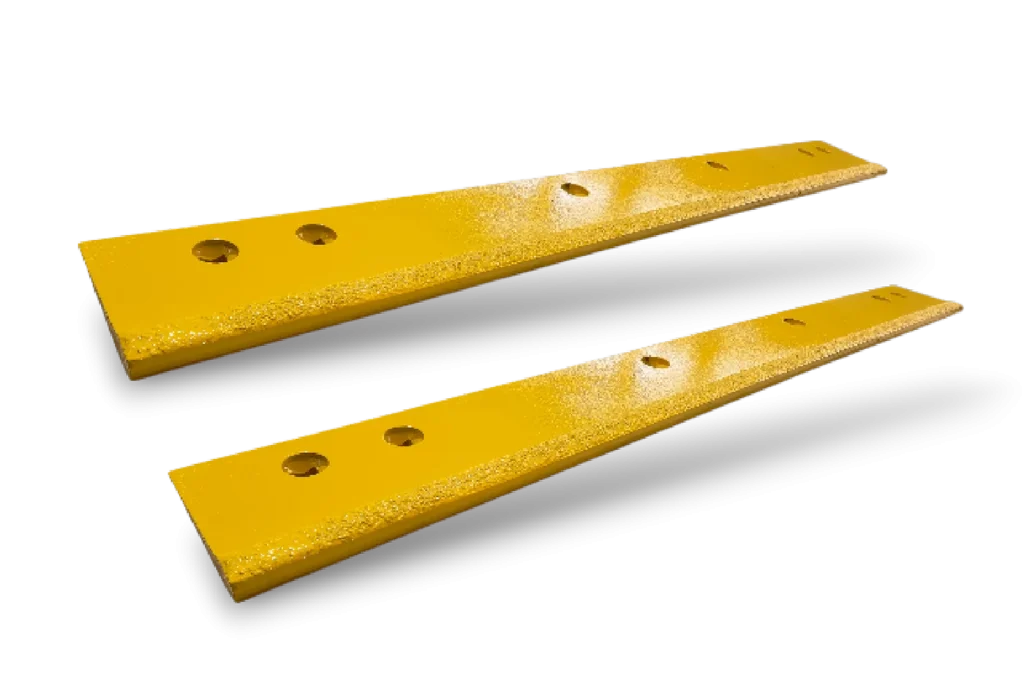
| Highway and arterial asphalt | Carbide snow plow blade | Hardness holds the scraping angle through the season |
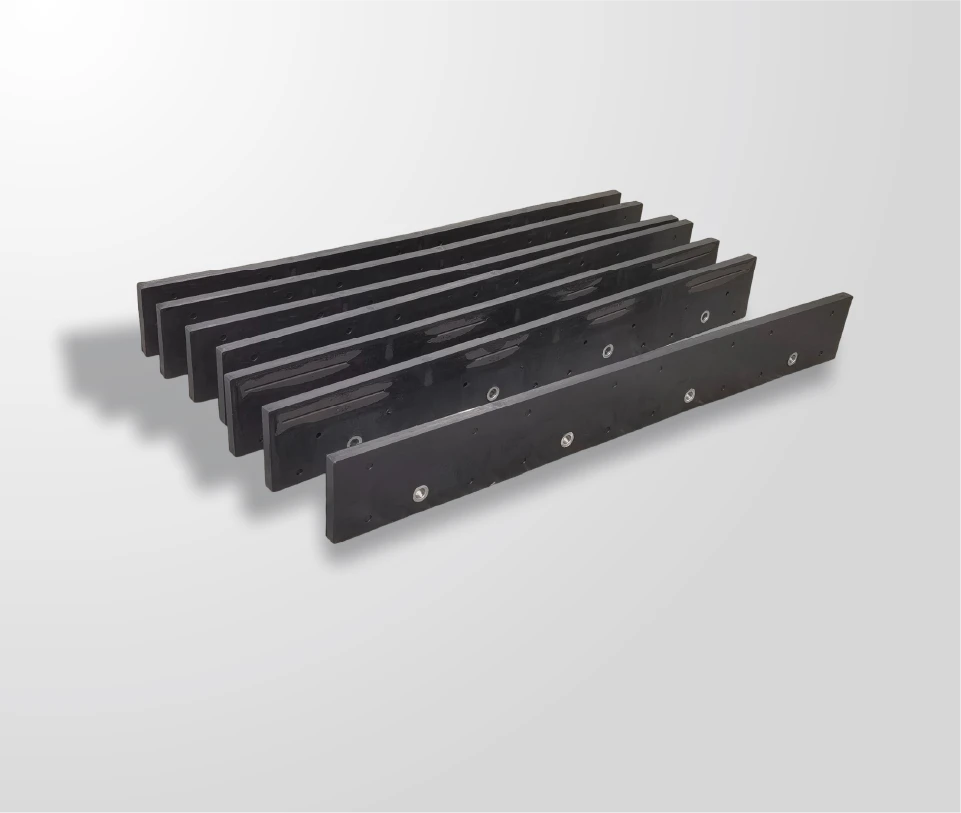
| Commercial lots and decorative paving | JOMA style rubber-flex blade | Rubber damps impact and protects the surface |
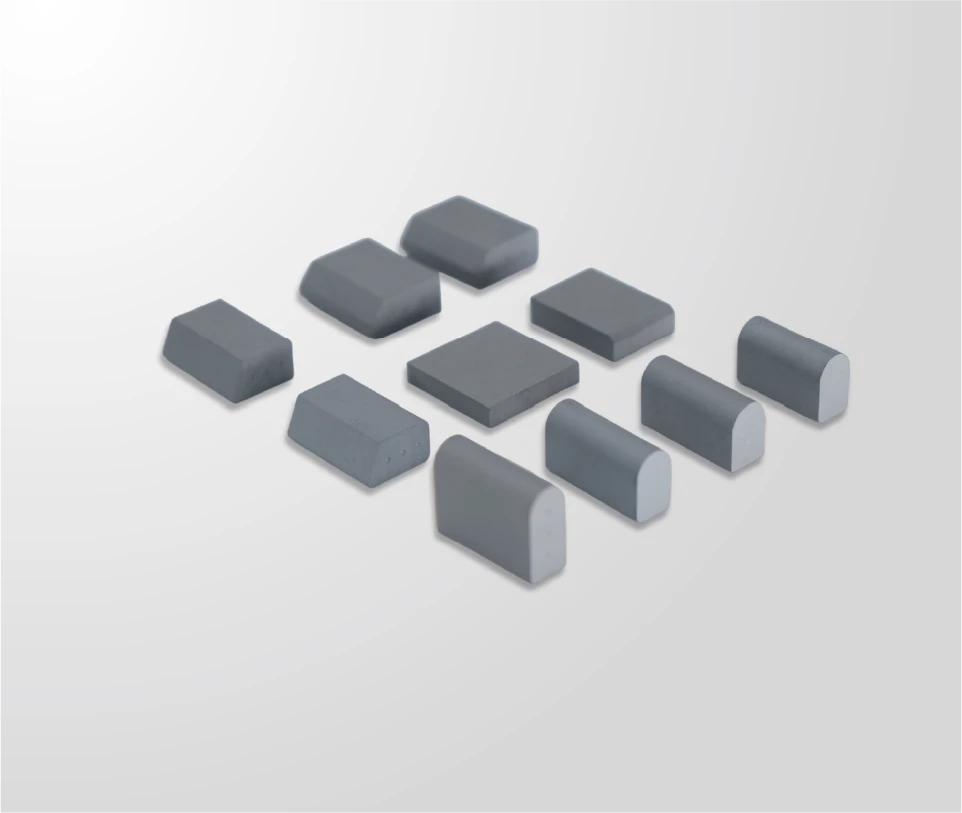
| Tender-driven replacement programmes | Carbide inserts or edge strips | Inserts can be specified and replaced independently |
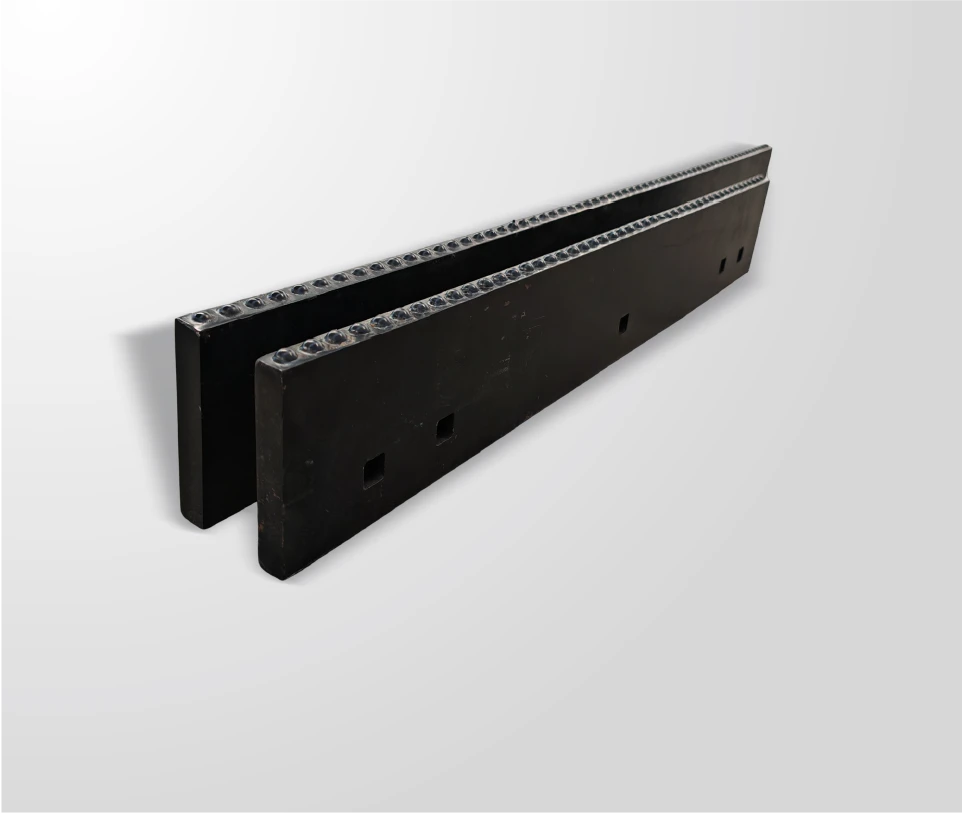
| Packed ice and hardpack | Packed ice carbide kit | Aggressive insert layout bites instead of skidding |
| Mixed gravel and paved routes | Tougher grade carbide edge | Impact toughness matters more than maximum hardness |
What determines how long your edge lasts
Four variables decide the outcome, and only one of them is the blade.
- The surface. Abrasive chip seal wears an edge faster than clean concrete, and gravel adds impact that a hard grade cannot absorb.
- The carbide grade. Harder grades resist abrasion; tougher grades resist chipping. Getting this wrong is the most common cause of an early failure.
- The edge angle and insert spacing. Geometry controls whether the blade scrapes cleanly or skips across the surface.
- Machine setup. Down-pressure, shoe height and operator habit decide how much load the edge carries.
If you are unsure which of the four families fits your route, send a description of the surface mix and the machine. Our engineers will recommend one, and tell you when a cheaper edge is the honest answer.
Buying notes for fleet and procurement teams
- Compare cost per lane kilometre, not cost per blade. Labour and downtime usually dominate the calculation.
- Standardise the specification. Once a profile works, keep the drawing and the batch records so repeat orders do not drift.
- Ask for the packing plan before you order. Rectangular, clearly labelled pallets save receiving time on every shipment.
- Plan rotation. Rotating edges across a fleet spreads wear and makes forecasting simpler.
Custom lengths, private label and OEM
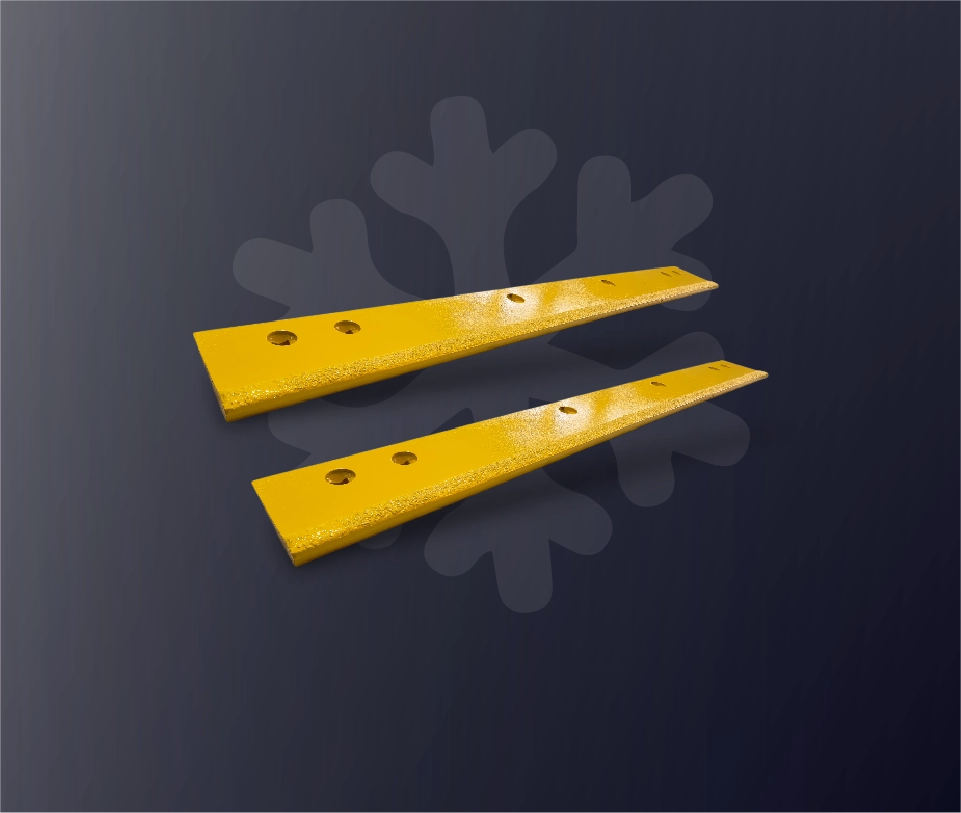
Every family above is available to a drawing. We produce custom lengths, thicknesses, bolt patterns and edge angles, pack under your own label and hold the approved specification on file for repeat orders. Tooling is quoted with the blade so the real cost of a bespoke profile is visible before you commit.
Frequently asked questions
Can I mix blade types in one shipment?
Yes. Blades, inserts and kits can be consolidated on a pallet or in a container, provided the packing plan keeps the items identifiable. Tell us at quotation stage how you want the load split.
How do I know which carbide grade to choose?
Describe the surface and how the blade is loaded. Gravel and mixed routes generally call for a tougher grade; clean asphalt and packed ice can take a harder one. We will confirm the choice against a sample before a season order.
Do you supply the bolts and hardware?
Hardware can be supplied with the order where your specification calls for it. Let us know the bolt grade and thread so it matches your existing plow setup.
What is the smallest order you will quote?
It depends on the profile. Established patterns can be quoted at trial quantities; a new profile needs to justify the tooling, and we will say so honestly.