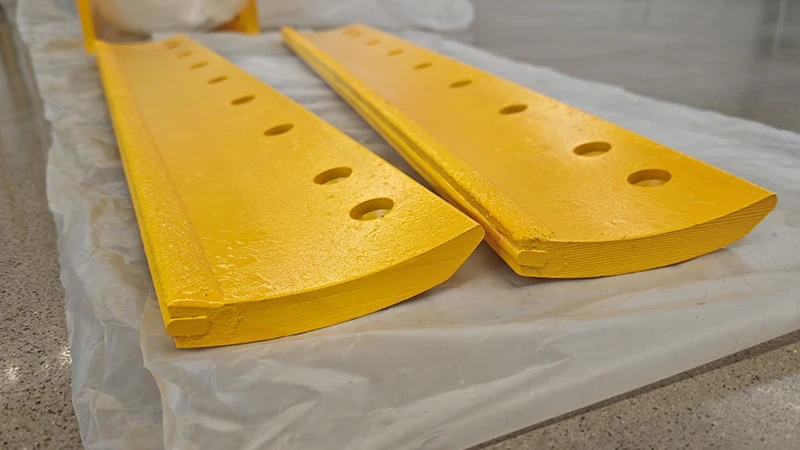
A grader runs a blade 10 to 14 feet long and wears it from the ends inward, which makes the edge a different problem from a truck plow. The same blade that survives the centre of the moldboard can be worn through at both ends a season earlier.
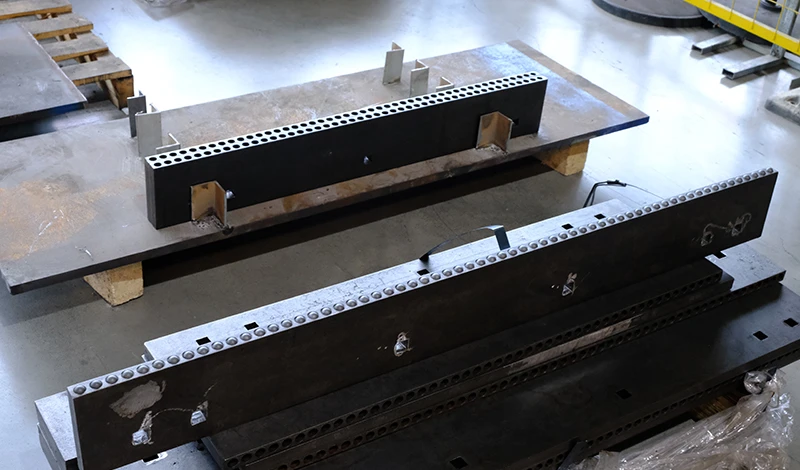
We build grader blades and carbide edges to your mounting face, in one piece or segmented, so a chip at one end does not condemn the full length.
- Lengths10–14 ft typical, cut to the mounting face rather than the model
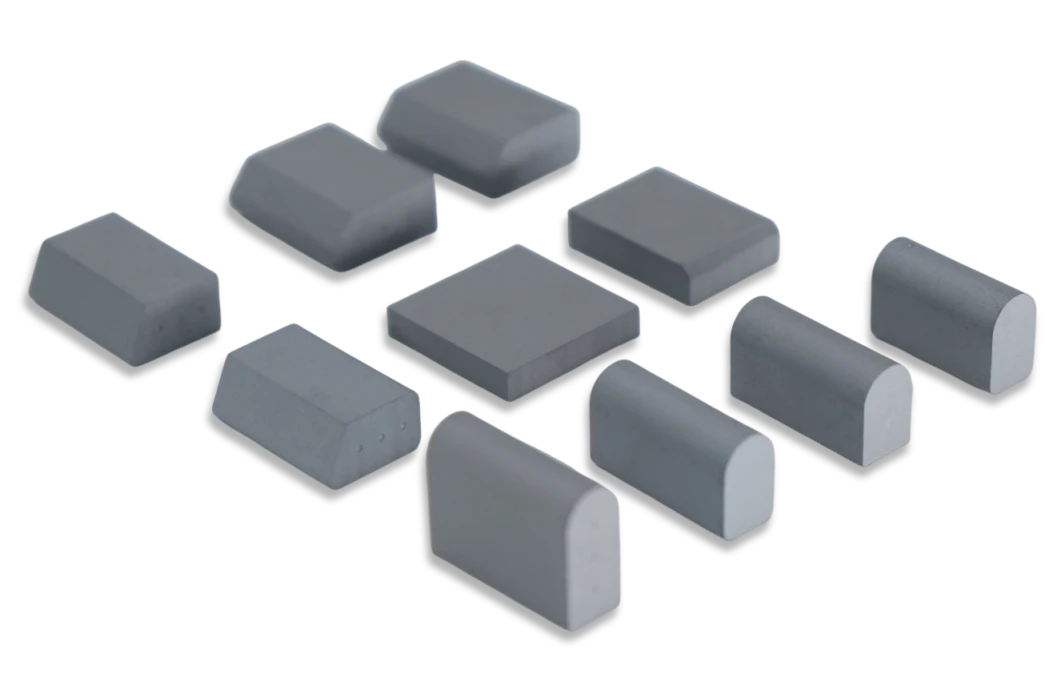
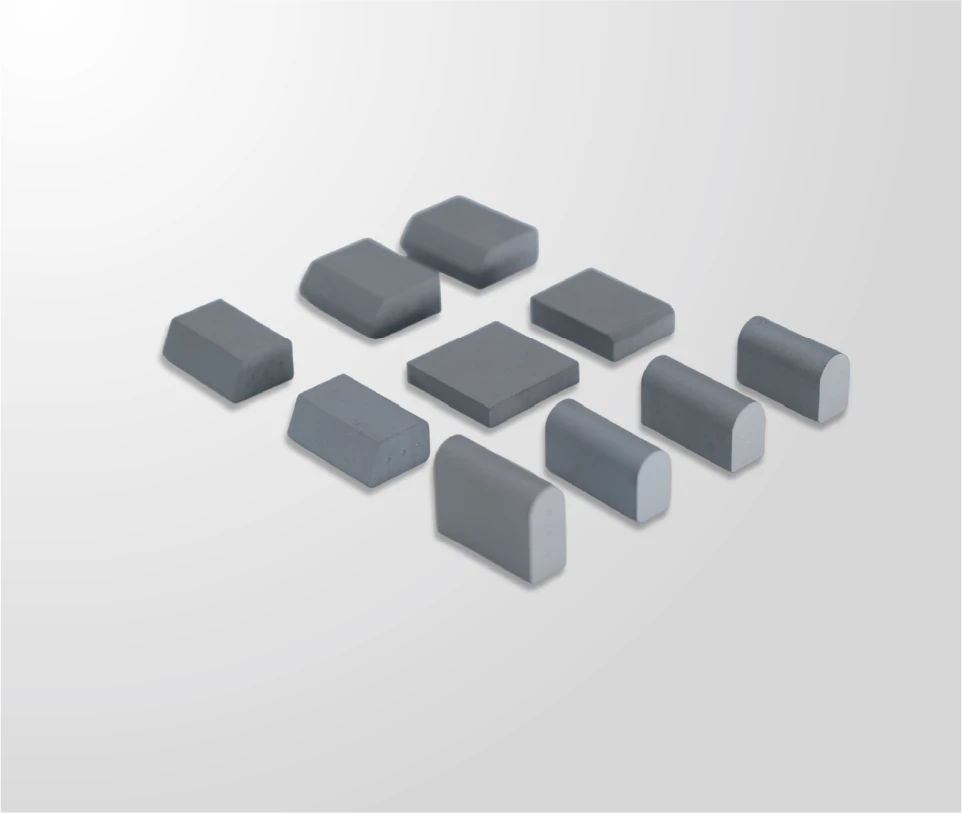
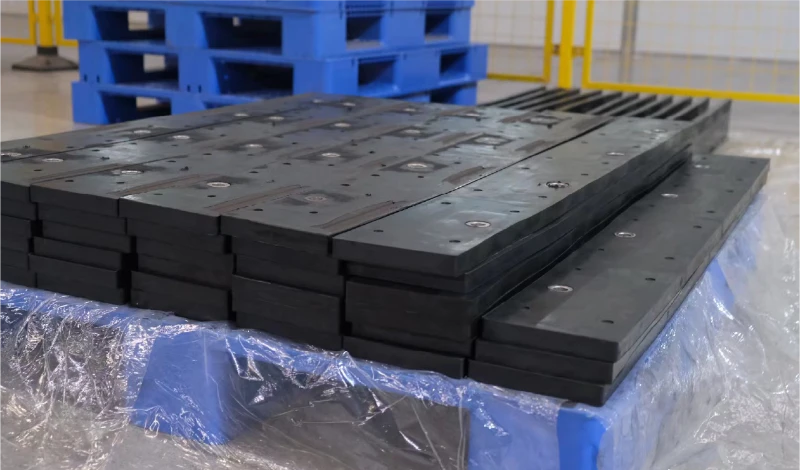
- ConstructionCarbide inserts on an annealed steel carrier, one piece or segmented
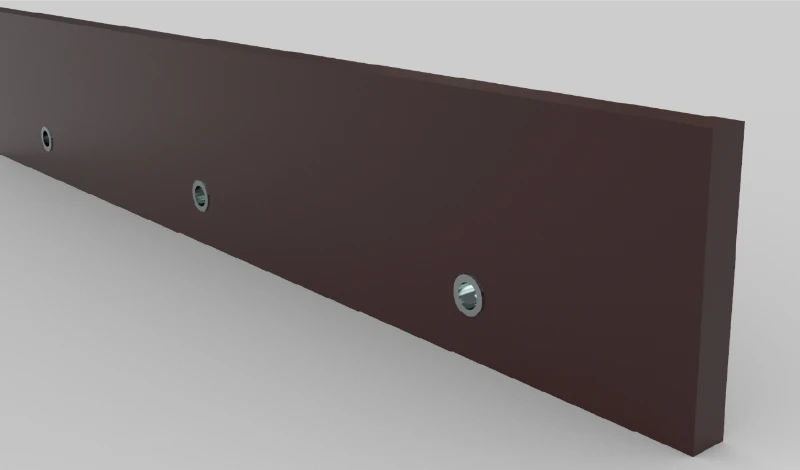
- ThicknessHeavier than a truck edge; bolt length and trip clearance confirmed with it
- Bolt patternsSpacing recorded at both ends, since long blades can be drilled in sections
- Insert gradesAbrasion-led for pavement, impact-led only where shoulders are unavoidable
- TraceabilityBatch reference on every carton, back to the sintering run
Why grader edges fail at the ends
A grader does not only push snow; it cuts, mixes and spreads, and the operator changes the angle continuously through a pass. That produces two loads at once: abrasion along the face and shock at the ends where the blade meets curb lines and frozen banks.
- Ends wear first because that is where the blade meets shoulders, curb lines and banks.
- Centre wear first usually means the machine is holding a crown with the blade angled.
- Cracks at the bolt holes point at the mount — elongated holes, over-torque or a repaired moldboard — not at the material.
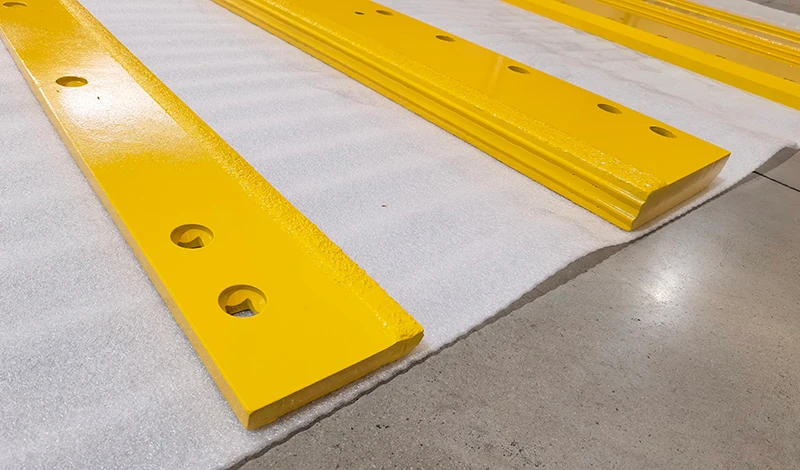
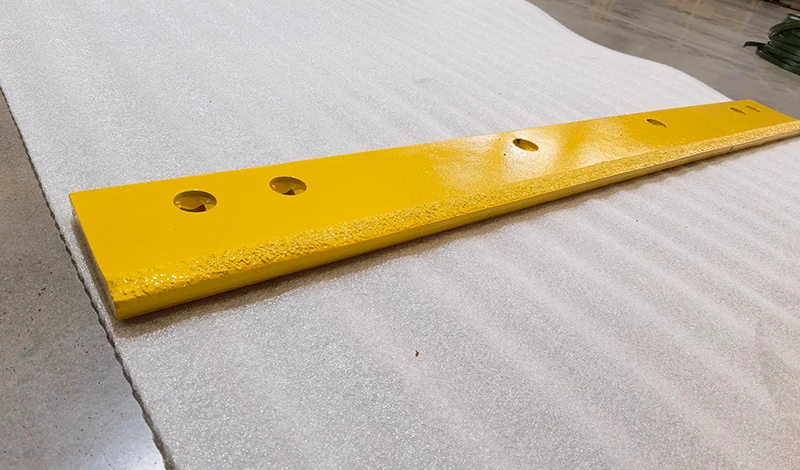
One piece or segmented
| Your situation | What we recommend | Reason |
|---|---|---|
| Municipal route, long season, abrasive pavement | Segmented carbide edge | A chip at one end is replaced without condemning the full length |
| Clean asphalt, stable mount | One-piece carbide edge | Simplest to fit; lowest cost per foot up front |
| Gravel and unpaved shoulders | Steel edge | Impact tolerance beats hardness where stone is loose |
| Tender written against a specification | Spec held on file | Repeat orders restart from the same drawing, not a close relative |
Bolt length
Moving a grader to a thicker edge changes the hardware and the trip clearance. Send the thickness you are moving to, and we quote the bolts and spacing with the blade.
Fitment
Blades are produced to your mounting face. Send the moldboard length at the mounting face, the edge height, thickness and the hole spacing from both ends, plus a photograph with a tape measure in frame. Segmented blades need the section lengths and how many sections you replace at a time. Skid steer and loader mounts are covered on their own pages.
Working conditions on a grader
A grader cuts, mixes and spreads rather than only pushing snow, and the operator changes the blade angle continuously through a pass. Two loads arrive at once: abrasion along the full face, and shock at the ends where the blade meets kerbs, shoulders and frozen banks. Municipal routes often combine a long paved run with gravel shoulders in the same shift, which is why grader specifications tend to be a compromise rather than a maximum.
Material choice over a long blade
Segmented carbide where the mount allows it: a chip at one end is replaced without scrapping twelve feet of edge. One-piece carbide suits clean asphalt and stable mounts. Steel where shoulders and unpaved sections dominate. Rubber-flex is not a grading edge and is quoted only for surface-protection work.
Purchasing conditions
Graders are frequently bought against a tender specification rather than a machine, so we hold the approved drawing on file and repeat orders restart from it. Section lengths and the number of sections replaced at a time are confirmed before cutting. Thickness changes are quoted with the bolt length and trip clearance they imply.
Most relevant next steps
- Cutting edge size chart
- Bolt pattern recording, including sectioned blades
- Carbide inserts and replacement
What to send, and what comes back
For a grader we need the hole spacing from both ends, because long blades are often drilled in sections and the spacing can differ end to end.
Quotation inputs
Machine make and model, blade width across the mounting face, edge height and thickness as fitted, hole spacing centre-to-centre across three consecutive holes, quantity for the season, and a photograph of the mount with a tape measure in frame.
Send sizes, confirm fit Upload a drawing instead
How long is a motor grader blade?
Typically 10 to 14 feet depending on machine class, but the mounting face on your machine is the only number that matters. Measure it rather than quoting the model year.
Should a grader edge be segmented or one piece?
Segmented where the mount allows, because a damaged end can be replaced without scrapping the full length. One piece is simpler and cheaper on clean, stable routes.
Why does my grader blade wear at the ends first?
Usually because the machine works shoulders and curb lines, where the ends take impact and abrasion at once. It is an operating pattern rather than a material fault.
Is carbide suitable for gravel roads?
Usually not. Gravel is an impact problem, and a hard edge chips where a tougher steel edge would wear and bend.