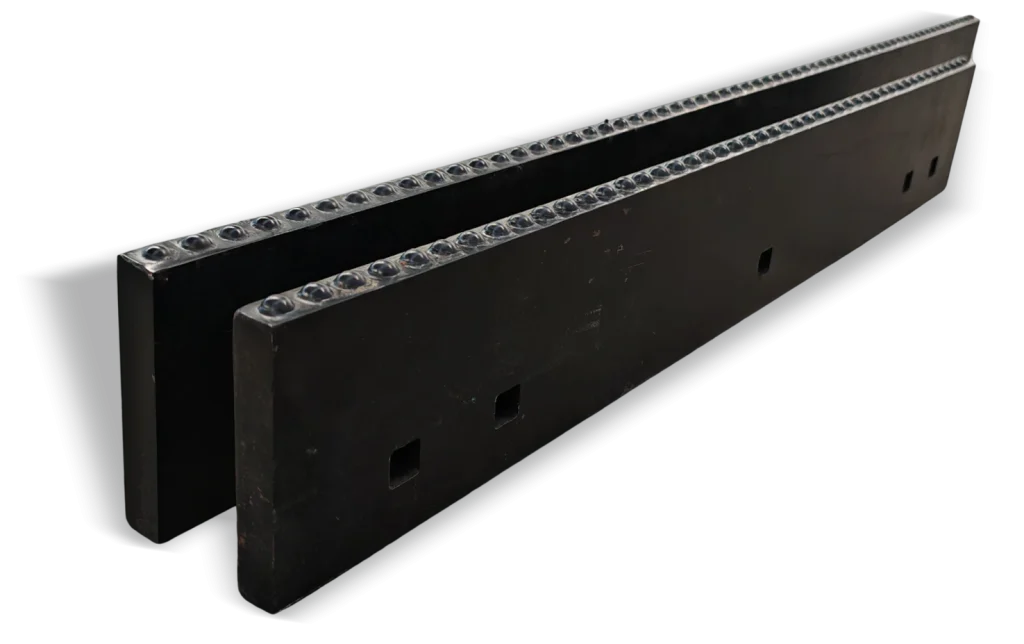
Packed ice is not deep snow with a hard surface. It is a bonded layer that a standard edge polishes rather than removes, and the fix starts before the first storm.
Hardpack forms where traffic compresses snow before a plow reaches it, and it sets hardest at intersections, on bridge decks and in shaded sections that never see sun. A standard steel or even carbide edge rides over the top because the layer is too hard for the edge angle to bite into. This guide covers what to install, how to set it up, and the operating habits that decide whether the layer comes off in passes or stays until spring.
What packed ice does to a standard cutting edge
A conventional edge polishes the layer instead of cutting it. The blade stays sharp, the road stays white, and the fuel and salt budget pays for it.
The failure is geometric before it is metallurgical. A flat edge presented at a normal plowing angle spreads the machine’s weight across the full length of the blade, so contact pressure per square centimetre stays far below what is needed to fracture a bonded layer. The edge glides, the surface polishes, and the crew’s instinct — add down-pressure, or slow down and try again — produces a marginal improvement at the cost of worn linkage, higher fuel burn and a truck that spends the shift fighting itself. Buying a harder steel, or a harder grade of carbide on the same flat geometry, reproduces exactly the same result at a higher price.
What changes the outcome is not hardness but contact area. Concentrate the load deliberately and the ice breaks rather than shines.
How an isolated carbide system bites instead of skating
An isolated insert layout concentrates load at a small number of points. The layer fractures, the edge cleans itself, and the passes come down.
An isolated edge system holds the carbide clear of the carrier so that a defined set of inserts — not a continuous strip — meets the road. Weight that was spread over a two or three metre blade now lands on a handful of contact points, and the pressure at each of them is several times higher than a flat edge can generate at any realistic down-pressure setting. That is what makes the difference between polishing and cutting. The rest of the design is about keeping those points in the right place: how deep the inserts sit, how they are supported, and how the assembly behaves when the surface changes from bonded ice to bare asphalt within a single pass.
- packed Ice Carbide Kits: How an Isolated Edge System Works on Hardpack
- studded, Segmented and Insert Edges for Ice Control
Cut early, or pay for it all winter
The cheapest hardpack is the layer you remove in the first two hours. Once traffic bonds it, every later pass costs more than the first would have.
Route sequencing is the highest-leverage decision in ice control and it costs nothing but planning. Send the edge down the high-traffic lanes before the compaction window closes and the same machine that would later scrape a bonded layer simply removes loose snow. Municipal schedules that treat every road equally usually produce the worst hardpack on the busiest routes, because those are precisely the ones compressed first by commuter traffic. The practical rule is to invert the usual order: arterial roads and bus corridors first, residential streets after, and the same priority repeated on every pass rather than re-cut at the end of the storm when the layer has already set.
- packed Ice Prevention on Municipal Routes
- choosing the Right Snow Cutter for Packed Snow on Municipal Roads
Tactics change by location, not by route
Intersections, bridge decks and shaded sections each form ice differently. One pass pattern for the whole route guarantees that two of the three stay white.
Intersections collect what the approach lanes push into them, so they need a pass after the through lanes are clear rather than before. Bridge decks lose heat from both surfaces and freeze earlier and harder than the roadway either side, which usually means a different angle and a slower pass. Shaded sections — north-facing cuttings, tree-lined streets, the side of a street beside a wall — never see enough sun to release the layer and will hold ice long after the rest of the route is bare. Where a route cannot be cut early, these are the places worth the extra pass, and treating them as three separate problems costs nothing but a change to the route sheet.
Setup decides whether the kit bites or skates
Down-pressure, attack angle and speed work as a set. Change one and the other two have to move with it.
An insert system set up like a standard blade will underperform and get blamed for it. Down-pressure has to be enough to load the inserts without overloading the linkage; blade angle has to present the inserts to the surface rather than dragging them flat; speed has to stay low enough for the edge to bite rather than bounce. The three interact, so change one at a time, record what you changed, and give the crew a week on the new setting before judging it. Start from the surface: a layer that has been bonded for a fortnight needs a more aggressive setup than fresh hardpack, and a route that alternates between the two needs a setting that is tolerable on both rather than optimal on one.
Inspect, rotate, and order against the drawing
Order against the machine and the bolt pattern, not the model name. Rotation spreads wear; the payback shows up as fewer passes and less salt.
A packed ice kit is a set of components that has to fit the moldboard it is going on, so the ordering list starts with the drawing: length, thickness, hole pattern and the machine’s linkage. Confirm those before the price, and check what arrives against the same list before the blade goes anywhere near the truck. In service, rotate and inspect on a schedule — an insert that has begun to move is cheap to deal with in the workshop and expensive on the roadside. On payback, resist justifying the purchase on blade life alone. The return on a kit that genuinely removes the layer shows up as fewer passes to reach bare pavement, less salt and sand spread, fewer complaint callbacks, and less fuel burned scraping ice that was never going to move.
- inspecting and Rotating a Packed Ice Edge Through the Season
- packed Ice Kit Ordering and Fitment Checklist
- when a Packed Ice Carbide Kit Pays for Itself
Tell us which roads hold ice through the winter, what machine clears them and how many passes it currently takes. We will say whether a packed ice kit is the right answer or whether the problem is sequence, angle or down-pressure — and we will tell you before you buy anything.
Frequently asked questions
Is a packed ice kit the same as a carbide blade?
No. A carbide blade hardens the cutting edge; a packed ice kit changes the contact pattern so the edge bites into a bonded layer. Some routes need both treatments on different machines, and some get everything they need from a correct angle and down-pressure setting.
Will a kit damage the road surface?
An isolated insert system concentrates load at a small number of points, which is the opposite of a flat edge dragging across the surface. On asphalt and chip seal it is gentler than a worn steel edge. On decorative or very soft surfaces it is the wrong tool, and a rubber-flex edge is the honest alternative.
How many passes should it take to reach bare pavement?
On a route cut early, one or two. On a layer that has been bonding for weeks, no edge removes it in a single pass and pretending otherwise sets the crew up to fail. The realistic goal is a measurable improvement in the number of passes and the amount of salt required.
Do we have to change our plowing speed?
Usually yes, on the worst sections. Bite comes from load and angle, and speed works against both. Most fleets operate the same routes at a slower speed on the sections that hold ice, and keep normal speed everywhere else.
What do you need to quote a kit?
Machine make and model, blade length and thickness, the bolt pattern with dimensions, and the surface you are clearing. A photograph of the current blade with a tape measure across the mounting holes answers most of the remaining questions.
Where to go next
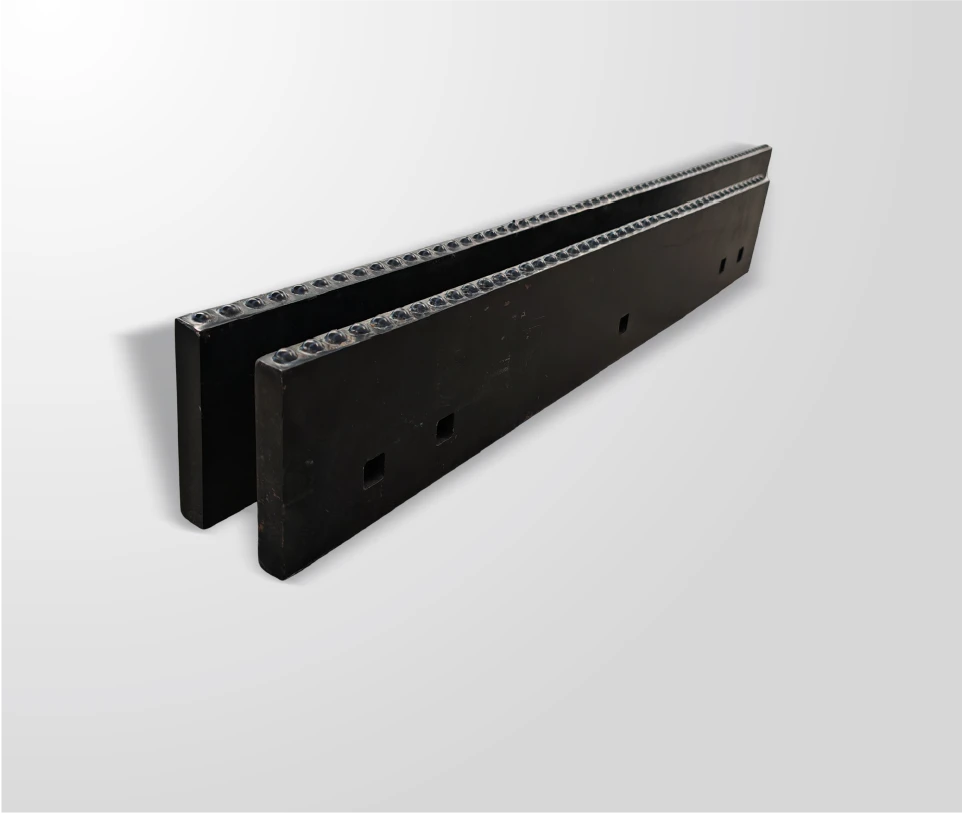 Packed ice carbide kitAn aggressive insert layout for hardpack and bonded ice.View products
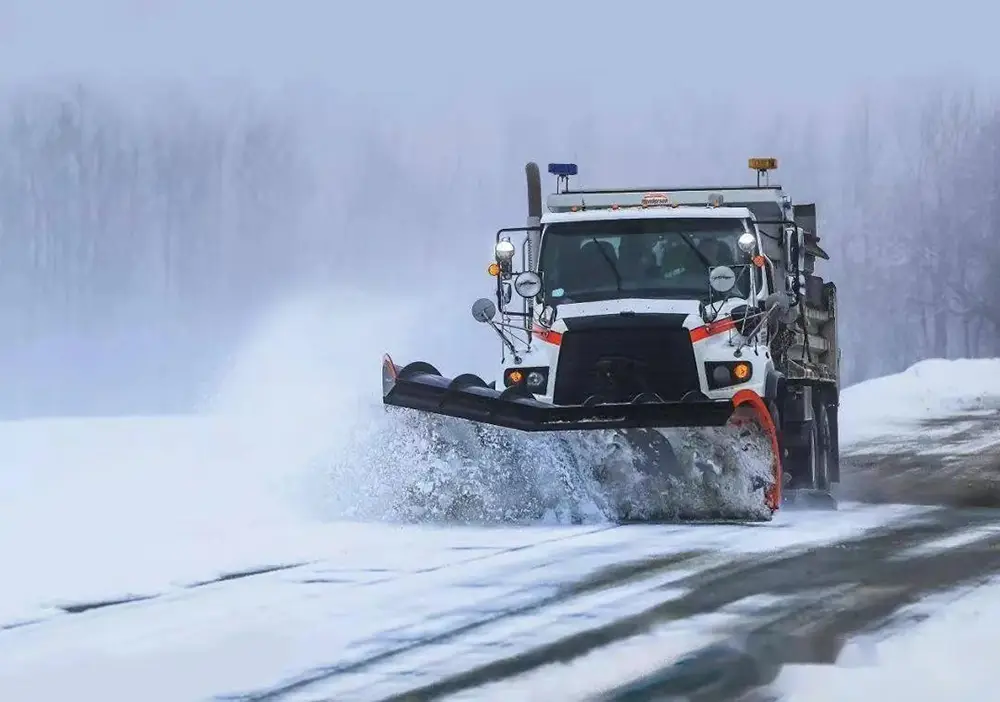 Snow plow blade selection guideSurface, position, size, geometry, material — in order.Read the guide
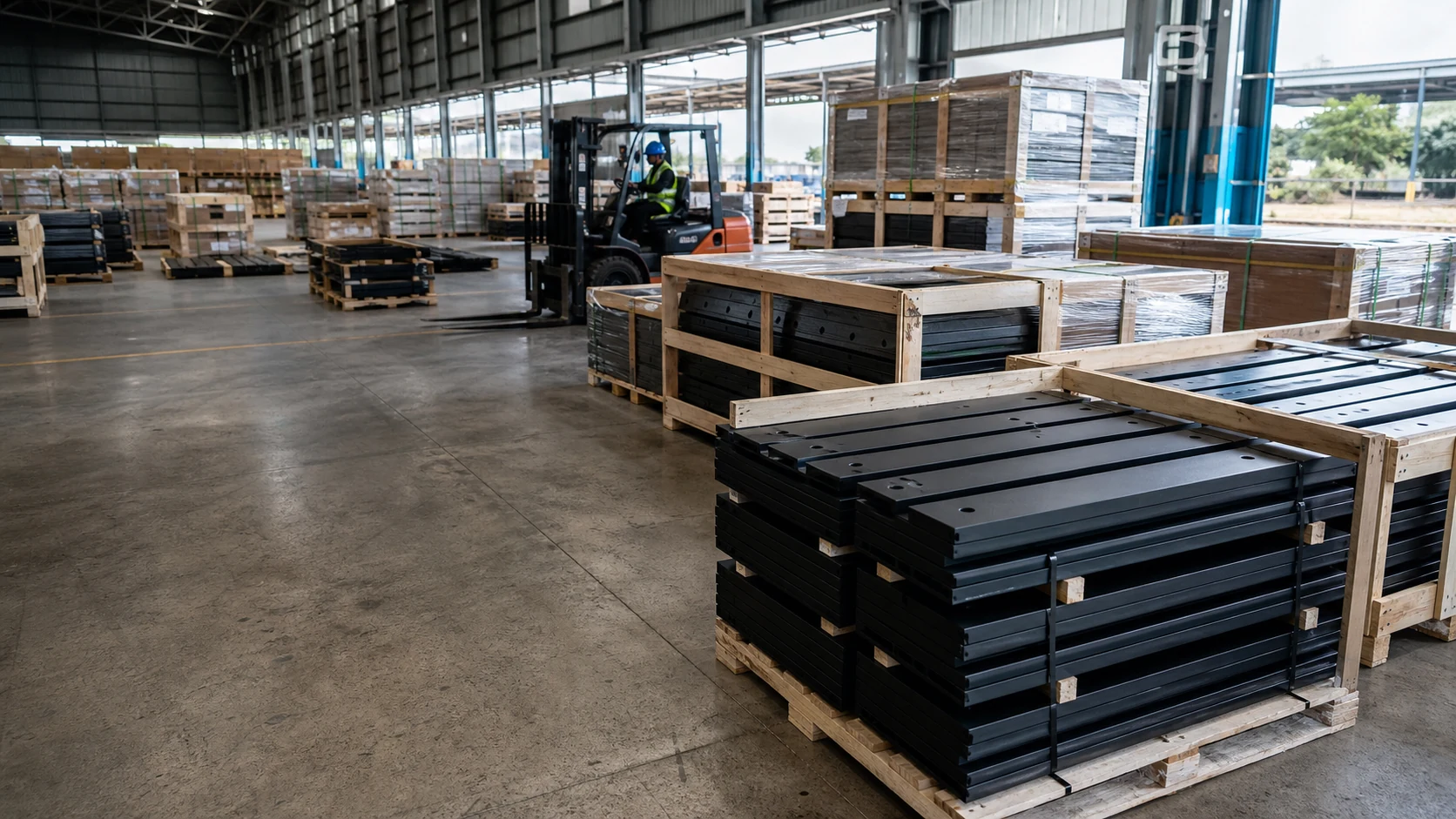 Sourcing carbide wear parts guideTechnical pack, supplier choice, landed cost and supply risk.Read the guide
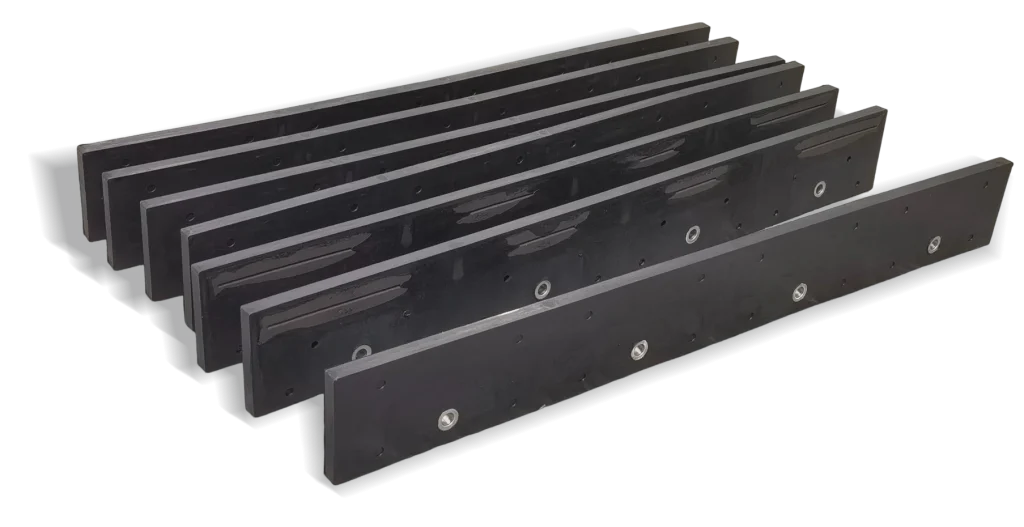 JOMA style rubber-flex blade guideSegments, clamps, insert retention and off-season care.Read the guide
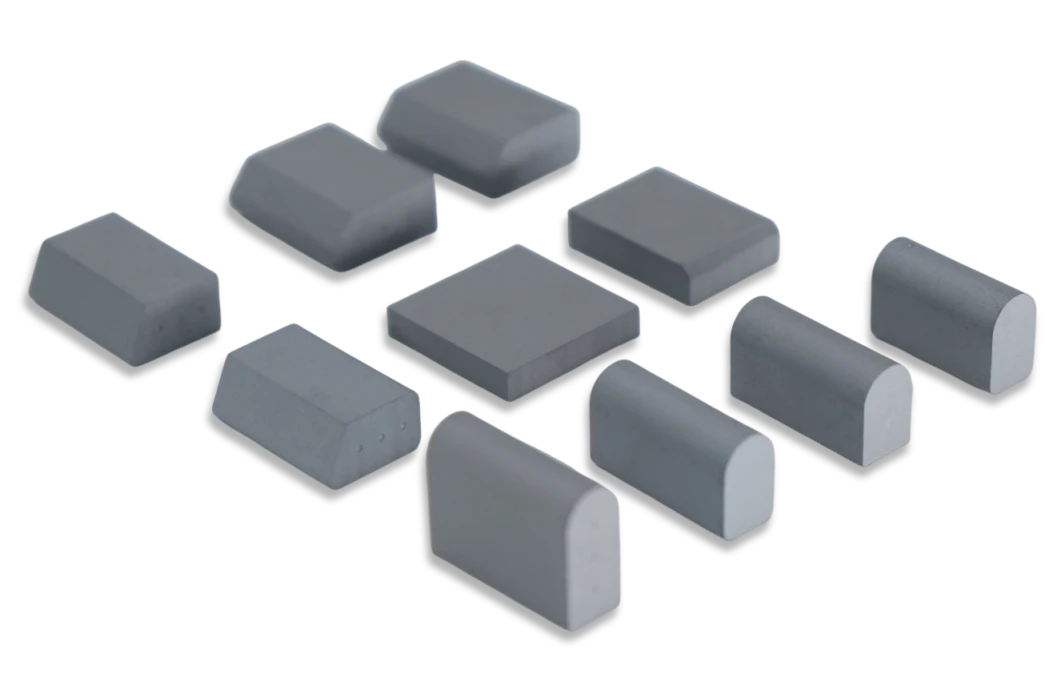 Carbide insert selection and replacement guideGrade, spacing, fitment and the replace-or-re-plate call.Read the guide
 Talk to the quote deskSend the machine, the surface and a rough quantity.Request a quote