Plow parts is a broad term that covers everything from the cutting edge to the hydraulic hose, and most of it is not what a carbide plant makes. This page sets out the parts we manufacture, the parts we do not, and how to identify what your plow actually needs.
The parts we make are the ones that meet the road: the cutting edge, the carbide inserts or rubber-flex segments that do the scraping, and the fixings that hold them to the moldboard. Everything else on a plow — the hydraulic system, the electrics, the lights, the controller — is somebody else’s product.
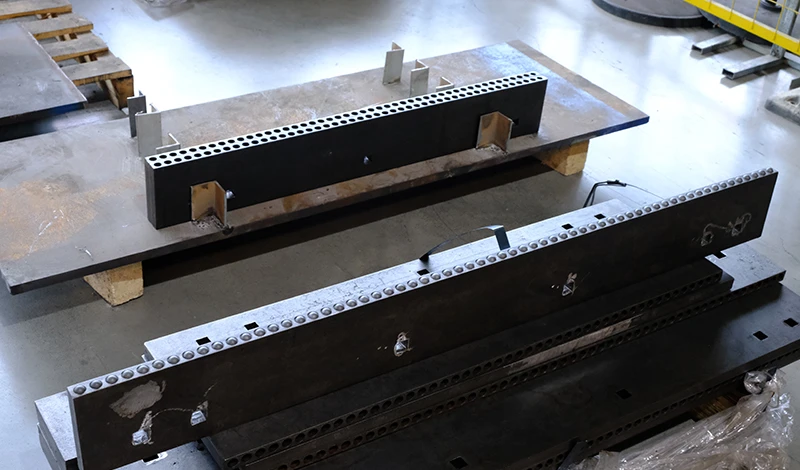
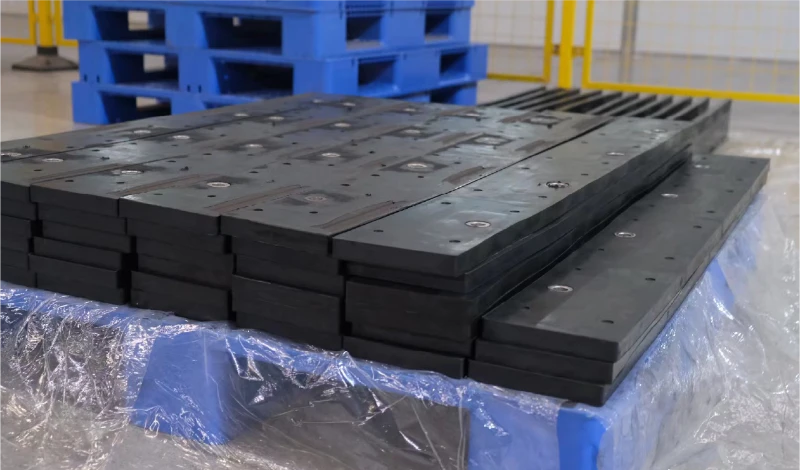
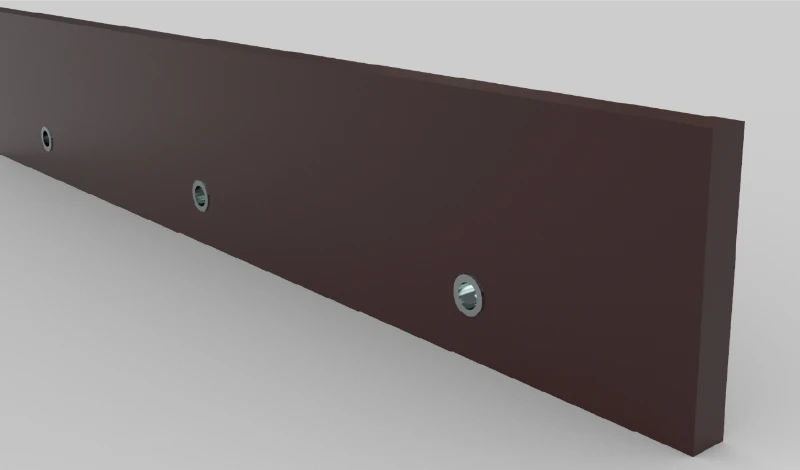
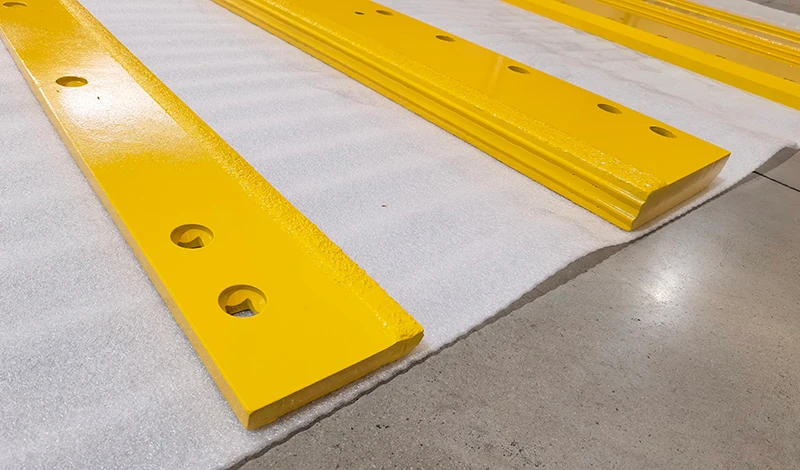
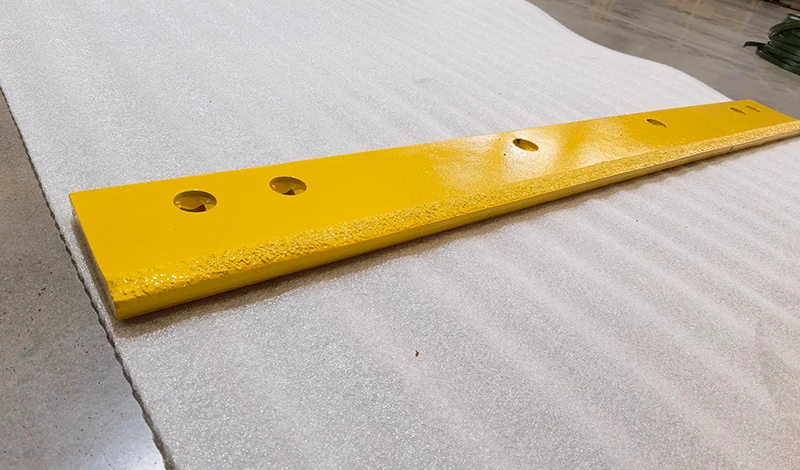
- Cutting edgesCarbide, steel and rubber-flex, drilled to your mounting pattern
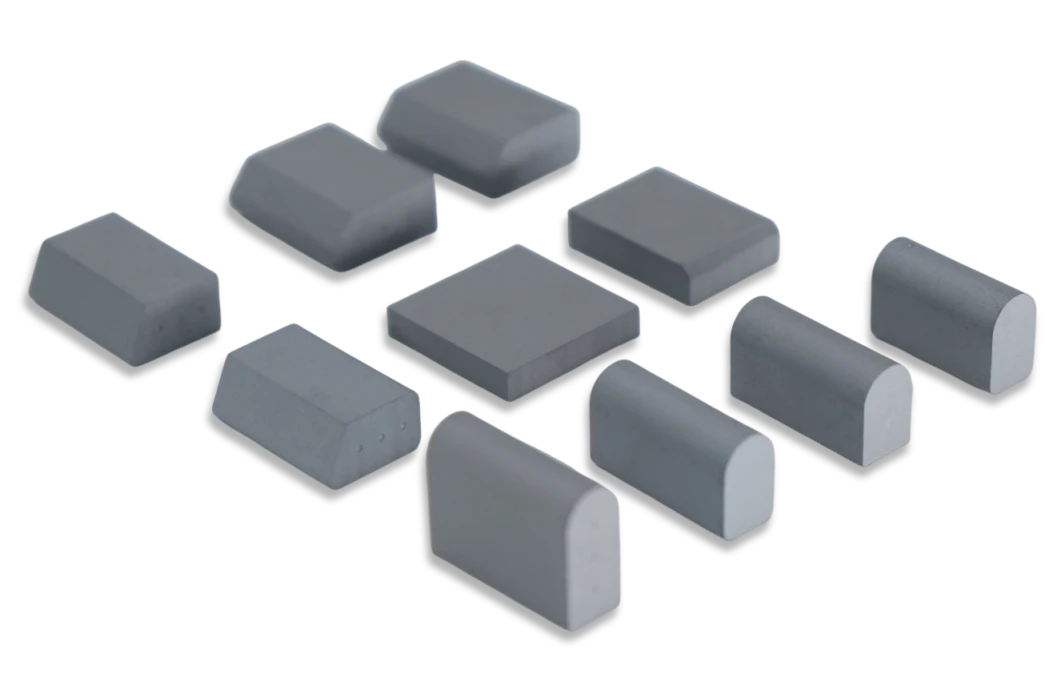
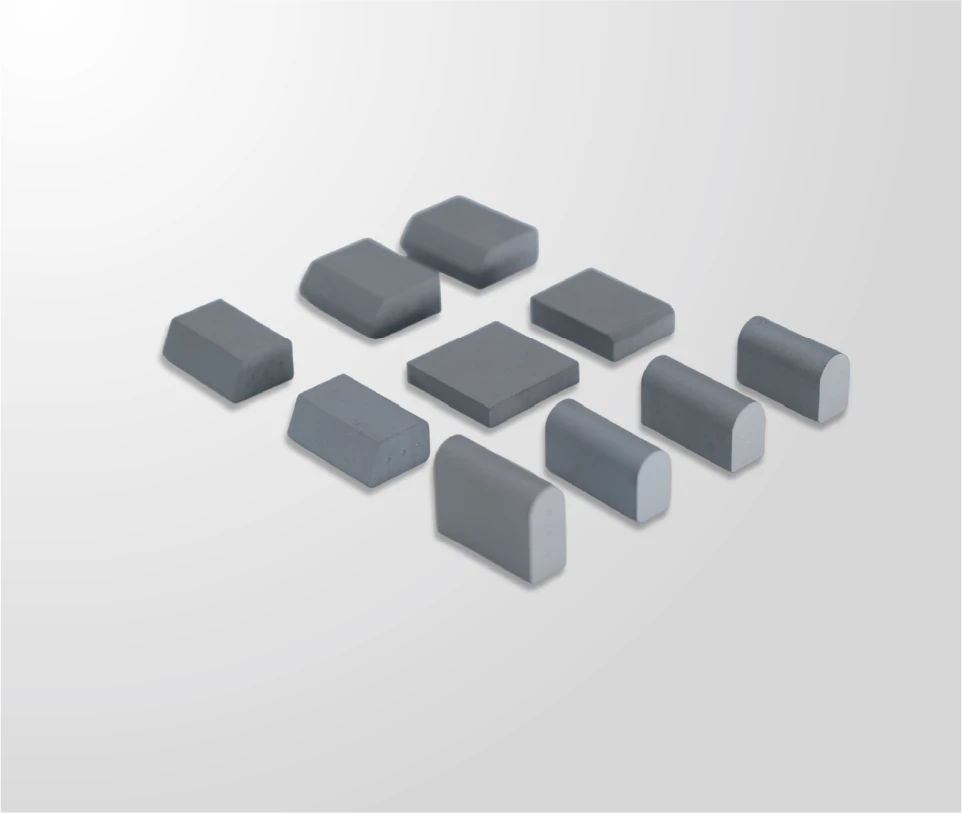
- Inserts and segmentsReplaceable carbide inserts and JOMA-style rubber-flex segments
- Packed ice kitsComplete edge kits for hardpack and compacted ice routes
- FixingsBolts, nuts and washers matched to the edge thickness and countersink
- Machine coverageTrucks, graders, loaders and skid steers
- Not manufacturedHydraulics, electrics, lights, controllers, plow frames
The parts that actually wear out
Four items account for almost all plow maintenance, and only three of them are wear parts in the sense that matters here.
- The cutting edge. Consumable by design. It protects the moldboard above it and the pavement below it, and it is bolted rather than welded so it can be replaced.
- Inserts or segments. The wear material on a serviceable edge. Replacing inserts instead of the whole edge is what keeps a carrier in service for years.
- Fixings. The cheapest part on the plow and the one that fails first. A worn bolt head means the countersink has gone, and the next edge will not seat.
- Shoes and runners. Not a cutting part, but they set how hard the edge works. Adjusting them changes edge life more than switching materials does.
Identify the part before you buy it
| Part | What it does | Wear signal | What to do |
|---|---|---|---|
| Cutting edge | Scrapes the surface, protects the moldboard | Face worn down, edge no longer holds the road | Measure the mount and replace the edge |
| Carbide inserts | The wear material on a serviceable edge | Chipped or missing inserts, clean pockets | Replace inserts; investigate clean-pocket failures |
| Rubber-flex segments | Protects decorative surfaces, quiet operation | Torn or flattened segments | Replace segments on the affected sections only |
| Fixings | Holds the edge to the moldboard | Heads worn flush, threads stretched | Replace at every edge change |
| Shoes and runners | Sets the working angle and height | Worn pads, plow riding low or high | Adjust or replace; check the edge at the same time |
What we do not sell
A large share of searches for plow parts are for hydraulics, controllers and lights. We do not manufacture or supply those, and we would rather say so than send you a quotation for something that arrives wrong.
Brand fitment
Edge patterns differ across Western, Fisher, BOSS, Meyer, SnowDogg, Hiniker, Blizzard, Curtis and Sno-Way, and several of those patterns have changed over the years. The brand narrows the search; the bolt pattern decides it.
Record the mounting face width, the edge height, the thickness and the centre-to-centre hole spacing across at least three holes, then send them with a photograph. Our note on mapping bolt patterns covers how to take those numbers from a worn edge.
Fitment by machine
The same edge family is built for four machine types, each with its own mount and duty: skid steer blades, grader blades and loader blades, alongside truck plows. Send the machine and the mount, and we confirm which edge family applies before quoting.
Working conditions decide which part fails first
On abrasive pavement the edge wears and the fixings survive. On gravel and shoulders the edge chips and the fixings take the shock. On routes worked by several operators, the failure you see is usually impact rather than wear, which points at technique before it points at material.
That matters for parts selection: a fleet that keeps losing inserts to clean pockets has a joining question, not a wear question, and buying a harder grade will not fix it.
How to buy the right part
Identify the part by function, then by measurement: cutting edge, insert or segment, fixing, or shoe. For edges and inserts the four measurements decide it; for fixings the countersink and bolt length decide it. We do not supply hydraulics, controllers or lights, and saying so up front is cheaper than a quotation for the wrong part.
Purchasing conditions
Quotations are returned within one working day of receiving measurements. Trial quantities are confirmed per profile. The specification is archived so a repeat order restarts from the same drawing, and export packing is planned against your receiving requirements.
Most relevant next steps
What to send, and what comes back
If you are not sure which part you need, send the photograph first — we will name the part and the measurement it has to satisfy.
Quotation inputs
Machine make and model, blade width across the mounting face, edge height and thickness as fitted, hole spacing centre-to-centre across three consecutive holes, quantity for the season, and a photograph of the mount with a tape measure in frame.
Send sizes, confirm the part Upload a drawing instead
Brand fitment confirmation checklist
Work through the list before you send anything: machine make, model and year; blade width at the mounting face; edge height and thickness as fitted; hole spacing across three consecutive holes; countersunk or plain hardware; and whether the mount has been repaired, welded or re-drilled.
Download the fitment checklist (CSV)
What parts do you actually manufacture?
Cutting edges in carbide, steel and rubber-flex, replaceable carbide inserts, JOMA-style segments, packed ice kits and the fixings that go with them. We do not make hydraulics, electrics, lights or controllers.
Can I buy just the edge, without the whole blade?
Yes. The edge is a consumable and is supplied on its own, drilled to your mounting pattern. If the carrier is sound, that is the cheaper route.
How do I find the right part for my plow?
Measure the mounting face width, edge height, thickness and hole spacing, then send a photograph of the mount with a tape measure in frame. The brand helps narrow it; the measurements decide it.
Do you supply skid shoes?
We do not manufacture shoes or runners, but they change how hard the edge works, so we will tell you what setting to run when we quote an edge.