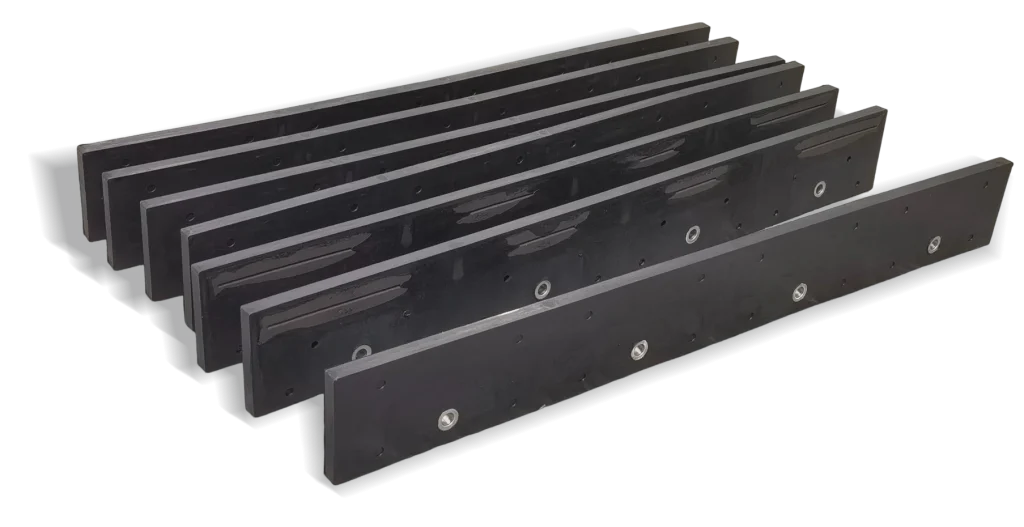
A rubber body with carbide wear segments clears the surface without destroying it. The decisions that matter are segment length, clamp fitment and insert retention.
Rubber-flex edges own a specific job: any route where the surface is the asset you are protecting. Airport aprons, commercial car parks, decorative paving, interlocking brick and rural roads with exposed shoulders all punish a rigid edge and reward a body that absorbs the impact. This guide covers what the edge actually is, how it is fitted to the common machine families, and the maintenance decisions that decide whether it survives a season or two.
What a rubber-flex edge actually is
A vulcanised rubber body carries tungsten carbide segments. The rubber takes the impact, the carbide does the scraping, and the joint between them is the design.
It is not a rubber blade that wears out quickly, and it is not a solid carbide edge with a soft mounting. The body is a vulcanised rubber layer bonded to a carrier, with tungsten carbide segments set into the wear face, so the assembly flexes over an obstruction and returns to its working angle instead of chipping or digging in. That single behaviour is what makes it the default choice wherever the surface is the asset being protected. It also explains the maintenance profile: the carbide wears slowly, the rubber and the joint take the punishment, and the repair question is almost always about re-segmenting a sound body rather than replacing the wear material.
When a flex edge beats solid carbide, and when it does not
Delicate surfaces, exposed aggregate and rough rural roads reward a flex edge. Open abrasive asphalt at working speed does not.
The honest boundary is the surface. Airport aprons, car parks, decorative paving, interlocking brick, and rural roads where a rigid edge would lift aggregate all reward a body that absorbs impact instead of transmitting it. On long, open, abrasive runs at working speed the same flex behaves against you: the edge follows the surface rather than cutting it, and a solid carbide blade lasts considerably longer at a lower cost per lane kilometre. Fleets that run both kinds of route usually fit flex edges to the units that work the lots and rigid edges to the units that run the highway, rather than compromising every machine in the middle.
Fitment: segments, clamps and machine families
Segment length follows moldboard width and route. The clamp and the bolt pattern follow the machine, and getting those wrong is the usual reason a blade will not sit flat.
Short segments articulate better over rough ground and uneven surfaces; long segments cover ground faster on open, consistent lots. That trade-off, not the price, should set the segment count for a given moldboard — and the count then determines how many joints have to be aligned and inspected through the season. Fitting is a matter of matching the carrier to the machine: clamp design, plate thickness and the bolt pattern all have to line up before the blade reaches the yard, and machine families differ enough that a drawing or a measured pattern is worth more than a model name. On articulated and constant-pressure machines the mechanism changes how load arrives at the edge, so segments wear in a different pattern than they would on a fixed moldboard.
- installing JOMA Style Segments
- jOMA 6000 Blades and Cutting Edges: Fitment, Segments and Replacement
- jOMA Articulating Blades and Cutting Edges
Insert retention decides whether the edge survives the season
Brazing and mechanical fixing each have a place. The wrong choice for the load is what turns a segment into a scattered row of loose carbide.
Retention is where rubber-flex edges are won and lost. Brazed inserts give an uninterrupted wear face and suit surfaces that punish the joint with abrasion; mechanical fixing allows field replacement and suits fleets that keep their own workshop and would rather re-plate than re-order. The choice has to follow the load the segment actually sees, which in turn follows the machine and the route. However well it is done, the repair question arrives eventually, and by then the diagnosis matters as much as the fix: a single lost insert points to a joint problem, a row of them points to a load or setup problem, and a polished face with no loss at all points to a grade that is simply too hard for the surface.
- insert Retention in Flex Blades: Brazing vs Mechanical Fixing
- rubber-Flex Blade Repair and Re-Segmentation
Cost it per season, not per blade
Compare a flex edge with two steel change-outs across a season. The advantage is the change that does not happen, not the price on the invoice.
The comparison that convinces a finance team is not price per blade, it is cost per season measured against the change-outs the flex edge replaces. Two steel changes, two sets of labour, two workshop slots and two disruptions to the route are the baseline a contractor is choosing between; the flex edge’s advantage is the season it does not have to come off. That advantage is easy to lose in the yard, and losing it turns a good decision into a bad one on paper the following winter.
Store it properly, and order the next one to the drawing
A drawing, a worn sample or a measured pattern is enough. Custom rubber-flex blades are a reproduction job before they are a design job.
Rubber that spends the summer in the sun, under load, or bundled against sharp edges will deform, crack or take a set, and the following season starts with a blade that no longer sits flat on the pavement. Store it flat and unloaded. When it is time to re-order, most custom flex-blade orders are reproductions: the machine and the carrier already exist, and the requirement is a blade that fits the way the previous one did. Send the drawing if you have it, or the worn blade with the critical dimensions marked, or a measured pattern including segment count and hole positions. We will confirm the geometry, propose a segment layout and a retention method, and produce a sample for approval before a season order goes into the plant.
Send a photograph of the worn blade, the machine model and the bolt pattern. We reproduce the length, thickness and segment layout to match, quote the retention method that suits your workshop, and hold the approved specification on file for the next order.
Frequently asked questions
When should I choose rubber-flex over carbide?
When the surface matters as much as the snow. Airports, car parks, decorative paving and road surfaces with exposed aggregate all favour a flex edge. On open abrasive asphalt or chip seal at working speed, a solid carbide edge lasts longer and costs less over a season.
Can a worn rubber-flex blade be repaired?
Often yes. If the rubber body and carrier are sound, re-segmenting restores the wear face at a fraction of the price of a new blade. If the body has taken a set, cracked or delaminated, replacement is the honest answer and we will say so.
How many segments should a blade have?
It follows moldboard width and the route. Shorter segments articulate better over rough ground; longer segments clear open lots faster. We will propose a segment layout against your blade length and the surface you actually clear.
Does a rubber-flex blade need different machine settings?
It usually works at a similar angle to a rigid edge, but the flex means the effective contact changes under load. Set down-pressure so the segments are loaded without flattening the body, and inspect the wear face after the first few storms so the setting can be adjusted with real data.
How should the blade be stored between seasons?
Flat, out of direct sun, off sharp edges and without weight on the segments. Rubber that spends the summer bundled or loaded takes a permanent set, which shows up as an edge that no longer sits flat on the pavement.
Where to go next
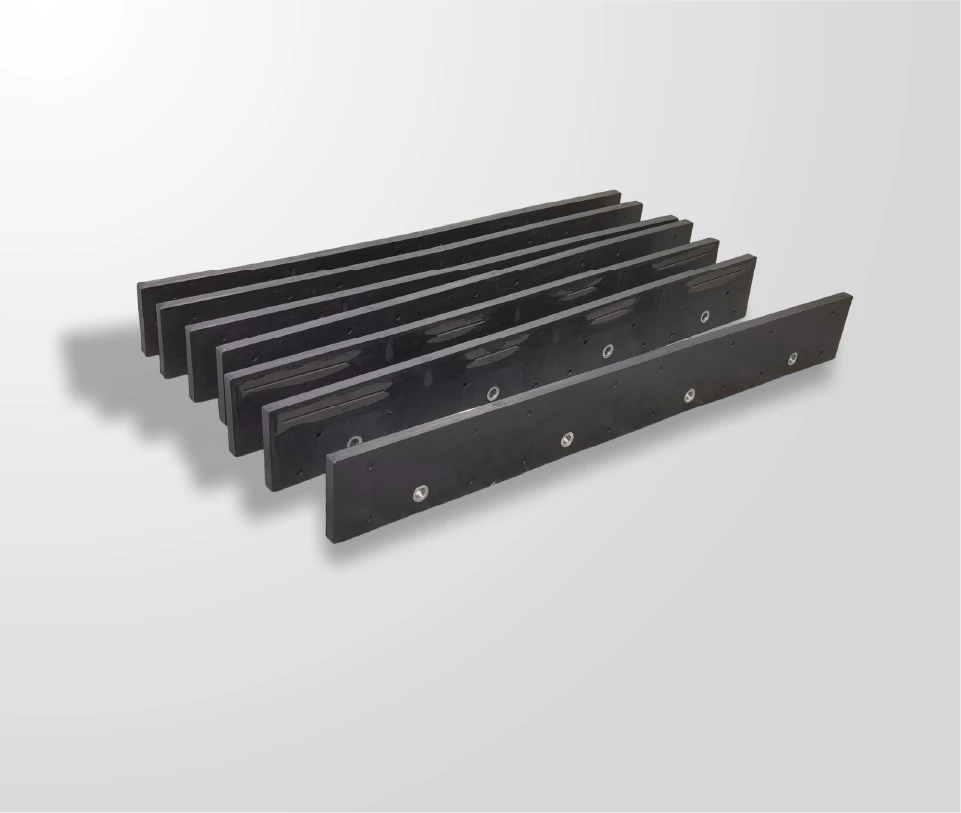 JOMA style rubber-flex bladeA flex edge that clears the lot without marking it.View products
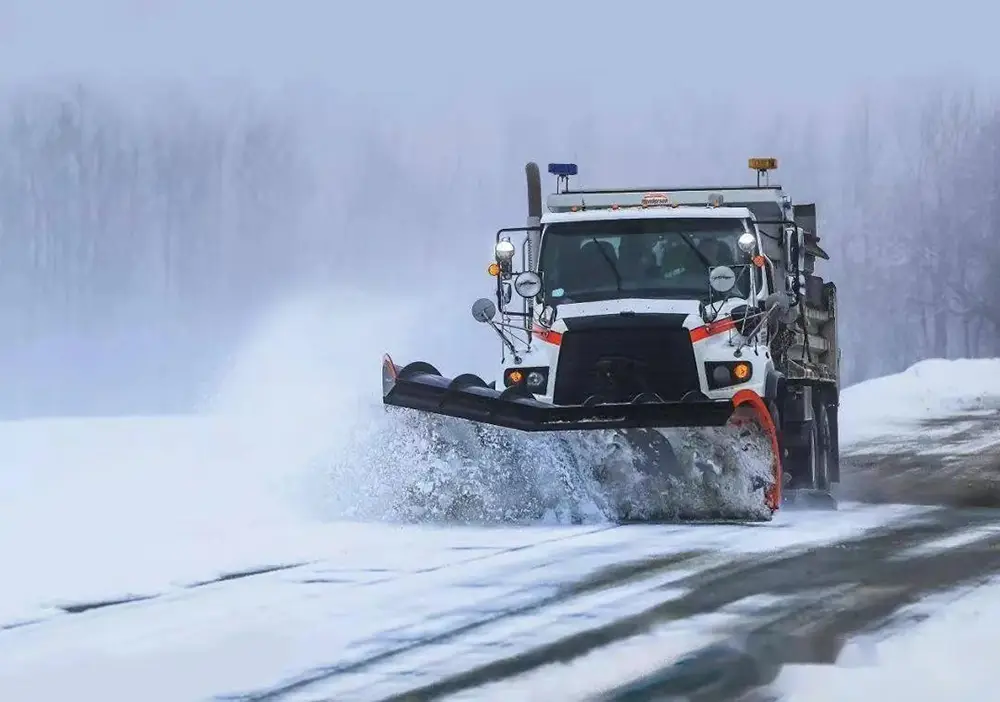 Snow plow blade selection guideSurface, position, size, geometry, material — in order.Read the guide
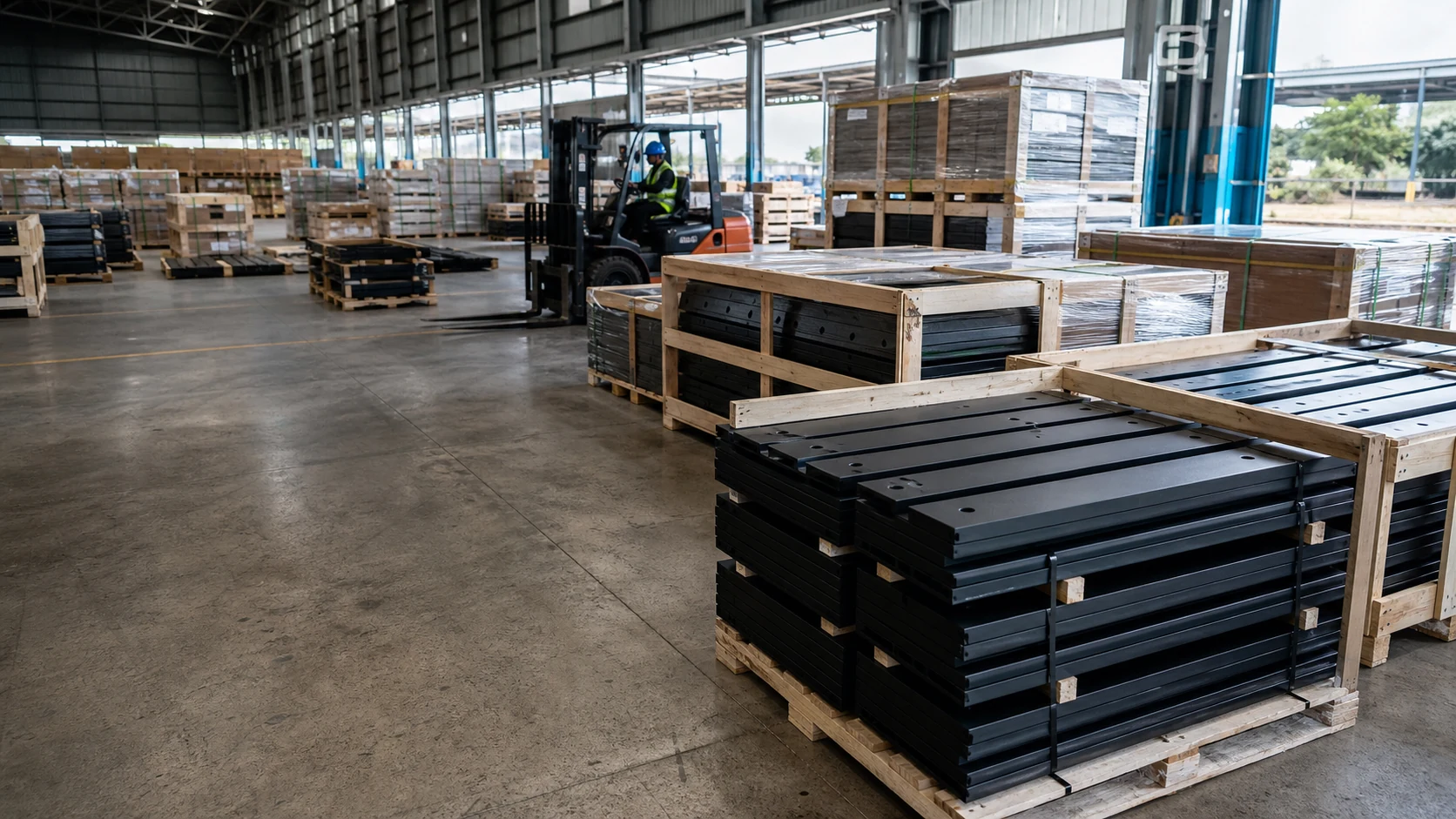 Sourcing carbide wear parts guideTechnical pack, supplier choice, landed cost and supply risk.Read the guide
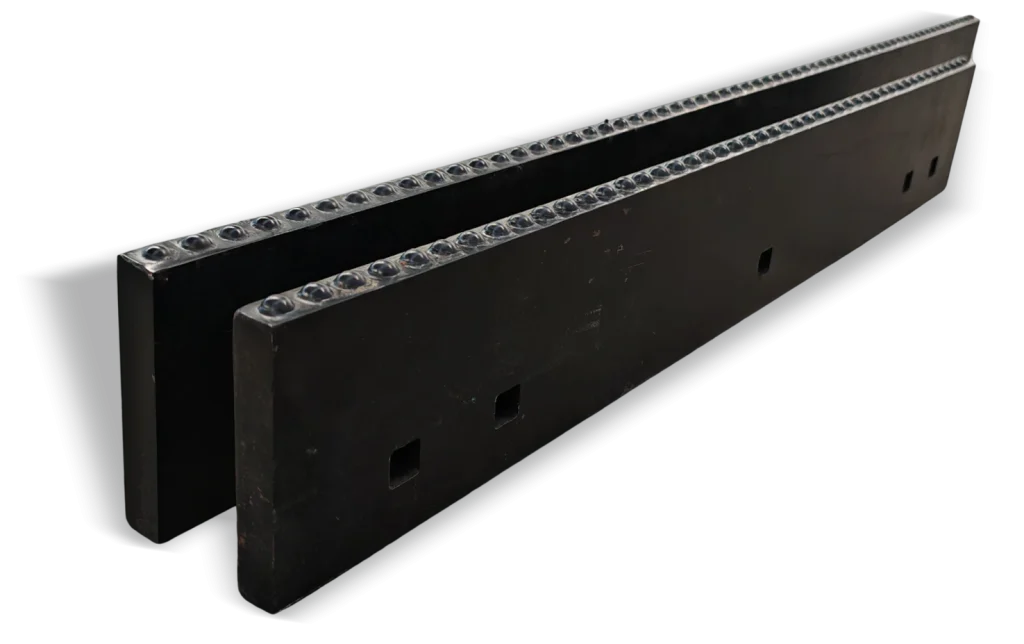 Packed ice edge guideWhy a standard edge skates, and how to make one bite.Read the guide
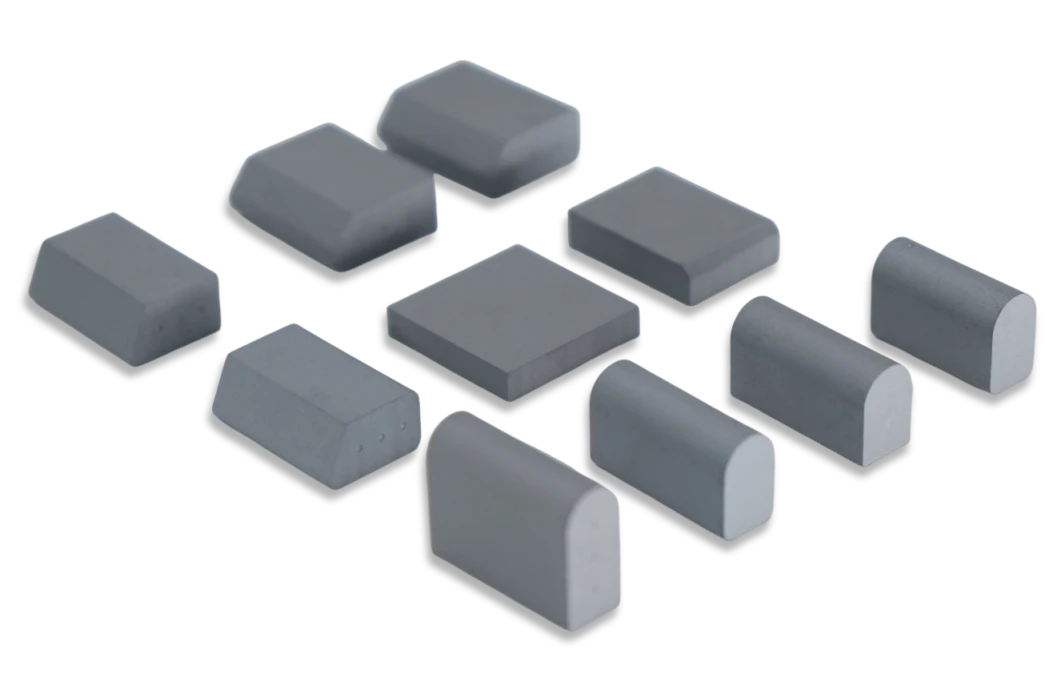 Carbide insert selection and replacement guideGrade, spacing, fitment and the replace-or-re-plate call.Read the guide
 Talk to the quote deskSend the machine, the surface and a rough quantity.Request a quote