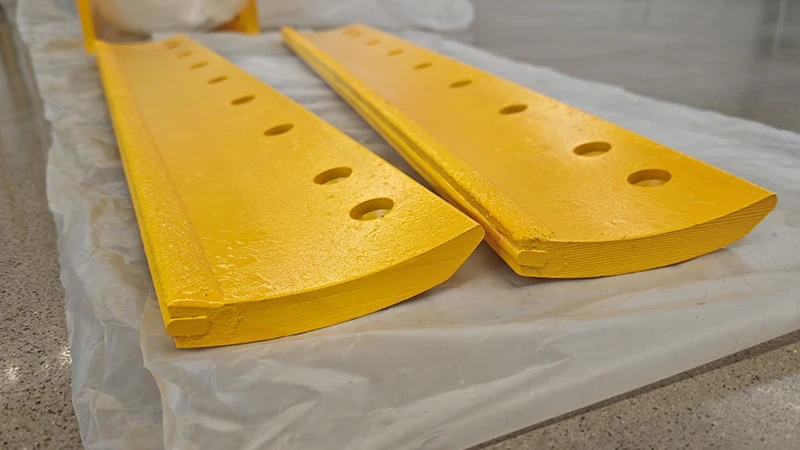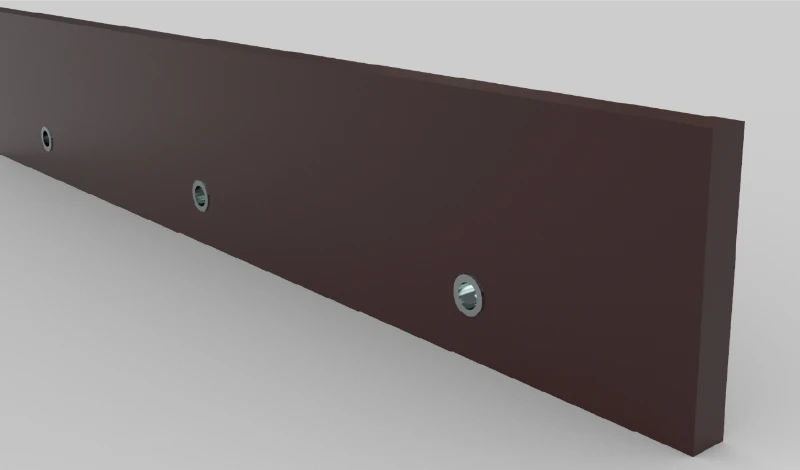
Meyer plows sit on a long tail of older trucks, which means the blade in front of you has often been repaired, re-drilled or fitted with a third-party edge at some point. The brand narrows the search; the mounting face on your blade decides it.
We drill Meyer-pattern edges in carbide, steel and poly, and we confirm the hole pattern from a drawing or a photograph rather than from the model year.
- MountBlade pattern measured directly on the plow
- EdgesCarbide, steel and poly, drilled to your pattern
- Thickness3/8 to 1/2 in typical for light-truck Meyer blades
- HardwareCountersunk or plain, matched to the original hole type
- CoverageStraight blades and older hoist-style mounts
- TraceabilityBatch reference on every carton, back to the sintering run
Why Meyer fitment is usually a repair question
Meyer plows are common on second and third-owner trucks, and that history shows up at the mounting face.
- Re-drilled blades. A repair can shift the hole pattern by a few millimetres, enough that a catalogue edge will not start.
- Mixed hardware. Countersunk and plain bolts are not interchangeable, and older mounts often carry a mix.
- Thin carriers. A tired carrier flexes and the edge works loose, which reads as a material failure but is not one.
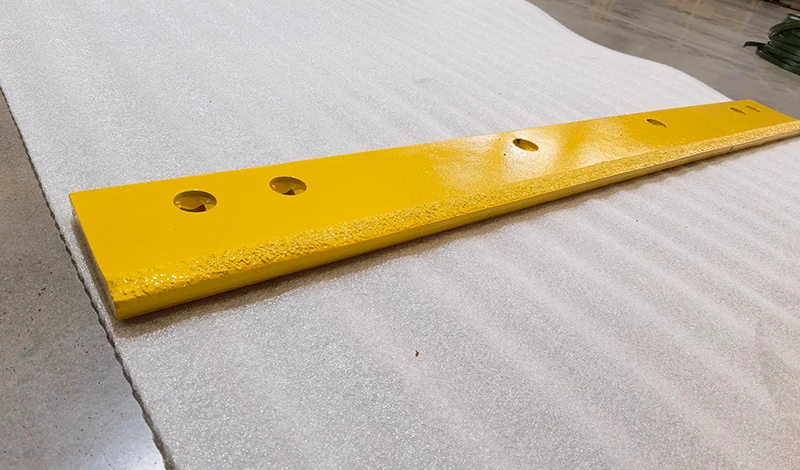
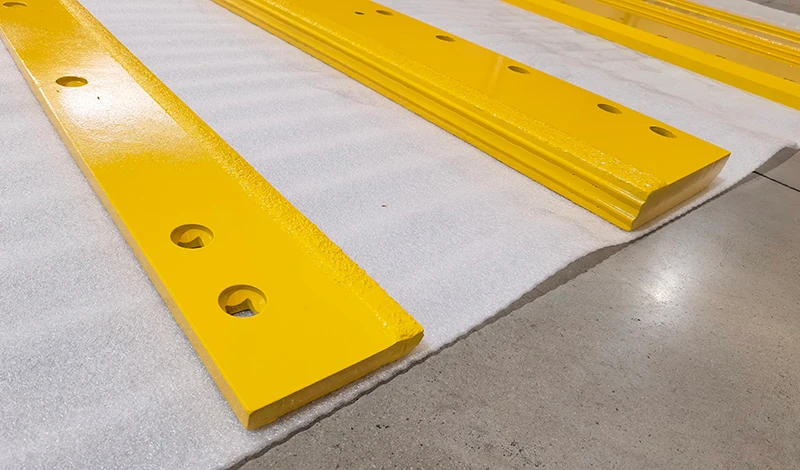
Choosing the edge
| Your route | What we recommend | Reason |
|---|---|---|
| Abrasive pavement, long hours | Carbide edge | Fewer changeouts where impact risk is low |
| Driveways and decorative surfaces | Poly or rubber-flex | Protects the surface being cleared |
| Gravel and mixed routes | Steel edge | Impact tolerance and predictable wear |
| Unknown pattern | Photograph and measure first | One wrong batch costs more than a photo |
Pattern check
Send the blade width, edge height, thickness and centre-to-centre hole spacing across three holes, with a photo of the mount. On a repaired plow the photo is the only reliable record.
Fitment
Edges are produced to your blade. Send a drawing, a part number or a photograph with measurements, and we confirm bolt spacing, hole diameter and edge angle before production. Western and Fisher patterns follow the same process.
What we can supply on a Meyer blade
Carbide, steel and poly edges for straight blades and older hoist-style mounts, drilled to your blade. Meyer plows are common on second and third-owner trucks, so a large share of what we quote here is a replacement against a mount that has already been repaired once.
What to send before we confirm a Meyer pattern
Photograph first, then the four measurements: blade width at the mounting face, edge height, thickness and hole spacing. On a repaired blade the photograph is not optional — re-drilling can shift the pattern by a few millimetres, which is enough that a catalogue edge will not start.
How we confirm the pattern
We map the holes from the photograph or from a rubbing of the mounting face, send the drawing back, and cut only after approval. If the hardware is countersunk and the replacement is plain-drilled, we say so before quoting rather than after delivery.
When we will not quote a direct replacement
- The mount was re-drilled and no original pattern can be recovered from the blade.
- The carrier is thin enough to flex; the edge will work loose and the fault will look like a material failure.
- You want a thickness increase beyond what the trip mechanism was built for.
Most relevant next steps
Before you ask for a price
Send these five items and the quotation comes back size-confirmed rather than indicative: machine make and model, blade width measured across the mounting face, edge height and thickness as fitted, hole spacing centre-to-centre across three consecutive holes, and a photograph of the mount with a tape measure in frame.
Send the measurements, confirm fit Upload a drawing instead
Brand fitment confirmation checklist
Work through the list before you send anything: machine make, model and year; blade width at the mounting face; edge height and thickness as fitted; hole spacing across three consecutive holes; countersunk or plain hardware; and whether the mount has been repaired, welded or re-drilled.
Download the fitment checklist (CSV)
Independent aftermarket supply
SENTHAI is an independent manufacturer of tungsten carbide and steel wear parts. We are not affiliated with Meyer, and we do not claim OEM equivalence or model-by-model compatibility. Every Meyer-pattern edge we quote is produced to dimensions measured on your blade, confirmed against a drawing before cutting.
Do you make Meyer-pattern edges?
Yes, in carbide, steel and poly, drilled to your blade pattern. Send the four measurements plus a photo of the mount and we confirm before cutting.
My plow was repaired — will a catalogue edge fit?
Possibly not. A repair can shift the hole pattern, so measure the blade rather than trusting the model year, and send a photo of the mount.
Carbide or steel on a light Meyer blade?
Carbide where the surface is abrasive and the hours are long. Steel on gravel and mixed routes, where impact chips a hard edge.