A skid steer carries the lightest mount in the fleet, so the edge has to be sized to the attachment rather than to the route. A blade that is too heavy survives the season and wears out the trip springs; the right thickness scrapes full depth and still saves the mount.
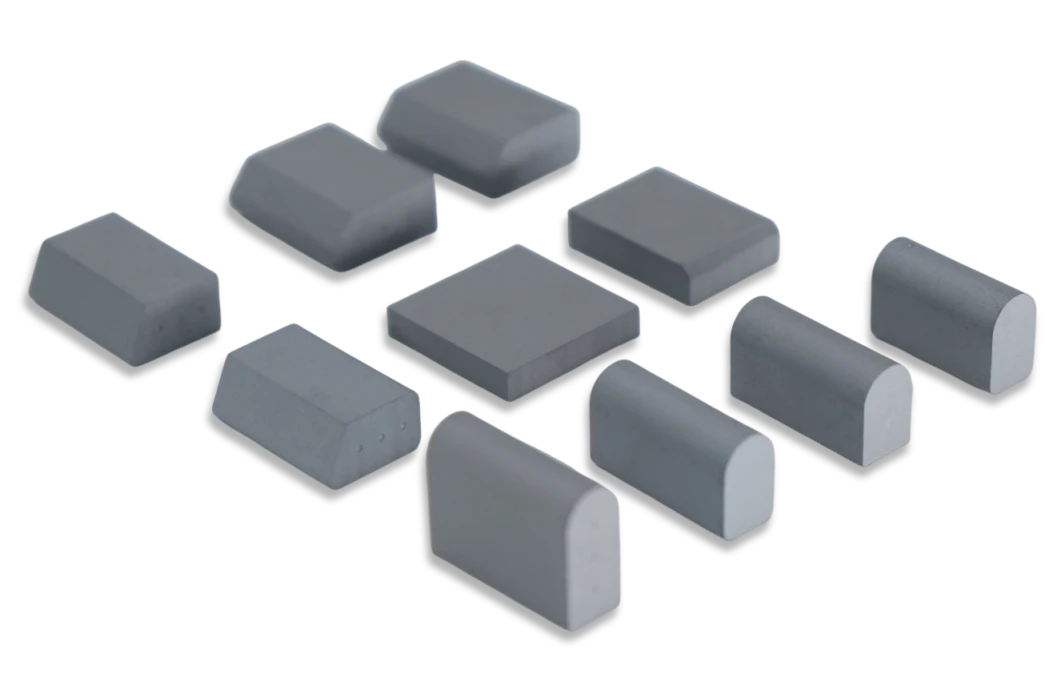
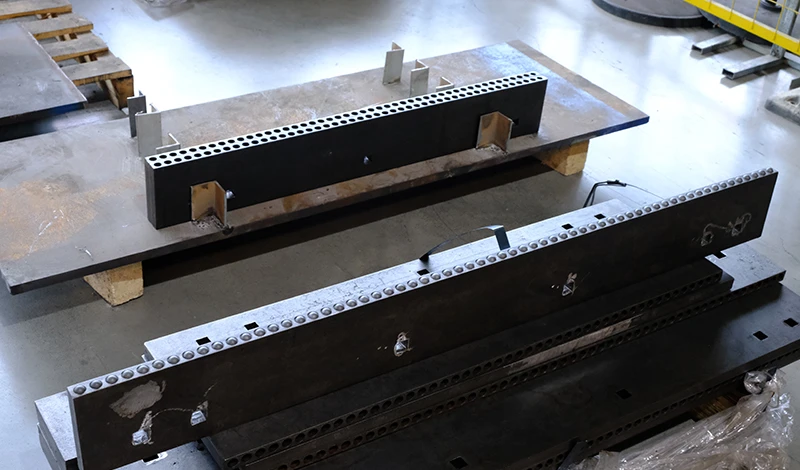
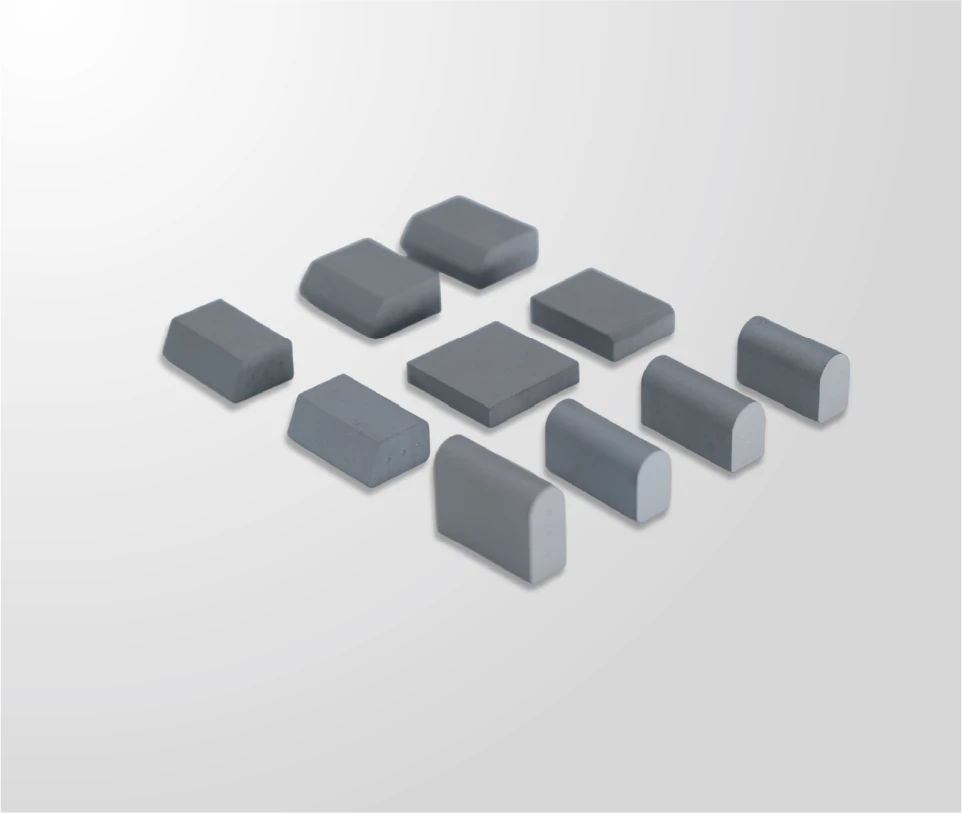
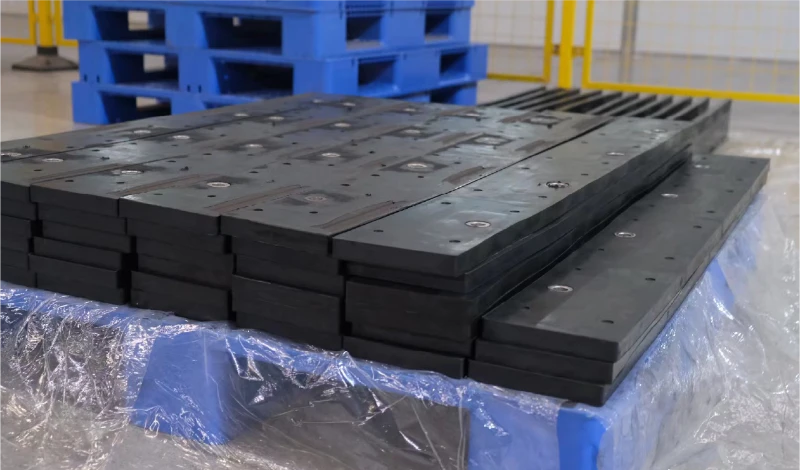
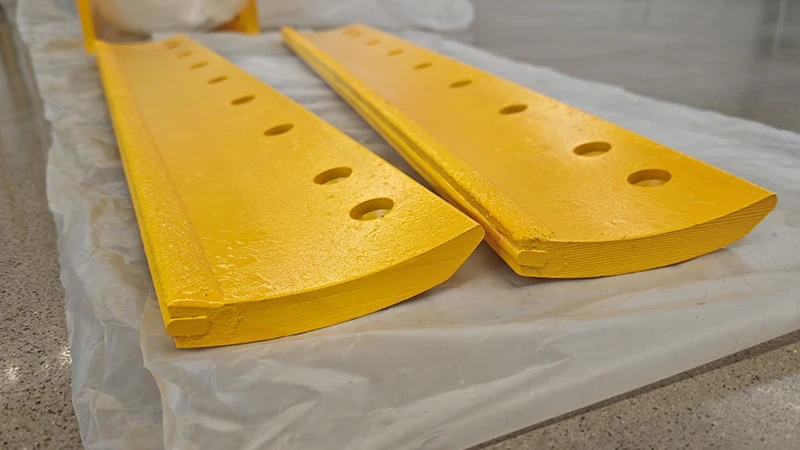
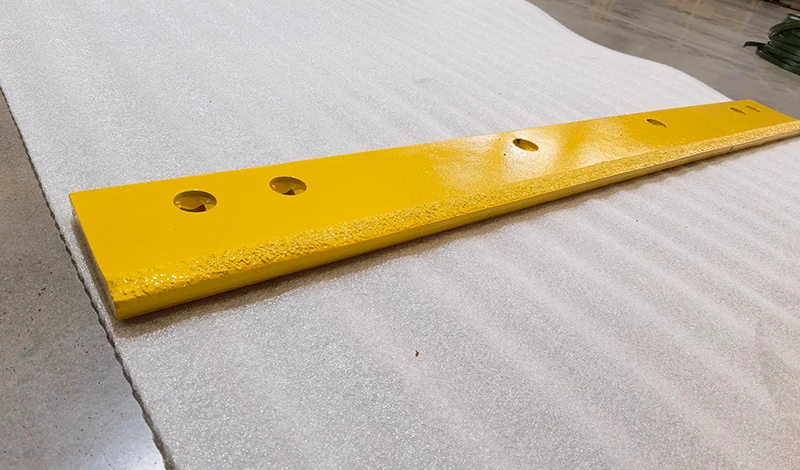
We build skid steer blades and edges to your carriage, in carbide, replaceable inserts or rubber-flex segments, with the hole pattern confirmed against a drawing or a photo before anything is cut.
- MountQuick-attach plate or dedicated frame, matched to your carriage
- Edge heights4–6 in common on skid steer blades; confirmed against the mounting face
- Thickness3/8–1/2 in, set by the attachment’s rated load rather than the route
- Bolt patternsDrilled to your mount; countersunk or plain hardware
- Insert gradesAbrasion-led for lots and aged asphalt, impact-led for mixed yards
- TraceabilityBatch reference on every carton, back to the sintering run
Where a skid steer edge earns its price
The machine is light and turns on the spot, which is hard on edges and harder on the way they wear. In practice that produces three patterns:
- One end wears faster. Angled working and tight turns load the outer end, so rotation is the cheapest life extension available.
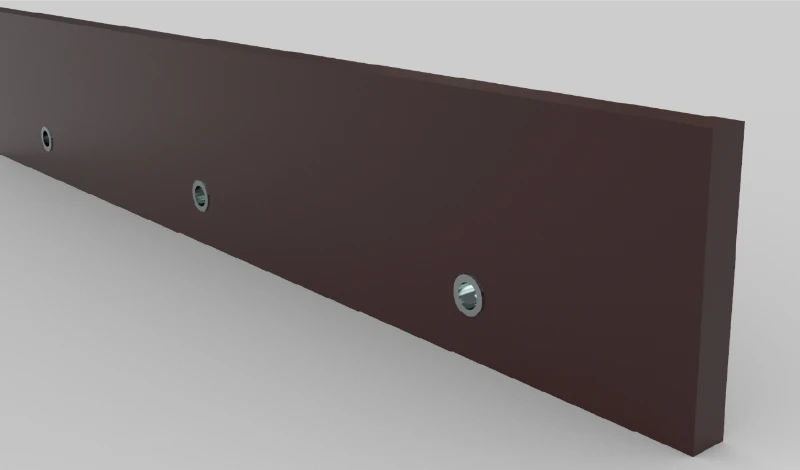
- Bolt heads disappear before the face does. Recessed or countersunk hardware is what keeps the edge seated.
- A heavy edge breaks the mount. On a light machine the failure moves from the edge to the trip mechanism.
Choosing the edge for the machine you actually run
| Your situation | What we recommend | Reason |
|---|---|---|
| Sealed lots and driveways, long hours | Carbide edge | Abrasion life where impact risk is low |
| Depot that services edges in place | Replaceable carbide inserts | Carrier stays, only the wear material is consumed |
| Pavers, decorative paving, quiet operation | Rubber-flex segments | Protects the surface the machine works on |
| Gravel, shoulders, mixed yards | Steel edge | Impact tolerance beats hardness on unpaved surfaces |
Mount rating
On a skid steer, over-thickness is the most common cause of trip and carrier failure. Send the rated load with the measurements and we will tell you when a lighter edge is the better answer.
Fitment
Blades are produced to your quick-attach plate or dedicated frame. Send a drawing, a part number or a photograph of the mounting with measurements, and we confirm bolt spacing, hole diameter and edge angle before production. The same mount is also used on grader and loader blades, if you run mixed machines.
Working conditions on a skid steer
A skid steer turns on the spot and works close to walls, doors and kerbs, so the edge meets more lateral load and more impact than a truck edge on the same lot. The machine is light, which means the attachment rating — not the route — usually sets the thickness ceiling.
Tell us whether the blade is used for back-dragging. Back-drag puts load on the carrier in the opposite direction to normal plowing, and a pattern that is fine in forward work can work loose.
Material choice on a light machine
Carbide on sealed lots and long hours. Steel where the machine also handles gravel, yards or debris, because impact chips a hard edge on a light mount faster than abrasion wears it. Rubber-flex where the surface is pavers or decorative paving, and scraping power is secondary.
Purchasing conditions
Trial quantities are confirmed per profile rather than from a minimum order table. The quick-attach plate and the blade pattern are recorded separately: the blade may fit the machine and not the carriage you actually own. Production is scheduled before cutting, and export packing is planned against your container.
Most relevant next steps
- Snow plow parts — what we make and what we do not
- Cutting edge size chart
- Bolt pattern recording method
What to send, and what comes back
Send the plate photograph as well as the blade measurements — the two are separate questions and both decide whether the blade arrives usable.
Quotation inputs
Machine make and model, blade width across the mounting face, edge height and thickness as fitted, hole spacing centre-to-centre across three consecutive holes, quantity for the season, and a photograph of the mount with a tape measure in frame.
Send sizes, confirm fit Upload a drawing instead
What edge size does a skid steer snow blade take?
Typically 4 to 6 inches high and 3/8 to 1/2 inch thick on a 5 to 8 foot blade, but the attachment decides it. Measure the mounting face and the hole spacing rather than quoting a model list.
Can I fit a heavier edge for longer life?
Only within the attachment’s rated load. The extra weight sits at the end of a light machine and loads the trip mechanism, so the edge survives and the attachment does not.
Carbide or steel on a skid steer?
Carbide where the surface is abrasive and the hours are long. Steel where the machine works gravel, shoulders or mixed routes, because a chipped carbide edge costs more than a steel edge that wears predictably.
Do you match the quick-attach plate as well as the blade?
Yes. The plate style and pin spacing are recorded separately from the blade mount, which is why we ask for a photo of the plate with a tape measure in frame.