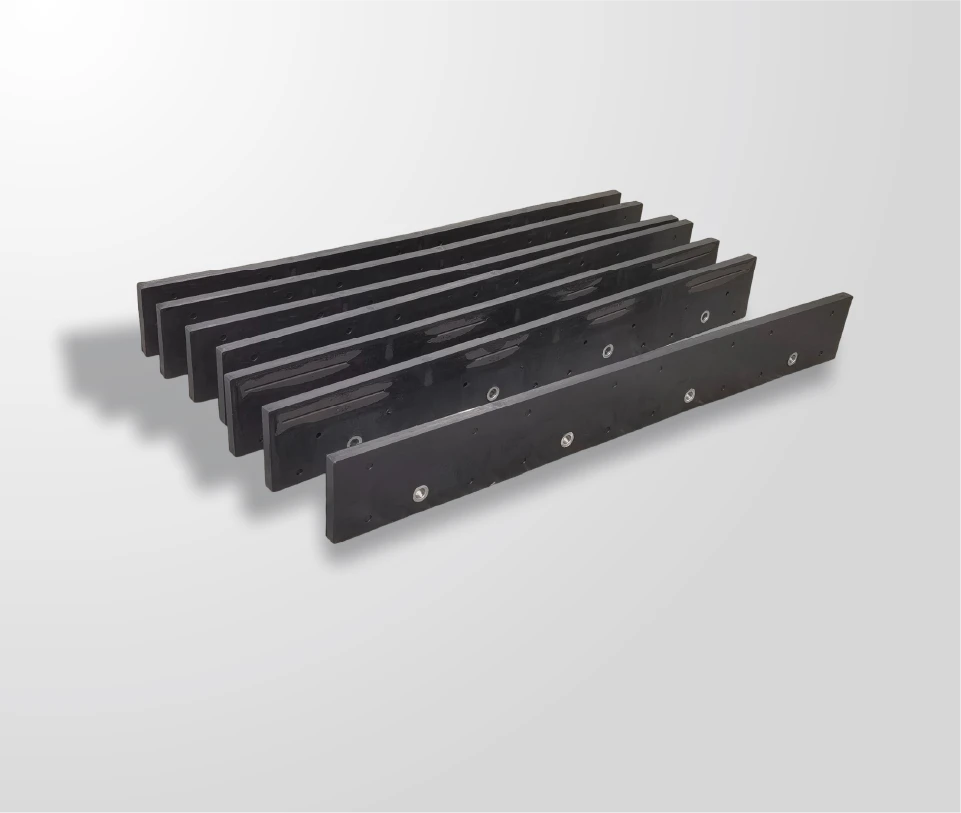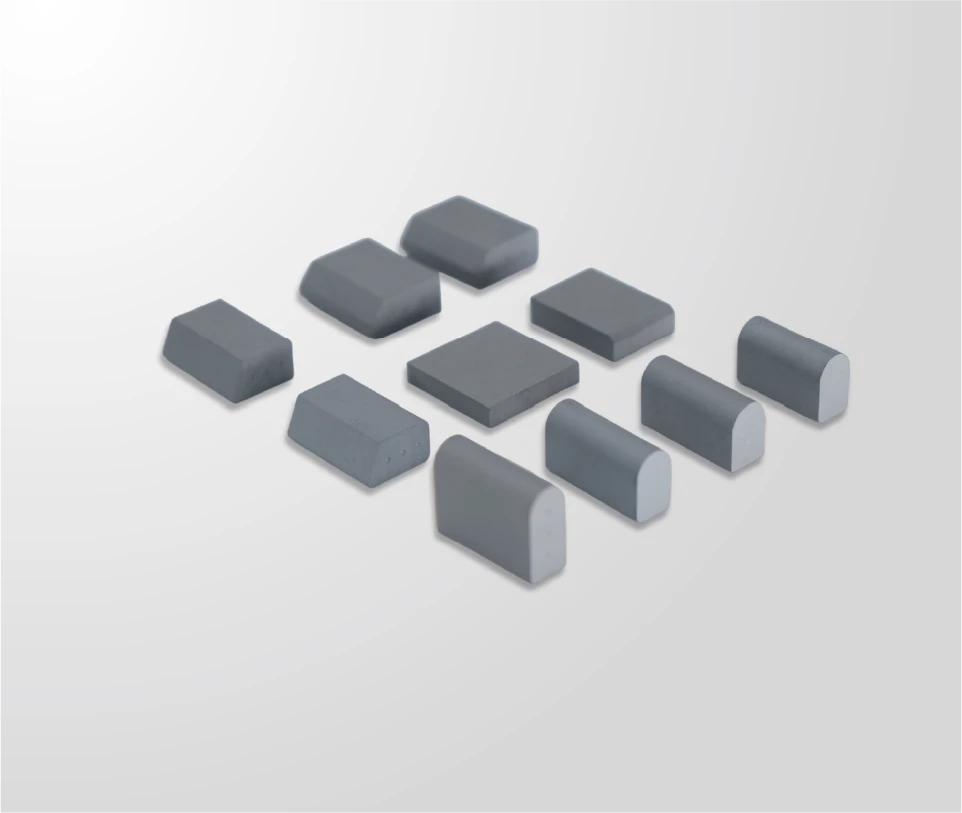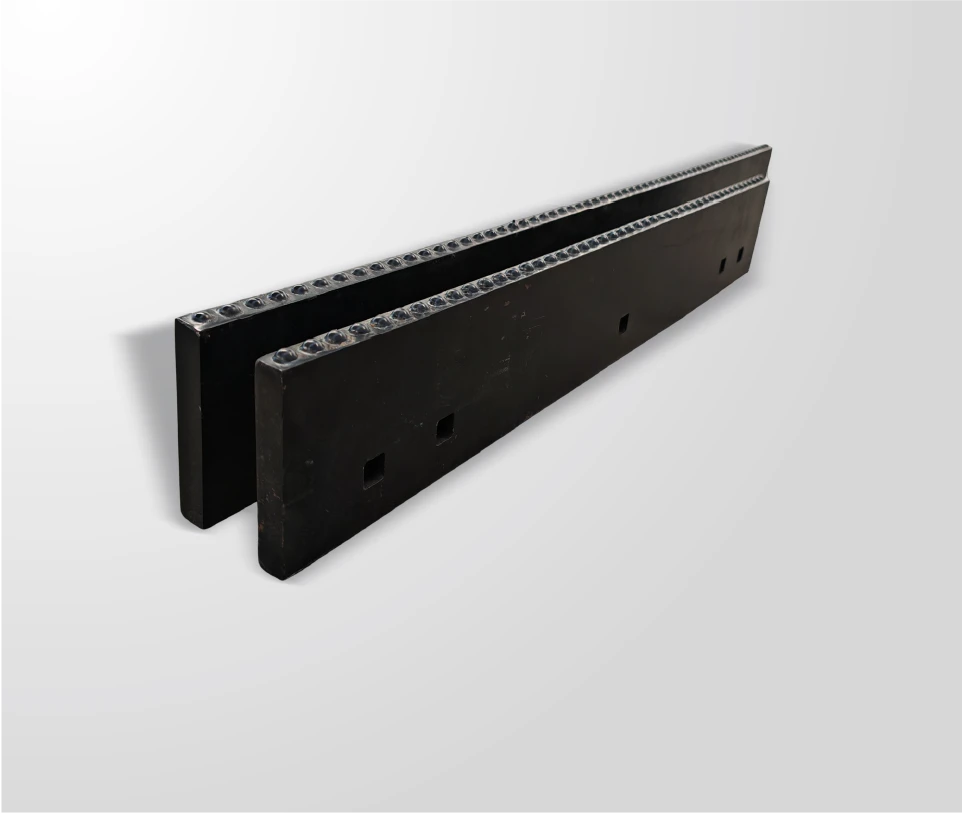
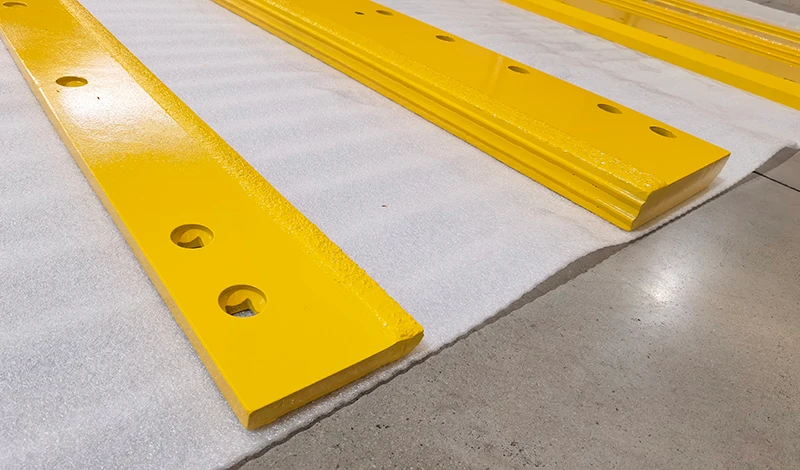
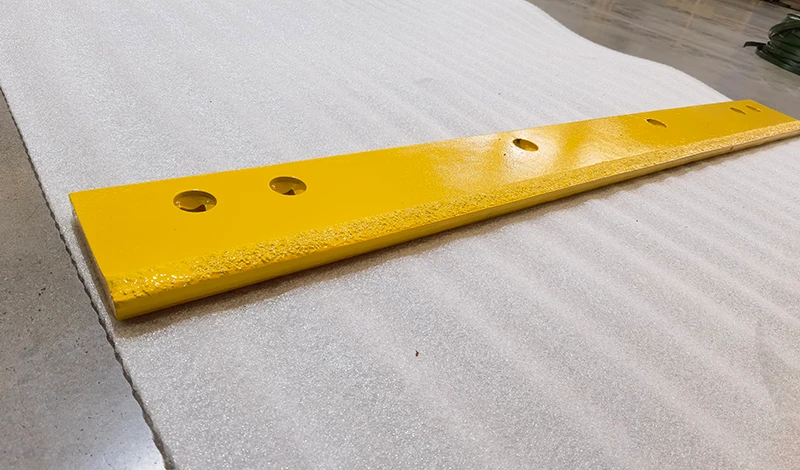
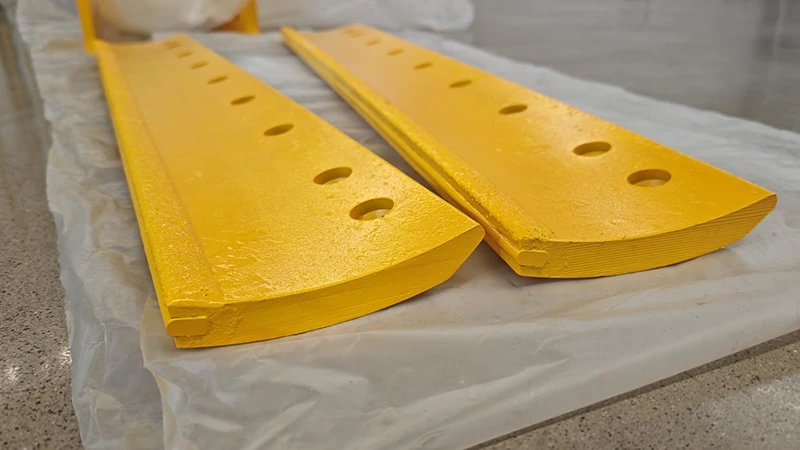
This is the edge most highway and municipal fleets standardise on. Tungsten carbide inserts are welded into a steel carrier, which gives you abrasion resistance where the road meets the blade and the structural strength to take the load of a full plow.
Because the carbide holds its shape, the scraping angle you set at the start of the season is still the scraping angle in February. That single fact is what removes unplanned changeouts from the schedule.
- ConstructionTungsten carbide inserts joined to a steel carrier
- Insert gradesSelected by surface: abrasion-led or impact-led
- HardwareRecessed bolt holes protect heads from road debris
- Lengths and thicknessStandard profiles plus custom lengths and thicknesses to drawing
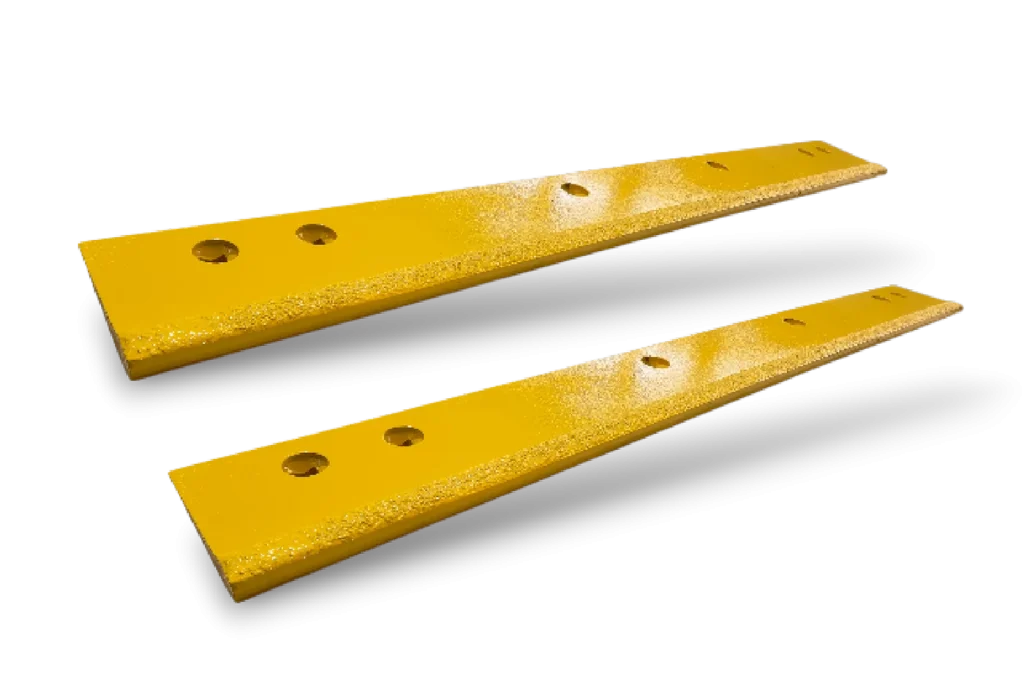
- Bolt patternsMatched to truck, grader or loader mounting
- TraceabilityBatch reference on every carton, back to the sintering run
Built for the way a route actually wears an edge
Blades rarely wear evenly. The centre takes the traffic, the outer sections hit the crown and the shoulders, and a single hidden manhole can chip a hard grade that would otherwise last a season. Our edge design accounts for that in three ways:
- Grade selection per application. Clean asphalt is not the same as chip seal, and neither is the same as a mixed gravel route.
- Recessed hardware. Bolt heads sit below the wear plane so they are not shaved off by the road surface.
- Annealed carriers. Heat treatment after welding trades a little hardness for toughness so the blade survives an unexpected impact.
Choosing a grade
| Your route | What we recommend | Reason |
|---|---|---|
| Clean asphalt and concrete | Abrasion-led grade | Maximum hardness where impact risk is low |
| Chip seal and surface dressing | Abrasion-led grade, closer insert spacing | Highly abrasive aggregate wears the edge fastest |
| Mixed paved and gravel | Impact-led grade | Tougher carbide absorbs stone impact without chipping |
| Packed ice and hardpack | Aggressive pack-ice layout | Geometry has to bite before the grade matters |
| Unknown or variable | Trial sample first | One season of field data settles the question |
Carbide rewards correct setup. Too little pressure and the edge skips; too much and you are grinding carbide into the surface for no benefit. Ask us for the setup notes that suit your machine.
Fitment
Blades are produced to your mounting pattern for trucks, graders, loaders and skid steers. Send a drawing, a part number or a photograph of the mounting with measurements, and we will confirm the bolt spacing, hole diameter and edge angle before production.
How much longer will a carbide blade last than my current steel edge?
On abrasive winter roads, expect ten to twenty times the service life of a standard steel edge. The multiple depends on the surface, the load on the blade and how the route is worked, which is why we quote a range.
Can the blade be re-edged instead of replaced?
Carbide edges are not usually re-edged. When the carbide is worn through, the blade is at the end of its life — which is why a replaceable-insert design may suit fleets that want to service edges rather than replace them.
Do you produce blades for graders and loaders as well as trucks?
Yes. Graders, loaders and skid steers are all covered, with the carrier, thickness and bolt pattern matched to the machine.
What is the standard lead time?
Repeat orders against an archived specification move fastest. New profiles add tooling and first-article approval. We confirm a production schedule with every quotation.