When a highway plow comes off the road mid-storm because the steel edge is gone to bolts, the failure is not “parts were cheap.” The failure is changeout cadence: bay time, overtime, and a truck that is not clearing lane kilometres while the crew fights frozen hardware.
A carbide snow plow blade uses tungsten carbide inserts in a steel carrier so abrasive asphalt and chip seal grind the inserts instead of eating the full steel face as quickly. For US and Canadian highway fleets that already change steel more than once per major storm cycle, carbide usually reduces labour and downtime; soft gravel, decorative lots, and very short seasons still need a different edge. Spec length, thickness, bolt pattern, and insert layout before you order a season set.
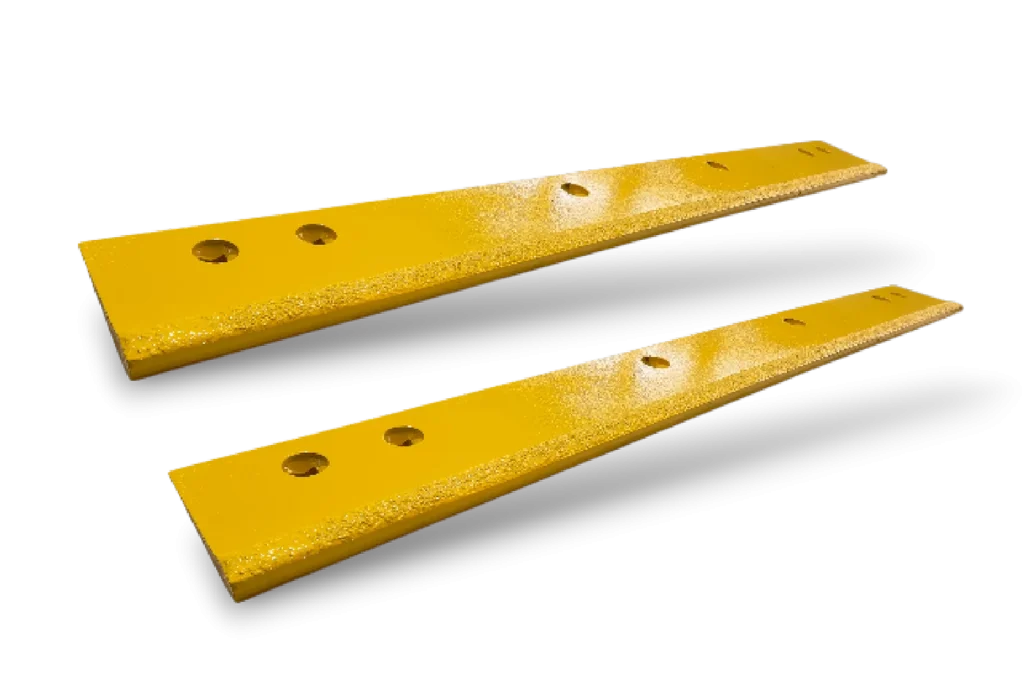
What a carbide snow plow blade is and is not
Carbide is a wear system, not a permanent moldboard. Inserts take abrasion; the steel body still carries bending loads and bolt shear. A carbide edge is not a rubber-flex JOMA-style system, not a quiet poly lot edge, and not an OEM Western, Fisher, BOSS, or Meyer branded part unless your drawing and purchase order say so in aftermarket “style” language. Plants such as SENTHAI’s Rayong factory (US-invested manufacturer in Thailand, per company website) sell by drawing and insert layout.
If your team still needs a material overview before buying, read the snow plow blade selection guide first. This article is the highway procurement path: when to switch, what to measure, and how to RFQ without wrong-grade deliveries.
Public process claims on the SENTHAI site include in-house powder metallurgy through pressing, sintering, brazing/welding, and related finishing, plus ISO 9001 and ISO 14001 certified processes (per company website; certificate numbers are not published on the public pages). Use those statements as supplier narrative, not as third-party audit proof in a tender unless you have the certificates on file.
When carbide beats steel on asphalt and chip seal
Asphalt treated with abrasives and chip seal that sheds aggregate both polish steel edges fast. Carbide insert hardness resists that grit, so intervals stretch when down-pressure and attack angle are sane. Steel still wins when the surface is soft, when crews need a sacrificial edge over frequent curb and manhole strikes, or when the season is so short that carbide never pays back the premium.
Practical decision rule used by many fleet engineers: if steel changeouts already interrupt storm sequences on the same route class, model carbide on labour and downtime, not on unit price alone. Road-weather operations pressure is why that labour line matters; see FHWA Road Weather Management for the broader ops framing you can attach to a finance brief.
Airport aprons and some industrial yards add foreign-object concerns when inserts fracture. Those sites need inspection routines and sometimes different geometries; do not copy a highway carbide spec onto an apron without a local review.
Service life range and what drives the multiple
Vendor life multiples, including ranges published on manufacturer marketing pages, assume defined surfaces and operating habits. Your real multiple moves with aggregate hardness, plow angle, travel speed with the blade down, chloride corrosion on hardware, and whether a cover blade or runner shares wear. Record lane kilometres between changeouts for at least one steel-heavy season before you write a carbide payback into a bid.
Tungsten supply risk is a procurement footnote, not a daily ops metric. USGS publishes tungsten market notes that help explain why carbide pricing and lead discussions can move with raw-material markets; keep them in the sourcing file: USGS tungsten statistics.
Spec checklist: length, thickness, bolt pattern, grade
| Spec field | What to capture | Common miss |
|---|---|---|
| Length / sections | Overall and per-section lengths for V or wings | Ordering V wings as straight bars |
| Thickness and height | Carrier plate and insert exposure | Ignoring cover-system stack height |
| Bolt pattern | Hole diameter, centres, end distances | Elongated holes on worn moldboards |
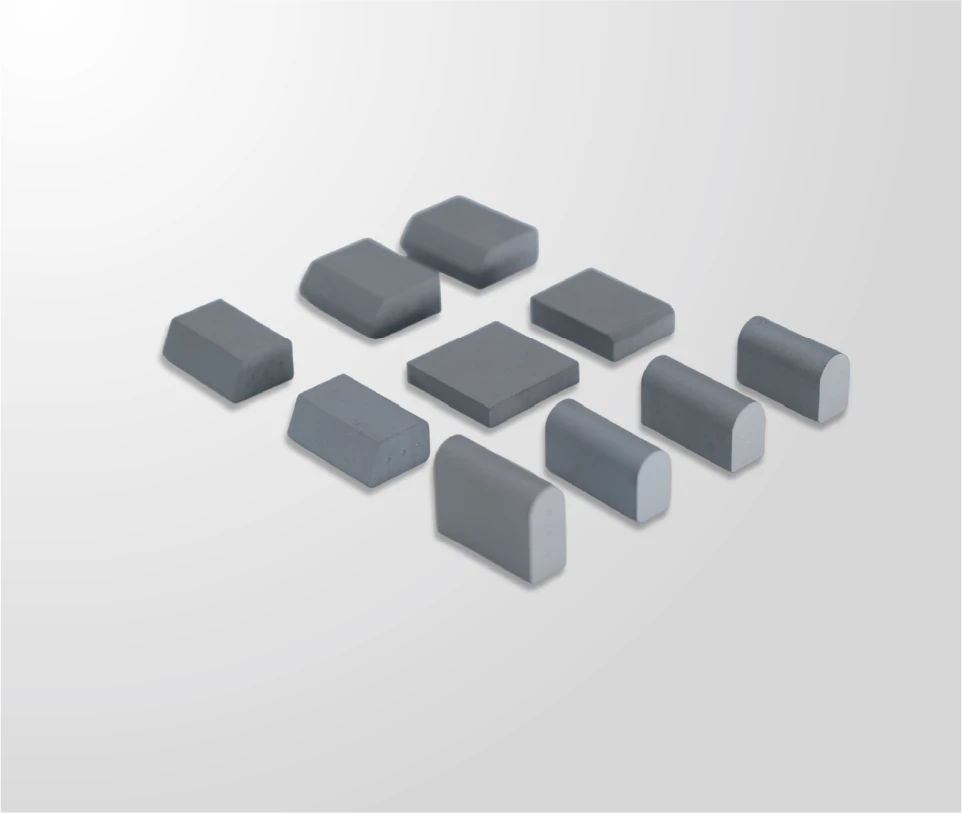
| Carbide layout | Continuous vs segmented; insert size | PO line that only says “carbide” |
| Hardware | Bolt grade, length, anti-seize policy | Reusing salt-welded fasteners |
| Revision control | Drawing number and date | Mixing old and new hole charts in one order |
Gap versus thin catalogue pages: include fitment brand-model notes, wear-interval fields for cost-per-mile math, installation torque/hardware lists, and batch/trace fields on the same RFQ—not as afterthoughts.
Browse family geometry on the carbide snow plow blade product page, then lock numbers on the RFQ. Insert-level detail belongs in the carbide insert selection and replacement guide when you replace inserts instead of full carriers.
Trial batch vs season order quantities
First-time highway buyers should trial one plow bay or one route class before a full winter buy. MOQ is set by product family and packing configuration (per company wholesale terms), discuss trial versus production packing with sales rather than inventing a piece count for the blog. After the trial, scale only to moldboards that share the same drawing revision.
Container packing for import buyers needs dunnage plans and clear marks. Long one-piece edges may force sectional designs when container length or yard handling is limited. Ask for packing photos on the first shipment and file batch IDs with warranty records. Factory context: inside our factory.
How to read a worn steel edge before switching
Photograph the wear bevel in daylight, measure remaining height at left, centre, and right stations, and note scalloping at joints. Uniform abrasive wear supports a carbide trial. Deep impact gouges from lids or frozen windrows mean fix operator angle and speed first; carbide will not repair technique. Elongated bolt holes mean repair moldboard holes or bushings before hanging any new edge, carbide or steel.
If the steel edge shows blueing or heavy heat tinting, check for dry scrape on bare pavement at high down-pressure. That operating mode destroys inserts as well as steel. Keep a simple wear card in the cab so night crews record the same three stations every time.
Packing and container notes for import buyers
Rust prevention, edge protection, and carton marks tied to drawing revisions are how you prove which revision arrived when a bay claims “wrong holes.” For US and Canadian snow-belt depots buying from overseas plants, align Incoterms, broker contacts, and seasonal dock capacity before peak winter criteria in your region (see NWS products for timing context).
Canadian buyers should keep Transport Canada and provincial winter ops expectations in the same folder as the edge drawings when the fleet crosses jurisdictions: Transport Canada.
RFQ fields that prevent wrong-grade deliveries
- Drawing or measured hole chart with a ruler in the photo
- Route surface class: asphalt, chip seal, gravel, apron, or lot
- Cover blade or carbide-and-cover preference
- Destination, broker, and preferred Incoterms
- Private-label marks if the edge ships into a distributor brand
- Named contact for written fit confirmation before production release
- Warranty ship-to and batch ID marking requirements
Send the pack to [email protected]. Distributor-scale programmes should also review wholesale snow plow blades for distributors and the sourcing carbide wear parts guide.
Carbide-and-cover setups competitors pitch—and what to verify
SERP pages for carbide snow plow blade often sell a “carbide and cover” stack: inserts take abrasion while a steel or sacrificial cover shields the braze line and slows rounding on chip seal. That geometry can help highway fleets, but only when hole pattern, cover thickness, and insert projection match the moldboard you already run.
Ask for a worn-edge photo with a scale, the cover part number or drawing revision, and whether the cover is meant to be replaced on a different cadence than the carbide carrier. Without those fields, a cover kit becomes another SKU that does not bolt up mid-storm.
FAQ
What is a carbide snow plow blade?
A carbide snow plow blade is a steel carrier edge with tungsten carbide inserts along the wear face. It scrapes snow and ice like steel but resists abrasion longer on asphalt and chip seal. It remains a wear part: impact, wrong angle, and soft shoulders can still chip inserts.
When should a highway fleet switch from steel to carbide?
Switch when measured changeout labour and storm downtime cost more than the carbide price premium on your routes. Clean asphalt and abrasive chip seal usually favour carbide; soft gravel or very short seasons may keep steel economic.
How long do carbide snow plow blades last versus steel?
Life is route-dependent. Marketing multiples are directional only. Measure remaining edge height against lane kilometres for one steel season before writing a life factor into a bid or council packet.
What specifications belong on a carbide blade RFQ?
Include plow model or moldboard drawing, overall length, thickness, hole pattern and centre distances, carbide layout, cover preference, packing marks, and destination terms. Photos of the worn edge help catch angle and hole-wear issues.
Are carbide blades right for every municipal route?
No. Aggressive carbide on decorative pavement or soft gravel can mark surfaces or dig. Match material to surface and downtime cost instead of forcing one depot SKU onto every plow.
Request Specs or a Quote
If you have a worn edge on the bench, take a photo and measure its length, thickness and bolt pattern. Send that, the plow make/model and a line about your route surfaces to [email protected]. We usually reply within one working day in English or Chinese, and the quote confirms lead time and MOQ for that product family; this page deliberately avoids quoting generic production weeks.
Related Articles
- Carbide snow plow blade products
- Snow plow blade selection guide
- Carbide insert selection and replacement
- Sourcing carbide wear parts guide