Retail search results push poly cutting edges because they photograph clean and promise “pavement safe.” Field limits appear later: abrasive asphalt eats plastic, cold snaps embrittle some formulations, and contractors discover they bid a highway scrape with a lot edge.
UHMW and poly snow plow cutting edges excel on pavement-sensitive property work; they are not automatic substitutes for carbide on abrasive chip seal and high-duty municipal routes. Hybrid covers over carbide exist for some systems. Avoid Amazon-style listings that omit thickness, temperature ratings, and hole charts. Use the decision matrix below, then RFQ carbide when downtime and abrasion dominate, via carbide snow plow blade and the selection guide.
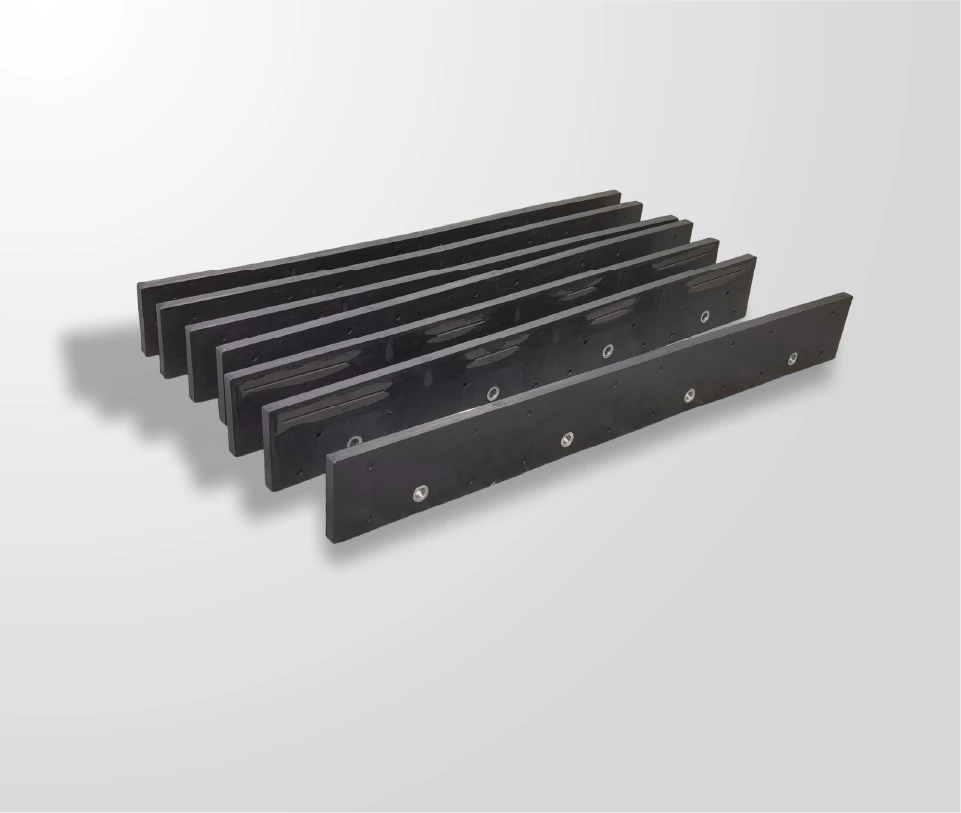
Why poly ranks high in retail SERP
Poly edges protect surfaces and quiet lots.
Polyurethane and UHMW cutting edges reduce marking and noise; they wear faster on abrasive asphalt and skate on severe ice.
Retail SERPs push poly as durable and surface-safe versus steel and rubber. That holds for decorative lots and night noise rules. Municipal abrasive routes and glaze ice still need carbide or steel in the rack. Hybrid poly covers over carbide are a different RFQ than poly-only strips. Do not treat Amazon-style listings as highway specs.
Buyers should demand thickness and durometer callouts plus bolt charts—poly SKUs without geometry still mismatch mouldboards.
Poly listings win clicks with low unit price and “won’t scratch” claims. Those claims can be true on the right surface and false on abrasive city connectors. Commercial buyers should treat retail SERP popularity as a demand signal, not as engineering validation.
Pavement-friendly scraping behaviour
Plastic edges conform and reduce marking on decorative concrete and many lots. That is why HOA and retail contracts love them. They still leave snow film and can smear rather than cut hardpack. Pair property trucks with a hardpack plan if ice bond is common.
| Surface / duty | Poly / UHMW | Carbide |
|---|---|---|
| Decorative lot / stamped concrete | Usually preferred | Often too aggressive |
| Abrasive asphalt / chip seal | Wears fast | Usually preferred |
| Hardpack ice | Often skates | Kit geometry may be needed |
| Soft gravel | Variable | Chipping risk, evaluate |
Abrasive asphalt and poly wear rates
Grit acts like sandpaper on plastic. Contractors who move a poly-equipped truck from a courtyard onto an abrasive arterial can burn a season’s edge inventory in weeks. Measure remaining height; do not wait for bolt contact.
Cold temperature brittleness checks
Ask suppliers for temperature guidance on the specific formulation. Some plastics chip or crack when struck cold. Store bars indoors when practical and inspect after deep freezes. Weather timing context: NWS.
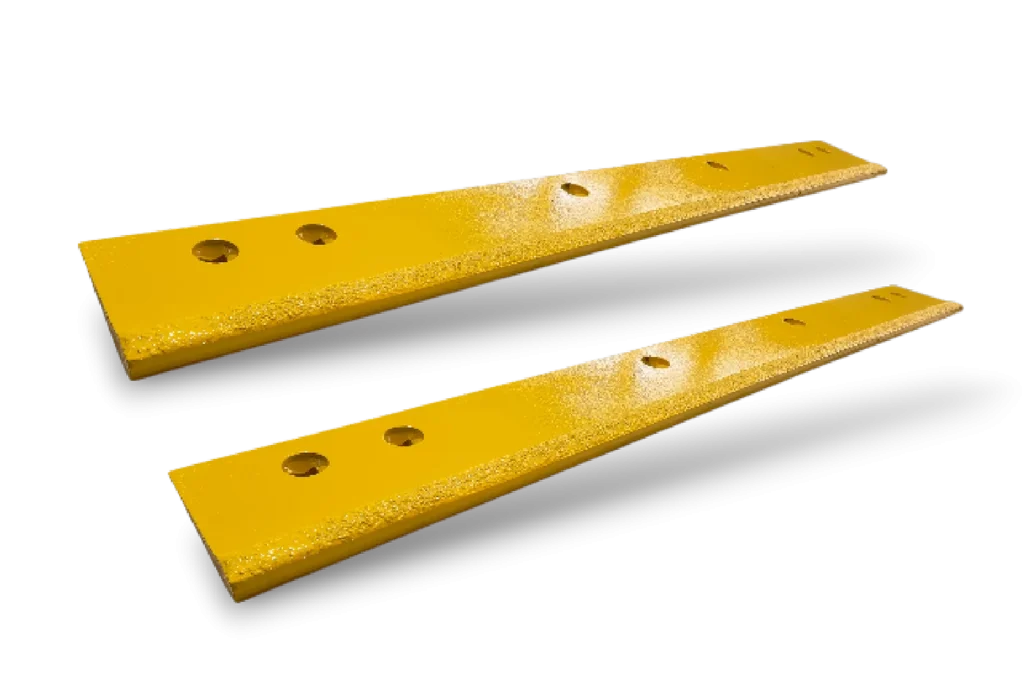
Hybrid poly cover over carbide
Some systems run a sacrificial cover over carbide to balance scrape and surface care. Spec the stack height and bolt length explicitly. Hybrid is not a free “best of both” without drawing control.
Procurement mistakes from Amazon-style listings
- No hole chart or “fits most” claims
- No thickness or temperature notes
- No batch or revision control for fleet reorders
- Mixing consumer photos with municipal duty assumptions
For brand-plow aftermarket language discipline, see aftermarket vs OEM edges.
When SENTHAI carbide is the better RFQ
RFQ carbide when abrasive routes already force repeated poly or steel changeouts, when bay labour dominates, and when the truck class can load the edge. SENTHAI positions as a US-invested Rayong manufacturer with non-China tungsten sourcing stated per company website, use that as supplier narrative in sourcing files, not as a substitute for your own trial data. Factory tour: our factory.
Decision matrix
Score surface sensitivity, abrasion, hardpack frequency, truck class, and downtime cost. If abrasion and downtime win, carbide; if surface complaints win, poly/rubber; if both win on different nights, split the fleet SKUs. Ops framing: FHWA. Canadian contractors: Transport Canada. Material market footnote: USGS tungsten. Evaluation culture example: ND DOT.
Contractor RFQ notes when poly and carbide share a yard
Many US and Canadian contractors keep poly edges for HOA nights and carbide for abrasive connectors. The failure mode is not owning both, it is hanging the wrong one because the truck was staged without a tag. Label moldboards by surface class, kit fasteners for each stack height, and brief night leads that “whatever is clean in the rack” is not a materials policy.
When writing an RFQ that covers both families, separate line items for poly/UHMW geometry and carbide geometry. Include temperature storage notes for plastics and batch-mark expectations for carbide. If a hybrid cover-over-carbide stack is in scope, state bolt lengths explicitly so receiving does not reuse short hardware from a single-layer bar.
Price comparisons should include changeout labour on abrasive nights, not only stickers on retail-style listings. A poly edge that looks inexpensive online can dominate the week’s overtime once grit appears. Keep a simple log: surface, edge family, hours, remaining height. That log becomes the decision matrix for next season’s mix instead of another argument at the counter.
SENTHAI’s carbide offering is relevant when abrasion and downtime dominate and the truck can load the edge; property-marking risk still points to rubber-flex or poly. Ask [email protected] with photos and surface notes rather than a one-line “send carbide.” Lead time and MOQ stay confirmed with the quotation by product family.
FAQ
Is poly always safer for pavement than carbide?
Poly is usually gentler on decorative surfaces, but “safer” depends on contract priorities. On abrasive asphalt, poly can fail quickly and create downtime that carbide would have avoided.
When does UHMW fail in the field?
Common failure modes include rapid abrasive wear on grit-heavy asphalt, cold-impact cracking on some formulations, and skating on hardpack when the edge cannot bite.
Should I buy poly edges from retail listings for a municipal fleet?
Only if the listing provides controlled dimensions, hole charts, and temperature guidance, and the duty matches property-style scrape. Most municipal abrasive routes need a proper RFQ.
Can poly and carbide be combined?
Some systems use a poly or cover layer over carbide. Spec stack height and fasteners carefully; hybrids need drawing control like any other edge.
Request Specs or a Quote
Write to [email protected] with your route surfaces, the plow make and model, and the edge length, thickness and bolt pattern; pictures of a worn edge help if dimensions are uncertain. The usual turnaround for a reply is one working day, in English or Chinese. Each quotation confirms MOQ and lead time for the product family concerned, so no generic production timeline is shown on this page.