The complaint ticket after a retail plow night is rarely “you left two inches of snow.” It is the black scrape across a stamped courtyard and the email from the property manager with photos. Contractors who answer with a steel edge solve the ice and create a coating claim.
A rubber snow plow blade protects decorative and coated lots by putting an elastomer face between steel and pavement. Choose thickness and declared hardness for curb strikes; use rubber-flex with carbide segments when you still need bite on light ice. Plain rubber alone is a poor primary edge for packed-ice municipal arterials.
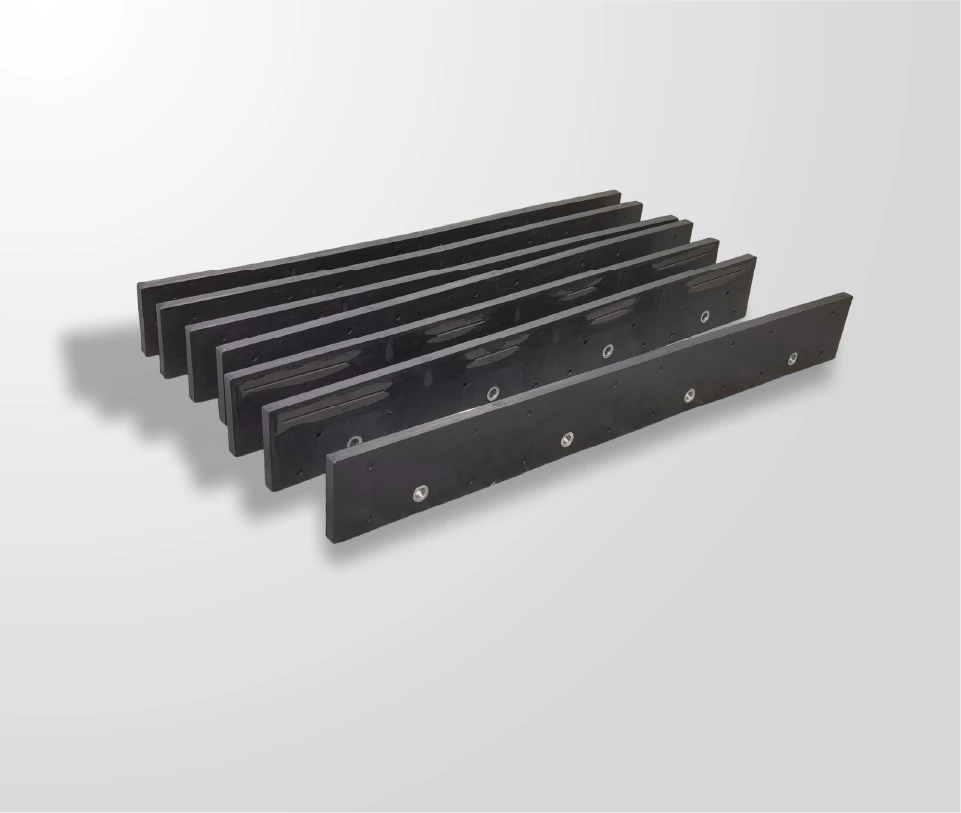
Where rubber edges protect stamped and coated lots
Stamped concrete, decorative overlays, epoxy coatings, and soft asphalt in loading courts take damage from steel. Rubber reduces marking and noise for overnight retail work. Confirm chemical compatibility if the lot uses aggressive de-icers that can swell some elastomers, ask the supplier for compound notes rather than guessing from colour.
HOA boards often write “do not damage decorative pavement” into the scope without naming an edge material. Translate that clause into rubber or rubber-flex on the equipment list, and document the ice-night alternate so you are not accused of under-clearing when glaze forms.
Rubber-only vs rubber-flex with carbide segments
Rubber-only strips are simple and cheap to stage across a contractor fleet. Rubber-flex (JOMA-style aftermarket language) adds carbide segments in a flexible rubber matrix so the edge can follow pavement and still cut light pack. Complexity and parts cost rise; pavement friendliness stays higher than a full rigid carbide bar.
Geometry and ordering: JOMA-style blade. Field notes: JOMA flex blade guide. For broader material mapping, keep the selection guide in the same folder as your lot contracts.
PSI hardness and thickness cues for buyers
Aftermarket rubber edges are often sold with tensile strength callouts on specialty supplier pages. Treat those numbers as comparative within one supplier’s datasheet family. Always record thickness, height, hole layout, and whether a backup plate is included. Harder compounds generally last longer on grit but transmit more shock into curbs, balance for your lot mix rather than chasing the highest number on a brochure.
| Lot type | Edge bias | Watch-outs |
|---|---|---|
| Stamped / coated courtyard | Rubber or rubber-flex | Coating warranty language |
| Retail night plow | Rubber or poly | Noise ordinances |
| Mixed lot + apron ice | Rubber-flex + carbide spare | Skating on glaze |
| Municipal arterial | Usually not rubber-only | Abrasion and ice bite |
| Loading dock with soft asphalt | Rubber with backup plate | Extrusion between bolts |
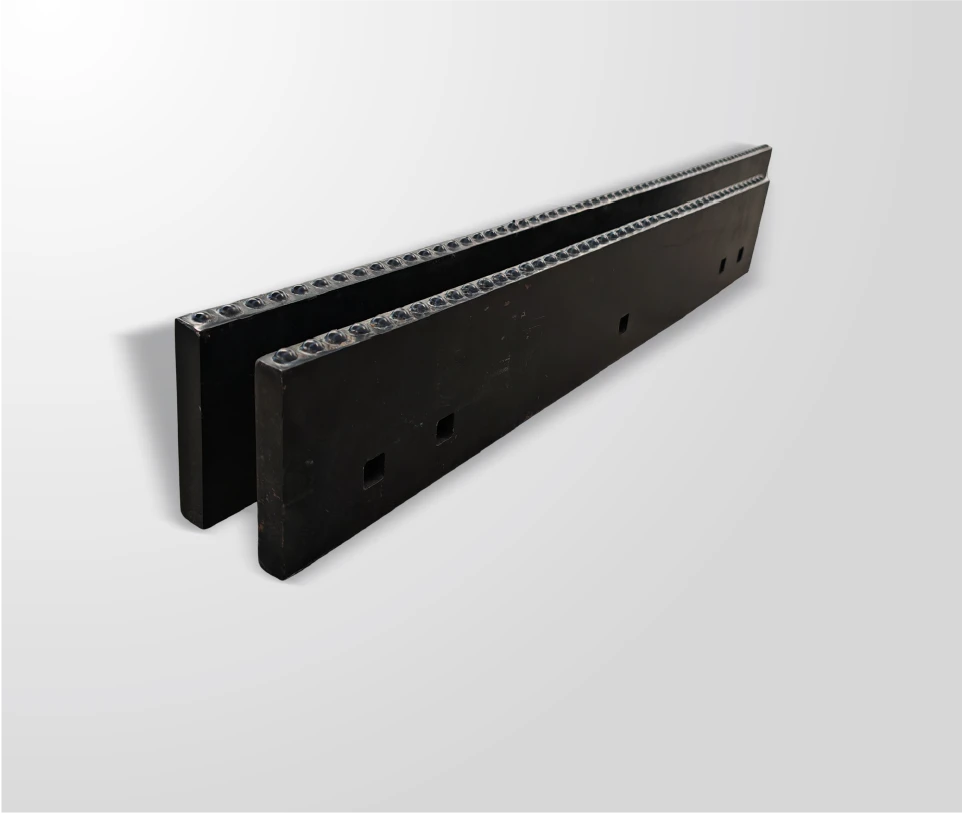
Noise and curb strike behaviour
Rubber quiets the scrape and forgives light curb kisses better than carbide. It can still tear if the operator hooks a curb at speed or if bolts are loose. Train drivers to float pressure on lot perimeters; compound choice cannot replace technique. Night crews should carry a spare section when the book includes tight islands and decorative curbs.
When rubber skates on packed ice
Bonded ice needs either carbide teeth/segments or a dedicated packed-ice approach. If contracts include freeze–thaw crusts, stage a packed ice carbide kit or a carbide carrier for those nights instead of forcing rubber harder into the surface. Skating is a physics problem, not a motivation problem for the driver.
Watch regional winter products so you know when glaze nights are likely: National Weather Service. Ops framing for storm staffing still benefits from FHWA Road Weather Management notes even on private lots that sit beside public roads.
Mounting hardware and backup plates
Rubber without a backup plate can extrude between bolts under down-pressure. Specify plate thickness, bolt grade, length, and torque sequence. Replace stretched or salt-welded bolts; reusing hardware is a common cause of mid-shift edge walk. Keep a small hardware kit in each truck that runs rubber as the primary lot edge.
Strengthen what product SERPs skip: torque/hardware notes, backup plates, JOMA-style versus plain rubber comparison, and a short buyer FAQ—plus a comparison table when PSI and thickness vary by lot type.
Comparing JOMA-style systems to plain rubber strip
Plain strip: lowest complexity, least ice bite, easiest training story. JOMA-style rubber-flex: higher parts cost, better scrape on light pack, still pavement-friendlier than a full rigid carbide bar. Inventory both only if your book mixes HOA courtyards and light commercial ice. Otherwise pick one primary family and one spare family, and write the swap rule into the night checklist.
Procurement checklist for HOA and retail lots
- Surface map with photos and coating notes
- Noise window and resident complaint history
- Current edge length, thickness, and hole chart
- Backup plate requirement yes/no
- Ice-night alternate edge plan and who authorises the swap
- Spare quantity per truck and depot min/max
- Photo pack standards for warranty or supplier claims
Email measurements and photos to [email protected] when you want a rubber-flex or carbide spare quote matched to the same bolt pattern.
Contract language when HOAs ban carbide on decorative pavement
Many retail and HOA scopes quietly forbid carbide because a rubber snow plow blade is assumed to protect stamped or coated lots. That ban does not remove the need to clear packed corners or curb lines—crews still need hardness, thickness, and backup-plate notes so rubber does not fold or tear on the first hard curb strike.
Put surface-protection language and ice-exception language in the same purchase note. If hardpack appears, document a temporary aggressive kit or chemical assist instead of silently swapping a carbide edge onto a decorative lot.
FAQ
Where should I use a rubber snow plow blade?
Use rubber edges on stamped, coated, or decorative pavement, HOA lots, and retail plazas where steel would scar coatings. Pair with backup plates. Change strategy when packed ice dominates the shift.
What hardness should buyers ask for on rubber edges?
Suppliers often quote tensile or hardness bands on datasheets. Ask for the declared rating, thickness, and durometer on the quote, and do not mix PSI marketing language with Shore hardness without the supplier sheet.
Will rubber blades clear packed ice?
Plain rubber often skates on bonded ice. Rubber-flex systems with carbide segments or a separate aggressive kit handle ice better. Keep a carbide plan for freeze–thaw crusts.
How does JOMA-style differ from a plain rubber strip?
JOMA-style aftermarket language usually means a rubber-flex carrier that holds carbide segments, giving flex for pavement protection plus scrape bite. A plain rubber strip has no carbide segments.
What belongs on an HOA or retail lot procurement checklist?
Surface type, noise rules, curb strike frequency, backup plate requirement, bolt pattern, spare policy for ice nights, and a photo pack of the current edge.
Request Specs or a Quote
The fastest quotes start with clear inputs: plow make/model, edge length, thickness, bolt pattern, and notes on route surfaces, or photos of the worn edge if that is easier. Send them to [email protected]. Expect a reply within about one working day in English or Chinese. Lead time and MOQ vary by product family and are confirmed with the quotation; this page carries no blanket production week count.