Buyers do not need to run a vacuum furnace, but they do need language to ask whether density uniformity and sinter-run traceability exist when inserts chip early or wear unevenly across a single bar. Troubleshooting supplier quality starts with questions, not metallurgy lectures.
A vacuum sintered carbide plow insert should show denser, more uniform material than a poorly controlled sinter; buyers can ask process questions without pretending to run a metallurgy lab.
Vacuum sintering is a controlled-atmosphere densification step used in carbide production; for snow plow buyers it matters because density uniformity and sinter integrity influence insert toughness and wear consistency. Ask plants how sinter runs are identified, what buyer-visible cues they provide, and how failures from poor sinter are handled. Tie questions to selection guide and carbide snow plow blade RFQs, and to factory narrative at our factory.
Why density uniformity matters
Vacuum sintering densifies carbide inserts.
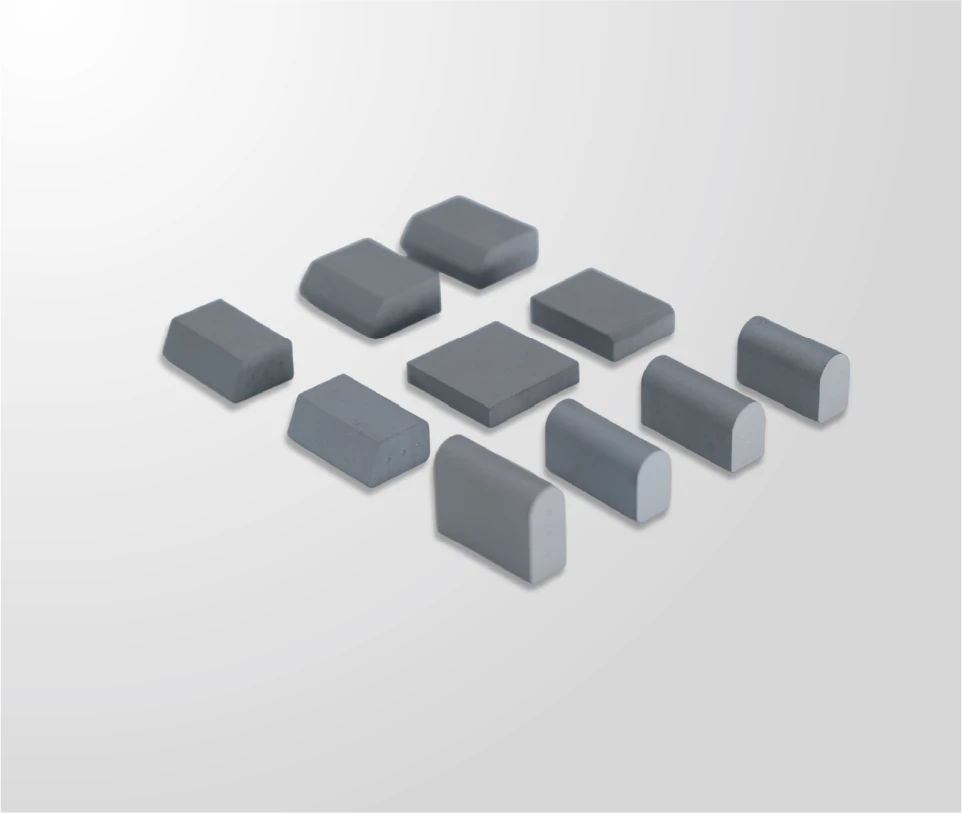
A vacuum sintered carbide plow insert is a wear tip densified under vacuum then brazed into the edge—uniformity affects chip resistance.
Buyer-visible cues include consistent insert appearance, sound braze seats, and batch linkage to sinter runs. Poor sinter shows up as early fracture. Ask plants process questions without inventing certificate numbers. Audit checklists and RFQ sinter questions belong in procurement files.
Linking field chip photos to sinter-run IDs is the warranty step overviews omit—put retention samples in the receiving SOP.
Non-uniform density can create tips that chip early or polish unevenly. You will not measure density in the bay; you will see scatter in wear photos across supposedly identical tips. That scatter is a prompt to ask sinter-run questions.
| Buyer question | Why ask | Good answer traits |
|---|---|---|
| How are sinter runs identified? | Traceability | Run IDs linkable to batches |
| What density/porosity checks exist? | Process control | Documented checks, not vibes |
| How are out-of-family tips handled? | Escape prevention | Quarantine rules |
| Can packing marks trace to sinter? | Claims | Clear mark legend |
Buyer-visible quality cues
Consistent tip geometry, clean seating, and batch marks are visible. Microstructure is not. Use visible cues plus documentation requests. QC page: quality control.
Questions to ask plants
- Vacuum vs other sinter routes for the quoted grade family
- Sinter-run ID on certificates or packing
- Retention method QA (braze/weld) after sinter
- Sample retention policy
SENTHAI describes in-house powder metallurgy through sintering and finishing in Rayong per company website, ask for the documentation your program requires rather than treating homepage copy as a lab report.
Traceability to sinter runs
Batch marks that stop at “packing date” are weaker than marks that can link to sinter runs. Put the expectation in the RFQ for critical programs.
Failure modes from poor sinter
Early chipping clusters, inconsistent wear across one bar, and tips that fail despite sane technique. Still differentiate from impact damage with photos, see chipping checklist thinking in related articles.
Audit checklist
Tour or video: powder handling, press, sinter, braze/weld, packing mark station. Ask where nonconforming tips go. ISO 9001 / ISO 14001 process claims: request certificates, do not invent numbers (ISO 9001 overview). Tungsten market: USGS. Ops: FHWA. Weather: NWS. Canada: Transport Canada. ND DOT: dot.nd.gov.
Links
Glossary
Sintering: densification of pressed carbide powder at high temperature. Vacuum sintering: sintering under vacuum/controlled atmosphere to manage chemistry and density. Batch / sinter run ID: identifiers linking product to a production lot. Porosity: voids that can weaken tips if uncontrolled.
How to put sinter questions into an RFQ without overclaiming
Add a short process appendix: request sinter-run identification method, packing-mark legend, and nonconforming tip handling. You are asking for transparency, not writing the plant’s work instructions. Score whether answers are specific.
During audits or video reviews, ask to see where marks are applied and how a failed tip is segregated. Buyer-visible discipline at packing often correlates with whether claims later have data. Still separate impact failures from process failures using photo triage.
Do not treat “vacuum sintered” as a magic phrase in marketing comparisons. Two vacuum-sintered grades can still mismatch your duty if toughness and geometry are wrong. Sinter questions qualify suppliers; grade and drawing choices still qualify the product for the route.
Keep tungsten market notes and ISO certificate requests in the commercial file beside process answers. Together they form a sourcing packet a new purchasing hire can understand without tribal knowledge.
Putting sinter questions into an RFQ without overclaiming
Vacuum sintering is a densification process for pressed carbide powder under controlled atmosphere. Buyer-visible cues are density uniformity, consistent insert behaviour, and a plant’s ability to tie tips to a sinter run, not a marketing adjective alone.
Ask: how sinter runs are identified on packing marks, how failed tips are segregated, and what non-destructive or sample checks the plant will share under NDA if needed. Do not treat “vacuum sintered” as proof of superiority versus another vacuum-sintered grade; grade and duty still decide field life.
Keep ISO certificate requests and tungsten sourcing questions in the commercial file beside process answers. Per company website, manufacturing is based in Rayong, Thailand; verify certificates when bids require them. Contact [email protected] for process appendices on RFQs.
Treat sinter-run answers as process evidence, not a marketing checkbox. If two lots of the same grade behave differently in the field, ask for the sinter-run identifiers on both packing lists before opening a chemistry dispute. Align those identifiers with batch marks on the inserts so the conversation stays tied to traceable metal, not slogans.
RFQ appendix language can request sinter-run identification method and packing-mark legend without claiming a specific certificate number. Keep ISO evidence requests in a separate commercial checklist when a bid requires them.
FAQ
Why should a plow edge buyer care about vacuum sintering?
Because sinter integrity and density uniformity influence how consistently inserts resist chipping and wear. You buy outcomes; sinter questions help qualify the process behind them.
What can buyers see without a lab?
Tip consistency, seating quality, packing marks, and documentation. Microstructure requires lab methods, ask for process evidence instead of guessing from photos alone.
How do sinter runs relate to claims?
If packing marks link to sinter runs, you can quarantine siblings and investigate systemic issues. Without linkage, claims stay anecdotal.
Does mentioning vacuum sintering on a website prove quality?
No. Treat it as a process claim to explore with questions, audits, and certificates on request, not as automatic proof.
Request Specs or a Quote
Send an enquiry to [email protected] with the plow make/model or photos of the worn edge, and the length, thickness, bolt pattern and route surface details. You can expect a reply within about one working day in English or Chinese. Lead time and MOQ are confirmed alongside the quotation for the relevant product family; we do not list blanket production weeks on this page.