Canadian buyers ask the same question as American buyers and get a worse answer, because half the sizing content online is imperial-only and none of it mentions the paperwork. The edge is the same product. What changes is the measurement convention, the spec language in provincial tenders, the landed cost, and how early in the year you have to commit.
This page covers what actually differs for a Canadian fleet or distributor buying carbide snow plow edges, and which fields to put into an RFQ so the quotation you receive is comparable to the one from your incumbent supplier.
What changes when the buyer is in Canada
Three things, in order of how often they cause a problem: measurement, documentation, and timing.
Measurement is the smallest issue and gets the most attention, and if the sizing itself is still open the carbide snow plow blade range and the blade overview cover the product side.
Documentation decides whether the shipment clears without a surprise invoice. Timing decides whether the container arrives before the season, and it is the one that cannot be fixed after the fact.
Metric and imperial: the size table contractors actually use
Plow hardware in Canada is overwhelmingly imperial, because the machines are built to imperial patterns. Tenders, however, are often written in metric, and a specification that rounds 3/8 inch to 10 mm has just described a different edge.
Keep both figures on the drawing and state which one is controlling. The table below is the conversion set that comes up most often on plow edges; treat the millimetre column as approximate unless the specification says otherwise.
| Imperial | Millimetres (nominal) | Where it appears |
|---|---|---|
| 3/8 in | 9.5 mm | Light-truck edge thickness |
| 1/2 in | 12.7 mm | Municipal edge thickness |
| 5/8 in | 15.9 mm | Highway edge thickness |
| 6 in | 152 mm | Edge height |
| 8 in | 203 mm | Edge height |
| 8 ft | 2,438 mm | Blade width |
| 10 ft | 3,048 mm | Blade width |
| 6 in spacing | 152 mm centres | Bolt pattern |
Provincial spec language: what to look for
Provincial and municipal specifications differ in how they describe the same edge, and the differences matter when a tender is evaluated.
Ontario and Quebec tenders commonly reference the machine model and the OEM part number, then add performance requirements on wear life. Prairie and northern tenders more often specify the material and the dimensions directly, with acceptance testing on hardness or coating. Coastal specifications tend to add corrosion language.
None of this changes the edge you need. It changes the evidence you have to submit with it: drawings, material certificates, batch records, and a stated origin.
Duty, brokerage and landed cost: what to put in the RFQ
The single most common comparison error is quoting an ex-works price against a delivered price. Two suppliers can appear to differ by 20 percent and be within a few percent once freight and clearance are counted.
Ask every supplier for the same four figures: unit price at the agreed Incoterm, freight to your receiving point, brokerage and clearance, and the duty assessment on the declared classification. Then compare delivered cost per edge, not unit price.
Classification is the part worth a conversation with your broker rather than a guess. The tariff treatment of a steel carrier with carbide wear sections can differ from that of loose carbide inserts, and the declared description has to match what is actually in the carton.
Lead time and the September cut-off
Winter equipment has a hard deadline that manufacturing does not. Production capacity is consumed in the order that purchase orders arrive, and a container that lands in November is a container that missed the first storms.
For a season order, the practical cut-off is late summer: specification agreed in June or July, sample approved by August, production slot booked before the autumn rush. Orders placed in October are usually filled from stock, or filled late.
If you are buying for the first time, add a sample cycle to that timeline. A trial edge that arrives in September cannot inform a decision that has to be made in July.
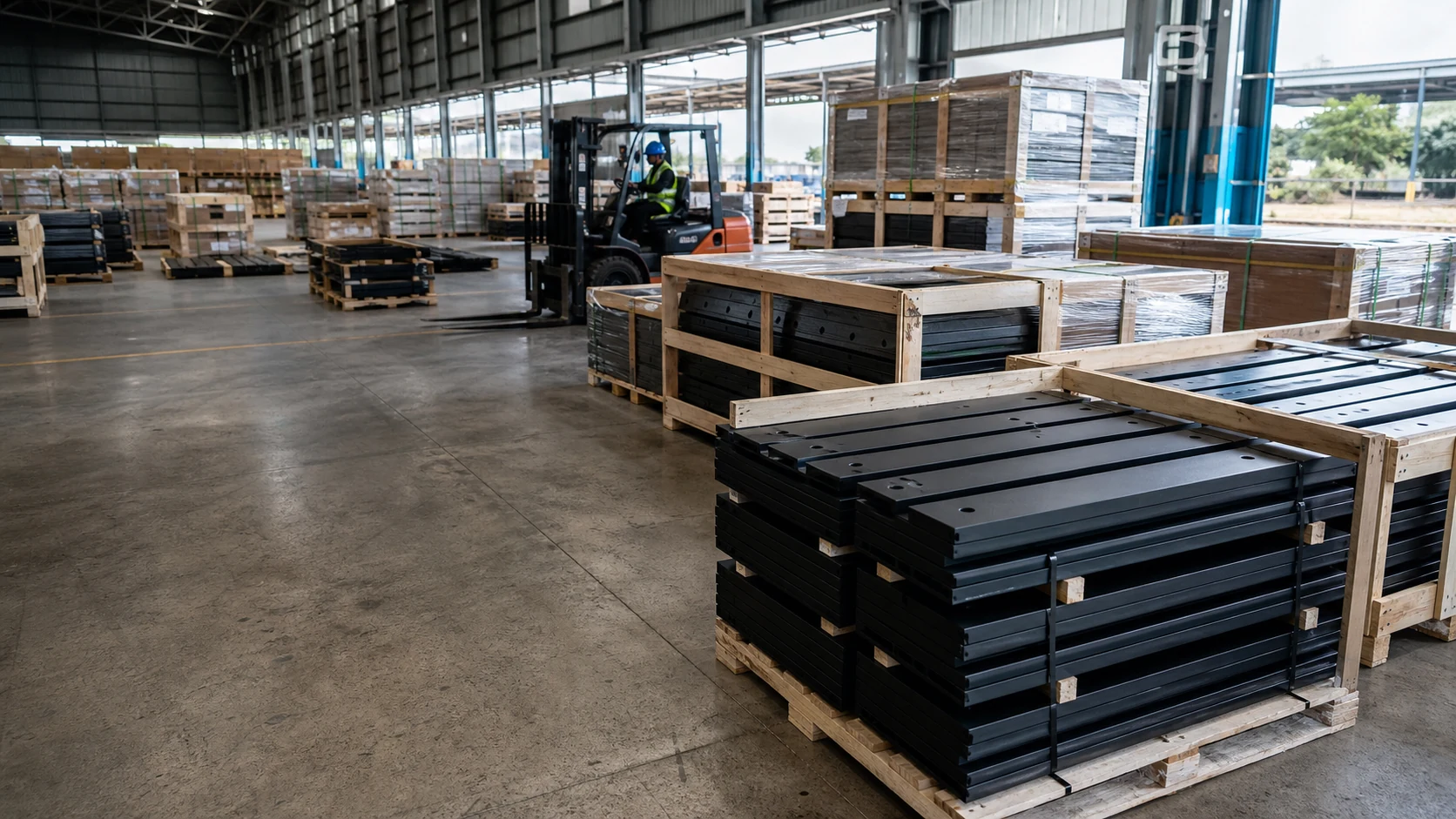
Warehousing, consignment or drop-ship
Canadian distributors usually choose between holding stock, consignment, and direct shipment to the end user.
Holding stock wins on service level and loses on working capital. Consignment moves the capital problem and keeps the service level, at the cost of a formal agreement. Drop-ship is cheapest and slowest, and it is a poor fit for a fleet that breaks an edge mid-storm.
For a first season, a mixed approach is common: a small stock of the two or three fastest-moving patterns locally, everything else drop-shipped.
Documents: origin, description and certification
Prepare the document set before the first shipment, not during it. You will need the commercial invoice with a description that matches the product, the country of origin stated per line, the HS classification agreed with your broker, packing details that match the pallet plan, and any quality certificate your tender requires.
Where a specification calls for a standard or a certificate, confirm that the wording matches what the factory can actually issue. A certificate that says something adjacent to the requirement is worse than no certificate, because it invites a rejection at receiving.
FAQ
Do we pay duty on carbide plow edges entering Canada?
The assessment depends on the tariff classification and the country of origin, and it is not something to take from a blog post. Ask your customs broker to classify the exact product description before you compare quotations.
Can we order in metric sizes?
You can specify in metric, but the bolt patterns are imperial. Keep both figures on the drawing and state which controls, or a rounding difference will produce an edge that does not fit.
How early should a season order be placed?
Specification by early summer, sample approved by August, production booked before the autumn capacity rush. Orders placed in October usually come from stock or arrive late.
Is a Thai-made edge at a disadvantage in a Canadian tender?
Only if the tender specifies a domestic origin, which is uncommon for consumable edges. What tenders do ask for is documentation, and that is a process question rather than a manufacturing one.
For a Canadian season order, send the province, the machine classes and the volumes you expect. We will return a quotation with the shipping terms and the document set, and flag anything that needs your broker.