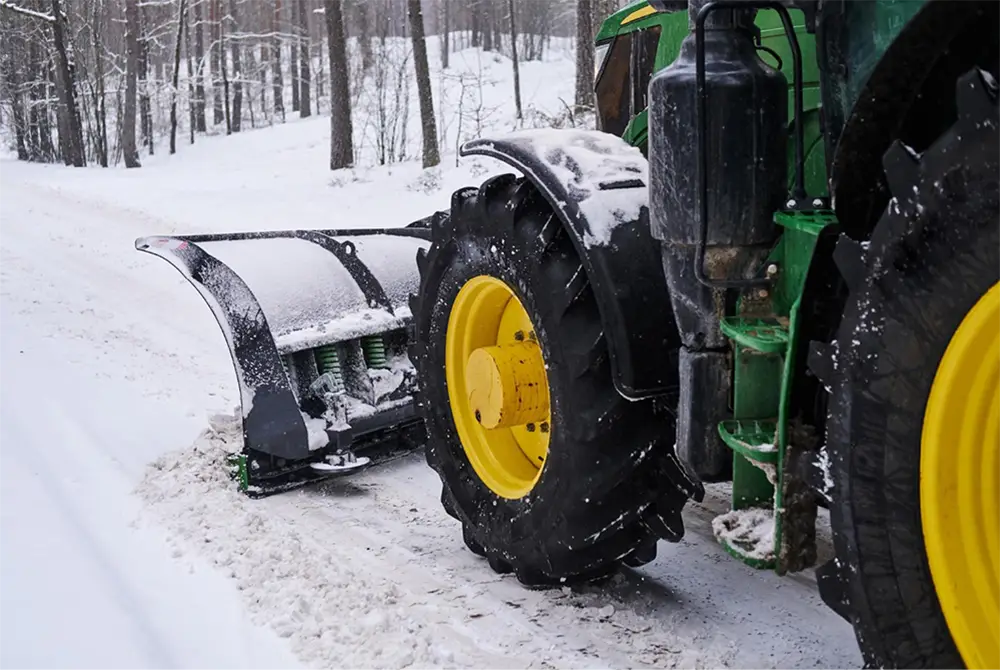
For how to write a snow plow blade specification that survives a full season, the best result comes from matching the component, material, and setup to a documented operating condition, then validating fit, wear, safety, and cost in a controlled trial. This updated guide uses current search evidence and official-source checks to turn the topic into a repeatable selection process.
Updated: October 19, 2026
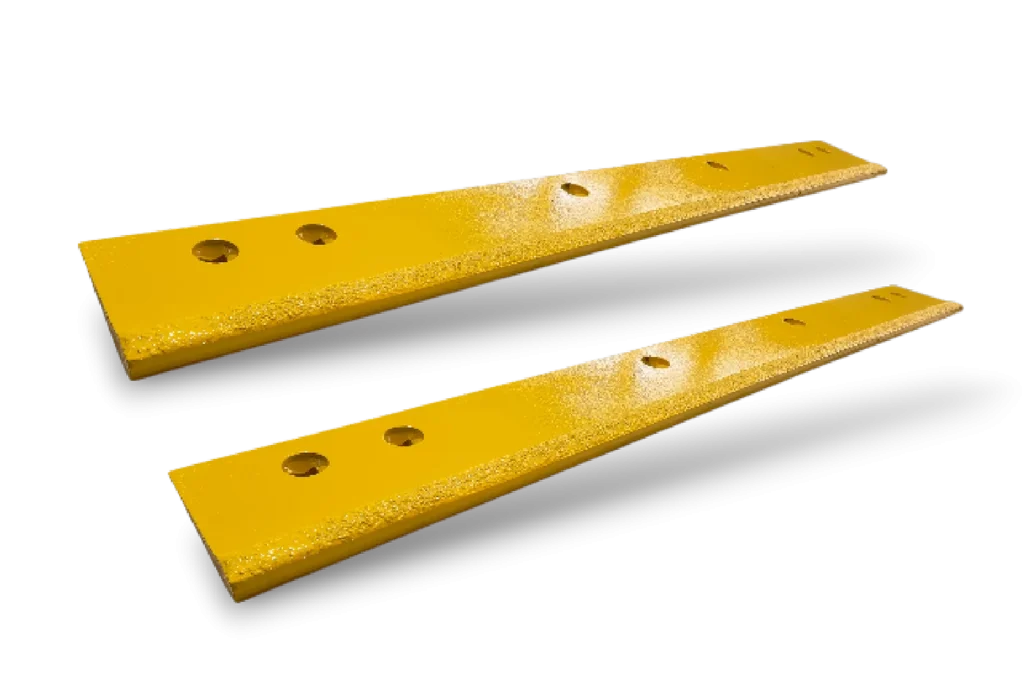
Specifications fail in a predictable way. The document names a length, a thickness and a price, the lowest bidder supplies an edge that meets all three, and the fleet spends the season discovering what was left unspecified: which carbide grade, how the inserts are joined, how tight the tolerances were and what evidence arrives with the pallet.
This is a working template for a snow plow blade specification, clause by clause, in the order a public tender or an internal purchase order should present them.
Material and grade clauses
State measurable properties, not supplier names.
Start with the design intent rather than a catalogue number. The clause should name the carrier material and section, the carbide grade intent expressed as a behaviour (abrasion-led or impact-led) and the surface conditions that intent is written against.
Name the standard that governs any property you intend to enforce, and require the supplier to declare the grade used on the batch. A grade clause that says only “tungsten carbide” is not a specification; it is a material family. Where a fleet has a proven grade from a previous season, reference it by drawing or approved sample instead.
Published standards work is the usual anchor for these clauses in North American practice (AASHTO), and the test methods behind hardness, abrasion and bond claims are maintained by bodies such as ASTM International. Cite the edition you are working to, because a standard reference without a year is an argument waiting to happen.
Dimensional tolerances and fitment
Fitment clauses do two jobs: they define the edge, and they define how it attaches. Both need tolerances, because a dimension without a tolerance is not enforceable.
State the overall length, section thickness, hole diameter, hole spacing, the offset of the hole line from the top and bottom edges, and the permitted deviation on each. Then state the mounting check: blades must be offered up to the drawing or to a supplied mounting gauge, and the pattern must be confirmed before production rather than on delivery.
This is the clause that catches the commonest failure in the category, which is an edge that meets its nominal dimensions and still does not bolt to the machine.
Insert type, size and spacing
Insert clauses convert a grade decision into something a workshop can inspect. Specify the insert shape and nominal dimensions, the arrangement on the edge, and the spacing between them.
Spacing deserves its own line because it changes both cost and behaviour. Closer spacing puts more carbide per metre of edge, which raises abrasion resistance and the price; wider spacing reduces cost and leaves more carrier exposed between inserts. Write it as a dimension with a tolerance, and add a coverage requirement if the route needs one, such as a minimum proportion of the wear face occupied by carbide.
Where replaceable inserts are part of the programme rather than complete edges, the same clause should state how a replacement is dimensioned so it can be fitted independently; SENTHAI supplies inserts and edge strips for fleets that service edges instead of replacing them.
Braze or bond verification
The bond between carbide and carrier is the least visible clause and one of the most valuable, because debonding removes an edge from service long before its wear life is used up.
Write the joining method, the process control expected (for example, a recorded heat profile per production run), and the verification applied to the batch. Verification can be visual inspection of the bond line on every unit plus destructive or shear sampling at a stated frequency, or a witness test on a defined sample.
If the fleet has experienced earlier failures, the clause should also require retained samples from the run, which is what makes a later investigation possible. Manufacturing controls and batch traceability for this stage are described on the SENTHAI quality control page.
Where the assembly interfaces with machine systems rather than with the road, the engineering standards published by SAE International are the reference for the adjacent equipment.
Hardness and wear testing requirements
Testing clauses should be proportional. Over-specified testing raises unit cost without reducing the risk the fleet actually carries, and under-specified testing turns every field failure into an argument.
A workable set names the method and the sampling basis for hardness, requires the supplier to declare the grade and the measured result per batch, and adds a wear or field-trial expectation where the route is unusual. Pair a hardness requirement with a toughness statement or a field trial, because hardness alone moves the failure mode from wear to chipping rather than removing it.
| Clause type | What it proves | Supplier record |
|---|---|---|
| Hardness on the finished part | The material is in the declared range | Measured result per batch |
| Dimensional check against drawing | The part will fit the measured pattern | Dimensional record, sampled per batch |
| Bond or retention inspection | Inserts are seated and joined as specified | Inspection result before packing |
| Field trial on a named route | The specification suits the surface it will work | Agreed trial report after one season |
Written this way, each clause has an owner and an artefact, which is what makes it enforceable at goods-in rather than only at quotation.
Where a specification is being used across several agencies or sites, procurement research published by the Transportation Research Board is a reasonable source for how similar clauses are worded and enforced elsewhere.
Documentation, traceability and samples
Documentation clauses decide what the receiving department can prove six months later. Require a material certificate for the carrier and the carbide, a dimensional record against the drawing, a batch reference that links cartons to the production run, and packing specifications with weights and dimensions.
Add the certificates needed for the route: composition and origin statements where the edge is imported (US Customs and Border Protection covers the entry-level expectations), and any buyer-specific test reports from an accredited laboratory.
State which documents travel with the goods and which are supplied electronically, and say who is responsible if one is missing at delivery. This is the clause that turns the pallet into evidence.
Acceptance and rejection criteria
Acceptance is where specifications are won or lost. The clause should name each characteristic that will be checked on receipt, the method used, the acceptable result, the sampling basis, and the action on failure.
| Characteristic | Check | Action if it fails |
|---|---|---|
| Dimensions and hole pattern | Measure against drawing on a sample per batch | Reject batch or accept by concession with a price adjustment |
| Insert retention | Visual inspection of the bond line on every unit | Reject affected units; investigate the run |
| Hardness | Supplier test to the named method, results per batch | Request re-test or replacement edge |
| Marking and traceability | Batch reference on each carton and the packing list | Hold the consignment until resolved |
| Packing condition | Pre-shipment photographs and receiving inspection | Claim for replacement or repack |
Warranty and remedy language
The warranty clause should be short and enforceable. State the period, what is covered (defects in materials and workmanship), what is excluded (impact damage, wear beyond the design point, use outside the agreed specification), and how a claim is made.
Write the claim mechanics explicitly: the batch reference, photographs, quantities affected and the operating conditions, with a stated response time from the supplier. A remedy clause that offers replacement or credit at the buyer’s option is easier to administer than one that leaves the choice to the seller.
SENTHAI publishes its scope and claim steps on the warranty and shipping page, which is a usable model for the wording; the hardware and torque requirements that often sit behind a claim are covered in the note on blade hardware, torque and wear plates.
Who reads the specification, and what each reader needs
A specification has three readers and they look for different things, which is why documents written for one of them fail the other two. The procurement officer needs clauses that can be evaluated objectively; the workshop needs dimensions and settings it can check on delivery; and the supplier needs enough definition to quote without inventing anything.
- For procurement: every requirement expressed as a measurable value, with the acceptance test named.
- For the workshop: the mounting pattern, edge dimensions and torque values in a form that can be verified against the delivered part.
- For the supplier: the grade intent, the documentation required with each batch, and the packing standard.
Writing all three into one document is what stops the familiar sequence in which a clause is interpreted one way at quotation, another way in production and a third way at goods-in. The measurable-property approach described in the clauses above serves the first reader, and the traceability requirements serve the second and third.
Testing the specification before it goes to tender
A specification can be checked before it is issued, and the cheapest check is to read it as though you were a supplier who wanted to comply at the lowest possible cost. Every clause that could be satisfied by a part the fleet would reject is a clause that needs a number, a test or a document attached to it.
- Read each clause and ask what a bidder would have to supply to prove compliance.
- Where the answer is “nothing”, add the evidence requirement rather than more adjectives.
- Check that every dimension quoted has a tolerance and a measurement method.
- Confirm the acceptance criteria can be applied at goods-in without laboratory equipment the fleet does not have.
- Run the document past the workshop that will receive the parts, not only past procurement.
The last step catches the clause that cannot be verified in practice, which is the one that turns a strict specification into an argument at delivery. Where the fleet cannot test what it has specified, the specification should say who does the testing and what record comes with the parts — material and hardness standards published by ASTM International and ISO are the usual reference points for that wording.
Match the Edge or Attachment to the Actual Operating Condition
This research-backed framework closes a recurring gap in pages ranking for How to Write a Snow Plow Blade Specification That Survives a Full Season: readers need a decision method, not a list of unsupported superlatives. Apply the same evidence fields to every option before choosing how to write a snow plow blade specification that survives a full season.
| Decision gate | Evidence to collect | Release rule |
|---|---|---|
| Surface | Asphalt, concrete, gravel, pavers, bridge deck, or sensitive finish | Choose material and setup that protect the surface while meeting removal goals |
| Snow and ice | Loose snow, wet snow, compacted snow, bonded ice, or mixed conditions | Separate plowing, scraping, and deicing functions |
| Machine setup | Carrier weight, attack angle, down pressure, shoes, trip system, and speed | Verify the complete system rather than judging the edge alone |
| Validation | Short route trial, photographs, wear readings, fuel or time, and operator notes | Expand only after the trial meets a written acceptance rule |
The most useful choice is the one that meets the route objective without shifting damage or downtime elsewhere in the system. Record setup and operating conditions so the result can be repeated.
Run a Controlled Trial Before Full-Fleet Adoption
-
Freeze the baseline: record the current component, carrier settings, route, weather, operator, hours, and reason for removal.
-
Approve fit first: compare the supplier drawing with the machine and attachment. Do not drill, grind, weld, or substitute fasteners without an approved procedure.
-
Change one major variable: keep route and operating method as consistent as practical so the result can be attributed to the component rather than a different setup.
-
Inspect at planned intervals: photograph the same locations, measure wear, check fastener torque and retention, and log impacts or abnormal vibration.
-
Release against written criteria: decide in advance what wear, removal quality, downtime, and cost per operating hour would justify expansion.
Official-Source and SERP Verification
The technical boundary was checked against Federal Highway Administration snow and ice guidance. That source is used for the operating or safety context; model-specific dimensions, settings, and limits must still come from the approved manual for the exact machine and component. The following leading pages were reviewed for search intent and missing decision details:
Frequently Asked Questions
What should be verified before selecting how to write a snow plow blade specification that survives a full season?
Confirm the exact application, dimensions, carrier limits, operating surface, expected impacts, supplier drawing, and acceptance evidence. A product name or grade label alone is not enough.
How should how to write a snow plow blade specification that survives a full season be compared on cost?
Compare landed and installed cost, service hours, maintenance labor, downtime, collateral wear, and replacement reason. Use cost per operating hour for comparable routes rather than purchase price alone.
When is a trial required?
Use a controlled trial whenever fit, material, setup, route conditions, or supplier process changes. Define the baseline and pass criteria before the trial starts.
Which document controls installation and operating limits?
The current manual, approved drawing, and written instructions for the exact carrier and component control. General articles and cross-reference tables are screening tools, not installation authority.
Request an Application Review
Send SENTHAI the carrier or machine model, drawing or dimensions, operating surface, route condition, current failure mode, expected quantity, and target service interval. The engineering team can then review a suitable product path without changing the evidence requirements described above.