Picture two parts counters on the same Monday morning. At the first, a buyer needs replacement inserts for a worn carbide edge. He finds the old grade name on a lathe-tool comparison chart, sees it listed next to a K20-class grade from another brand, and orders inserts in that grade cut to the same size. At the second, a buyer with the same problem boxes up a worn edge, photographs it, measures three inserts with a calliper and asks the supplier to propose a grade against that evidence.
Both orders arrive. Both sets of inserts fit the carrier slot. Only one buyer can say why the grade on the edge is the right one, and that buyer is the one who stays out of trouble if inserts start chipping in January. The first buyer did nothing unusual. He followed habits that feel like due diligence at a parts counter but quietly mislead. This article walks through those habits as the questions people actually ask, and ends with a matching process that holds up.
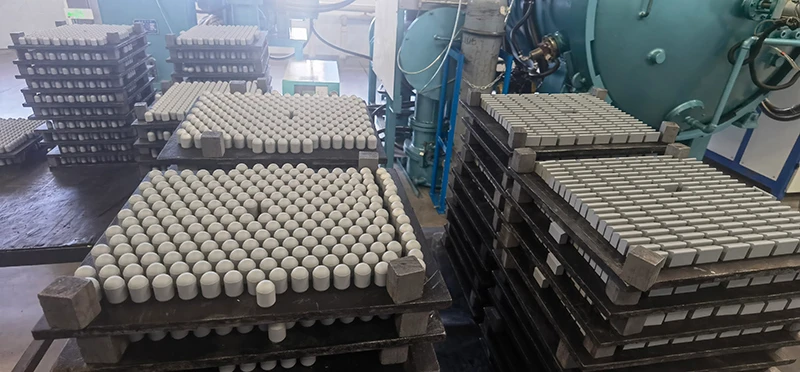
What does a carbide insert cross reference actually match?
A carbide insert cross reference from the machining world matches ISO 1832 geometry codes and ISO 513 application groups between cutting-tool brands. Snow plow inserts sit outside both systems; ISO 513 explicitly excludes mining and percussion uses. A sound plow cross-reference compares drawing dimensions, documented grade data and the braze seat, not catalogue letters.
The two standards are easy to check. ISO 1832 sets a designation code for indexable inserts for cutting tools: shape, clearance angle, tolerance, size and so on. ISO 513 classifies hard cutting materials for metal removal into groups such as P, M and K. Its scope says it does not apply to mining and other percussion tools. A brazed plow insert that spends its life striking frozen road is closer to that excluded category than to a turning insert.
If you want to understand how grade charts are laid out and why any substitution is approximate, read our guide to carbide insert grade charts and cross-references first. This page does not repeat that. It covers what buyers do with charts that gets them into trouble.
“The Widia chart lists it as the same grade—isn’t that enough?”
This is the most common habit, and it comes from a reasonable place. Widia, Sandvik, Kennametal and others publish grade comparison charts. The widia insert chart a buyer finds online looks authoritative because it is, for its purpose. That purpose is chip removal. The numbers in an ISO 513 group describe where a cutting grade sits between high-speed, wear-resistant cutting and high-feed, tough cutting on a machine tool. A K20 next to another K20 tells you two companies expect similar behaviour turning cast iron.
Neither entry says anything about a brazed insert hitting a manhole lid at 50 km/h at −15 °C. Our separate discussion of insert selection and replacement covers what plow duty asks of a grade. A machining chart can only ever be a starting clue, never the match itself.
“It fits the slot, so it’s the same insert—right?”
Size and grade are two separate questions, and a parts counter tends to answer only the first. Inserts that measure the same length, width and thickness can differ in binder content, grain size and how they were pressed and sintered. ISO 1832, the geometry code, does not contain a material field for this reason. Grade is designated separately.
For plow inserts, geometry also has to match the carrier: seat depth, protrusion, chamfer and the space left for braze. An insert that “fits” with a slightly different seat profile can braze poorly. That failure shows up later as lost tips and gets blamed on the grade.
“The quote says ‘equivalent grade.’ Doesn’t that settle it?”
“Equivalent” is a conclusion, not a specification. A quote that uses the word without naming the proposed grade, and without saying what it was compared against, gives you nothing to check. We have covered the questions to ask in detail in what to ask when a quote says “equivalent carbide grade”. The short version: get the grade name and the basis of comparison in writing before you accept the price.
“Same hardness, same grade?”
Hardness is the number most often printed, so it gets used as the cross-reference key. ASTM’s method for hardness testing of cemented carbides (B294) is clear that hardness indicates wear resistance and toughness within a compositional group. It also says hardness testing is never the only method to consider. Two grades can land on the same HRA value by different routes, for example finer grain with more binder against coarser grain with less. They can then behave differently under impact. Colour, surface shine and weight are even weaker clues.
“Our old part number is on file. Why isn’t that a cross-reference?”
A part number usually identifies the edge: length, bolt pattern and profile. It often does not identify the carbide inside it, and suppliers can change insert source or grade behind an unchanged part number. When a depot list maps “their number” to “our number”, it is matching edges, not inserts. Before re-ordering against an old number, ask whether the insert grade and seat drawing have the same revision as the batch that performed well.
“If the chart and the paperwork agree, can we skip looking at the worn edge?”
No. The worn edge is the only evidence of how the old inserts behaved on your roads. Research funded by Clear Roads on test procedures for carbide insert snowplow blade wear found that internal voids and cracks were linked to the poorest field wear performance (TRID summary). In other words, two inserts with the same nominal grade can perform very differently because of how they were made. No chart captures that. Rounded, evenly worn inserts and chipped, missing inserts point to different corrections.
| Habit | What it actually checks | What it misses | Safer replacement |
|---|---|---|---|
| Lathe grade chart lookup | Machining application group | Impact duty, braze, plow geometry | Treat it as a clue; ask for plow-duty grade data |
| Size-only match | Length, width, thickness | Grade, seat profile, protrusion | Match the drawing and the grade separately |
| “Equivalent grade” on a quote | Nothing verifiable | Grade name, basis of comparison | Named grade and comparison in writing |
| Hardness-only match | One property, one test method | Toughness, grain, binder | Hardness with method plus binder and grain class |
| Old part number | Edge format | Insert source or grade changes | Confirm insert grade and seat drawing revision |
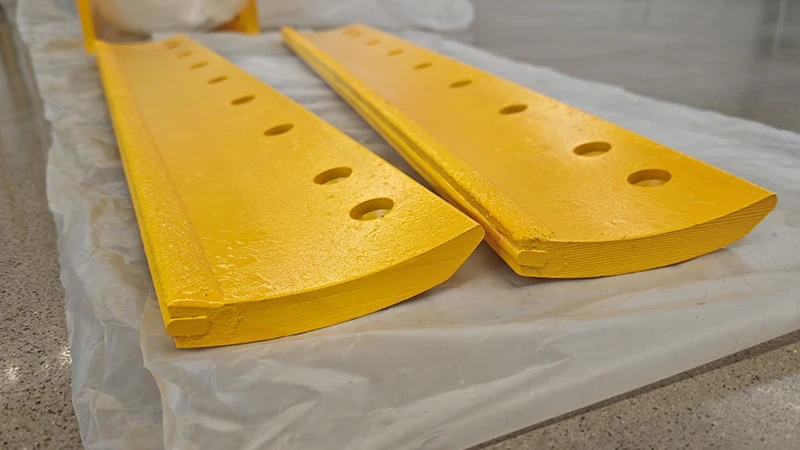
A safer cross-reference process, step by step
- Start from the edge, not the catalogue. Pull a worn edge from the route you care about and photograph it square-on and from the end.
- Record geometry. Insert length, width, thickness, chamfer, spacing and protrusion, plus carrier length, thickness and bolt pattern.
- Read the failure mode. Even wear, chipping, cracking or lost inserts, counted per metre.
- Collect whatever grade data exists. The old grade name, any certificate and hardness with its test method. Note what is missing rather than guessing.
- Ask for a named grade proposal that states binder range, grain class and hardness method, and explains why it suits the failure mode you recorded.
- Confirm the seat and braze details on a drawing both sides sign off.
- Trial before you standardise. Fit the new edge on one route, log kilometres and damage, and only then roll it across the fleet.
Clear Roads’ standard specification for plow blades with carbide inserts is a good model for steps 2 and 6: it treats insert dimensions, insert material and accept/reject inspection as separate, explicit requirements.
When to ask for the OEM drawing, and when a worn sample will do
Ask for the original drawing when the edge is a non-standard profile, when the plow maker specifies seat geometry tightly, or when you are replacing a large fleet quantity and need the drawing for tendering. A worn sample with a few clean measurements is often enough for common formats. That is especially true if you can also send an unused spare from the same batch. In either case the grade is a separate decision from the drawing. If your edges are aftermarket “style” fits, measure and confirm in writing rather than relying on a brand name. Edge formats we make are shown on the carbide snow plow blade page.
Building to a drawing instead of a chart
Per our company website, SENTHAI runs carbide production in-house in Rayong, Thailand: powder preparation, pressing, sintering and brazing to the steel carrier. That lets us work from your drawing and failure evidence rather than from someone else’s grade list. The carbide inserts page shows the insert formats involved.
To start, skip the part number. Send the evidence instead: two photos of the worn edge, the calliper readings, a line on how it failed, and the old grade name if you have it. Email them to [email protected]. Our reply names the grade we would use, explains the choice, and includes a price. Batch size and dispatch timing are settled inside that quote for the specific product, so neither is published here as a fixed figure.
FAQ
Can’t I just use a Widia or Sandvik grade chart to match plow inserts?
Not reliably. Those charts compare machining grades within ISO 513 application groups, and ISO 513 does not cover percussion-type uses. Use the chart as a clue to the grade family, then ask for plow-duty grade data and match the insert geometry against a drawing or a worn sample.
If the insert fits the slot, isn’t the grade a minor detail?
No. Fit confirms geometry only. Inserts of identical size can differ in binder content, grain size and toughness, which decides whether they wear evenly or chip on impact. Seat profile and braze clearance also need checking, because a poor braze shows up later as lost inserts.
Our old supplier’s part number is on file—why isn’t that enough?
Part numbers usually describe the edge format, not the carbide inside. Insert source or grade can change behind an unchanged number. Confirm the insert grade name and the seat drawing revision match the batch that performed well before re-ordering.
Doesn’t a matching hardness value prove two grades are equivalent?
No. Hardness is one property measured by one method. Grades with different grain size and binder content can share a hardness value and still behave differently under impact. Ask for hardness with its test method, plus binder range and grain class, before treating grades as equivalent.
The questions above come from buyers at the parts counter rather than from search data; our keyword research returned no People Also Ask results for this term.
Related reading
- Carbide insert grade charts and cross-references: how to read them
- What to ask when a quote says “equivalent carbide grade”
- Carbide insert selection and replacement guide
- Browse the blade selection and specification archive
Sources
- ISO 513:2012: Classification and application of hard cutting materials
- ISO 1832:2017: Indexable inserts for cutting tools, designation
- ASTM B294: Hardness Testing of Cemented Carbides
- Clear Roads: Test Procedures for Carbide Insert Snowplow Blade Wear
- TRID: Development of Standardized Test Procedures for Carbide Insert Snowplow Blade Wear
- Clear Roads 17-02: Standard Specifications for Plow Blades with Carbide Inserts