Two blades of the same width left the workshop on the same day. One was built from three 4 ft segments and needed two joints; the other used four 3 ft segments and needed three. At the next replacement the first blade took one fitter forty minutes and the second took two fitters over an hour — not because of the material, but because of the number of places the blade had to be dismantled and reassembled.
Segment length is a cost decision as much as a dimensional one, and this breakdown follows where the money actually moves: joints, coverage, handling, spares and the inspection time each layout asks for.
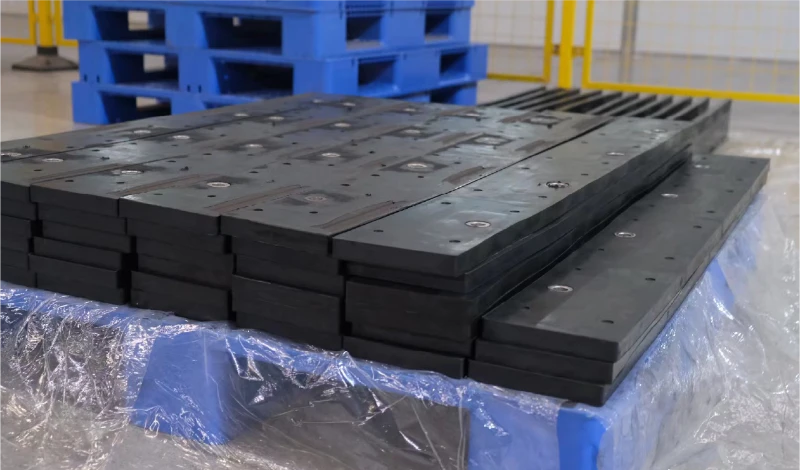
Segment length and joint count
Joints are the cost driver.
A blade’s joint count follows from its width divided by the segment length, so shorter segments mean more joints, more fixings and more places where the assembly can move.
Each joint carries three costs that do not appear on a parts invoice. It adds a set of fixings to check at every inspection, it introduces an interface that has to stay closed under load, and it adds the time to dismantle and reassemble that part of the blade when a section is replaced. Those three costs scale with the number of joints rather than with the price of the segments, which is why a layout with fewer joints is usually cheaper to run even when the pieces cost the same per metre.
The counterweight is handling. A longer segment is heavier and more awkward to position alone, and a segment that needs two people to fit will not be replaced during a season by a fleet that works single-handed. The choice is therefore between joint count and piece weight, and both are measured rather than guessed.
Blade width coverage math
The layout has to cover the measured width exactly, and the arithmetic is worth doing before the order rather than after. Divide the available width by the candidate segment length, and look at the remainder: a width that divides evenly gives a clean layout with joints at regular intervals, while a remainder has to be absorbed somewhere.
Where the remainder exists, there are two ways to close it. An end segment cut to size concentrates the irregularity in one place, which keeps the joints in the middle of the blade regular. Spreading the difference across every segment keeps the pieces identical but moves every joint slightly, which is harder to specify and harder to replace later. For most fleets the first option is the better trade, because the non-standard piece is at the end where it is easiest to identify on the shelf.
Handling weight on site
Handling is the constraint that decides many layouts in practice, and it is a workshop fact rather than a specification figure. What matters is the weight one person can position accurately while standing at the blade, not the weight that can be lifted in ideal conditions.
The check is simple: take the candidate segment to the machine and fit it once with the crew that will normally do the work. A segment that can be positioned and held while the first fixings go in is workable; one that has to be supported by a second person or by equipment is not, because the replacement then waits for a day when the extra help is available.
Wear behaviour at joints
Joints wear differently from the segments around them, and a layout with more joints has more of this behaviour to manage. The faces accumulate grit, the fixings see load that a continuous section would not, and the material either side of a joint is where localised damage tends to begin.
Comparing two layouts across a season usually shows the same segment wear in both and a different joint burden. That is the measurement worth keeping: segment wear per position, and the number of joints that needed attention. A fleet that records both can see whether its segment length is buying anything beyond convenience, and the comparison method is the same one used to classify edge wear generally, described in installing JOMA style segments.
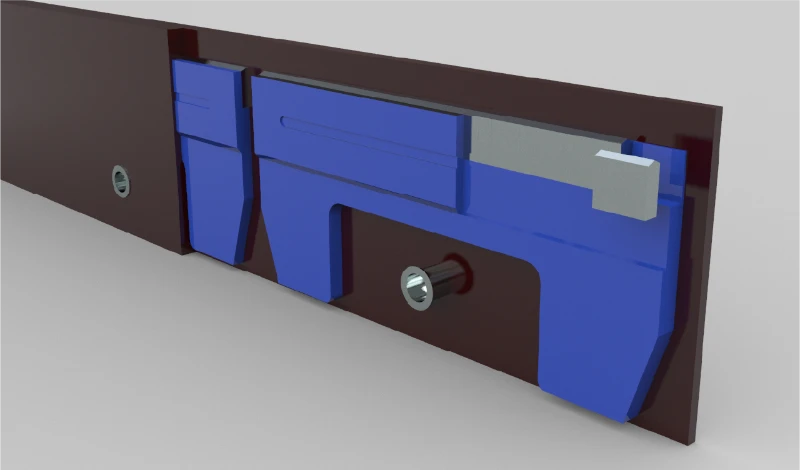
What segment length costs per metre of blade
Reducing the comparison to a cost per metre of blade makes the two layouts comparable, and it also shows which lines the choice actually moves.
| Line | 4 ft segments | 3 ft segments |
|---|---|---|
| Joints on a typical blade | Fewer | More |
| Fixings to inspect | Lower | Higher |
| Piece weight at replacement | Heavier | Lighter |
| Replacement time per section | Longer per piece, fewer pieces | Shorter per piece, more pieces |
| Spare variants to stock | Usually fewer | Usually more |
Read down the table, the two columns differ on labour and stock rather than on material. That is the useful finding: segment length is a decision about how much assembly work the fleet is prepared to do, not about which blade lasts longer.
Spares planning across a fleet
Spares follow the layout, and a mix of layouts across a fleet multiplies the stock list. Two segment lengths in service means two part numbers, two sets of joint hardware and two positions on the shelf; three lengths across a mixed fleet quickly becomes a store that cannot be checked at a glance.
The planning rule that keeps it manageable is to standardise on the smallest number of lengths that covers every blade in the fleet, and to accept a non-standard end segment where a width does not divide. Segment replacement is driven by impact damage rather than by even wear, so the spares quantity follows the heaviest route rather than the total number of machines.
Mixing segment lengths on one blade
Mixing lengths on a single blade is legitimate and often the better engineering answer. It allows the joints to fall at chosen positions rather than at whatever interval the arithmetic produces, which matters on a route where the same obstacle takes out the same section every season.
Two considerations apply. The mixed layout should be recorded as its own pattern, because the next order or replacement needs to reproduce it exactly rather than approximate it. And the non-standard piece is best placed at one end, where it is easy to identify and where a replacement does not disturb the joints in the middle of the blade.
Where a JOMA segment layout is the wrong answer
Segment layouts make sense where the surface is uneven enough to justify a flexible base and where sections are damaged individually rather than worn evenly. On a smooth route with even wear, the joints add assembly work without changing the outcome, and a one-piece or continuous edge is the simpler and cheaper answer.
The same applies where the route needs a bonded layer cut rather than followed: a flexible base does not concentrate enough pressure to fracture hardpack, and the segment layout does not change that. Both cases are route decisions rather than product comparisons, and both are settled by looking at the failure record rather than at the catalogue. Equipment guidance for these assemblies is published by the Association of Equipment Manufacturers, and road maintenance guidance by the Federal Highway Administration.
Ordering checklist
Five items settle an order without a follow-up question, and all five come from the machine rather than from the catalogue.
- The measured blade width available for segments.
- The hole pattern, including diameter and hole form.
- The candidate segment length, with the remainder accounted for at one end.
- The joint hardware specified for that pattern.
- The proposed layout drawn once, so the next order reproduces it.
The fifth item is the one that pays over time. A layout that exists only as a set of measurements will be reinterpreted by the next person who orders, and the blade will come back slightly different. Standards for measured components and their documentation are published by ISO, winter maintenance research by the Transportation Research Board, operator practice by the Snow and Ice Management Association, and component practice by AASHTO.
SENTHAI manufactures JOMA style rubber-flex blades and replacement segments in Rayong, Thailand, and confirms the segment layout against the measured blade width before production. Replacement parts are listed under JOMA style replacement blades.
FAQ
Which JOMA segment length should I order?
The one that covers the measured blade width with the fewest joints while still being light enough for one person to handle at replacement. Different machines in one fleet can legitimately need different lengths.
Do 3 ft segments wear faster than 4 ft segments?
The segment itself wears at the same rate for the same surface; what changes is the number of joints. More joints mean more places where movement can start and more fixings to check, so a 3 ft layout asks for more inspection, not softer material.
Can I mix segment lengths on one blade?
Yes, and it is often the correct answer. A mix lets the outer joints land away from the highest-impact parts of the route and lets the remainder of the width be absorbed in one place rather than spread across the blade.
How many spare segments should a fleet hold?
Enough to replace the worst single section per machine, plus the hardware for those joints. Segments are the part that fails from impact rather than from wear, so the spare requirement follows the heaviest route rather than the fleet total.
Send the blade width, the hole pattern and the surfaces the machine works. The SENTHAI engineering desk will propose the segment layout, confirm the joint hardware and quote the layout with the spares it implies.
This article is one step in the Snow Plow Blade Selection Guide, which works the whole decision in order — surface, position, size, geometry and material — through to the written specification.