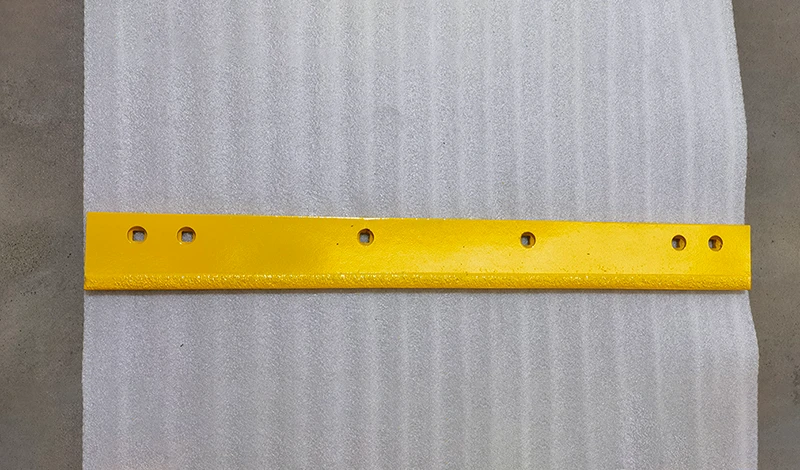
Two checks decide compatibility, and they are often treated as one. The first is whether the blade’s mount fits the vehicle’s mounting points, which is a dimensional question with a yes or no answer. The second is whether the vehicle can carry and use the blade, which depends on axle capacity, electrical and hydraulic provision, and the weight of the assembly.
This comparison organises the decision around those variables rather than around model names, because two vehicles of the same model year can differ in both mounting provision and front axle capacity. It closes with what to record per unit so a blade can be moved between vehicles deliberately rather than by trial.
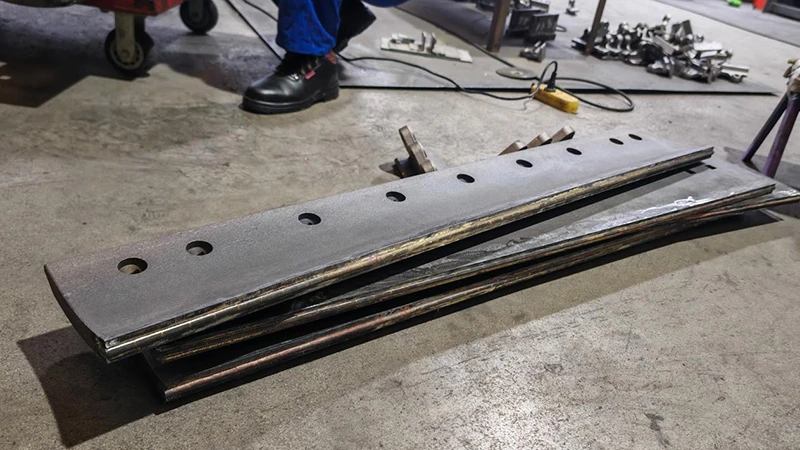
Snow plow compatibility by truck model: mount family versus blade family
Mount compatibility and blade choice are separate questions.
The mount family is the interface between the vehicle and the blade, and it has to match the vehicle’s mounting provision exactly: the attachment points, the geometry of the receiver, and the position the blade sits at when mounted.
The blade family is a separate set of choices about width, height and material, and it sits on top of a mount that already fits. A buyer who starts from the blade and works back to the mount usually ends up with a blade that fits the mount they can obtain, which is the wrong order.
That is why the model name is a starting point rather than an answer. Application data published by the equipment manufacturers maps models to mounting kits, and it is the reference to check first; the vehicle’s own documentation then settles what the mounting kit has to work around.
Front axle and payload constraints
The front axle carries the blade, the mount and the hydraulic assembly, all of it ahead of the axle line, and that load is part of what the vehicle was specified for. What matters is not the vehicle’s total capacity but the reserve available at the front axle with the vehicle loaded the way it will actually be used.
Two practical consequences follow. A blade that consumes most of the available front axle reserve leaves nothing for the ballast or the load that the vehicle needs to steer and brake in winter conditions. And the reserve changes with the vehicle’s configuration: a heavier engine, a different body or a full fuel tank all move the figure before the plow is considered at all. The vehicle’s own documentation is where the axle figures come from, and the plow manufacturer’s application data is where the blade weight comes from.
Electrical and hydraulic requirements
The blade’s control system has to be provided for on the vehicle, and the provision is not universal across a model line. The items to confirm are the electrical supply for the control and lighting, the hydraulic or electrohydraulic circuit that operates the blade, and the mounting provision for any pump or reservoir the system needs.
Where a vehicle has no provision, fitting one is a workshop job rather than a plug-in, and it changes the cost of the decision rather than its feasibility. Where the provision exists but is rated for a different system, the mismatch shows up as a blade that operates slowly or not at all in the cold rather than as a fault at fitting. Standards for vehicle and equipment interfaces are maintained by SAE International and the Association of Equipment Manufacturers.
Blade width for the vehicle footprint
Blade width should be chosen against the vehicle’s track and the routes it works rather than against a preference for the largest blade the mount will accept. A blade narrower than the vehicle’s track clears less than the wheels compact, which means the vehicle is driving on the material it has already pressed into the surface. A blade substantially wider than the vehicle’s footprint clears more per pass and puts a greater offset load on the front end when the blade is angled.
The useful comparison is between the blade’s effective clearing width when angled and the width of the surface the vehicle is working. On open routes the wider blade pays; on residential streets with parked vehicles and tight turning, the narrower one usually produces less damage and fewer obstructions to clear.
Blade weight versus lift capacity
Weight is where a compatible-looking combination fails in service, so it belongs in the comparison as a margin rather than as a pass or fail.
| Item | Where the figure comes from | Why it matters |
|---|---|---|
| Blade and mount weight | The plow manufacturer’s specification | The load carried ahead of the front axle |
| Hydraulic assembly weight | The system specification | Often overlooked but carried in the same place |
| Front axle available reserve | The vehicle’s own documentation, with the vehicle loaded | Determines whether the combination can be used as intended |
| Ballast or bed load in use | The fleet’s operating practice | Consumes the same reserve as the blade |
Reading the table downwards gives the reason so many combinations are approved on paper and disappointing in practice. The blade is checked, the hydraulic assembly is not, and the ballast the vehicle needs for traction is left out of the calculation entirely.
Used equipment and retrofit warnings
Used blades change the economics and add three risks that do not exist on a new purchase.
- The mount comes with the blade, and it may not correspond to any kit available for the receiving vehicle.
- The wiring and hydraulics may have been modified to suit the previous vehicle rather than being standard.
- The blade’s own structure may have been repaired or straightened in a way that affects how it loads the mount.
The third entry is the one to inspect closely on a used purchase. A blade that has taken a significant impact can look sound and still be carrying a bend that transfers load into the mount, and the mount is the part that fails first in that case.
Where compatibility is checked: the mounting points
The mounting points are the physical evidence of whether the combination will work, and the table below sets out what to check and what each check settles.
| Check | What it settles |
|---|---|
| Mounting provision on the vehicle frame | Whether a mounting kit exists for this vehicle at all |
| Receiver geometry and attachment points | Whether the proposed mount family is the right one |
| Ride height and clearance at the front | Whether the blade can sit at the working height the design expects |
| Electrical and hydraulic interfaces | What has to be added before the blade can be operated |
| Front axle documentation with the vehicle loaded | Whether the assembly fits inside the available reserve |
The third item is the one that produces surprises after the purchase rather than before it, because ride height changes with suspension and tyre specification, and a blade that sits too high cannot be brought to the pavement without modification.
What the truck’s own documentation settles
Three items come from the vehicle rather than from the equipment supplier, and they should be confirmed before any blade is considered. The front axle rating and the loaded weight carried on it. Any manufacturer guidance or restriction on snow plow preparation, including whether the vehicle is offered with a preparation package. And the electrical system capacity available for the plow control and lighting circuits.
Those three are also the items a fleet cannot reasonably guess, which is why they belong at the start of the sequence. Manufacturer guidance on vehicle safety and load distribution is published by bodies including the National Highway Traffic Safety Administration, and road maintenance practice by the American Association of State Highway and Transportation Officials and the Federal Highway Administration.
When a blade can be adapted and when it cannot
Adaptation is feasible where the difference is in the mount and the vehicle has provision to receive a different one, because the mount is a distinct part of the assembly. It becomes difficult where the vehicle has no provision at all, since the mounting points have to be added to a structure that was not designed around them.
Adaptation is not feasible where the limitation is weight. A blade that exceeds the front axle reserve cannot be made to fit by changing the mount, and the honest answers are a smaller blade or a different vehicle. Recognising that distinction early prevents a purchase that is followed by a season of restricted use.
Recording the combination per unit
A fleet that moves blades between vehicles benefits from recording the combination against each vehicle rather than against each blade.
- The mount family fitted to the vehicle, and the mounting kit reference it was installed with.
- The blade sizes the vehicle is approved to carry, including the weight margin used.
- Any modification made to the vehicle to accept a mount or a control system.
- The electrical and hydraulic interface, described well enough for another workshop to match it.
The third entry is the one that stops a modification being repeated by the next person who needs to fit a blade. Where a vehicle has been adapted for one mount family, that adaptation is a fact about the vehicle and belongs with its record.
Buying sequence for a mixed fleet
The sequence below keeps the decision in the right order and takes about an hour per vehicle when the documentation is to hand.
Start with the vehicle’s front axle documentation and loaded weight, which sets the limit. Then confirm the mounting provision and identify the mount families available for it. Then choose blade width against the routes the vehicle works, and only then compare specific blades within the weight margin that remains. Finally, confirm the electrical and hydraulic provision and what has to be added to operate the system.
Running it in that order means every blade considered is already feasible, which changes the comparison from determining whether a purchase is possible to choosing between options that all work. Edge and shoe specification for the chosen blade is a separate decision, covered on the plow shoe selection page and the carbide snow plow blade page.
SENTHAI manufactures carbide and rubber-flex plow edges, wear plates and inserts in Rayong, Thailand, and produces edges to the pattern and specification the customer’s blade requires, so a replacement edge matches the assembly already on the vehicle. Blade and edge questions for a specific combination can be raised through the contact page.

FAQ
Will any snow plow fit my truck?
Any plow whose mount matches the vehicle’s mounting points and whose weight is within what the front axle can carry. Mounting is the first filter and weight is the second, and a blade that passes the first and fails the second is a blade that will be fitted and then not used.
Are snow plows interchangeable between trucks?
Only where the mount family and the electrical interface match and the receiving vehicle can carry the blade. Two trucks of the same model year can differ in mounting provision and in front axle capacity, so interchangeability is established per vehicle rather than per model name.
What is the first thing to check before buying a used plow?
Whether the mount it comes with is available for your vehicle, including the wiring and hydraulic interfaces. A used blade is usually bought for the blade, and the mount it is attached to is the part that decides whether it can be used at all.
Does blade width have to match the truck’s track?
It should be chosen against the vehicle footprint and the routes it works. A blade narrower than the vehicle’s track leaves material where the wheels have already compacted it, and one much wider than the vehicle can handle loads the front end beyond what the mounting and axle were specified for.
Send the vehicle, the mounting provision and the routes it works. The SENTHAI engineering desk will confirm the edge specification and pattern that suit the blade the vehicle can carry.