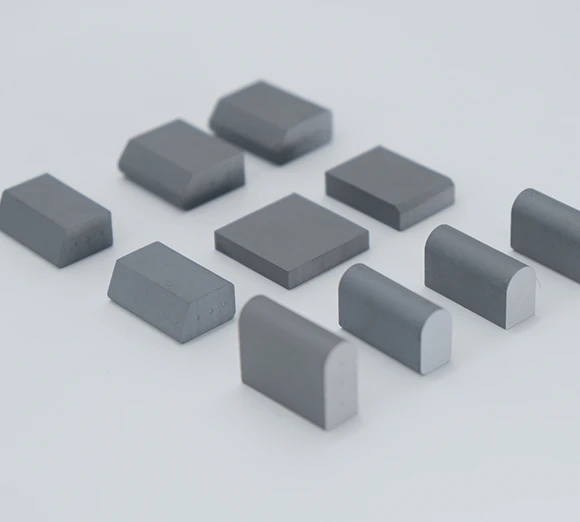
Two ways of protecting the same surface differ by roughly a factor of three in hardness and by orders of magnitude in the area covered. Abrasion-resistant plate spreads a moderate hardness across the whole surface; carbide concentrates a much higher hardness on a narrow band.
Which is right depends on how the wear is distributed, and that is a question about the machine rather than about the material. This is how the two compare on the variables that decide it.
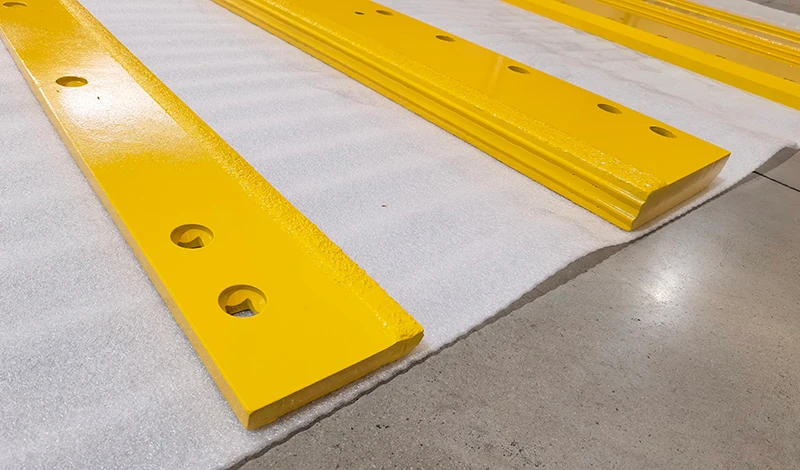
Abrasion resistant plate vs carbide: what the comparison turns on
The decision is about where the wear actually occurs.
Plate protects a large area at moderate hardness, inserts protect a small area at very high hardness, and the right choice follows the width of the band that wears rather than the hardness of the material.
Where the damage is spread across a wide face, a harder material confined to a narrow line leaves the rest of the surface unprotected and the plate becomes the better answer. Where the damage concentrates at a contact line, protecting the surrounding area with plate spends money on material that does not wear.
The second factor is the maintenance model. Plate is workshop material and can be cut, formed and welded locally; inserts are manufactured parts with a lead time. A fleet that repairs in its own workshop and a fleet that replaces parts on a schedule will weigh the same comparison differently.
How each solution resists abrasion
The two materials resist wear by different mechanisms, and that is why the coverage area matters as much as the hardness.
Abrasion-resistant plate is a quenched and tempered steel with a hardness chosen for sliding abrasion, and it resists wear across its whole surface. Cemented carbide is a composite with hard grains in a metal binder, and it resists wear by being harder than the abrasive at the contact point, which is far more effective where the contact is concentrated.
| Variable | Abrasion-resistant plate | Carbide inserts |
|---|---|---|
| Hardness at the wearing surface | Moderate | Very high |
| Area protected | The whole surface | The band carrying the inserts |
| Behaviour under impact | Deforms and stays serviceable | Can chip or be lost |
| Repairability in a workshop | Cut, formed and welded | Inserts replaced, or the part replaced |
The fourth row is often the deciding one in a fleet context. A wear surface that can be rebuilt from plate between seasons is a different proposition from one that has to be ordered as a finished part each time.
Installation and repair methods
Installation separates the two more sharply than any property measurement.
Plate arrives as material and is cut to shape, formed and welded or bolted onto the structure. The work happens in a workshop, with ordinary fabrication equipment, and a repair is a repeat of the same operation. Inserts are fixed by brazing or by mechanical retention in a prepared body, and the body itself is usually a manufactured part with a defined pattern.
The practical consequence is that plate can be adapted to a machine that was not designed for it, while inserts need a design that anticipates them. Retrofitting a carbide wear line onto a surface designed for plate means creating the fixture, the pattern and the retention, which is a project rather than a repair.
Weight and thickness implications
Thickness and weight affect the machine as well as the wear surface.
Plate performs by section as well as by hardness: a thicker plate lasts longer and adds mass to the machine. That mass matters on a carrier with a limited load rating and on equipment where the extra weight changes the balance or the ground pressure. Inserts add very little mass, because the hard material is confined to a thin layer on a body that has to be there anyway.
Where the structure is already substantial, the added mass of plate is often acceptable. Where the machine is weight-sensitive or where the wear surface is on a moving part, the insert route usually wins on mass alone before any cost analysis begins.
Cost per surface area
The cost comparison changes completely when it is normalised by area rather than by item.
Per square metre, plate is far cheaper than carbide, which is why covering a large surface with plate is affordable and covering the same surface with inserts is not. Per unit of abrasive life along a narrow contact band, the ranking usually reverses, because a small amount of carbide outlasts a much larger area of plate.
| Basis | What it favours | When it is the right comparison |
|---|---|---|
| Cost per square metre | Plate | Broad surfaces with general sliding wear |
| Cost per metre of wear line | Inserts | Concentrated contact, as on a cutting edge |
| Cost per season of service | Depends on the maintenance model | Where the part is rebuilt rather than replaced |
| Cost including downtime | Inserts, where the interval is long | Equipment with high hourly operating cost |
The fourth row is the one that decides a lot of real installations. Where a machine’s downtime costs more than the wear part, the option that extends the interval wins even when its own price is higher.
Combined solutions
The two are frequently combined, and the combination works when each material is placed where it is strongest.
The usual arrangement is a plate body that carries the general wear across the surface, with inserts applied to the line that does the work. Plate liners on chutes, hoppers and bucket floors protect where the abrasive slides; inserts go on the edge where the contact pressure is highest and the band that wears is narrow.
The failure mode to watch in a combined design is the interface. Where inserts are attached to a plate rather than to a structural body, the joint carries the load path between two materials with different stiffness, and the transition area is where cracks start. Designing that interface properly is what makes a combined solution last.
Selection matrix
The matrix below reduces the decision to the width of the wearing band and the maintenance model, which are the two variables that dominate it.
A wide, evenly worn surface points to plate. A narrow contact line points to inserts. A surface that wears generally but has one line of concentrated damage points to both, arranged so that the inserts sit where the load is highest.
Where the two look equally suitable, the deciding factor is usually repairability: the option that the workshop can restore between seasons is the one that will actually be maintained.
Application examples in winter equipment
Winter equipment produces both patterns, often on the same machine.
A plow edge wears along a narrow contact line where the blade meets the surface, which is the pattern inserts suit. A bucket floor, a chute or a spreader body wears across a broad area, which is the pattern plate suits. An underbody scraper can show a mixture, with concentrated wear along the leading edge and general wear on the surrounding face.
That mixture is why a fleet with one rule for wear surfaces ends up over-specifying some parts and under-specifying others. The rule that works is to look at the worn part, measure how wide the worn band is, and choose the material that matches it.
Where AR plate is the wrong answer
Plate is the wrong answer in three situations that appear regularly on winter equipment.
Each of these is a case where the wear is too concentrated, or the section too heavy, for plate to be the efficient choice.
- A narrow contact line on a blade or scraper edge, where hardness matters more than coverage.
- A weight-sensitive machine where the added section needed for plate life changes the handling.
- A part whose life is set by a narrow band, leaving the rest of the plate unworn at replacement.
The third item is easy to confirm in practice: a plate that is worn through in one strip and nearly untouched elsewhere was the wrong shape of solution for that part.
Where carbide is the wrong answer
Carbide is the wrong answer in three equally practical cases.
These are situations where the area to be protected is too large, the load too unpredictable, or the repair route too important for a manufactured part.
- A broad surface with general sliding wear, where covering the area with inserts is uneconomic.
- A location where heavy impact is expected and a chipped insert would stop the machine.
- A part that the workshop rebuilds repeatedly rather than replacing.
Material and test standards for both material families are published by bodies such as ASTM International and the American Society of Mechanical Engineers, with measurement practice published by the National Institute of Standards and Technology.
What the maintenance model decides
The maintenance model often settles the question before the materials analysis does.
A fleet that rebuilds wear surfaces in its own workshop will lean towards plate, because the work is familiar, the material is available and the repair is repeatable. A fleet that replaces parts will lean towards inserts where the interval is long enough to reduce the number of changes. A fleet that does both will use each where it fits.
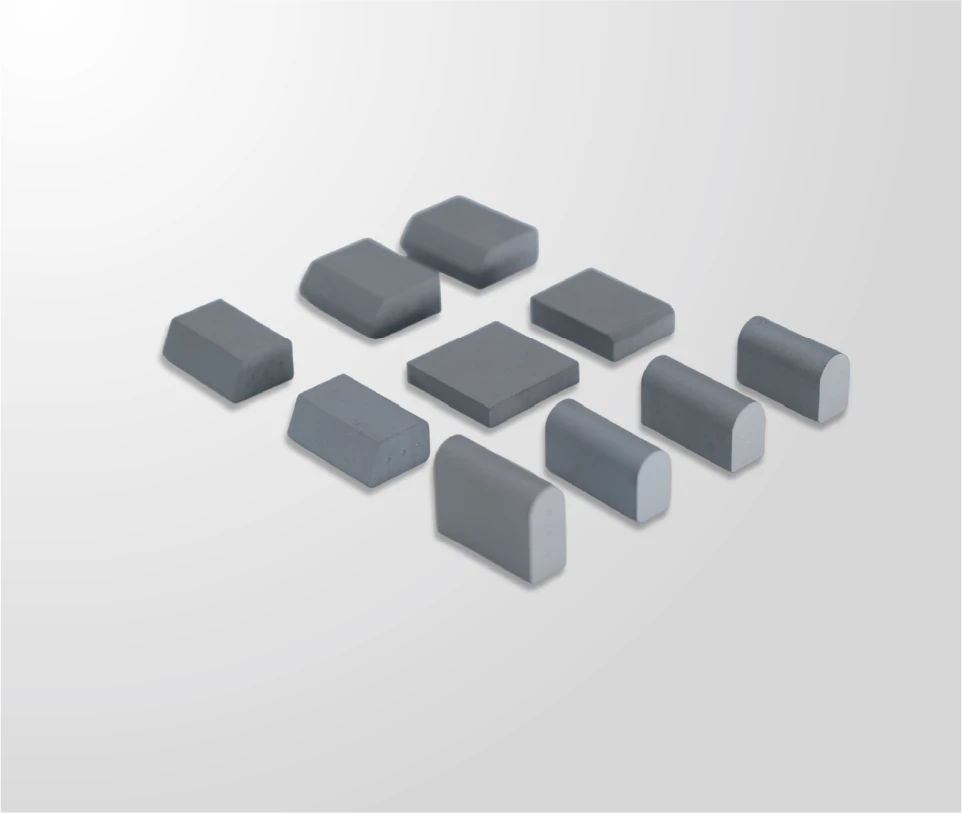
The choice is therefore worth stating as a policy rather than making it part by part. A stated rule, based on the width of the worn band and the repair route, produces consistent specifications and a stocking position that matches them. Fitment and equipment conventions that either solution has to meet come from the American Association of State Highway and Transportation Officials and SAE International, and the buying practice around wear surfaces is documented by the Snow and Ice Management Association. The insert range SENTHAI produces for these applications is described on the carbide inserts page.
FAQ
Is carbide not always harder than abrasion-resistant plate?
It is considerably harder, and that advantage applies to the small area the inserts cover. Abrasion-resistant plate covers the whole surface at a moderate hardness, so the comparison is between protecting everything a little and protecting the wear line a great deal.
Can the two be used together?
Yes, and it is common on equipment that sees both sliding wear and concentrated load. The plate carries the general wear across the surface while inserts take the concentrated damage at the line that does the work, which means each material is doing what it is better at.
Does AR plate need the same lead time as inserts?
No. Plate is bought as material and cut, formed and welded in a workshop, so lead time is measured in days. Inserts are produced to a grade and a shape, and a wear line built from them has to be specified, produced and shipped, which is a different planning problem.
Which option is cheaper over a season?
It depends on which covers the area that actually wears. Plate wins where wear is spread over a large surface; inserts win where the damage concentrates in a narrow band, because paying for hardness across an area that does not wear is cost without benefit.
Send a photograph of the worn surface and the material it handles, and SENTHAI will say whether plate, inserts or a combination belongs on that part.