A runway edge bought on price alone is a cheap part attached to an expensive risk. The unit cost is a small share of what an unavailable edge costs during an event, and the contract is where that difference is either managed or ignored.
Procurement for a movement area therefore covers four things: the specification, the availability model, the acceptance routine and the continuity arrangement. This is how each is decided.
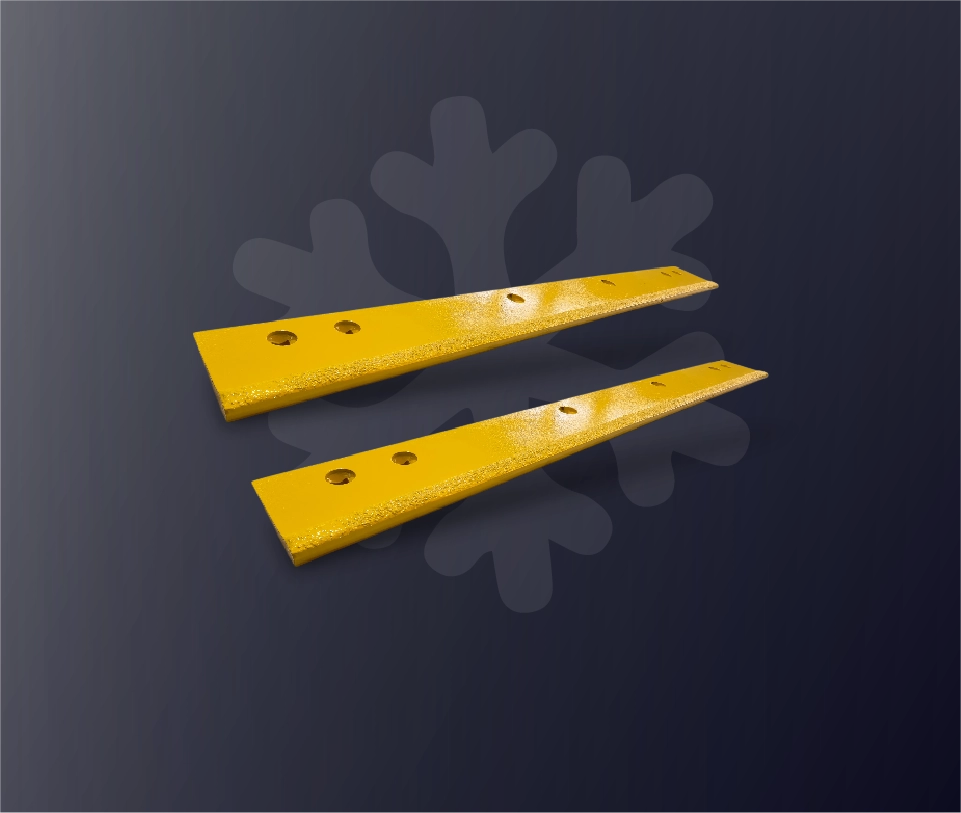
Runway clearing edge procurement: what the contract has to cover
The contract covers four things.
A specification states what the edge is, an availability model states how fast it can be obtained, an acceptance routine states what is checked on arrival, and a continuity arrangement states what happens when the primary source cannot deliver.
Those four are decided in that order, because each one constrains the next. The specification sets the pattern and the material, which determines who can supply it; the supplier base determines the availability model that is realistic; and the availability model determines what acceptance and continuity have to look like.
The most common procurement failure in this category is deciding the availability model first, by running a conventional supply tender, and then discovering that the specification it implies cannot be met inside the required delivery window.
Defining criticality and service levels
Criticality is what turns a generic service level into a requirement an airport can hold a supplier to.
The useful distinction is by machine and position: the edges on the formation that clears the main runway are critical, the edges on a machine used for service roads are not. Those two items should not sit under the same service level, because the operational consequence of being without them is different.
Once the critical items are named, the service level becomes concrete: the sizes covered, the quantity held or available, the response time from order to dispatch, and the period through which that applies. A service level expressed only as an annual availability percentage does not tell the maintenance team what will happen on the night of an event.
Specification essentials for aviation
An aviation specification has to be complete enough that a supplier can build to it without interpretation.
That means the drawing revision, the pattern as a layout, the edge material and grade, the fixings, the marking, the packing, and the document set that travels with each lot. Where the operator works to its own quality system, the specification should also say how the evidence is to be presented.
The document set is the item most often left to the supplier, and it is the one that causes the most rework. Naming it in the specification, with the batch referencing convention, means the requirement is planned into production rather than assembled afterwards.
Stockholding versus call-off contracts
Stockholding and call-off contracts place the availability risk in different organisations, and the choice is about which risk the airport can carry.
Stockholding gives the airport immediate access and consumes working capital and space. A call-off contract releases both and depends entirely on the supplier’s ability to deliver inside the window, which has to be evidenced from past performance rather than promised.
| Model | Airport provides | Supplier provides |
|---|---|---|
| Airport stockholding | Capital, space and stock management | Replenishment against a stated lead time |
| Supplier-held stock | A consumption forecast and a call-off mechanism | Physical stock held and dispatched within an agreed time |
| Call-off against production | A firm forward schedule | Capacity reserved inside the season |
| Mixed model | Stock of the critical sizes only | Cover of the long tail and of non-critical positions |
The fourth model is the one most airports actually run, and it is the one worth writing down explicitly. Holding stock of the critical sizes and covering the rest against a contracted lead time matches the availability model to the operational consequence rather than to a purchasing convention.
Delivery windows around weather
Delivery windows have to be expressed in the terms the operation uses, which are events rather than weeks.
A lead time of several weeks is acceptable for planned replenishment and irrelevant during an event, when what matters is whether an edge can be on site before the next clearing sequence. The contract should therefore state both: the standard lead time for planned orders, and the response commitment that applies during the operating season.
The second commitment needs to be supported by something the supplier can actually do, whether that is local stock, reserved capacity or a distributor arrangement. A response time that depends on an airfreight decision taken after the order is received is an intention rather than a service level.
Acceptance inspection
Acceptance inspection on delivery is short, and its purpose is to confirm that the lot is the one that was ordered.
The checks are documentary and physical, and they take minutes rather than hours. What they catch is the delivery that is technically within specification and wrong for the machine in front of it.
- Match the batch reference on the parts to the batch reference on the documents.
- Check the drawing revision on the dimensional record against the revision in the contract.
- Confirm the pattern as a layout on one piece, using a gauge or a trial fit where the machine is available.
- Confirm the document set is complete as specified, and log any missing item the same day.
The fourth item is the one that is skipped under time pressure and the one worth keeping. A document requested the day of delivery takes a day; the same request a month later turns into a correspondence that nobody can close.
Continuity and second-source options
Continuity is a decision about what happens when the primary source cannot deliver, and it belongs in the contract rather than in a contingency plan.
The options are to hold a buffer sized to the disruption, to qualify a second source against the same drawing, or to accept the risk deliberately for non-critical items. Each has a cost, and the cost is worth stating next to the item it protects.
A second source is more than a quotation. It needs the drawing, an approved first article, a pattern verification against the carrier and a document set in the same format, and those take time to put in place. An airport that wants a second source available in the winter has to have qualified it in the summer.
Total cost view for an airport
A total cost view for edges includes four items that a unit price does not.
The changeout labour and the downtime, the working capital or storage cost of whatever is held, the administrative cost of the document set and the acceptance routine, and the operational consequence of an unavailable edge during an event. The last of those is the largest and the hardest to quantify, which is why it is usually left out.
A workable way to include it is to price a defined outage: what an unavailable edge on the formation would cost in operational terms, and how much of that risk each contract structure removes. That converts a qualitative argument into a number a finance function can compare with a price difference.
Writing the tender
The tender works when it asks for the evidence the airport will rely on later.
The sequence below keeps the evaluation comparable between bidders and gives the acceptance routine something to check against.
- State the machines, the patterns and the sizes, with the drawing revisions.
- State the criticality split and the availability commitment that applies to each group.
- State the document set and the batch referencing convention in full.
- Ask for evidence of response performance rather than a statement of capability.
- Ask how a second source would be qualified, and what that would take.
The fourth item is what separates a credible bid from an optimistic one. A supplier that can show how it met a response commitment for another operator is answering the question; one that describes its warehouse is answering a different one.
What a supplier needs from the airport
A supplier cannot meet a service level it has not been given the inputs for, and the inputs are usually the airport’s own operational data.
The list below is short and it determines whether a committed response time is achievable or aspirational.
- The machines and the patterns they run, with the drawing revisions in force.
- Consumption by size over previous seasons, including the severe ones.
- The operating season and the events during which response matters most.
- The acceptance routine, so the document set can be assembled to match it.
Where procurement goes wrong
Four failures account for most procurement problems in this category, and none of them is about price.
The first is a specification that names the product without naming the document set. The second is a service level expressed as an annual percentage rather than as a response during an event. The third is a second source that was identified but never qualified. The fourth is an acceptance routine that exists on paper and is skipped when the delivery is late.
Each is corrected before the tender is issued rather than after the first winter. Material and test standards that a specification can reference are published by ASTM International and the American Society of Mechanical Engineers. Equipment and fitment conventions come from SAE International and the American Association of State Highway and Transportation Officials, model contract terms from the International Chamber of Commerce, and public procurement practice from the National Association of Counties and the Snow and Ice Management Association.
FAQ
What makes runway edge procurement different from highway buying?
The operating window and the documentation. A movement area has to be returned to service quickly, so availability matters as much as price, and every part has to carry a traceable record because the operator’s own procedures require it.
Is stockholding or a call-off contract better?
Stockholding puts availability under the airport’s control at the cost of working capital. A call-off contract releases the capital and depends on the supplier’s ability to deliver inside the event window, which has to be demonstrated rather than assumed.
What should an acceptance check cover?
The batch reference against the lot documents, the pattern and critical dimensions against the approved drawing revision, the edge condition and marking, and confirmation that the documentation set named in the contract has arrived complete.
How should continuity be protected?
By qualifying a second source or by holding an agreed buffer, and by stating in the contract what happens if the primary source cannot deliver inside the window. Continuity that depends on one supplier’s spare capacity is not a plan.
Should the contract be awarded on price alone?
Rarely, because the cost of an unavailable edge during an event is not in the unit price. A total cost view includes the changeout labour, the stocking cost and the operational consequence of a delivery that arrives after the window.
If you are specifying edges for a movement area, send the machine list and the operating window. SENTHAI will respond with the specification, the availability commitment it can support and the document set that travels with each lot.