Two inserts carry the same thread designation, fit the same holder and produce threads that pass a gauge check. One lasts a shift and the other lasts a third of it, and the difference sits in the profile detail and the coating rather than in the thread standard.
Substitution is a normal part of tool room practice and a common source of unexpected cost. This is what to check before the change is made.
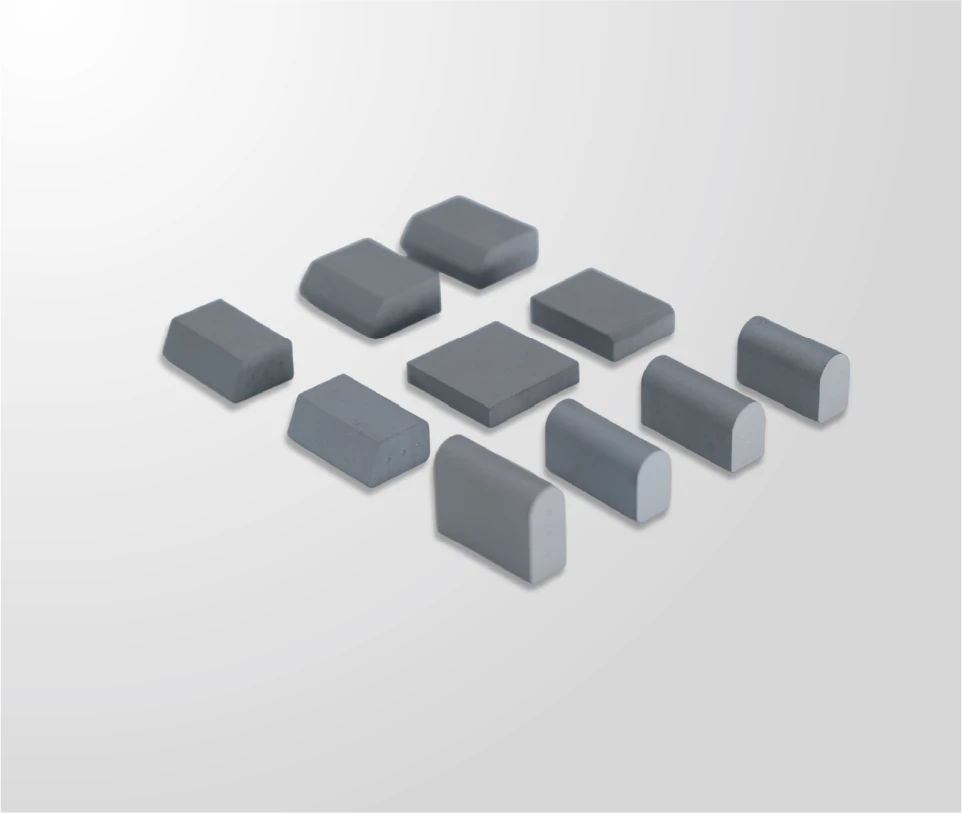
What a thread turning insert has to match
A thread turning insert has to match four things, and the thread standard is only one of them.
The thread form defines the profile, the geometry defines the tip and the seating, the grade and coating define how the cutting edge behaves, and the holder interface decides whether the insert sits correctly and repeatedly in the same position.
A substitution that gets three of the four right produces threads that pass inspection and a tool life that does not. That is why the process of changing supplier starts with comparing the items on the drawing and in the holder rather than with comparing prices.
Thread turning inserts: what to check before substituting
Four items decide whether a substitution is interchangeable.
The thread form and profile angle, the tip radius and any truncation, the grade and coating, and the seating interface with the holder.
A partial-profile insert that leaves the root form to a second pass is not interchangeable with a full-profile insert even when both cut the same pitch, because the number of passes and the load on the tip change. A different tip radius changes the root form, which may pass a gauge and fail an assembly. A different coating changes the heat and wear behaviour at the tip, which shows up as tool life rather than as a dimensional defect.
The seating interface is the item most easily overlooked. Two inserts that appear to fit can sit at slightly different heights, which changes the effective cutting geometry and the thread form in a way that a few parts will not reveal.
Insert geometry and thread form
Geometry and form are separate variables that are often described by a single part number.
The form is the profile the insert produces: the included angle, the root radius and whether the insert covers the full profile or a partial one. The geometry is the physical shape of the insert: its tip, its rake and the way it seats.
| Item | What it determines | Failure if it differs |
|---|---|---|
| Profile angle and form | The thread shape produced | Gauge may pass; assembly fit may not |
| Root radius and truncation | The root detail of the thread | Stress concentration and inspection failures |
| Full or partial profile | How many passes the thread needs | Changed cycle time and different tip loading |
| Seating interface | How repeatably the insert positions | Inconsistent thread form between inserts |
The third row is the one that changes the process rather than the part. A partial-profile insert requires additional passes to complete the root, so the cycle time and the number of insert engagements both change, and a comparison of tool life between the two has to account for that.
Grade and coating effects
Grade and coating decide how the tip behaves at temperature, which is where thread turning differs from general turning.
Thread turning concentrates the cut at a small area of the insert, and the tip spends a high proportion of each pass in contact. That raises the temperature at the tip and makes the coating’s ability to resist wear and diffusion more important than it would be on a broader cut.
The visible consequence is a change in tool life rather than in dimension. An insert that wears faster will still produce a conforming thread while it is sharp, and the cost appears in the number of inserts consumed per batch rather than in a rejection. That makes tool life the measurement that reveals a grade substitution, and it makes cost per thread the comparison to run.
Substitution risks
The risks fall into four groups, and only one of them is a dimensional risk.
Dimensional risk affects the thread form. Process risk affects the cycle time and the number of passes. Tool life risk affects consumption. And holder risk affects repeatability, which produces all three of the others intermittently.
| Risk | How it appears | How it is checked |
|---|---|---|
| Form difference | Gauge or assembly failures on some parts | Thread measurement against the drawing |
| Process change | Longer cycle, more passes | Cycle time records before and after |
| Tool life change | More inserts consumed per batch | Inserts consumed per hundred threads |
| Holder interaction | Intermittent variation between inserts | Repeat measurement across a full box of inserts |
The fourth row explains why a substitution can appear to work and then stop working. If the insert does not seat identically each time, the first few parts may be correct and later ones may not be, which is a pattern that is easy to attribute to the material rather than to the tooling.
Testing a replacement grade
A replacement is tested by changing one variable and measuring two outcomes.
The variable is the insert; the outcomes are thread conformance and tool life. Changing the cutting data at the same time removes the ability to attribute the result to either.
- Run the substitute on the same machine, material and setup as the current insert.
- Keep the speeds, feeds and passes the same as the current process.
- Measure the thread form on a sample from the batch, not only with a go and no-go gauge.
- Record the inserts consumed across the batch, and compare with the same figure for the current insert.
- Only after those are established, trial changes to the cutting data to optimise the new insert.
The fifth step is the one that is usually taken too early. Optimising the new insert before the baseline comparison has been made means the trial measures the optimisation rather than the insert, and the result cannot be used for a purchasing decision.
Documentation to request
The documentation that matters for a substitution is the material and coating specification, not the marketing description.
What a tool room needs is the grade designation with its composition class, the coating type, the profile and geometry designation, and the manufacturer’s stated application range. With those, the substitute can be compared with the incumbent on the same terms rather than on the description on a box.
Where the insert is supplied as an alternative to an original, asking for the equivalent designation rather than a general grade is the practical way to keep the comparison meaningful.
Cost per thread and tool life
Cost per thread is the comparison that reflects the process, because it includes the insert, the time and the scrap.
The calculation is the insert cost plus the machine time for the threading operation, divided by the threads produced per insert, with the scrap rate applied. On a thread turning operation the machine time is a significant term, so an insert that reduces the number of passes can be cheaper even at a higher price.
- Record the insert cost and the number of threads produced per insert.
- Record the cycle time for the threading operation, including all passes.
- Record the scrap rate attributable to the threading operation.
- Calculate cost per thread for the incumbent and for the substitute on the same basis.
The third item is the one that is usually left out, and on a thread operation it is where a form difference shows up. Scrap from a threading problem is expensive, and an insert that produces a conforming thread more reliably can pay for a higher price through the parts it does not spoil.
When to stay with the original
There are three situations where the substitution is not worth making, regardless of price.
The first is a process running close to a dimensional limit, where any variation in form is a rejection rather than a nuisance. The second is a machine whose holder condition is already marginal, where the new insert’s seating will be affected by the holder rather than by itself. The third is an operation where the thread is safety-critical or subject to a specified standard, where the evidence needed to justify a change is more than a trial batch can provide.
In each of those cases the saving is real and the risk is larger. Recognising them before the trial is what prevents a substitution from appearing to work and then producing a problem that takes weeks to attribute.
Questions for a tool room
Five questions establish whether a substitution is being evaluated or assumed.
They are worth asking at the point the change is proposed rather than after the first batch has run.
- What is the current cost per thread, including machine time and scrap?
- Which profile and geometry is the incumbent, and what does the substitute claim as equivalent?
- Has the holder condition been checked, and does it seat the substitute repeatably?
- What will be measured on the trial batch, and against which drawing?
- Who will decide, and on what evidence, whether the substitution is adopted?
The fifth question is the one that keeps a trial from becoming a fait accompli. A substitution that is introduced on a box of inserts and a favourable impression is difficult to reverse once the original has been removed from the system. Material and test standards that a specification can reference are published by ASTM International and the American Society of Mechanical Engineers, with measurement practice published by the National Institute of Standards and Technology, and machining conventions come from SAE International. Maintenance practice in equipment fleets, where the same substitution decisions arise on the workshop floor, is documented by the Snow and Ice Management Association.
FAQ
What are threading inserts used for?
Cutting a thread form on a turned part, as opposed to forming it or rolling it. The insert carries the thread profile at its tip, so the geometry of the insert determines the form of the thread that is produced.
Can a thread turning insert be substituted by another make?
It can, where the thread form, the geometry and the seating interface match. The failures come from the differences that are not obvious on a catalogue page: the profile angle, the tip radius, the coating and the way the insert seats in the holder.
What are the different types of threading insert?
They differ by thread form, by whether they cut partial or full profile, by the pitch range the tip is designed for, and by the holder interface. A substitution has to match all four, not only the thread standard and pitch.
How do you test a replacement insert grade?
On the same machine and the same material, with the same speeds and feeds, on a batch of parts that can be inspected. Measuring the thread form and the tool life on that batch gives a comparison; changing the cutting data at the same time gives neither.
If you are evaluating a replacement insert, send the current designation and the operation, and SENTHAI will confirm what has to match before the change is made.