If an aftermarket tooth set costs half the OEM price but lasts only a third as long, the fleet pays more per operating hour and may not notice for a season. That is why mulcher tooth purchasing is harder than it looks: the price is visible on the invoice, the consumption is not.
(Last modified date: November 12, 2026)
The comparison only becomes clear when both are measured the same way. This is what differs between the two and how to test it on your own work.
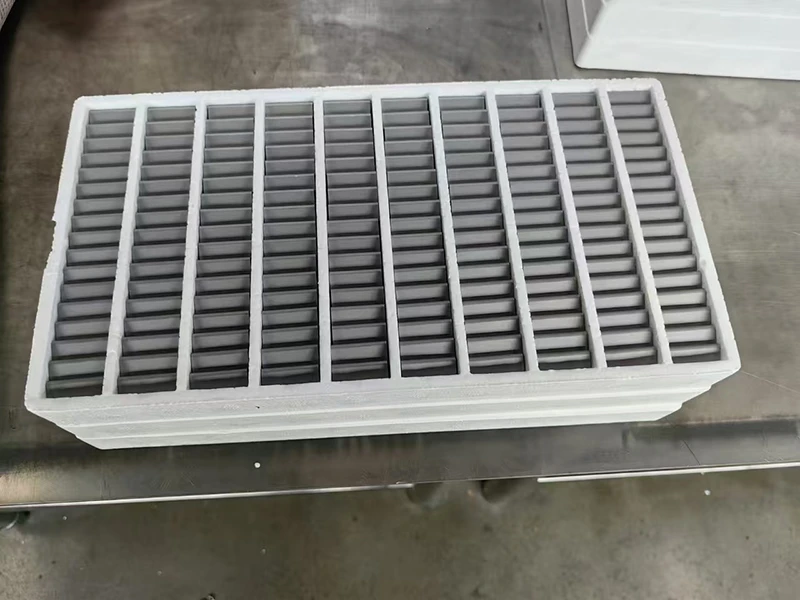
What makes a mulcher tooth wear
A mulcher tooth wears by three mechanisms, and the balance between them decides how long any tooth lasts.
Abrasion wears the tip as it contacts material and ground. Impact damages the tooth when the rotor meets something it cannot cut cleanly. And heat builds at the tip during heavy cutting, softening the material around it and accelerating wear. All three are affected by rotor speed, feed rate and what is being cut.
That is why a quoted tooth life is close to meaningless without the conditions attached. A tooth that lasts a long time on soft material and light ground contact can fail quickly when the same machine moves to stumps and rock, and the comparison between two teeth is only valid when both ran the same work.
Forestry mulcher teeth: what differs between OEM and aftermarket
Four things differ, and they are not equally visible.
The carbide grade and tip geometry differ first. The body material and heat treatment differ second. The dimensional fit at the mounting differs third, and the documentation and warranty position differ fourth.
The first two decide wear rate and show up gradually. The third decides whether the tooth sits as designed, and a small difference there produces uneven wear across the rotor rather than a simple reduction in life. The fourth decides what recourse the buyer has when a set fails early.
The practical consequence is that price per tooth is the least informative number in the comparison. A tooth that fits properly and wears predictably is worth more than a cheaper one that changes the balance of the rotor, even before the wear rate is considered.
Carbide grade and tip geometry
The tip is where the work happens, and its grade and shape are what an aftermarket supplier can most easily change without it being obvious.
A harder grade resists abrasion and is more sensitive to impact, which suits clean cutting and less suited to ground contact. A tougher grade does the reverse. The geometry of the tip controls how the tooth enters the material and how the load is distributed, so a differently shaped tip changes the cutting behaviour as well as the wear rate.
| Item | What it affects | How the difference appears |
|---|---|---|
| Carbide grade | Wear rate against toughness | Shorter or longer intervals; chipping on hard ground |
| Tip geometry | How the tooth enters and cuts | Changed cutting feel and power demand |
| Tip attachment | Whether the tip stays in place | Tips lost while the body remains sound |
| Body material and treatment | How the body wears behind the tip | Rapid loss of body once the tip is gone |
The third row is worth checking on any returned tooth. A tip that has separated has failed at the joint rather than at the cutting edge, and the joint is the item an aftermarket supplier is least likely to describe in a catalogue.
Hammer vs disc mulcher teeth: does OEM vs aftermarket change?
Yes, a little. Drum (hammer) mulchers carry many teeth that often touch soil and rock, so tooth consumption and the cost per hour of a cheaper aftermarket tooth show up quickly. Disc mulchers carry fewer teeth around a high-inertia disc, so each tooth’s fit and weight matter more for balance, and an off-weight aftermarket tooth is a bigger risk. The full comparison of the two head types is in carbide teeth types for mulchers.
Fit and balance considerations
Fit matters on a mulcher more than on many other wear parts, because the rotor is a balanced assembly.
Teeth of different mass, or teeth that seat differently, change the balance of the rotor. The visible consequences are vibration, uneven wear across the set and additional load on the bearings. The invisible consequence is that the comparison between two tooth types becomes meaningless, because the machine is no longer running as it did before.
The practical check is to weigh a sample from each set and to compare how they seat in the holder. A set that differs in mass or seating is not interchangeable, regardless of how it performs on a short trial.
Warranty and liability questions
The warranty position differs between OEM and aftermarket, and it is worth establishing before a failure rather than after.
An OEM tooth is normally covered by the machine manufacturer’s position on consumables, which may or may not provide recourse for early failure. An aftermarket tooth is covered by its own supplier’s terms, which vary considerably. In both cases the practical question is what evidence the supplier requires to consider a claim, and whether that evidence is something the fleet would have anyway.
There is also a question the fleet should ask itself: whether a machine under warranty or a service agreement requires original consumables. Where it does, using aftermarket teeth can affect the position on an unrelated failure, and that consequence is larger than the savings on a set.
Cost per hour of operation
Cost per hour of operation is the comparison that makes the two comparable, because it includes the changeover and the interruption.
The calculation is tooth cost plus changeover cost, divided by the hours the set worked. On a mulcher the changeover is not trivial: teeth are replaced in sets, the rotor has to be accessible, and the machine is stopped while it happens.
| Term | Where it comes from | Why it matters |
|---|---|---|
| Tooth cost per set | Purchase record | The visible figure and the least decisive |
| Changeover cost | Labour and machine downtime | Frequently the larger term on a productive machine |
| Hours per set | Operating records | The divisor that turns cost into cost per hour |
| Job conditions | Operator record | Determines whether two sets are comparable at all |
- Record the tooth cost per set and the changeover cost separately.
- Record the hours the set worked, on a defined job.
- Record what was cut and the ground conditions during those hours.
- Divide the total by the hours, and compare only sets that ran comparable work.
The fourth step is what keeps the comparison honest. A set that ran softer material and lighter ground contact will always look better, and the difference will be attributed to the tooth unless the conditions are recorded with it.
Trial approach before a fleet switch
A trial is worth running before a fleet changes supplier, and it has to be designed so that its result means something.
The sequence below produces a comparison that can be repeated, rather than an impression formed over a season.
- Choose one machine and one job type where the work is consistent.
- Fit the substitute to part of the rotor and the incumbent to the rest, if the design allows it.
- Run a defined number of hours and record the material and ground conditions.
- Weigh and measure both sets at the end, and compare wear at the same positions.
- Decide on the measurement, and record the basis of the decision.
The second step is the one that makes the trial fair, where the rotor allows it. Running the two sets on the same machine under the same conditions removes the variables that otherwise make the result an opinion.
Documentation to request
The documentation that supports a comparison is short, and it is what makes a claim possible later.
The useful items are the carbide grade or its designation, the tooth dimensions against the holder, the mass of the tooth, and the batch reference that ties the delivery to a production record.
- The grade or designation of the hard tip.
- The critical dimensions at the mounting interface.
- The mass of the tooth, so balance can be checked.
- The batch reference and what it resolves to.
Where aftermarket teeth fail
Aftermarket teeth fail in four recognisable ways, and each points at a different part of the specification.
The patterns below are worth identifying before the supplier is judged, because two of the four are fitment problems rather than material problems.
- Tips lost while the body remains sound, indicating a joint or attachment difference.
- Rapid wear across the whole set, indicating a different grade or tip geometry.
- Uneven wear between positions, indicating a mass or seating difference.
- Body wear behind an intact tip, indicating a different body material or treatment.
The third pattern is the one that is most often misread. Uneven wear across a rotor suggests the teeth are doing different amounts of work, which is a balance and seating issue, and changing the grade will not correct it.
Where OEM teeth are not worth the premium
Original teeth are not automatically the right answer, and there are conditions where the premium buys less than it appears.
The cases worth considering are work where the teeth wear evenly and predictably, so a good aftermarket set can match the interval; a machine that is close to the end of its service life, where a long interval is not valuable; and a job where the teeth are consumed by impact damage rather than wear, so a harder or better tip changes little.
In each of those, the comparison should still be made on cost per hour, but the expectation that the original wins is worth testing rather than assuming.
Questions for a dealer
Five questions establish whether an aftermarket tooth is a genuine alternative or a substitute of unknown specification.
The answers also make two suppliers comparable, because they force the same terms to be stated for both.
- What grade is the tip, and what application is it intended for?
- What are the dimensions and the mass of the tooth, with tolerances?
- How is the tip attached to the body, and what body material is used?
- What is the position on early failure, and what evidence is required?
- Has the tooth been run on comparable work, and what was the recorded interval?
The fifth question is the one that separates a supplier with evidence from one with an opinion. Material and test standards that a specification can reference are published by ASTM International and the American Society of Mechanical Engineers, with measurement practice published by the National Institute of Standards and Technology. Equipment conventions come from SAE International, and equipment industry practice is documented by the Association of Equipment Manufacturers. The carbide range SENTHAI produces for these applications is described on the carbide inserts page.
FAQ
Are aftermarket mulcher teeth as good as OEM?
Some are comparable and some are not, and the difference is visible in the tip geometry, the carbide grade and the fit. The practical answer is to compare on cost per operating hour using the fleet’s own records rather than on price per tooth.
What are mulcher teeth made of?
A steel body with a hard tip, usually cemented carbide, attached at the working edge. The body provides the toughness and the attachment, and the tip provides the wear resistance where the tooth meets the material.
How long do teeth last on a forestry mulcher?
It depends on the material being cut, the ground conditions and the rotor speed, so the useful measure is hours of operation on a defined job rather than a general figure. A rate established on the fleet’s own work is what makes two teeth comparable.
Can mulcher teeth be sharpened?
Some designs can be re-sharpened while the tip remains, and the exercise is worthwhile only while the hard material is still present. Once the tip is worn away, sharpening the steel body behind it produces a tooth that dulls within a short period.
Isn’t the cheapest tooth set the cheapest option?
Only if it lasts as long. Compare cost per operating hour including changeout labour; a tooth that costs less but wears much faster usually costs more.
Send the machine, the tooth pattern and the hours you get from a set, and SENTHAI will say what to compare and which specification suits the work.