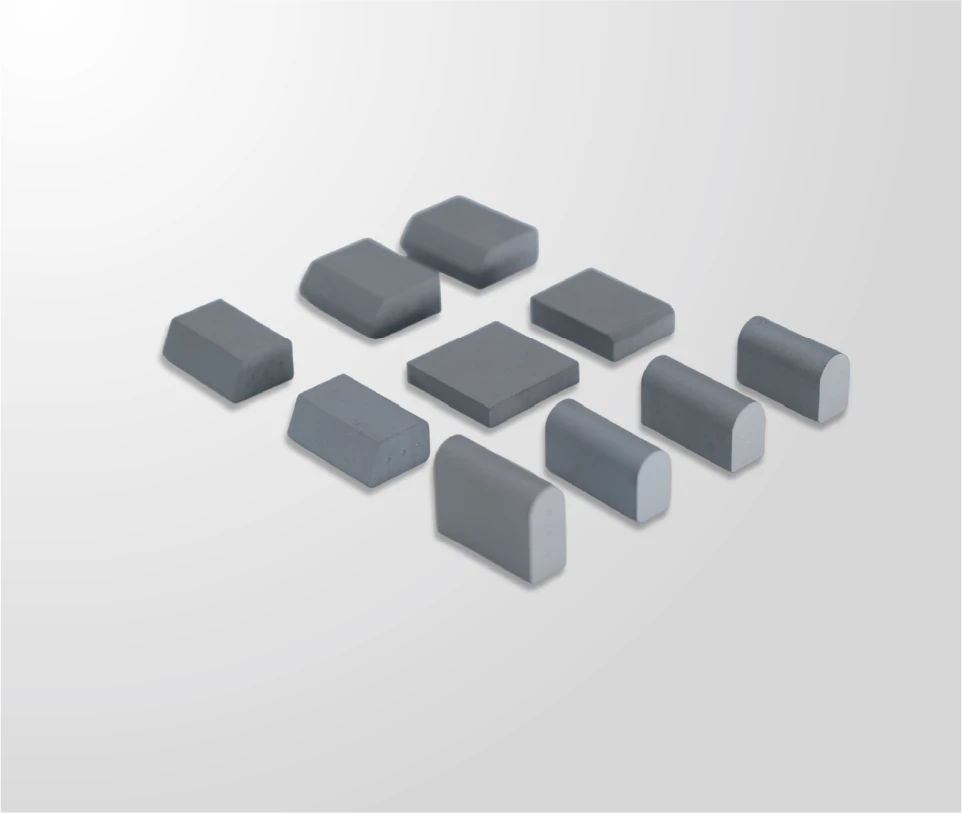
Two contractors run the same machine on comparable ground and get very different tooth life. One is using a fixed tooth with a shallow tip angle on material that includes ground contact; the other is using a swinging tooth with a different grade. The machine and the work are similar, and the tooth type is doing the difference.
(Last modified date: November 12, 2026)
Choosing a tooth type is a sequence of decisions about mounting, geometry and grade. This is the comparison, in the order it is made.
What the tooth has to do
A mulcher tooth has to cut, reduce and clear material while surviving contact with whatever is on the ground.
Those three jobs pull in different directions. Cutting and reduction favour an aggressive tip and a sharp edge; surviving ground contact favours a robust body and a tougher tip; and clearing favours geometry that lets material leave the rotor rather than being recirculated.
The machine sets the limits. Rotor speed, power and the mounting pattern determine what the tooth can be, so the comparison starts with the machine and the work rather than with a tooth catalogue.
Carbide teeth types mulchers: what the comparison decides
The comparison decides four things.
How the tooth is mounted, how aggressively the tip cuts, what the tip is made of, and how the tooth is maintained through its life.
Each decision constrains the next. A swinging design changes how the tip can be shaped because the tooth has to move. An aggressive tip angle changes the load on the body and the power demand. The grade has to suit the resulting load, and the maintenance practice determines whether the tooth is rotated or replaced.
Working in that order avoids the common outcome where a tooth is chosen for its tip and turns out to be wrong for the rotor it has to sit on.
Hammer mulcher teeth vs disc teeth
| Factor | Hammer / drum mulcher teeth | Disc mulcher teeth |
|---|---|---|
| Head design | Many fixed or swinging teeth on a horizontal drum | Fewer teeth around the rim of a heavy rotating disc |
| Cutting action | Repeated impact and grinding as the drum rotates | High-inertia cutting, strong on standing stems |
| Typical work | Brush, stumps and mulching close to grade | Fast clearing of standing trees and right-of-way |
| Ground contact | Frequent; soil and rock wear the teeth | Less, but a rock strike hits a few teeth hard |
| Carbide choice | Tougher carbide tips where ground contact is common | Wear-resistant tips held securely; balance matters |
Neither type is better in general: a drum with teeth suited to ground contact will outlast a disc on rocky stump work, while a disc clears standing timber faster. Match tooth type to the job first, then pick the carbide tip. Carbide tip material is the same family as the carbide inserts used in plow edges.
Fixed versus swinging tooth designs
The mounting design decides how the tooth behaves when it meets something it cannot cut.
A fixed tooth is bolted rigidly to the rotor, so any load passes directly into the tooth and the rotor. That gives a consistent cutting geometry and a predictable finish, and it means the tooth has to absorb impact rather than avoid it. A swinging tooth pivots, so it can deflect around an obstruction and return to its working position, which reduces the impact that reaches the tip.
The consequence for grade selection is direct. A fixed tooth usually needs a tougher tip, because it cannot avoid the load. A swinging tooth can carry a harder and more wear-resistant tip, because the mounting absorbs part of the shock. Neither design is better; they suit different ground conditions and power levels.
Tip geometry and cutting action
Tip geometry determines how the tooth enters the material and how the load is distributed across the tip.
A steeper angle concentrates the cut into a smaller area, which cuts harder material more effectively and loads the tip more heavily. A shallower angle spreads the load, which reduces tip stress and produces a less aggressive cut. The shape of the tip also affects how material leaves the rotor, which influences recirculation and power demand.
The practical implication is that geometry and grade cannot be selected separately. A harder grade on an aggressive geometry concentrates both the wear and the load in the same place, and the tooth fails at the tip rather than wearing out.
Carbide grade options
The grade sets the balance between wear resistance and impact tolerance at the tip.
A harder grade resists abrasion for longer and tolerates less shock, which suits clean cutting and light ground contact. A tougher grade does the reverse, which suits work where the rotor meets soil, stones or stumps. As on any carbide component, binder content and grain structure move the same two properties.
| Variable | Effect on the tooth | Where it is decided |
|---|---|---|
| Mounting type | How much impact reaches the tip | Machine design and rotor pattern |
| Tip angle and shape | Cutting aggression and load concentration | Tooth selection and application |
| Grade and binder content | Wear rate against impact tolerance | Tooth specification |
| Tip attachment | Whether the tip stays in place under load | Manufacturing method |
| Maintenance practice | How much life is realised before replacement | Fleet procedure |
The fifth row is the one that changes the outcome without changing the product. A tooth type that can be rotated or re-sharpened through its life delivers more of its potential than one that is run to destruction, and the same set of teeth can give very different results depending on the practice around it.
Material type effects on wear
What is being cut changes the wear mechanism more than the tooth type does.
Soft vegetation and brush produce cutting wear with little impact, which suits a hard tip and an aggressive geometry. Hardwood and dense material load the tip more heavily and generate more heat, which favours a grade that tolerates temperature. Ground contact introduces soil and stone, which is where impact tolerance becomes the limiting property.
The practical rule is to record what each set of teeth worked on. A comparison between two tooth types run on different material describes the material rather than the tooth, and that is the most common error in tooth selection.
Rotation and replacement practice
Rotation is worth having, and it depends on the design allowing it.
Swinging teeth can usually be reversed in their holders, which distributes wear across both working edges. Fixed teeth may be symmetrical, in which case they can be turned once, or single-sided, in which case they cannot. The practice is what converts a design feature into extra life.
- Check the tooth design for a reversible geometry before ordering.
- Record hours and material for each set, so the interval is measured rather than remembered.
- Rotate at a defined point in the interval rather than waiting for visible wear.
- Inspect the holders at each rotation, since wear there affects the next set.
The fourth step is the one that prevents a gradual decline that looks like a material problem. Holder wear changes how a new tooth sits and loads, so a set fitted into worn holders will not reach the interval its predecessor did.
Selection by machine and task
Selection ends with the machine and the task, because those two decide what is possible and what is useful.
A lower-powered machine with a fixed rotor needs a tooth that cuts efficiently at its available power, which usually means a less aggressive geometry and a grade that keeps an edge. A higher-powered machine on heavier material can carry a more aggressive tooth, because it has the power to drive it and the strength in the rotor to absorb the load.
The task matters in the same way. Work that stays above the ground suits a harder tip and a keener geometry. Work that mixes vegetation with soil contact needs a design that tolerates the ground, at some cost in cutting efficiency.
Where the wrong tooth type shows up
Three symptoms point at the tooth type rather than at the material or the operator.
Each is visible on the rotor rather than only on the returned tooth.
- Tips lost while the body remains sound, indicating a load or attachment mismatch.
- Uneven wear between positions, indicating a mass or seating difference between teeth.
- Excessive power demand and recirculation, indicating a geometry unsuited to the material.
What to check before changing type
Before a fleet changes tooth type, three items are worth confirming, because each changes the comparison.
The list below is short and it prevents a change that solves one problem by creating another.
- The machine’s power and rotor speed, and whether they suit the more aggressive option.
- The mass of the new tooth against the old, so rotor balance is not altered.
- The holder condition and whether the new tooth seats as its design requires.
Reading a tooth specification
A tooth specification is useful when it states the items that can be compared, and it usually does not.
The useful entries are the mounting type and dimensions, the tooth mass, the tip grade with its binder content or designation, the tip geometry, and the batch reference that ties a delivery to a production record. With those, two tooth types can be compared on the drawing rather than on the box.
Material and test standards that a specification can reference are published by ASTM International and the American Society of Mechanical Engineers, with measurement practice published by the National Institute of Standards and Technology. Equipment conventions come from SAE International, and equipment industry practice is documented by the Association of Equipment Manufacturers. The carbide range SENTHAI produces for these applications is described on the carbide inserts page.
FAQ
What are the different types of mulcher teeth?
They divide first by how they are mounted, fixed or swinging, and then by tip geometry, which governs how aggressively the tooth cuts. Grade and tip material sit behind those two, and the choice follows the machine and the material rather than the tooth alone.
Are mulching blades with teeth better than a plain blade?
They do different jobs. A toothed rotor cuts and reduces material, while a plain blade is used where the work is lighter and the finish matters more. Fitting teeth to a machine designed for plain blades changes the rotor balance and the power demand.
How long do carbide teeth last on a mulcher?
It depends on the material, the ground contact and the rotor speed, so it is measured in hours on a defined job rather than in a general figure. A rate established on the fleet’s own work is what makes two tooth types comparable.
What are carbide teeth?
A steel tooth body with a cemented carbide tip attached at the working edge. The body carries the load and the mounting, and the tip carries the wear resistance where the tooth meets the material.
Which lasts longer, hammer or disc mulcher teeth?
It depends on ground contact. Drum teeth wear faster in soil and rock but are cheaper to replace in sets; disc teeth see less ground contact but each rock strike matters more.
Send the machine, the rotor pattern and the material you cut, and SENTHAI will recommend the tooth type and grade that suit the work.