Two carbide edges with the same drawing and the same grade can arrive with quite different supply histories behind them. One follows a straightforward concentrate route through a single processing region; the other includes recycled hardmetal and a second conversion step.
Those histories rarely change the part, and they change the risk attached to ordering it. This is the route from ore to a finished wear part, the stages where supply is concentrated, and the questions that turn a sourcing risk into something a buyer can plan around.
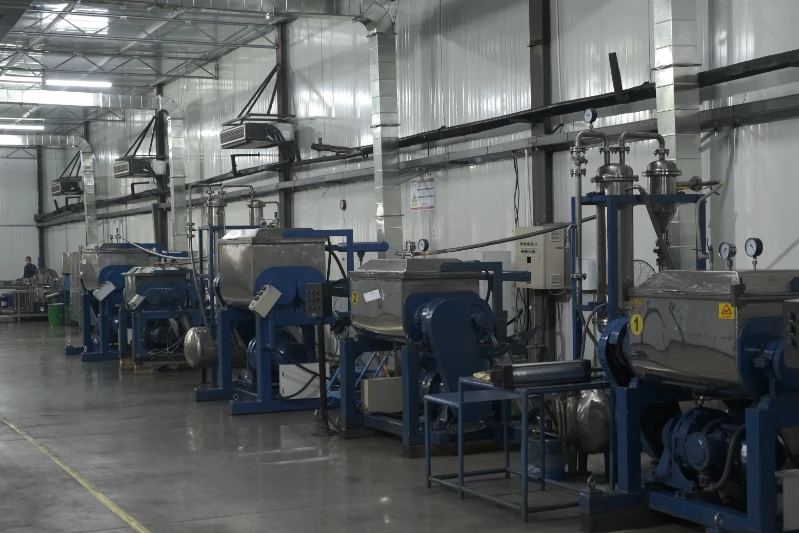
Where tungsten is mined and processed
Tungsten is mined as wolframite or scheelite, and both are concentrated close to the mine before the material travels any distance.
Mining is concentrated in a small number of countries, and that concentration is the first fact a buyer needs. Ore grades are low relative to the metal content, so the concentrate is the practical unit of trade rather than the ore, and the processing that follows is a chemical operation rather than a mechanical one. Because the conversion stage can be located anywhere with the right plant, energy and permitting, the geography of processing does not have to follow the geography of mining.
Mineral commodity information covering production, reserves and country concentration is published by national geological surveys, including the United States Geological Survey and the British Geological Survey. Those publications are the reference point for any figure a buyer intends to rely on.
Concentrate to ammonium paratungstate
The chemical conversion stage turns concentrate into an intermediate that a powder plant can use, and it is where most supply concentration actually sits.
Work through the stages below to see where a constraint would bite.
- Concentrate is digested chemically to bring the tungsten into solution.
- Impurities are removed so that the solution meets the purity a powder plant requires.
- The tungsten is crystallised out as an intermediate salt, commonly ammonium paratungstate.
- The intermediate is dried, packed and shipped to a powder producer or to a carbide manufacturer with its own reduction plant.
The concentration risk at this stage is not about ore reserves. It is about how many independent plants can perform the conversion, how long a new one takes to permit and build, and whether the trade rules for the intermediate differ from those for the concentrate. A restriction applied to one form of the material does not remove the material from the world; it redirects it and raises the cost of the route that remains open.
Powder production and carbide manufacturing
The powder stage decides the grades available, and it is the point at which the material becomes a manufacturing input rather than a commodity.
The intermediate is reduced to tungsten metal powder and then carburised to tungsten carbide powder. That powder is milled to a controlled grain size, blended with a binder metal such as cobalt and with any grain-growth inhibitors, and pressed into a shape. Sintering then densifies the compact into a hardmetal with the hardness, transverse rupture strength and wear behaviour the grade calls for. Grain size and binder content are the two variables that move the balance between wear resistance and toughness, and they are the reason two parts made from the same material chemistry can behave completely differently.
For a buyer, this is the stage where the specification work pays. A supplier that can state the grade, the grain size and the binder content, and can show a lot record against them, is describing a reproducible part. One that can only name a category is describing a class of part.
Supply concentration risks
Concentration risk in this supply chain is measurable in three ways, and each one leads to a different mitigation.
The first is by country, which matters when trade policy rather than geology is the constraint. The second is by company, which matters when a single producer’s plant outage affects a large share of a stage. The third is by stage, which matters most of all for a buyer, because a chain is only as resilient as its narrowest conversion step rather than its raw material base.
Critical raw material assessments published by public bodies are one way to read the first two, and the European Commission’s raw materials work is one such source: raw materials policy and analysis. What none of them can tell a buyer is their own exposure, which depends on the specific route their supplier uses.
Tungsten mining supply: how disruption reaches a buyer
Disruption reaches a buyer through lead time first.
A constraint at one processing stage shows up as a longer lead time before it shows up as a price, and the price arrives later still, when the stock bought at the old cost has been consumed. That order matters, because it is the reverse of how the risk is usually discussed.
Understanding the sequence changes the response. A buyer who expects a price effect plans a budget; a buyer who expects a lead time effect plans an order date, and the order date is the variable that actually protects a season. Between the two, the lead time effect is also the one a buyer can act on, because it can be absorbed by ordering earlier and by holding a qualified second source rather than by holding stock.
The second consequence is that the disruption usually arrives unevenly. Parts with a long production route and custom tooling are affected before catalogue items, because a delay at the powder or pressing stage pushes everything behind it. A fleet or a distributor with a mixture of both can sequence its orders to protect the items that cannot be substituted.
Recycling as a secondary source
Recycling is a genuine secondary source of tungsten, and its characteristics are different from those of primary supply.
Hardmetal scrap, swarf and end-of-life tooling are collected and processed back into intermediate material, which reduces the quantity of primary concentrate a manufacturer needs for the same output. Because tungsten is a dense and valuable material, recovery rates are economically attractive and the practice is long established. What recycling does not do is respond quickly to demand: the available scrap depends on what industry discards, so supply from this route is a function of past consumption rather than of current orders.
The practical implication for a buyer is that recycled content is one way a supplier manages material availability, and it is a legitimate answer to a question about continuity. It is not an answer to a question about origin, because recycled material has its own history.
Supplier questions on origin
The questions worth asking about origin are the ones a supplier can answer from its own records.
- Which conversion route does the material for this part use, and how many independent plants serve it?
- Is any of the material recycled, and if so, what is the declared recycled content?
- Which stage of the route is the narrowest, and what is the lead time if that stage is constrained?
- What documentation travels with the lot, and does it record the grade and the production batch?
A supplier that answers these four is describing a supply chain rather than a country of origin, which is more useful and harder to misstate.
Comparing two supply routes
The two routes that a buyer will actually encounter differ in a consistent set of ways.
| Variable | Single-route supply | Route with a second conversion source or recycled content |
|---|---|---|
| Material availability | Dependent on one processing chain | Shared across more than one chain |
| Lead time exposure | Longer and more variable when that chain is constrained | Shorter and more even, because the load can be reallocated |
| Origin documentation | Simple to state, since one route is involved | Requires a declared content figure rather than a single origin |
| Cost | Lower when the route is unconstrained | Often slightly higher, in exchange for continuity |
What a buyer can verify without visiting a mine
Verification does not require visibility of the whole chain, and four checks cover most of the risk.
- Ask for the grade and the lot record for the part, not for the material.
- Confirm the inspection that was applied to the lot, and which dimensions it covered.
- Ask what the supplier’s own lead time has done over the last four quarters, which reveals more about its route than a statement about supply.
- Qualify a second source against the same drawing, so that continuity does not depend on one route remaining open.
The framework for cross-border supply, including how trade measures are applied to materials and intermediates, is described by the World Trade Organization, and industry-level material information is published by the International Tungsten Industry Association.
SENTHAI manufactures carbide wear parts in Rayong, Thailand, with the powder, pressing, sintering and brazing steps carried out in house, which keeps the conversion route within the factory rather than spread across suppliers. The carbide insert range sets out the grades and tolerances available, and the SENTHAI blog carries further notes on specification and supply.
FAQ
Where does tungsten come from?
It is mined as wolframite or scheelite ore, concentrated near the mine, converted chemically into an intermediate product and then reduced to powder before it becomes a hardmetal part. The mining stage is concentrated in a small number of countries, while conversion and powder production are more widely distributed.
How does tungsten supply affect carbide prices?
Through lead time first and price second. A constraint at one stage lengthens delivery before it changes a quotation, and the price effect appears later still, once the material bought at the previous cost has been consumed.
Can recycled tungsten replace mined material?
Recycling is a real secondary source and it recovers a meaningful share of industrial tungsten, particularly from hardmetal scrap. It supplements primary supply rather than replacing it, because the recovered material depends on the scrap that becomes available and not on demand.
If origin, grade or continuity has to be documented for a tender, send the specification and the documentation the buyer requires and SENTHAI will confirm what can be provided with each lot.
This article is one step in the Sourcing Carbide Wear Parts Guide, which covers the technical pack, supplier selection, landed cost and supply risk.