The most abrasive material a biomass plant handles is usually not the feedstock it was designed for. It is the stream that arrives when the specification slips: sandy chips, straw with soil in it, or green material that binds and loads the equipment differently.
Wear parts in these plants are therefore specified against the operating envelope rather than the design point. This is where the wear concentrates, how mixed feedstocks change the material choice, and how to measure the downtime a better specification actually avoids.
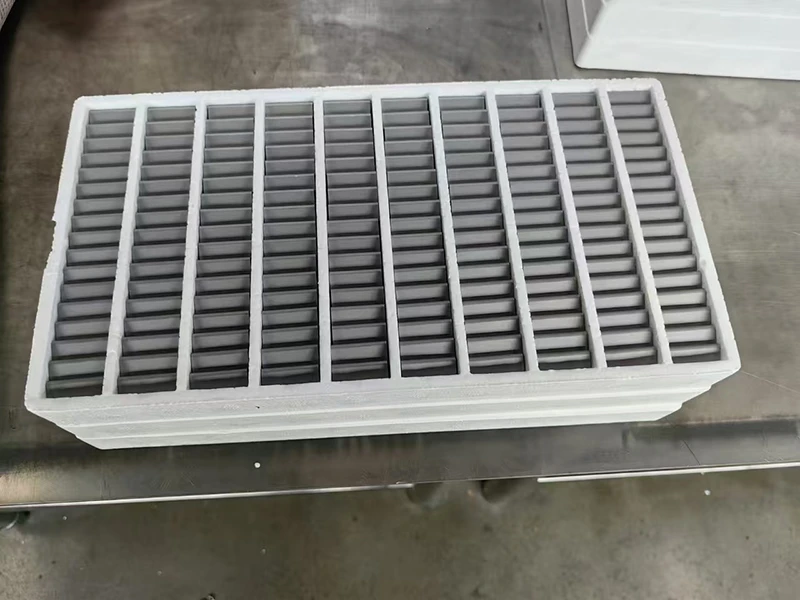
Wear points in biomass handling
Wear in a biomass plant concentrates at a small number of points where the material changes direction or is reduced in size.
The receiving area and the conveying system produce sliding abrasion, because the material moves continuously across floors, chute liners, screw flights and transfer points. Size reduction produces a mix of impact and abrasion, because hammers or knives strike the material and then drag across it. Drying and densification add heat and pressure, which change the mechanical properties of the steel around the wear surface and can accelerate both corrosion and abrasive loss. Screening equipment wears at the apertures and at the deck edges, where the material is forced through or past a restriction.
Each of those is a different duty, and a plant that uses one wear material everywhere will over-specify the easy positions and under-specify the hard ones. Mapping the positions by dominant mechanism is the first step in any downtime programme.
Abrasive and corrosive conditions
Biomass wear is rarely purely abrasive, and the corrosive component is what makes the material choice less obvious.
Moisture, organic acids and elevated temperature combine to attack the binder or the matrix of a wear material while abrasion is removing it mechanically. A hardfacing alloy that performs well on dry chips can deteriorate quickly on wet green material at temperature, because the corrosion removes the matrix that supports the hard phase and the hard particles then fall out rather than wearing down. Ash and soil content add mineral hardness to the same stream, which raises the abrasive load on top of the corrosive one.
The engineering consequence is that corrosion resistance has to be considered alongside hardness, and that the wear surface should be specified for the range of moisture and temperature the plant actually runs, not for the dry design case.
Where a plant handles material streams that are also regulated as waste or as fuel, the environmental and handling requirements for those streams are set out by the Environmental Protection Agency, and they shape what the plant is permitted to accept, which in turn sets the feedstock envelope the wear parts have to survive.
Material selection for mixed feedstocks
Selection follows from the mechanism map, and the practical options are fewer than a catalogue suggests.
For sliding abrasion at moderate temperature, hardened plate and carbide-faced liners are the two common choices, with carbide favoured where dimensional stability matters and the position cannot be rebuilt often. For impact-dominated positions, a tougher base with a more limited hard phase resists cracking where a fully hard part would fracture. For hot and corrosive positions, the matrix of the wear material matters more than its hardness, and a material with better corrosion resistance at slightly lower hardness often outlasts a harder alternative.
The useful discipline is to record which material was in place when a particular failure occurred, with the feedstock and moisture at the time. Two seasons of that record are enough to replace a general recommendation with a plant-specific one. Standard test methods for wear and hardness are published by ASTM International.
Biomass wear parts: how downtime is actually reduced
Downtime falls when the part is matched to the feedstock.
A wear part that suits dry wood chips will not survive a mixed feed that includes sand, straw and green material. The reduction in downtime comes from choosing the wear surface for the worst feed the plant actually accepts, not the average one it was designed around.
That single change produces most of the available improvement, because it moves the failure from an unplanned stop to a scheduled replacement. The second change is to replace on a measured interval rather than at failure, which converts a breakdown into an activity inside a planned maintenance window. The third is to hold the parts at the plant, so the interval is limited by the work rather than by the delivery.
The order matters. A plant that improves availability without changing the specification will schedule more replacements of the same inadequate part; one that changes the specification without improving availability will simply discover the improvement later.
Carbide versus overlay solutions
The two families of solution compete on different grounds, and the comparison is usually decided by the position rather than by the plant.
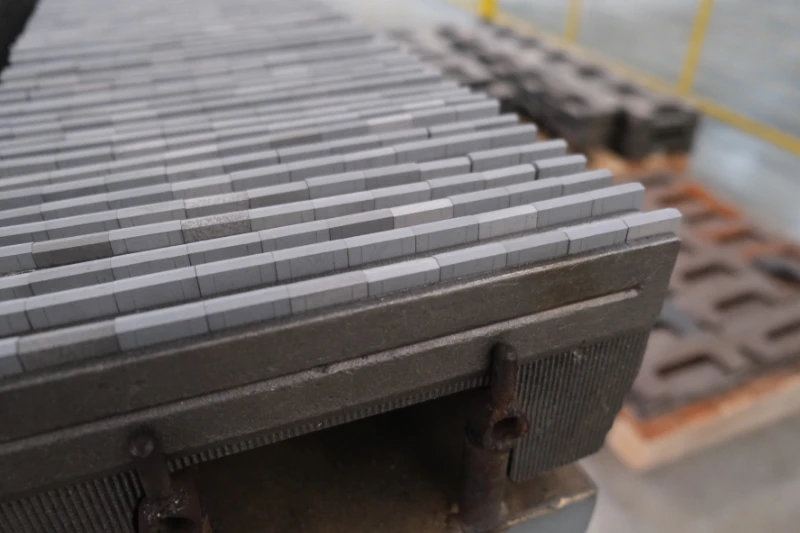
Weld overlay applies a hard surface to a steel base and can be renewed in place, which suits large fabricated components and positions where a workshop can rebuild the part. Its limits are the thickness that can be applied and the heat the process puts into the base. Carbide-faced parts are made as components, usually with a defined profile and tolerance, and they are replaced rather than rebuilt; they suit positions where dimensional control matters, where the part is small enough to handle, and where a rebuild would cost more than a replacement.
The practical split in a biomass plant is that overlays dominate on large chutes, hoppers and screw flights, while carbide-dominated parts appear in size reduction, in restricted-flow positions and wherever a defined edge or aperture has to hold its shape. Both belong in the same specification, because a plant that uses only one of them leaves performance on the table at one end of the range.
Maintenance windows and planning
The value of a wear specification is realised inside maintenance windows, and the windows have to be planned before they are needed.
- A written inspection interval per wear position, expressed in operating hours or tonnes processed.
- A replacement interval derived from two seasons of that record rather than from the supplier’s general advice.
- Parts held at the plant for the positions that cause the longest unplanned stop.
- A defined work sequence for the window, so that several wear positions are addressed in one shutdown.
The last item produces the largest gain in most plants, because the cost of a shutdown is dominated by the stop itself rather than by the parts replaced during it.
Measuring downtime avoided
A downtime claim should be measured in the plant’s own units, and the table below sets out what to record.
| Measure | How to record it | What it shows |
|---|---|---|
| Unplanned stops per position | Count and duration, with the cause | Whether failures moved to scheduled work |
| Tonnes processed per wear part | Processed tonnage divided by parts consumed | The wear rate in production units rather than hours |
| Replacement hours per position | Labour hours for each replacement | The true cost of the part, beyond its price |
| Feedstock mix during the interval | Moisture, ash and the share of each stream | Whether a change in wear came from the part or the feed |
Written as a formula, the availability benefit is avoided downtime = (unplanned hours before less unplanned hours after) x contribution per hour of production, with the tonnage record used to check that the two periods handled comparable material. Without that check, an improvement is as likely to be a change in feedstock as a change in wear parts.
Procurement checklist
A procurement specification for biomass wear parts is short, and every item on it is drawn from the plant’s own record.
- The position and the dominant wear mechanism at that position, from the plant’s inspection record.
- The feedstock range the part has to tolerate, including moisture and the abrasive streams.
- The material or grade required, with the hardness or wear property stated rather than implied.
- The dimensions that matter for fit, including the fixing centres and any aperture size that must hold.
- The documentation expected per lot, so that a failure can be assessed against the specification.
What causes premature wear in biomass plants
Premature wear is usually traceable to one of a small number of causes, and each leaves a different signature.
- A feedstock outside the design envelope, which shows as accelerated wear across every position at once.
- A material matched to abrasion in a position where impact dominates, which shows as cracking rather than thinning.
- Corrosion reducing the matrix that supports the hard phase, which shows as pitting and as hard particles releasing.
- A fixing or backing problem that lets the wear surface move, which shows as localised loss at bolt positions.
Feedstock questions buyers ask
Three questions come up in procurement conversations, and each one affects the specification rather than only the description.
Raw biomass material is plant or organic material used as feedstock before processing, including wood, straw, agricultural residues, energy crops and organic waste streams. The material that reaches a wear part is normally a mixture of several of these, and the mixture decides how the part wears. Biomass pellets are pressed from ground biomass, most often wood and increasingly agricultural residues, which means the grinding and pressing stages carry the heaviest wear load in a pellet plant. What can be made from biomass is a wider question than wear parts, and it determines the feedstock mix, which is the input the wear specification is built on.
Energy and feedstock data for this sector are published by the Department of Energy and the Energy Information Administration. Reference measurement practice for the inspections behind the record comes from the National Institute of Standards and Technology.
FAQ
What is raw biomass material?
It is plant or organic material used as feedstock before processing, including wood, straw, agricultural residues, energy crops and organic waste streams. The material that reaches a wear part is usually a mixture, and the mixture rather than the nominal feedstock decides how the part wears.
What are biomass pellets made from?
Pellets are pressed from ground biomass, most often wood, and can include agricultural residues and other streams depending on the plant and the specification it produces to. Grinding and pressing are the two stages where abrasive and impact wear concentrate.
How do you reduce downtime from wear parts?
By matching the wear surface to the worst feed the plant accepts rather than the average it was designed for, and by replacing on a measured interval instead of at failure. Both changes move the failure from an unplanned stop to a scheduled task within a maintenance window.
If a plant is rebuilding a wear specification for mixed feedstocks, send the positions, the feedstock range and the failure history and SENTHAI will set out what can be supplied against them.
This article is one step in the Sourcing Carbide Wear Parts Guide, which covers the technical pack, supplier selection, landed cost and supply risk.