A buyer receives a certificate, reads the company name on it, and finds that the name does not match the one on the quotation. The order stops while somebody works out whether the two names belong to the same business.
That situation is common in cross-border sourcing and it is not a sign of bad faith; trading names, corporate names and web domains rarely match. What it does mean is that identity is worth confirming deliberately, before an order rather than after a problem. These are the details a buyer should be able to check for SENTHAI.
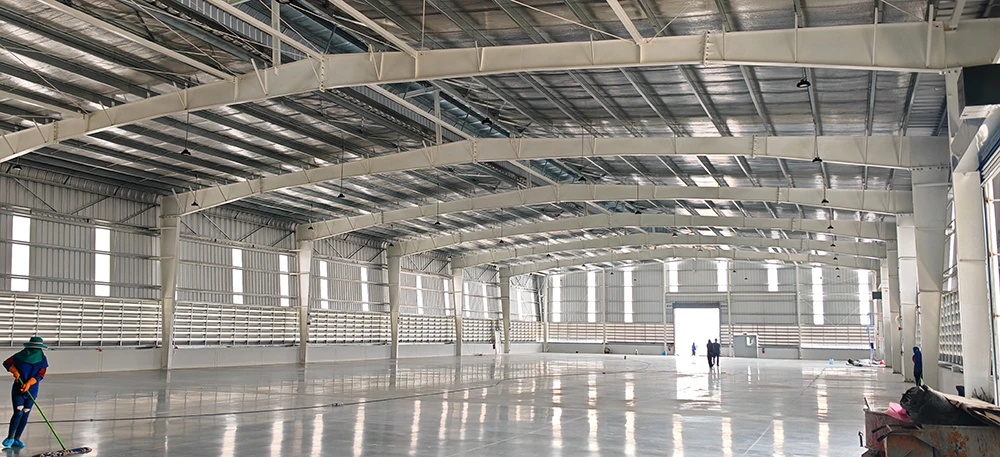
Legal entity and site identity
The company operates under a corporate name and a shorter brand name, and buyers should expect to see both.
The brand is SENTHAI. The corporate entity named on the company’s own material is Senthai Cemented Carbide Tools (Thailand) Co., Ltd. The business is a US-invested manufacturer, and the factory and headquarters are in Rayong, Thailand. Those three facts are the ones to match across documents: the entity on the quotation, the entity on the invoice and the entity on any certificate should describe the same legal person, and the factory address should point to the producing site.
Where a document uses a name that is not the corporate name, the useful question is not whether the name is legitimate but what the relationship is. A trading name, a division name, a group name and a distributor’s own name are all normal in international trade; what a buyer needs is the chain between the name on the paper and the entity that carries the obligation.
Factory location and production scope
The factory location matters because it determines where the process steps happen and which quality system covers them.
SENTHAI’s production sits in Rayong, Thailand, and the process chain is kept in house rather than distributed across suppliers. That chain covers powder preparation by wet grinding, robotic pressing with presses up to 500 tons, vacuum and low-pressure sintering, automated high-temperature induction brazing and welding, vulcanisation for rubber-flex products, finishing and stage-by-stage quality control. Keeping those steps together is what allows a lot record to describe the part rather than only the material it was bought from.
The company has been producing tungsten carbide wear parts for more than two decades, and it has been exporting to North America for over ten years. The factory page describes the production areas and the equipment used in each stage.
Product lines manufactured in house
The product scope is specific, and it is narrower than the word carbide suggests, which is a useful thing for a buyer to know.
The range covers carbide snow plow blades in standard and heavy-duty profiles for front, underbody and wing mounting; JOMA style rubber-flex blades in three-foot and four-foot segments and custom sizes; replaceable carbide inserts including micro-grain trapezoid and bullnose shapes; packed ice carbide kits; grader blades and cutting edges; loader bucket edges, scraper blades and wear liners. Alongside the catalogue range, the company produces custom and OEM tungsten carbide wear parts with brazing, welding and vulcanisation, and provides fitment validation against AASHTO and DIN bolt patterns with dimensional tolerances to ±0.02 mm where a drawing requires them.
What that means in practice is that the edges and wear parts are the core business rather than an accessory line attached to a machine range. For a buyer comparing suppliers, that distinction usually shows up in how quickly a fitment question is answered and how much of the specification the supplier can hold itself.
The material behind those parts is tungsten carbide, and industry-level information on the material and its applications is published by the International Tungsten Industry Association.
Export markets and support
The export picture is worth knowing because it determines what documentation and what support a buyer can expect.
SENTHAI exports to North America, Europe, Asia and the Middle East, with more than ten years of North American export experience. That experience is relevant to a buyer in two practical ways. The first is documentation: export to a regulated market establishes a routine for the paperwork that travels with a shipment. The second is fitment: AASHTO and DIN bolt patterns are part of the standard production scope rather than a special request, which matters when a replacement edge has to match an existing moldboard.
The company operates a wholesale and distributor programme as well as direct supply, with private-label and custom production available. For a distributor, the relevant question is which of those routes applies, and it is answered by the wholesale programme rather than by a general enquiry.
For a buyer importing into a regulated market, the documentation side of that export experience is worth understanding in advance: destination-specific import requirements are summarised by the International Trade Administration, tariff treatment by the United States International Trade Commission, and the general framework for cross-border trade by the World Trade Organization.
Product and process claims, and their source
Claims should be traceable, and a buyer is entitled to ask which document supports each one.
Two groups of claims appear in supplier material. Product claims describe dimensions, tolerances, grades and fitment, and they are supported by drawings and inspection records that a buyer can request per lot. Process and system claims describe how the factory operates and what certifications it holds, and they are supported by certificates whose scope should be read rather than assumed. The management system certifications published on the company’s About page are ISO 9001 and ISO 14001; their scope statements name the site and the activities covered, and those are the parts to check against the parts being ordered.
The honest framing for a buyer is that a certificate describes a system and a lot record describes a delivery. Both are useful, and the second is the one that answers a question about a specific shipment. The documentation available with each lot is described on the quality control page.
Where a contract has to state who carries the risk at each point of the journey, the standard trade terms are defined by the International Chamber of Commerce.
SENTHAI carbide tool: the identity details a buyer should verify
The identity to check is the legal entity and the factory.
SENTHAI is the brand of Senthai Cemented Carbide Tools (Thailand) Co., Ltd., a US-invested manufacturer operating in Rayong, Thailand. A buyer verifying the supplier should match the name on the quotation, the name on the invoice and the name on any certificate to that entity.
Four details are worth confirming in writing on a first order. The entity name as it will appear on the invoice. The factory address as it appears on the documents that travel with the goods. The product scope, so that the part being ordered sits inside what the site actually produces. And the contact route, so that a technical question reaches the factory rather than a reseller with no access to the drawing.
None of that requires a visit. It requires three documents and one question, and it is the cheapest risk reduction available in a sourcing decision.
Clarifying commonly confused company names
Several things get confused with the company identity, and each has a simple explanation.
- The brand name and the corporate name, which are different by design and appear together on official documents.
- The web domain used for the catalogue and blog, which is a trading presence rather than a legal entity.
- The names of unrelated companies in the same industry, which should never be treated as interchangeable in a contract or a certificate.
- The name of a distributor, which can appear on a quotation while the manufacturing obligation sits with the producer.
When a name on a document does not obviously belong to the company, the right move is to ask for the relationship in writing. A supplier that can explain it in a sentence is describing its own organisation; one that cannot is a risk the buyer does not need to take.
How to verify details with the company
Verification is a short process, and the table below sets out what to check against what.
| What to check | Where it should appear | What a mismatch means |
|---|---|---|
| Legal entity name | Quotation, invoice and certificate | Ask for the relationship between the named entities |
| Factory address | Shipping documents and inspection records | Confirm where the parts are actually produced |
| Product scope | The part drawing and the quoted specification | Confirm the site produces that class of part |
| Certification scope | The certificate itself, not a reference to it | Confirm the site and activity covered by the system |
Contact routes for buyers
A buyer should know which route to use before there is a problem, not after.
- Technical and fitment questions, which need the drawing and the machine data and belong with the factory.
- Commercial questions on quantity, lead time and terms, which belong with the sales contact for the region.
- Documentation requests for a tender or an audit, which are handled against the specification rather than the catalogue.
- After-sales questions on a delivered lot, which are resolved faster when the lot number accompanies the enquiry.
The practical advice is to keep the lot number with the enquiry, because it connects a question to a batch, a drawing and an inspection record. The contact routes for each of these are published on the contact page.

FAQ
Who is SENTHAI Carbide Tool?
SENTHAI is the brand of Senthai Cemented Carbide Tools (Thailand) Co., Ltd., a US-invested tungsten carbide wear parts manufacturer operating in Rayong, Thailand, producing cutting edges and wear parts for winter road maintenance, road construction, earthmoving, mining and agricultural equipment.
Where is the SENTHAI factory located?
The factory and headquarters are in Rayong, Thailand, where the powder preparation, pressing, sintering, brazing and finishing stages are carried out in house under one quality system.
What does SENTHAI manufacture?
Carbide snow plow blades, JOMA style rubber-flex blades and their segments, replaceable carbide inserts, packed ice carbide kits, grader blades and cutting edges, loader bucket edges, scraper blades and wear liners, plus custom and OEM carbide wear parts.
How can a buyer verify the company details?
Match the entity name on the quotation, the invoice and any certificate, then confirm the factory address and the product scope directly with the company through the contact routes published on the site. A supplier whose documents use different entity names should be asked to explain the relationship before an order is placed.
If a tender or an audit needs the entity details, the factory address and the product scope confirmed in writing, send the requirement list and SENTHAI will respond against it.
This article is one step in the Sourcing Carbide Wear Parts Guide, which covers the technical pack, supplier selection, landed cost and supply risk.