For how senthai documents its capabilities: claims, certificates and evidence, the best result comes from matching the component, material, and setup to a documented operating condition, then validating fit, wear, safety, and cost in a controlled trial. This updated guide uses current search evidence and official-source checks to turn the topic into a repeatable selection process.
Updated: October 19, 2026
The most useful document a manufacturer can send a buyer is usually not the certificate. It is the inspection record for the lot that was actually produced, because that is the document that answers a question about the parts in the box.
Certificates matter, and they describe a system rather than a shipment. This page sets out what SENTHAI can evidence, what the certificates cover, which claims the company deliberately does not make, and how to request documentation for a tender or an audit.
What a buyer should be able to verify about a supplier
Four questions decide whether a supplier’s claims can be used in a purchasing decision.
Can the supplier state what it produces, in terms specific enough to be checked? Can it show the process behind a part rather than only its dimensions? Can it produce a record for the lot that was shipped? And can it say clearly what it does not do? A supplier that answers all four is straightforward to buy from, because the specification and the evidence meet in the same document.
That last question is the one most buyers skip. A supplier’s account of its own limits is the most reliable signal available about how it will behave when a requirement falls outside them, and it is the reason SENTHAI answers enquiries by stating what can be produced rather than by agreeing to everything.
Capabilities we can demonstrate
The capabilities that can be demonstrated are the ones tied to equipment and process records inside the factory.
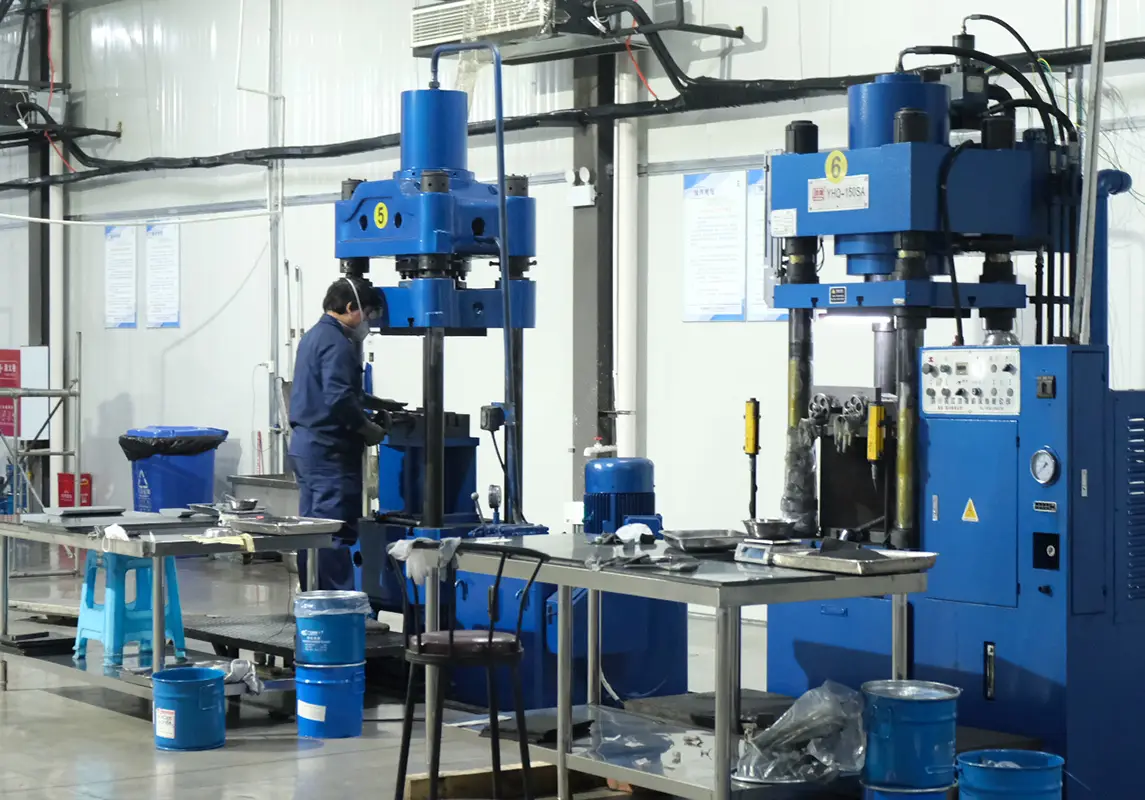
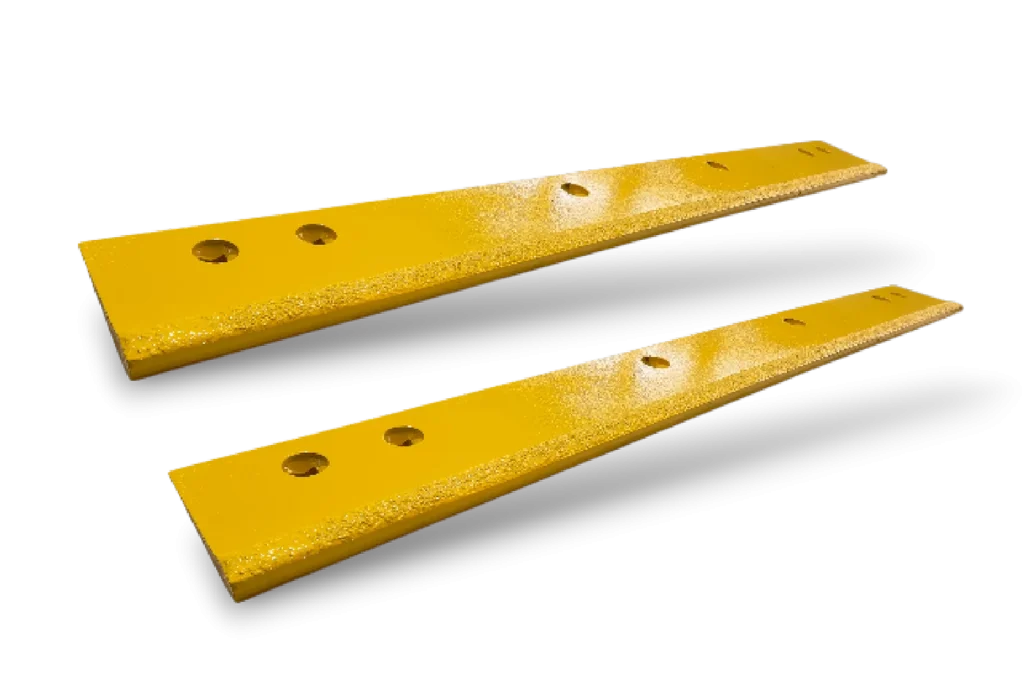
SENTHAI’s production covers powder preparation by wet grinding, robotic pressing with presses up to 500 tons, vacuum and low-pressure sintering, automated high-temperature induction brazing and welding, vulcanisation for rubber-flex products, finish machining and dimensional inspection. The product scope runs from carbide snow plow blades and JOMA style rubber-flex blades through replaceable carbide inserts, packed ice carbide kits, grader blades and cutting edges, loader bucket edges, scraper blades and wear liners, to custom and OEM wear parts. Fitment validation covers AASHTO and DIN bolt patterns, and dimensional tolerances are held to ±0.02 mm where a drawing requires them.
Each of those statements corresponds to a piece of equipment in the plant or to a routine in the quality system, which is what makes them checkable rather than promotional. The production detail is described on the factory page.
Certificates and their scope
A certificate has a scope, and the scope is the part of it that a buyer should read.
The management system certifications published on the company’s About page are ISO 9001 and ISO 14001. A certificate of this kind names the certified entity, the site covered, the activities within scope and the validity period. The items to check against a purchase are the site and the activity: a system certified for a site is evidence about that site, and a certificate issued to a different legal entity or covering a different activity is not evidence about the parts being ordered.
The About page carries the company’s own statements about its certifications, and the certificate document itself is what confirms the scope. Where a tender requires the certificate, the version supplied is the issued document rather than a description of it.
| Certificate covers | Certificate does not cover |
|---|---|
| The site and activities named in its scope | A different site or a different legal entity |
| The management system in operation at that site | The dimensions or grade of a delivered part |
| The period for which it was issued | Performance in a specific application |
| The process controls the system requires | Whether those controls were applied on a particular batch |
Process documentation available to buyers
Process documentation is what turns a production claim into something a buyer can hold.
- The drawing or specification the part is produced to, including the dimensions that are inspected.
- The grade identification for the part, with the properties verified.
- The process parameters that affect the result, recorded against the batch, including brazing or curing conditions where they apply.
- The dimensional inspection record for the lot, showing the dimensions measured and the results.
These four are retrievable from the lot number. What is included in a particular shipment depends on what the order asks for, which is why the documentation requirement belongs in the purchase order rather than in a later conversation.
Testing and inspection records
Testing falls into two groups, and it is worth separating them when a claim is assessed.
The first group is routine inspection: the dimensional checks applied to production, including the tolerances held on the functional dimensions of an insert, an edge or a stud. This is recorded per lot and is the evidence most buyers actually need. The second group is characterisation testing, including hardness and material properties, which is used to qualify a grade or a process and is documented against the specification rather than against every shipment.
Test methods for hardmetals and for mechanical properties are published by ASTM International, and reference measurement practice by the National Institute of Standards and Technology. Using published methods is what allows a result from one supplier to be compared with a result from another.
SENTHAI capabilities: the evidence that travels with a lot
A lot record says more about a delivery than a certificate.
A certificate describes the system a factory operates; a lot record describes the parts that were actually made. Buyers verifying a supplier need both, and the one that answers a question about a specific delivery is the second.
The lot record for a SENTHAI delivery ties the parts to the batch they were produced in and to the inspection applied at each stage of the process chain. That means a question about a dimension, a grade or a brazed joint can be answered against the production data rather than from memory, and a defect claim can establish whether the part met its specification before anything else is discussed.
The same record supports improvement. Where a batch is compared with the one before it, the comparison is between measured results rather than between impressions, which is what allows a specification to be tightened over time instead of being renegotiated.
Claims we deliberately avoid making
What a supplier declines to claim is as informative as what it asserts, and SENTHAI avoids four categories.
The first is a comparative service life expressed as a multiple, such as a figure for how many times longer a part lasts than a competitor’s, unless a documented test exists behind it. The second is a performance figure for an application that has not been measured, including wear rates for operating conditions that have not been tested. The third is attributing a certification or a capability from one product line to another, because a system or a test that covers one class of part does not automatically cover a different one. The fourth is a claim about a site, a capacity or a market position that cannot be traced to a document.
The practical value of the list is that it tells a buyer what a quotation will and will not contain. Where a requirement needs a measured number and no test exists, the honest response is to run the test rather than to estimate it, and that answer is available on request.
How to request evidence for a tender
A documentation request is answered against a list, so the list is the first thing to send.
- Send the tender’s documentation requirement in full, including any prescribed forms.
- Send the specification or drawing for each part, with the grade and the dimensions that will be inspected.
- State the destination market and the delivery term, since both determine which export documents apply.
- State the quantities and the delivery window, so that lead time and documentation can be answered together.
- Mark any item that cannot be provided, and expect a direct answer rather than a substitute for it.
Documents relating to the origin and tariff treatment of a shipment are prepared against the classification of the part and the destination, with the schedules published by the United States International Trade Commission and destination requirements by the International Trade Administration. The material context behind the carbide itself is published by the International Tungsten Industry Association.
What a quality management system does and does not cover
The value of a management system in a purchasing decision is real and narrower than it often appears.
| Question | Quality management system | Product specification and lot record |
|---|---|---|
| Does it describe the factory? | Yes, the controls it operates under | No, it describes the part |
| Does it describe a shipment? | No | Yes, the batch and the inspection applied |
| Is it comparable between suppliers? | Yes, where the standard is the same | Yes, where the test method is stated |
| Does it settle a defect claim? | Indirectly, by showing controls exist | Directly, by showing what was measured |
Read together, the two answer different questions. A buyer assessing a new supplier uses the system to judge the factory and the lot record to judge the part, and neither substitutes for the other.
Continuous improvement commitments
Improvement is only meaningful if it is visible in the records, so the commitments that matter are the ones that change a document.
Three practices support that. Inspection results are kept against the batch, so a trend can be seen rather than an incident remembered. Where a specification changes, the drawing is revised and dated, so an order can be placed against a defined revision rather than against a description. And where a field failure occurs, the lot record is retrieved before the cause is discussed, so the conversation starts from evidence.
None of that is unusual in a manufacturing system, and it is what makes a supplier easy to audit: the records either exist for a given lot or they do not.
Documentation for a distributor programme
A distributor needs a different document set from an end user, and the difference is worth planning.
- Specification sheets for the range, so a counter sale can be answered without a technical escalation.
- Lot documentation per delivery, so a customer complaint is resolved at the counter.
- Pack and label specifications, which matter where the distributor’s own labelling is applied.
- Agreed technical answers for the recurring questions, so the same enquiry receives the same answer from every branch.
A distributor programme is arranged through the wholesale supply route, and the documentation requirement is set at the time the programme is agreed rather than per order.
Common documentation gaps buyers accept
Four gaps are accepted routinely in sourcing, and each one costs the buyer later.
The first is a certificate supplied without its scope, which leaves the site and the activity unspecified. The second is a specification quoted without the inspection dimensions, which leaves nothing to check a delivery against. The third is a delivery without a lot number, which removes the possibility of tracing a failure. The fourth is a claim about performance with no stated test, which cannot be compared with anything.
Each of the four is closed by a sentence in the purchase order. That is the cheapest quality control available to a buyer, and it costs nothing except the decision to write it down.
Match the Edge or Attachment to the Actual Operating Condition
This research-backed framework closes a recurring gap in pages ranking for How SENTHAI Documents Its Capabilities: Claims, Certificates and Evidence: readers need a decision method, not a list of unsupported superlatives. Apply the same evidence fields to every option before choosing how senthai documents its capabilities: claims, certificates and evidence.
| Decision gate | Evidence to collect | Release rule |
|---|---|---|
| Surface | Asphalt, concrete, gravel, pavers, bridge deck, or sensitive finish | Choose material and setup that protect the surface while meeting removal goals |
| Snow and ice | Loose snow, wet snow, compacted snow, bonded ice, or mixed conditions | Separate plowing, scraping, and deicing functions |
| Machine setup | Carrier weight, attack angle, down pressure, shoes, trip system, and speed | Verify the complete system rather than judging the edge alone |
| Validation | Short route trial, photographs, wear readings, fuel or time, and operator notes | Expand only after the trial meets a written acceptance rule |
The most useful choice is the one that meets the route objective without shifting damage or downtime elsewhere in the system. Record setup and operating conditions so the result can be repeated.
Run a Controlled Trial Before Full-Fleet Adoption
-
Freeze the baseline: record the current component, carrier settings, route, weather, operator, hours, and reason for removal.
-
Approve fit first: compare the supplier drawing with the machine and attachment. Do not drill, grind, weld, or substitute fasteners without an approved procedure.
-
Change one major variable: keep route and operating method as consistent as practical so the result can be attributed to the component rather than a different setup.
-
Inspect at planned intervals: photograph the same locations, measure wear, check fastener torque and retention, and log impacts or abnormal vibration.
-
Release against written criteria: decide in advance what wear, removal quality, downtime, and cost per operating hour would justify expansion.
Official-Source and SERP Verification
The technical boundary was checked against Federal Highway Administration snow and ice guidance. That source is used for the operating or safety context; model-specific dimensions, settings, and limits must still come from the approved manual for the exact machine and component. The following leading pages were reviewed for search intent and missing decision details:
Frequently Asked Questions
What should be verified before selecting how senthai documents its capabilities: claims, certificates and evidence?
Confirm the exact application, dimensions, carrier limits, operating surface, expected impacts, supplier drawing, and acceptance evidence. A product name or grade label alone is not enough.
How should how senthai documents its capabilities: claims, certificates and evidence be compared on cost?
Compare landed and installed cost, service hours, maintenance labor, downtime, collateral wear, and replacement reason. Use cost per operating hour for comparable routes rather than purchase price alone.
When is a trial required?
Use a controlled trial whenever fit, material, setup, route conditions, or supplier process changes. Define the baseline and pass criteria before the trial starts.
Which document controls installation and operating limits?
The current manual, approved drawing, and written instructions for the exact carrier and component control. General articles and cross-reference tables are screening tools, not installation authority.
Request an Application Review
Send SENTHAI the carrier or machine model, drawing or dimensions, operating surface, route condition, current failure mode, expected quantity, and target service interval. The engineering team can then review a suitable product path without changing the evidence requirements described above.