A grip that is harder than the ice is not automatically the better grip. What decides whether a tip grips, holds and lasts is the geometry of the point, the grade behind it and the way it is fixed into the body it sits in.
(Last modified date: November 12, 2026)
The JX120 reference identifies a grip profile used on ice equipment, and the practical work behind it is the same as for any other wear tip: define the dimensions, define the grade, define the retention, and then make the order repeatable. This is how to do that for a distributor, an arena operator or an OEM buyer.
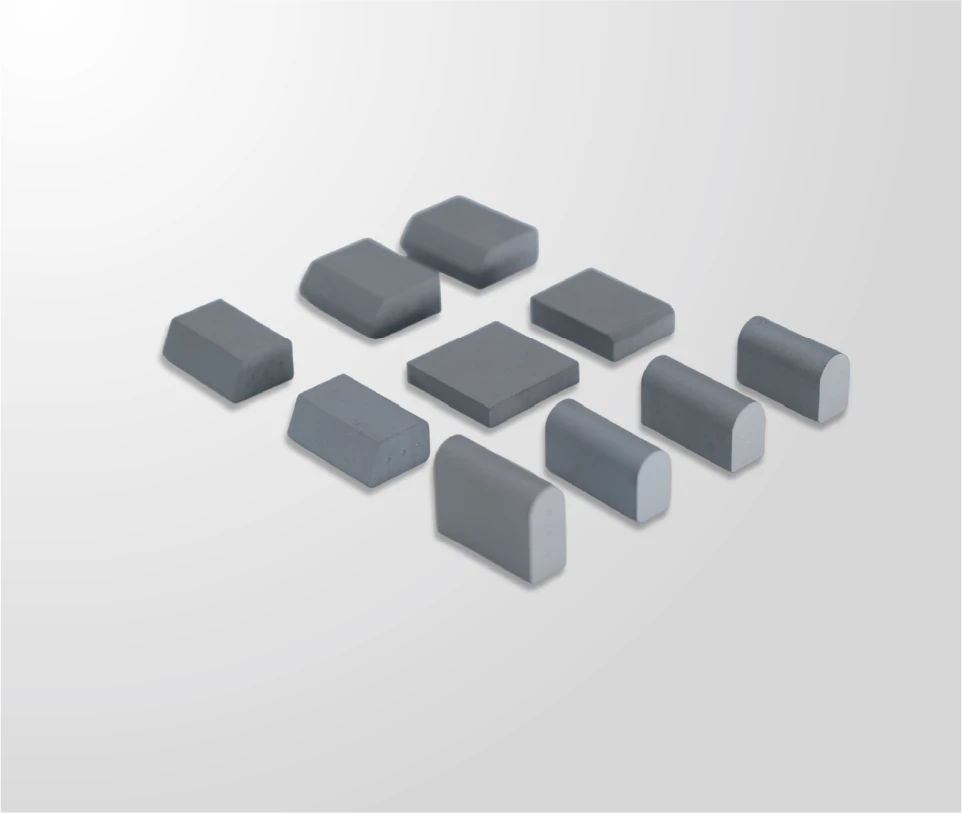
JX120 ordering checklist
Before you order JX120 carbide ice grips, confirm these points in writing; a part reference alone does not fix them.
- The drawing or sample the reference refers to, with revision.
- Overall length, body diameter and tip protrusion, with tolerances.
- Tip shape (pointed, conical or flat) for bite versus durability.
- Carbide grade and how the tip is fixed into the body.
- Quantity per set for your machine and the number of spare sets.
- Packing, lot marking and what is checked on delivery.
SENTHAI quotes grips to the drawing; related carbide parts are on the carbide inserts page.
What the JX120 designation refers to
The designation identifies a family of carbide ice grips with a defined tip form and mounting arrangement, and it functions as a factory reference for that form.
What it is not is a published international standard. That distinction matters commercially, because a buyer who orders on the reference alone is relying on both parties having the same drawing in mind. Where the supplier is the original manufacturer, the reference is unambiguous. Where a second supplier is quoting the same reference, the only way to know whether the parts are interchangeable is to compare the dimensions rather than the name.
The practical rule is short: use the reference to find the item, and use the drawing to specify it. Where no drawing exists, the first order should create one, because that document is what makes every later order and every later complaint resolvable.
Where an ice grip is asked to work
An ice grip is a wear part with two jobs at once, and the way those jobs conflict is what shapes the specification.
The first job is engagement: the tip has to bite into ice that has essentially no friction, and hold while the machine is driven and steered. The second is survival: it has to keep doing that through temperature changes, contact with concrete at the door, matting, and the sideways loads of a turn. A tip optimised only for bite wears or chips early, and a tip optimised only for survival will not grip on polished ice. Almost every sensible specification is a position on the line between those two.
Understanding which end of that line the application needs is the buyer’s contribution. The supplier can hold a dimension and a grade; it cannot know whether the machine spends its day on fresh ice or on a surface that has been used for two hours.
Dimensions and tolerance expectations
A grip drawing carries a small number of dimensions, and only two of them decide whether the part functions.
The functional pair is the shank diameter and the shoulder or collar, because those set whether the grip seats correctly in the hole and whether it stays. The other dimensions, tip angle or radius, overall length and body diameter, decide how the grip performs once it is in place rather than whether it fits. A drawing that controls the functional pair tightly and the rest sensibly is easier to produce and easier to inspect than one that controls everything to the same figure.
Tolerance philosophy follows the same split. Critical features need a stated figure that a supplier can hold and a buyer can verify; non-critical features need a range that does not create unnecessary cost. SENTHAI produces carbide wear parts to dimensional tolerances of ±0.02 mm where the drawing requires it, and documents the inspection for each lot so that a reorder arrives interchangeable with the last one.
Carbide ice grips JX120: what the specification has to pin down
The drawing defines the grip, not the part number.
Two suppliers can quote the same JX120 reference and deliver different tips, because the designation is a factory identity rather than a published standard. What makes an order repeatable is a drawing that fixes the tip angle, the shank diameter, the overall length and the shoulder.
Four further items belong on the same document. The carbide grade, expressed through hardness and grain size rather than a trade name. The surface finish on the shank, where it matters to retention. The inspection requirement, including which dimensions are measured on every lot and which are measured on a sample. And the lot identification, so that a field failure can be traced back to the batch it came from.
Written down, those items convert a difficult conversation into a short one. A distributor handling a complaint can compare the returned part against the drawing, and a manufacturer can confirm whether the part met it. Without the document, the same conversation is an exchange of opinions about a small metal tip.
Carbide grade and wear life
Grade selection is where wear life is decided, and it is a trade-off rather than a ranking.
Harder grades resist abrasion and hold a sharp point for longer, which extends the interval between replacements on a machine that runs against abrasive ice and debris. Tougher grades resist chipping and fracture, which matters where the tip meets concrete at the door, a metal threshold or a damaged surface. Grain size sits behind both: a finer grain supports a sharper edge at a given hardness, while a coarser structure can tolerate more impact.
The decision is made from the operating surface, not from the specification sheet. An arena with clean ice and careful machine handling can take a harder grade and get longer life from it. An arena where the machine crosses a concrete apron twice an hour should accept a shorter wear interval in exchange for tips that do not chip. Standard test methods for hardmetals, including hardness and transverse rupture properties, are published by ASTM International, and the material supply side of the industry is represented by the International Tungsten Industry Association.
Mounting method and retention
Retention is a system property, and it has three parts that are specified separately.
The hole in the receiving body sets the interference that holds the shank. The retention feature on the grip, whether that is a shoulder, a collar, a knurl or a flange, resists axial movement once the grip is seated. The insertion method, pressed, bonded or mechanically fixed, determines how well the first two behave in practice. Get any one of the three wrong and the grip will work loose, even though the grip itself meets its drawing.
Because retention is measurable, it can be required rather than hoped for. A pull-out or seating check on a sample from each lot, recorded against the insertion method, gives a distributor a defensible answer when a customer reports that grips are coming out. Where the body is supplied by the customer, the hole dimensions belong on the drawing too, because a grip held to a tight tolerance in an oversized hole will still fail.
Tip shape and the bite-versus-durability trade-off
Tip shape is the specification decision with the clearest trade-off, and it is worth writing down explicitly.
The comparison below sets out what each end of the range does in service.
| Tip form | Behaviour in service | Where it costs more |
|---|---|---|
| Sharp, narrow point | Bites quickly on polished ice, good initial grip and steering control | Wears and rounds faster; more sensitive to chipping on hard contact |
| Chamfered or blunted point | Wears more slowly and tolerates impact and debris | Less bite on hard ice, so grip depends more on stud count and load |
| Broad, flat-faced tip | Longest wear interval and highest resistance to fracture | Weakest engagement, suited to high-load applications rather than hard ice |
Written as a decision, the tip form is chosen from the ice the machine actually meets and the load it applies, with the grade used to adjust the balance afterwards. Choosing the tip form last, after the grade and the price, is the most common way to end up with grips that are either dull in a week or chipped at the door.
Applications beyond ice resurfacing
The same grip form appears in other equipment where a small carbide point has to hold on a low-friction surface.
Walk-behind and handheld ice equipment, edge trimmers and finishing tools on arena plant, and various municipal ice management implements use similar tip profiles. The requirements travel with the application: a hand-guided tool tolerates a sharper point and lower load per grip, while a heavier machine needs a broader tip and attention to retention. Distributors who stock the part for one machine usually find demand for it across a small family of tools, and it is worth mapping that family before setting an order quantity.
Ordering quantities and lead times
Order quantities follow consumption rather than the size of the machine, and the useful input is the replacement interval per machine.
Work from the number of machines served, the grips fitted per machine, and the interval at which the tips are replaced in the arena’s actual conditions. That gives an annual quantity, which is then split to reflect the lead time and the cost of holding stock.
- Machines served and grips per machine, including spares held on site.
- Replacement interval in operating hours, from the arena’s own records rather than from a general figure.
- Lead time for the order size, which lengthens for a first order and for custom dimensions.
- Whether the grips are consumed evenly or in a burst at the start of a season.
Trade terms for imported components, including the delivery and risk conventions used in a quotation, are defined by the International Chamber of Commerce, and they are worth settling before an order is placed rather than at the point of shipment.
Customisation options
Customisation is usually cheaper than it looks, provided the change is in the dimensions rather than the material.
The options that are practical to specify are the tip angle or radius, the overall length and shank diameter, the shoulder form, the grade, and the lot marking. Options that add cost and lead time quickly are unusual carbide compositions, tight tolerances on non-functional dimensions, and finishes that serve no purpose in service. A buyer who separates the two groups will usually find the application can be met without a custom development programme.
Where a custom grip is required, the drawing should state the function of each controlled dimension. That single practice prevents the most expensive form of customisation, which is a part that meets an over-specified drawing and still does not work.
What to check on delivery
A receiving check on a carbide grip is short, and it protects the whole order rather than one box.
- Shank diameter and shoulder on a sample of at least several pieces from each lot.
- Tip condition, looking for chipped points and for tips that have been handled roughly in packing.
- Grade identification and lot marking against the certificate supplied with the delivery.
- Seating check on the receiving body, if the grips are fitted on site.
Reference practice for dimensional measurement is published by the National Institute of Standards and Technology, and equipment-level interface conventions for the machines these grips are fitted to come from the Association of Equipment Manufacturers.
FAQ
Is JX120 a standard part number?
It is a factory reference for a grip profile rather than a published international standard, so two suppliers quoting JX120 may be describing slightly different tips. Treat the drawing and the dimensions it carries as the specification, and the reference as the shorthand for it.
What tolerance should a carbide grip be held to?
The critical dimensions are the shank diameter and the shoulder, because those decide whether the grip seats and stays seated. Production to a tight tolerance on those two features, and a stated figure on the drawing rather than an implied one, is what makes a reorder interchangeable with the first delivery.
Does a harder carbide grade always last longer?
It resists abrasion for longer and resists impact less well. On a machine that crosses door tracks, matting or damaged ice, a very hard tip can chip where a tougher grade would deform slightly and keep working, so the grade is chosen against the actual operating surface.
Can grips be supplied to a drawing rather than a part number?
Yes, and for a new application it is the safer route. A drawing that fixes tip angle, shank diameter, overall length, shoulder and carbide grade can be quoted and produced without the ambiguity that a reference number carries, and it gives both sides something to inspect against.
How many carbide studs are in a set for an ice resurfacing machine?
It depends on the machine and the drawing. Confirm the quantity per set with the machine manufacturer or the drawing before ordering rather than relying on a typical figure.
If a grip is being specified for a machine or a distributor range, send the drawing or the sample dimensions and SENTHAI will confirm the grade, the tolerance and the lot documentation that go with it.