A rod order looks like a commodity purchase and behaves like a specification purchase. The diameter and the grade are the visible part; the tolerances, the straightness and the handling decide whether the rod can be made into the component it was bought for.
(Last modified date: November 12, 2026)
This is the sequence a sourcing decision follows, from what the rod has to become back to the terms on the order.
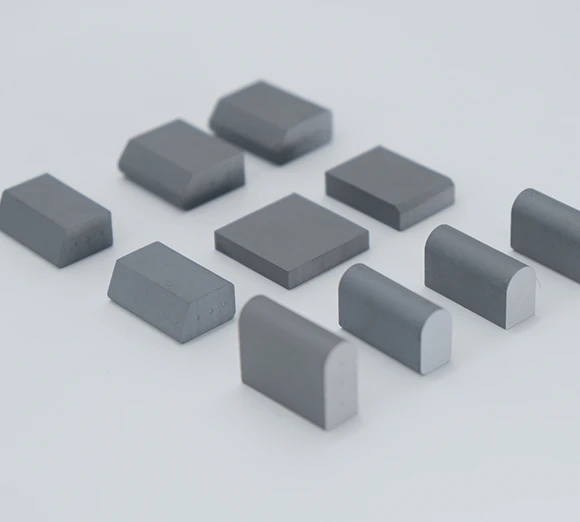
What a rod order actually decides
A rod order decides three things beyond the material: how much stock has to be removed to reach the finished component, how much material is lost to straightness or surface defects, and how much handling the rod will survive before it is machined.
Those three determine the effective yield of the order, and the effective yield determines the real cost. A rod bought at a lower price with a wider straightness tolerance can cost more per finished part than a tighter one, because more of it ends up as grinding swarf.
That is the reason to work backwards from the finished component rather than forwards from a stock list. The component’s dimensions and finish determine the minimum rod diameter and the tolerance the rod needs, and those two items determine what is worth buying.
Carbide rods: what the specification has to settle
The specification settles five things.
The grade with its binder content and grain band, the diameter with an allowance for finishing, the length and how it is cut, the straightness and surface finish, and the documentation that travels with the delivery.
Each of the five has a consequence if it is left open. A grade without a grain band describes half a material. A diameter without a finishing allowance produces either an undersized component or a longer grinding operation. Straightness left to the supplier’s default produces unpredictable yield. Surface finish affects how the rod behaves in a collet or a grinding operation. And documentation left unstated is the item that cannot be produced after the fact.
Working through the five on one order takes a short conversation and prevents the situation where a delivered rod is technically correct and practically unusable.
Grades and grain sizes available
Rods are supplied across a range of binder contents and grain sizes, and the choice follows the component rather than the price list.
Finer grain structures provide hardness and wear resistance at a given binder level, which suits cutting edges, wear surfaces and components that have to hold an edge. Coarser structures provide toughness and resistance to crack propagation, which suits components that meet impact or that are loaded in a way that would crack a harder material.
Binder content moves the same two properties in the opposite direction, so the grade is a combination rather than a single choice. A specification that names only the binder content accepts any grain structure within it, and the delivered material may not behave as the component requires.
Carbide rod tolerances for round tool manufacturing
Round tool makers usually buy carbide rods in one of two states, and the tolerance you write depends on which:
- Unground (as-sintered) rods are bought with grinding stock on the diameter; you grind them to size, so the order should state the minimum stock and the maximum out-of-round.
- Ground rods are commonly ordered to an ISO 286 shaft tolerance class such as h6, ready for fluting.
| Nominal diameter | h6 tolerance |
|---|---|
| Over 3 up to 6 mm | 0 / −8 µm |
| Over 6 up to 10 mm | 0 / −9 µm |
| Over 10 up to 18 mm | 0 / −11 µm |
| Over 18 up to 30 mm | 0 / −13 µm |
The counter-intuitive point: a tighter diameter class does not help if straightness, chamfer and length are left open. Put all four on the order, plus grade, grain size class and lot documents. Related carbide components are on the carbide inserts page.
Diameter and length tolerances
Diameter is chosen with the finishing operation in mind, and length with the cutting operation in mind.
A rod that will be ground after delivery needs enough material to remove and still finish inside the drawing. A rod that will be cut into lengths needs the cut allowance stated, and the finished length tolerance is decided by the cutting operation rather than by the rod supplier.
The practical rule is that the finished component’s tolerance drives the purchased tolerance, not the other way round. Buying a tighter rod than the component needs adds cost; buying a looser one adds grinding time, and the second is usually the more expensive mistake because it is discovered in production.
Straightness and surface finish
Straightness and finish are the two properties that most affect yield and least often appear on an order.
A rod outside its straightness limit cannot be held in a collet reliably, and the resulting run-out produces a component that is either out of tolerance or visually rejected. Surface defects have a similar effect: a chipped edge or a surface crack can render a length unusable, and the defect may not be visible until the rod is in the machine.
Both should be stated as limits, with a method of verification, rather than left to a supplier’s normal practice. That turns an invisible assumption into a term that can be checked at goods-in.
Grinding and finishing services
Whether the supplier grinds the rod or the buyer does is a decision about capability and yield.
Where the buyer has the equipment and the volume, grinding in house keeps control of the finished dimensions. Where the buyer does not, buying ground stock transfers the operation and the yield risk to the supplier, usually at a price that reflects both.
- Establish what the finished component needs in diameter, straightness and finish.
- Decide which operations the buyer can perform reliably in house.
- Compare buying ground stock against buying to a finishing allowance, on the basis of finished parts rather than rod.
- State in the order which operations the supplier performs and to which tolerance.
The third step is the one that makes the comparison meaningful. Comparing the price of a ground rod against the price of an unground one ignores the grinding operation and the material removed, and the two are not comparable until both are expressed per finished part.
Packaging and handling
Packaging is part of the specification because carbide is brittle and the damage shows up later.
Rods that touch during transport can chip at the ends and along the edges, and a chipped rod may be unusable for a precision component even when most of its length is sound. Separation, end protection and packaging that keeps the rods from moving are the practical requirements.
The handling requirement continues at the buyer’s end. A rod that is dropped or that is stored where it can be struck may pass a dimensional check and fail in machining, and the record should note how the material was received and stored.
Documentation and certificates
The documentation that should arrive with a rod delivery is short and it is the reason the delivery can be checked.
The useful set names the grade with its measured values, the dimensions checked, the batch reference that ties the rods to a production record, and any test result the specification requires.
- Confirm the grade values against the specification rather than against a description.
- Check the dimensions and straightness against the stated limits.
- Record the batch reference against the material received and the components made from it.
- Keep the documentation with the production record rather than in a purchasing file.
The fourth step is what makes the documentation useful later. A grade declaration held in a purchasing folder answers a question about a delivery; the same declaration filed against the production record answers a question about a component.
Sourcing questions to ask
Five questions establish whether a supplier is quoting a specification or a stock item.
They apply to a first order and to a repeat, because the answers change when the supplier’s own supply changes.
- Which grade and grain band is being offered, and what does it suit?
- What tolerances are held on diameter, length and straightness, and how are they verified?
- Which finishing operations are performed by the supplier, and to which tolerance?
- What documentation travels with the delivery, and does it carry a batch reference?
- What lead time applies, and does it change for a non-standard diameter or grade?
Where rod orders go wrong
Rod orders fail in four ways that are all specification failures rather than supplier failures.
The patterns are recognisable from the delivery and from the first machining operation.
An order that names a grade without a grain band receives whatever falls inside the grade. One that omits a finishing allowance receives a rod that cannot produce the finished dimension. One that omits straightness receives material that will not hold in the machine. And one that omits packaging receives rods with chipped ends and an effective yield below what was quoted.
Each is corrected by adding one line to the specification, and each is expensive to discover in production. Material and test standards that the specification can reference are published by ASTM International and the American Society of Mechanical Engineers, with measurement practice published by the National Institute of Standards and Technology.
What a quotation should state
A rod quotation is comparable when it states the four terms that decide the effective cost.
Grade and grain band, dimensions with tolerances, the condition of supply, and the quantity basis with its lead time. Without the condition of supply, a quotation describes a material rather than a deliverable item.
Equipment and handling conventions come from SAE International, and industrial supplier practice is documented by the Association of Equipment Manufacturers. The carbide range SENTHAI produces for precision components is described on the carbide inserts page.
FAQ
What grades and grain sizes are carbide rods available in?
Rods are supplied across a range of binder contents and grain sizes, from fine and micro-grain grades for wear and cutting applications to coarser grades where toughness matters more. The grade has to be stated with the grain band, because the two together define the material.
What tolerances should be specified on a rod order?
Diameter, length, straightness and surface finish, each with a stated limit rather than a general expectation. Where the rod will be ground after delivery, the allowance for that operation belongs in the same specification.
Do carbide rods need special handling?
They do. Carbide is brittle and chipped edges or corners can make a rod unusable for a precision component, so packaging, separation and handling practice are part of the specification rather than a logistics detail.
How does the price of a carbide rod relate to its grade?
Through the binder content and the grain structure, and through the processing needed to hold the tolerances. A fine-grain grade with tight straightness requirements costs more than a coarser grade to loose tolerances, so a price comparison without the specification is not a comparison.
What tolerance are ground carbide rods usually supplied to?
Commonly an ISO 286 h6 diameter tolerance, for example 0/−9 µm on sizes over 6 up to 10 mm. Confirm the class, straightness and chamfer on the quotation.
Send the finished component drawing and the operations you intend to perform, and SENTHAI will specify the rod grade, the diameter allowance and the tolerances to order to.