Carbide roll rings for finishing stands are specified to hold profile and surface longer under continuous finishing duty, which is how mills reduce downtime from unplanned roll changes. The cost case is the avoided stop—not a generic “carbide is harder” claim—and it only holds when grade, mounting, and cooling match the stand.
(Last modified date: November 12, 2026)
This article keeps the finishing-stand focus, adds a clear roughing versus finishing contrast, and lists the procurement questions OEMs and mills should put on the RFQ. Pair it with the sourcing carbide wear parts guide and quality control expectations for lot evidence. Related carbide component context: carbide inserts.
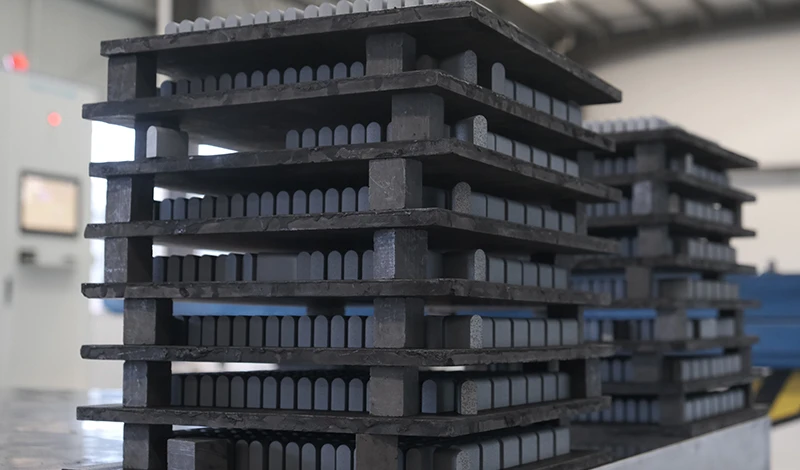
Why finishing stands use cemented carbide rolls
Finishing stands see product that is closer to final dimension and surface. Roll wear shows up as profile drift, surface marks, and shorter campaigns between changes. Cemented carbide rolls and carbide roll rings for finishing stands are chosen because they hold the working surface longer under that abrasive, continuous contact—so planned campaigns last longer and emergency stops for worn steel rolls become rarer.
Downtime reduction is therefore a maintenance-planning outcome: fewer unscheduled changes, more predictable grind or replace intervals, and less scrap while a worn roll is still in the pass. This page does not invent mill stoppage costs or life-multiplication factors; those belong in your own campaign logs and quotation comparisons.
Roughing stands versus finishing stands
Roughing stands take heavier reduction, higher loads, and often more thermal and impact shock. Roll materials and designs there prioritize toughness and bite under severe duty. Finishing stands prioritize dimensional stability and surface quality at lighter reductions but longer sliding contact on the product.
That is why a grade or ring design that succeeds in finishing may be wrong for roughing, and why “reduce downtime with carbide rolls for roughing stands” is a different engineering question from finishing. Some mills do evaluate carbide in earlier stands for specific products; those trials need their own load, cooling, and failure-mode plan. Do not copy a finishing RFQ into a roughing bay and expect the same result.
| Topic | Roughing stands | Finishing stands |
|---|---|---|
| Duty emphasis | Heavy reduction, impact, bite | Profile hold, surface, campaign length |
| Typical carbide role | Selective / trial-driven | Common for rings and finishing rolls |
| Failure watch-outs | Fracture, spall under shock | Wear band, surface marking, mounting issues |
| RFQ focus | Toughness and load case | Grade, grind stock, cooling, runout |
Finishing vs pre-finishing stands: what changes for carbide rolls
Pre-finishing (intermediate) stands sit between roughing and the finishing block. The bar is hotter and larger in section than at finishing, reductions per pass are heavier, and the pass design is still shaping the profile rather than holding final tolerance. Finishing stands, including high-speed wire rod and bar finishing blocks, run lighter reductions at the highest speed and are judged on dimension and surface.
| Factor | Pre-finishing stands | Finishing stands |
|---|---|---|
| Load and reduction | Higher per pass | Lighter, tighter tolerance |
| Grade bias | Tougher, higher-binder grades | More wear-resistant grades |
| Main failure to watch | Thermal cracking, chipping under load | Groove wear, surface marking |
| Downtime lever | Avoid fractures with cooling and grade choice | Longer campaigns per groove, faster changeover |
Five ways carbide rolls reduce downtime
- Plan campaigns per groove in tonnes, not days. Record the tonnage each groove delivers before dimension or surface drifts, and schedule changes to that number.
- Use every groove the ring design allows. Where a ring carries more than one pass, moving to the next groove at a planned stop is shorter than a ring change.
- Keep pre-ground spare rings on the shelf. A regrind backlog, not ring life, is a common cause of extended stops.
- Check cooling water every shift. Blocked or misaimed nozzles cause thermal cracks that end a carbide ring early, especially in pre-finishing stands.
- Mount with the right tools and fits. Carbide does not tolerate hammer fitting or uneven clamping; follow the shaft-fit and mounting method on the drawing.
The counter-intuitive point: the hardest grade is rarely the one that saves the most downtime. A grade that survives the stand’s thermal and load cycle without cracking usually beats a harder grade that wears slowly but fails suddenly.
Duty conditions that decide whether carbide helps
Cooling uniformity, mounting stiffness, product mix, and scale or abrasive oxides on the strip all change wear. A carbide roll ring that is poorly cooled or incorrectly clamped can lose its downtime advantage even if the grade is appropriate on paper. Wear measurement and a defined reconditioning or re-grind allowance should be part of the specification, not an afterthought.
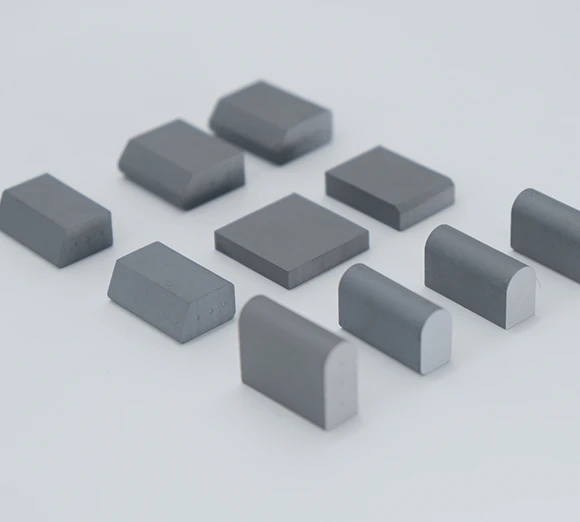
Grade, binder, mounting, and cooling
Grade and binder content trade wear resistance against toughness. Finishing applications often bias toward wear and surface hold; any impact or thermal shock in the pass line pushes the selection back toward toughness. Mounting and cooling interactions are equally part of the system: ring fit, keying or clamping method, and coolant delivery must be stated in the RFQ so suppliers are quoting the same duty.
Ask suppliers to document density, dimensional report, and lot identity with each delivery, consistent with the evidence approach on quality control. Company certifications should be cited per company website or attached certificates—do not invent ISO numbers in the article or the RFQ narrative.
Procurement documentation for OEMs and mills
- Stand type: finishing versus roughing, and product family
- Ring or roll drawing, tolerances, and re-grind stock
- Grade/binder intent and prior lot that performed acceptably
- Cooling and mounting description
- Inspection pack required at receipt
- Campaign target in your own units (hours, tonnes, or coils)—without treating marketing multiples as fact
Lead time for carbide roll rings is confirmed with the quotation after the drawing and grade freeze. Use the sourcing carbide wear parts guide to keep dual-source and revision control disciplined across suppliers.
What “reduce downtime” should mean in a mill KPI
Reduce downtime with carbide rolls is a measurable maintenance outcome only when the baseline is clear: how often steel or older rings forced an unplanned change, how much scrap appeared while a worn roll stayed in the pass, and how long a planned change actually takes on that stand. Without those notes, a supplier claim cannot be audited against your line.
OEMs supporting multiple mill customers should keep the KPI local to each stand and product family. A finishing campaign length on one alloy is not transferable evidence for another. Put the measurement method in the RFQ so every bidder knows what success looks like—without asking anyone to invent a universal life multiple or a fixed stoppage-cost number.
FAQ
What are carbide roll rings for finishing stands?
Carbide roll rings for finishing stands are cemented carbide working rings used where final passes need stable profile and surface. They are specified to extend campaigns and reduce unplanned roll-change downtime when mounting and cooling are correct.
Why use cemented carbide rolls for finishing stands?
Cemented carbide rolls for finishing stands hold the working surface longer under continuous finishing contact, which supports longer planned campaigns and fewer emergency changes. They are not automatically right for every roughing duty.
How do you reduce downtime with carbide rolls for OEMs?
Reduce downtime with carbide rolls for OEMs by locking grade, drawing, mounting, and cooling in the RFQ, measuring campaign length on the same product, and requiring lot documents so replacements match the qualified ring—not by assuming a fixed life multiple.
Can you reduce downtime with carbide rolls for roughing stands?
Sometimes, but roughing stands impose higher load and shock, so toughness and failure mode dominate. Treat roughing as a separate trial from finishing; do not copy a finishing carbide specification into a roughing stand without a new duty review.
How do you reduce downtime with carbide rolls for pre-finishing stands?
Choose a tougher grade for the higher load, keep cooling water aimed and unblocked to avoid thermal cracks, plan groove changes by tonnage, and hold pre-ground spare rings so a change is not delayed by regrinding.
Isn’t a harder carbide grade always better for downtime?
No. In stands with heavy load or thermal shock, a harder grade can crack or chip and force an unplanned stop. The grade that survives the duty cycle reliably usually delivers less downtime.
Specifying carbide roll rings for finishing stands? Send the stand type, drawing, and prior campaign notes to [email protected]. SENTHAI will respond with options and lead time confirmed with the quotation.