Two quotations arrive for the same carbide edge at the same price. One is from a plant that presses, sinters and brazes the insert in house; the other buys finished inserts and fits them. On paper the two offers describe the same product, and the price difference between them is nothing at all.
What separates them shows up later, in how a grade change is handled, what happens when a lot fails, and whether the documentation to prove a claim exists. The criteria below are the axes that separate the two, in the order a buyer should work through them.
How carbide blade manufacturer selection actually works
Nine criteria separate a manufacturer from an assembler.
Process capability, in-house steps, quality documentation, grade development, engineering support, capacity, references and commercial terms are the axes; a scoring sheet turns them into a decision rather than an impression.
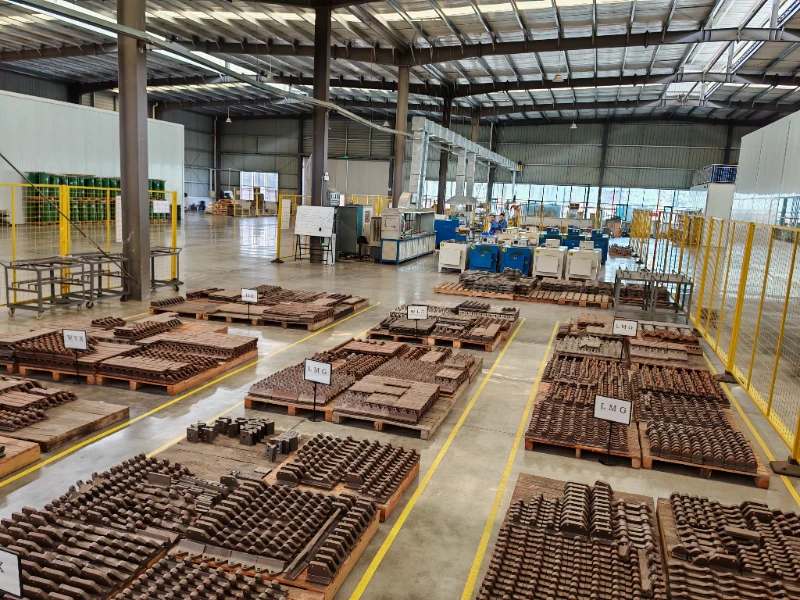
The reason a checklist beats a visit is that the two supplier profiles are hard to tell apart on a factory tour and easy to tell apart on paper. A full-process plant presses, sinters, brazes, finishes and inspects on one site, so the grade, the join and the inspection result belong to the same company. An assembler buys the wear element and the edge as finished goods and adds the mechanical work, which is a legitimate business but a different one to manage.
Score candidates rather than ranking them. A single number hides the reason, and the reason is what the buyer has to work with when the first lot arrives and something is not what was expected.
Process capability and equipment
Equipment answers a narrow question: can this plant make the product in the specification, or does it have to buy the difficult part in?
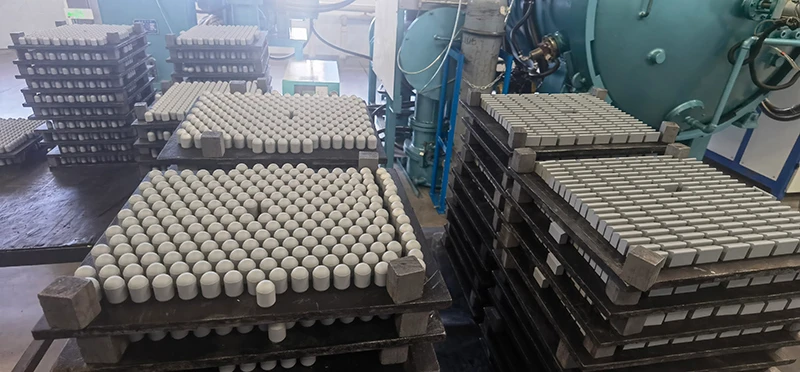
A carbide edge requires powder handling, pressing, sintering and a joining step. Where those exist on site, the supplier can change a grade, a shape or a fitment without negotiating with a third party. Where the press or the furnace belongs to someone else, the buyer inherits a second supplier’s lead time and a second supplier’s tolerance on the part that matters most.
The check is specific rather than general. Ask which tonnage the press reaches, which sintering route is used for the grade in question, and how the joining temperature is controlled. Vague answers about modern equipment are a signal; process-specific answers are the point.
In-house versus outsourced steps
The split between in-house and outsourced work decides who owns a failure, and it is the criterion buyers most often skip because the answer is rarely printed anywhere.
Four questions produce a usable answer. Which steps are performed on site. Which are subcontracted and to whom. What changes if a subcontractor’s process drifts. Who issues the inspection record for the finished part.
- Pressing and sintering, or the purchase of finished inserts.
- The joining step, and the record that proves how it was performed.
- Finishing operations such as machining, coating or edge preparation.
- Final inspection, including who signs the dimensional report.
An outsourced step is not automatically a disqualification. It is a different risk allocation, and it belongs in the score rather than in the reject pile. What should not be left ambiguous is which party the buyer holds responsible when the part fails.
Quality system and documentation
A quality system is worth exactly what it produces on a delivered lot, which is why the documentation counts for more than the certificate.
A site certificate shows that a system is audited, not that a particular lot was made correctly. The evidence that travels with the goods is the dimensional record against the agreed revision, the material declaration with the standards the values were measured to, and a batch reference tying the lot to its production record. Material test methods behind those declarations come from standards bodies such as ASTM International.
The practical test is to ask for the documentation pack from a recent shipment to another customer, with the commercial details removed. A supplier that can produce a real pack has the process in routine operation. A supplier that can produce a blank template has a procedure but not yet a habit. The routine SENTHAI uses is described on the quality control page.
Grade development and testing
Grade development separates a supplier that chooses from a catalogue of bought-in inserts from one that can adjust a grade to the application.
Two wear problems need different answers: abrasive wear on gravel and frozen gravel, and impact loading on rough roads with buried obstacles. Hardness and toughness trade against each other, and the balance is set by grain size and binder content rather than by hardness alone. A supplier that can describe which grade suits which condition, and why, is working from development rather than from a price list.
Ask how a new grade is qualified: what is measured, on what sample, and what the acceptance range is. If the answer involves only a supplier datasheet and no internal test, the buyer is buying a grade rather than a solution.
Custom engineering support
Custom support decides whether a fitment problem is solved by the supplier or handed back to the buyer as a drawing task.
A useful capability is the ability to work from a measured layout rather than only from a finished drawing, because many fleets and distributors know the machine and the pattern but do not have CAD. The same capability covers the reverse case, where the buyer has a drawing and needs the supplier to comment on whether the profile can be produced at the intended tolerance.
Fitment conventions come from the equipment side of the industry. Standards work published by SAE International and the fleet specifications maintained by the American Association of State Highway and Transportation Officials are the reference points that decide whether a pattern is a one-off or a standard fit. Buyers with a non-standard machine should ask directly how a first-off is validated before a batch is committed, and the process is set out on the custom blade programme page.
Capacity and lead times
Capacity has to be measured against the season, not against the annual total.
A winter wear part is bought in a window of a few months, and a supplier whose capacity is fully committed in that window will deliver late regardless of what the contract says. The useful questions are what the plant can produce per week for the specific item, what the current backlog looks like, and how the supplier sequences a new customer against existing commitments.
Ask for lead time in weeks from order rather than from payment, and ask what the quoted figure assumes. A lead time quoted without the underlying assumptions is a number that will be revised as soon as the schedule tightens.
References and export experience
References are worth checking when they are specific and recent, and worth ignoring when they are a customer count.
A reference that matters is a distributor or fleet in a comparable market, buying a comparable product, within the last two seasons. The questions to ask that reference are narrow: how the first delivery compared with the sample, how a non-conformance was handled, and whether the documentation arrived complete. Those three answers say more about a supplier than a list of logos.
Export experience is a related but separate criterion. Shipping, documentation and customs handling for an overseas dealer follow practices published in the winter maintenance sector, such as the material from the Snow and Ice Management Association, and a supplier that already ships into the buyer’s market will have solved problems the buyer has not met yet.
Commercial terms and communication
Commercial terms are evaluated last because they only become comparable once the scope is, and they cover more than price.
The offer should state the price basis and the quantity it applies to, tooling or set-up treatment, the delivery term, payment terms and the currency. Where goods cross a border the delivery term decides who carries freight, duty and risk, and those definitions come from the International Chamber of Commerce. Two quotations with the same goods price and different delivery terms differ by more than most negotiations achieve.
Communication belongs in the same score. A supplier that answers a technical question in a day and a commercial question in a week is telling the buyer where its attention sits, and a fleet programme that depends on fitment answers through the season will feel that difference.
Scoring sheet
The sheet converts the criteria into one comparable number per candidate, and its value comes from the weights rather than from the arithmetic.
Weights should follow the application. A municipal fleet tendering a fixed specification cares most about documentation and repeatability; a distributor building a brand line cares about engineering support and commercial flexibility; an OEM cares about capacity and grade control. Score each criterion out of five and multiply by the weight, then read the two lowest scores per candidate rather than only the total.
| Criterion | What is being scored | Evidence to ask for |
|---|---|---|
| Process capability | Can the plant make the specified part itself | Equipment list with the processes the item needs |
| In-house steps | Which steps are subcontracted, and to whom | Written split of the process chain |
| Quality documentation | What travels with a delivered lot | A redacted documentation pack from a recent shipment |
| Grade development | Ability to match grade to wear condition | Grade table, qualification method, acceptance range |
| Custom engineering | Support from a measured layout to a first-off | Description of how a first article is validated |
| Capacity and lead time | Ability to deliver inside the season | Weekly output for the item, current backlog, lead time basis |
| References | Comparable customers, recent | Two references in a comparable market |
| Commercial terms | Comparable price scope and delivery terms | Full offer including delivery term and payment terms |
| Communication | Response behaviour on technical questions | Measured response time during the enquiry |
- Weight the five criteria that would stop production if they failed, not all nine equally.
- Score evidence, not answers: an unsupported claim scores as unknown.
- Keep the sheet for the next tender, so the second evaluation is a review rather than a repeat.
Keep the sheet after the decision, because it stops being a selection tool and becomes a control document. The criteria a candidate won on are the ones to sample on arrival, and a relationship reviewed against the criteria it was chosen for is easier to hold to a standard than one assessed only on price and delivery. Where a criterion moves, such as a process being outsourced or a capacity commitment changing, the review should catch it before a delivered lot does. The production scope behind those criteria is described on the factory page and the distributor programme page.
FAQ
Is the in-house process list just marketing?
It is only meaningful where it can be checked, so ask which steps are completed on site and what the released record for the joining step looks like. A supplier that performs the step answers with process detail and a sample record. A supplier that subcontracts it answers with a product description.
Suppliers often call process records confidential. Is that reasonable?
Set points and cycle recipes can reasonably be withheld. The output record cannot, because it is what proves the lot was made to the agreed process, and a buyer has no other way to judge the join. Ask for the inspection result and the parameter range, not the recipe.
Does a price comparison not settle the question already?
Price compares quotations, and quotations describe different amounts of work. Where one offer includes grade control, lot documentation and fitment support and the other does not, the cheaper number is measuring a smaller scope rather than a better factory.
If the last order was good, is re-evaluation not wasted effort?
A good delivery proves the process worked that time. The point of scoring is to know which criteria would catch a change, so the review can be short every year and long only when something on the list actually moves.
If you are comparing carbide blade manufacturers, send the specification and the application. SENTHAI will answer the nine criteria in writing, including which steps are performed in house and what documentation travels with each lot.
This article is one step in the Sourcing Carbide Wear Parts Guide, which covers the technical pack, supplier selection, landed cost and supply risk.