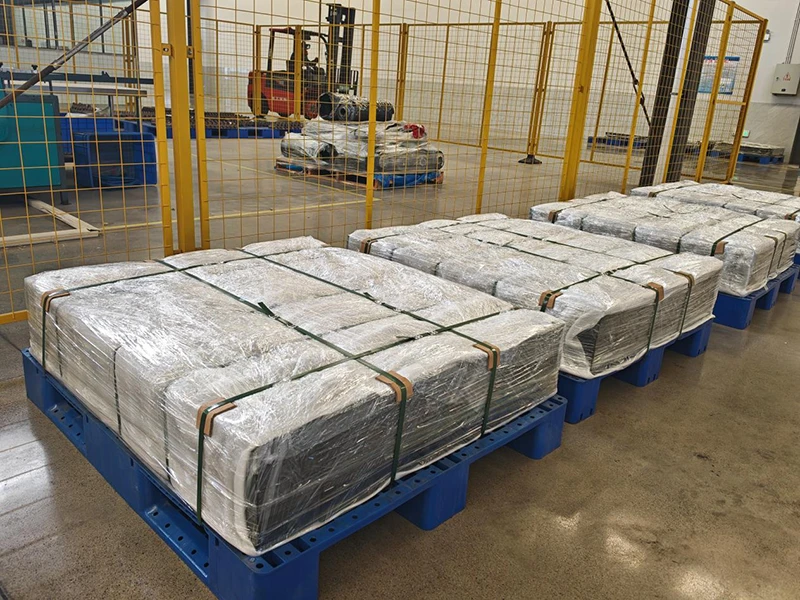
For dual sourcing vs single supplier for winter wear parts, the best result comes from matching the component, material, and setup to a documented operating condition, then validating fit, wear, safety, and cost in a controlled trial. This updated guide uses current search evidence and official-source checks to turn the topic into a repeatable selection process.
Updated: October 19, 2026
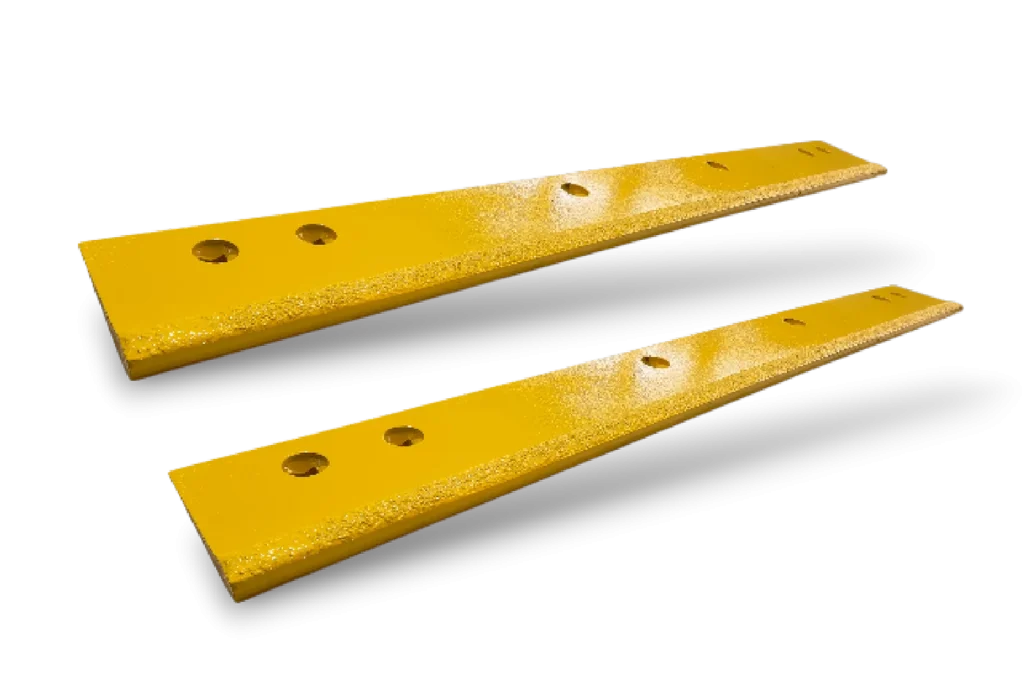
Two distributors buy the same blade. One has a single supplier and a comfortable price; the other splits the volume between two and pays slightly more per piece. When the first supplier’s furnace goes down in November, only one of them is still shipping that week.
That is the trade a sourcing structure makes, and it is not resolved by a general preference for one or two suppliers. It is resolved by working through the risks, the costs and the volume in sequence, which is what the sections below do.
What dual sourcing wear parts actually decides
Dual sourcing buys continuity, not a lower price.
A second qualified source protects supply when the first cannot deliver, and it costs money to keep alive; the question is whether the volume and the season justify carrying that cost.
The decision runs through a fixed sequence. First, how much interruption the operation can absorb. Second, what it costs to hold a second supplier in a state where it could actually deliver. Third, how the volume is split so both remain engaged. Fourth, how the specification is held identical across the two. Only then does it make sense to ask whether a single source is the better answer for a particular item.
Working in that order matters because the cheaper-looking option changes as you go. Splitting volume looks expensive at step three and cheap at step one.
Risk a single source carries
A single source concentrates every supply risk into one party, and the risks that matter in winter parts are narrower than they first appear.
Capacity failure is the obvious one: a furnace, a press or a coating line goes down at the moment demand peaks. Material availability is the second, since a grade or a steel specification may be tied to one supplier’s own supply. The third is commercial, because a single source sets the price and the schedule once the season has started, and switching then is not possible.
- Production interruption at the supplier during the season, when no alternative is tooled.
- Material or grade availability tied to one supply chain upstream of the supplier.
- Price and lead time set without competitive pressure once the season begins.
- Quality drift that nobody notices while there is no second source to compare against.
The fourth item is the least discussed and the most corrosive. Consistency is judged against something, and in a single-source relationship the only comparison available is the previous lot from the same plant.
Cost of maintaining two qualified suppliers
The cost of a second source is not the unit price; it is the cost of keeping that source qualified during the months when it is not shipping.
Qualification itself is a one-off: a first article, an approval record, a documentation review. What repeats is the maintenance. A supplier that has not run the item for a year has to re-prove the process before it can deliver, which means the tooling, the inspection routine and the material lot all have to be re-established at the worst possible moment.
The practical consequence is that a second source maintained on paper is not a second source. It becomes one only if it runs the item often enough to keep the process warm, which is why the next section is about volume rather than about qualification.
Splitting volume so both stay engaged
The split has to keep both suppliers in production, and a 90/10 split usually keeps only one of them interested.
Two reference points help. The first is the item’s minimum production run at each supplier, which sets the floor below which a share cannot go. The second is the supplier’s own expectation of the account, because a share that is obviously a placeholder will be priced as one and scheduled as one.
A workable pattern for seasonal parts is to allocate the core sizes in a stable ratio that both suppliers can plan against, and to use the flexibility in the long tail rather than in the core. Moving the whole volume back and forth each season is the pattern that leaves both suppliers unwilling to invest, which removes the benefit the second source was meant to provide.
Keeping specifications identical
Two sources only behave as one if they build to the same controlled specification, and the specification is the buyer’s document rather than either supplier’s.
That means a drawing with a revision number, a stated grade and tolerance set, an agreed joining method, and a document pack that both suppliers produce in the same format. Where a supplier proposes an improvement, it is reviewed by the buyer and then issued to both if it is accepted, rather than being introduced quietly on one side.
Fitment conventions make this easier than it sounds. Where a bolt layout follows published fleet practice, such as the specifications maintained by the American Association of State Highway and Transportation Officials or the equipment standards from SAE International, both suppliers can measure against the same reference instead of against each other’s sample.
Comparing consistency between sources
Once two suppliers deliver the same item, consistency becomes measurable, and that measurement is the main operational benefit of the structure.
The comparison should use the same evidence from both: the dimensional record, the material declaration, the joining inspection result and the delivered lot’s behaviour in service. A difference in any of those between suppliers is information, whether or not it causes a failure.
| Comparison | Evidence from each supplier | What a gap usually indicates |
|---|---|---|
| Dimensional consistency | Measured values on named critical dimensions | Different fixture or a different measuring routine |
| Material conformity | Grade, hardness range and material batch | A substitute grade or a different material source |
| Joining quality | Inspection result for the bonding step | Different parameter window or a different furnace loading |
| Field behaviour | Wear pattern and failure mode per route | Either a grade difference or an application difference |
| Documentation | Completeness of the lot pack | A process that is not yet routine at one of the two |
The last row is worth acting on early. A supplier whose documents arrive incomplete is usually a supplier whose process is not yet stabilised for that item, and that is discovered more cheaply from paperwork than from a failed edge.
When single sourcing is justified
Single sourcing is the correct answer more often than dual-sourcing policies admit, and the conditions are specific.
It is justified where the item is low-volume and specialised, so a second source cannot be kept warm on the available quantity. It is justified where the tooling cost is high enough that duplicating it is uneconomic, and where the technical support the supplier provides is part of what is being bought rather than an extra.
It is also justified where the supplier is genuinely interchangeable with a market. A commodity item with published dimensions and several capable plants does not need a maintained second source, because the second source is the market itself. Distinguishing that case from the specialised one is the whole point of the decision path.
What a second source really costs to keep alive
Keeping a second source alive is a line item, and writing it down is what makes the comparison honest.
The cost has four parts: the annual quantity that must be ordered to keep the item in production, the engineering time spent keeping two approval records current, the duplicated inventory of sizes that both suppliers carry, and the administrative cost of two order cycles, two document packs and two sets of shipments.
None of those are large individually, and together they are usually visible in the unit price. Against them sits the cost of an interruption, which for a distributor in season is measured in lost accounts rather than in lost margin. The comparison is between a certain small cost and an uncertain large one, which is why the decision belongs to the business rather than to the purchasing function alone.
Continuity plan template
Whether the answer is one source or two, the continuity plan is what converts the decision into something that works on the day it is needed.
- Name the item family, the sizes that carry the volume, and the season they have to cover.
- Record the qualified sources and, for each, the tooling, the drawing revision and the approval date.
- State the minimum order that keeps each source in production, and the split that satisfies it.
- Set a review date before the buying window opens, not during the season.
- Define the trigger that moves volume to the second source, and who decides.
- Record what each source can deliver at short notice, and what it cannot.
The last item is the one that gets left out, and it is the one that matters in a bad winter. A second source that can deliver in eight weeks but not in two is still useful; a buyer who does not know the difference will commit to a recovery plan that cannot run. Trade practice for winter programmes, including how distributors typically structure continuity, is published by the Snow and Ice Management Association.
Reviewing the sourcing structure each season
The structure should be reviewed once a year against the volumes that actually materialised rather than against the plan.
Three questions are enough. Did each source reach the minimum quantity that keeps it engaged. Did the two sources stay within the consistency range on the criteria being compared. And did anything happen during the season that a continuity plan would have caught earlier. Where the answer to the first is no, the split needs adjusting before the next buying window opens, not after.
Beyond the mechanics, the structure is also a decision about how much the buying organisation wants to manage. Two sources mean two relationships, two documentation sets and two sets of problems, and the organisation has to be able to run them. Purchasing practice in the public sector, where this is well documented, is published by the National Association of Counties and the equipment manufacturing body, the Association of Equipment Manufacturers.
Match the Edge or Attachment to the Actual Operating Condition
This research-backed framework closes a recurring gap in pages ranking for wear parts suppliers: readers need a decision method, not a list of unsupported superlatives. Apply the same evidence fields to every option before choosing dual sourcing vs single supplier for winter wear parts.
| Decision gate | Evidence to collect | Release rule |
|---|---|---|
| Surface | Asphalt, concrete, gravel, pavers, bridge deck, or sensitive finish | Choose material and setup that protect the surface while meeting removal goals |
| Snow and ice | Loose snow, wet snow, compacted snow, bonded ice, or mixed conditions | Separate plowing, scraping, and deicing functions |
| Machine setup | Carrier weight, attack angle, down pressure, shoes, trip system, and speed | Verify the complete system rather than judging the edge alone |
| Validation | Short route trial, photographs, wear readings, fuel or time, and operator notes | Expand only after the trial meets a written acceptance rule |
The most useful choice is the one that meets the route objective without shifting damage or downtime elsewhere in the system. Record setup and operating conditions so the result can be repeated.
Run a Controlled Trial Before Full-Fleet Adoption
-
Freeze the baseline: record the current component, carrier settings, route, weather, operator, hours, and reason for removal.
-
Approve fit first: compare the supplier drawing with the machine and attachment. Do not drill, grind, weld, or substitute fasteners without an approved procedure.
-
Change one major variable: keep route and operating method as consistent as practical so the result can be attributed to the component rather than a different setup.
-
Inspect at planned intervals: photograph the same locations, measure wear, check fastener torque and retention, and log impacts or abnormal vibration.
-
Release against written criteria: decide in advance what wear, removal quality, downtime, and cost per operating hour would justify expansion.
Official-Source and SERP Verification
The technical boundary was checked against Federal Highway Administration snow and ice guidance. That source is used for the operating or safety context; model-specific dimensions, settings, and limits must still come from the approved manual for the exact machine and component. The following leading pages were reviewed for search intent and missing decision details:
Frequently Asked Questions
What should be verified before selecting dual sourcing vs single supplier for winter wear parts?
Confirm the exact application, dimensions, carrier limits, operating surface, expected impacts, supplier drawing, and acceptance evidence. A product name or grade label alone is not enough.
How should dual sourcing vs single supplier for winter wear parts be compared on cost?
Compare landed and installed cost, service hours, maintenance labor, downtime, collateral wear, and replacement reason. Use cost per operating hour for comparable routes rather than purchase price alone.
When is a trial required?
Use a controlled trial whenever fit, material, setup, route conditions, or supplier process changes. Define the baseline and pass criteria before the trial starts.
Which document controls installation and operating limits?
The current manual, approved drawing, and written instructions for the exact carrier and component control. General articles and cross-reference tables are screening tools, not installation authority.
Request an Application Review
Send SENTHAI the carrier or machine model, drawing or dimensions, operating surface, route condition, current failure mode, expected quantity, and target service interval. The engineering team can then review a suitable product path without changing the evidence requirements described above.