A plow blade fastener kit is small enough to be treated casually and important enough to stop a machine in the middle of a storm. The planning question is not how many bolts to buy but how many combinations the fleet actually uses, and how many of each must be on the shelf before the first hard freeze.
This guide covers consumption rates per change, what else belongs in the kit, and the restocking triggers that keep a workshop ahead of the season.
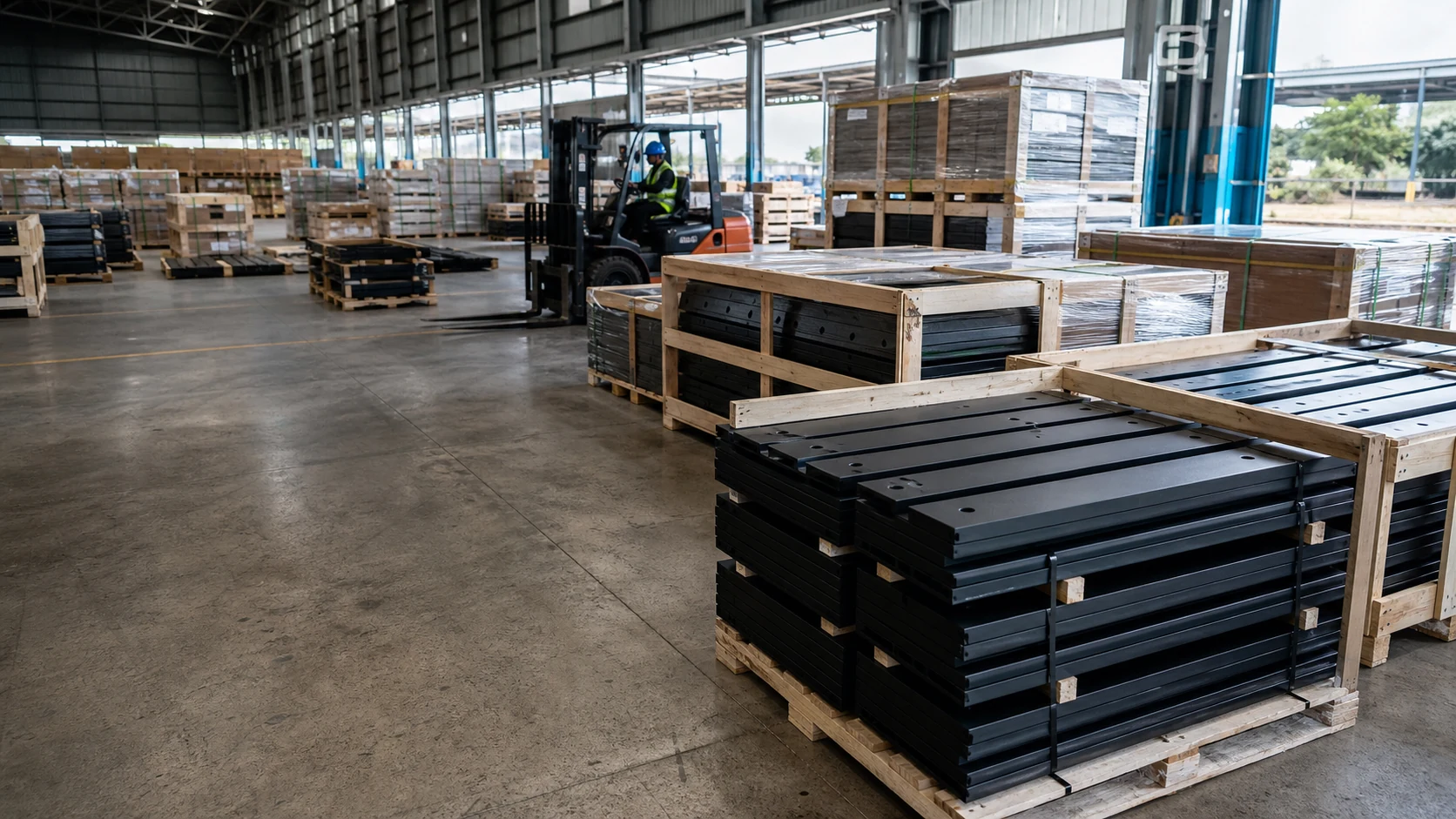
Starting point: count the combinations you actually run
A kit plan cannot be written until the fleet knows how many distinct fixing combinations it operates, and that number is almost always smaller than the parts list suggests. The exercise is a stocktake rather than a purchase: walk the machines, record the bolt diameter, thread, length and head form each one uses, and group them.
Two outcomes are typical. Several machines that appeared to need different hardware share one combination once the head form and length are compared. And one or two machines turn out to use a fixing nothing else uses, which is worth knowing before the store fills with a kit for each. The count that comes out of this walk is the number of kit lines the fleet actually needs, and it is what the rest of this plan is built on.
Consumption rates per blade change
Consumption is driven by three things, and only one of them is predictable from the order.
| Item | Consumed by | Planning note |
|---|---|---|
| Bolts and nuts | One per hole, plus losses | Hold a full set per machine plus spares |
| Washers and cones | Deformation under load | Often the part that fails first |
| Anti-seize | Applied at every assembly | Consumable, not capital |
| Cutting tools | Cutting or drilling a damaged fixing | Budget for several per season |
The unforeseen line is always the same: fixings that cannot be reused. A set that was correctly torqued and protected comes apart and goes back on; a set that was left loose or run in salt does not, and the workshop then needs a complete replacement rather than the few spares it holds. That is why the corrosion and removal practice in plow blade hardware corrosion changes the stock requirement as much as it changes the repair time.
Sizes and quantities to hold
The stock list should be built from the combinations in use, not from a catalogue page.
- List every edge pattern in the fleet with its hole diameter, head form and required bolt length.
- Consolidate where two machines can share one fixing without compromising either.
- Hold one full set per machine for the first change of the season.
- Add a spares allowance for losses, typically a proportion of a set rather than a fixed number.
- Review after the first season against what was actually consumed.
Bolt length is the entry that gets stale. It depends on the total stack of edge, wear cover and mouldboard, so adding a wear plate changes the required length without changing anything else. Recheck lengths whenever the blade specification changes, and record the stack alongside the part number rather than only the bolt size.
Consumables beyond bolts and nuts
The kit that works in the field contains more than fasteners.
- Anti-seize compound and penetrating fluid suited to the operating temperature.
- Correct-size sockets or spanners for each fixing, kept with the machine rather than in the workshop.
- Washers, cone seats and any shoulder components specified with the pattern.
- Cleaning tools for a counterbore, and a reamer for the cases where one is justified.
- Replacement fixings for the damage caused by cutting a seized bolt.
Treating these as consumables rather than as workshop equipment is what makes a roadside change possible. A machine that is towed to the workshop for want of a socket has already lost the storm.
Building the first kit, step by step
- Count the holes on one edge of the target machine and add the fixings for any wear cover or bracket fitted with it.
- Add the washers, cone seats or shoulder components specified with that pattern.
- Add the proportion of fixings the fleet’s own history says are lost or damaged per change rather than per season.
- Include one application of anti-seize and pack the kit sealed.
- Label it with the machine or blade family, not with a part number alone.
The step worth resisting the urge to skip is the third. Kits built on the hole count alone come up short the first time a fixing is cut or a head is rounded, and the shortage usually appears at the least convenient moment of the season.
Kitting for one full blade change
A prepacked kit turns a stock question into a picking question.
One kit should contain every fixing needed for one edge change on one machine, in the correct sizes and finishes, with the washers and cone seats that belong to that pattern and a sachet of anti-seize. Label the kit with the machine or blade family it serves rather than with a part number alone, because the person fitting it is working against weather rather than reading a catalogue.
Two kits per machine covers the season’s changes and one misjudgement. Kitting also stops the slow drift that happens in any store where bolts are picked loose: the bin ends up holding a mixture, and the workshop discovers the wrong sizes mid-season. The sourcing side of the same decision is covered in conical nut plow bolt hardware.
Seasonal restocking triggers
Triggers should be visible in the store rather than derived from a report.
- When a kit is issued, reorder or repack one to replace it.
- When remaining stock falls below one full set per machine, reorder before the next storm.
- When a new blade specification enters the fleet, add its kit before the first machine is fitted.
- At the end of the season, review actual consumption against the plan and adjust the allowance.
The end-of-season review is where the plan improves. Record what was consumed per machine, and separate genuine wear from the losses caused by seizing or by a change performed with the wrong tools; the second category is usually the one that can be designed out.
What to check after the first blade change
The first change of the season is the test of the kit plan, and three checks settle whether it works. Whether the kit contained everything needed, whether anything was left over, and how long the change took compared with the record from the previous season.
A kit with parts left over is usually over-specified rather than generous, and the excess should be identified so the next order carries it less often. A kit that ran short points at the loss allowance rather than at the hole count. The time comparison is the figure that justifies the whole exercise, because the plan exists to make blade changes faster rather than to make the store tidier.
Standardising across vehicle classes
Standardisation pays where it does not compromise the blade, and nowhere else.
The bolt diameter, head form and grade can often be shared across a fleet even where blade lengths differ, because the pattern family fixes the hole size rather than the blade size. Blade length, thickness and material stay route-specific. Holding the fixing uniform while letting the blade vary keeps the stock list short and the ordering simple, and it is the same logic used when a distributor consolidates an order for several customers — see wholesale snow plow blades for distributors.
What to do when a machine changes
A change of machine is the event that quietly invalidates a kit plan. A vehicle entering the fleet arrives with its own fixing combination, and a vehicle leaving takes one with it; if neither is reflected in the store, the fleet ends up holding kits for machines it no longer owns while running short on the ones it does.
The discipline that prevents it is to treat the fixing combination as part of the vehicle’s record alongside its mounting pattern, and to review the kit lines whenever a machine enters or leaves. That review takes minutes and is the difference between a store that tracks the fleet and one that accumulates history.
Storage and labelling
Storage decides whether the right part is found in the dark.
- Keep kits sealed and labelled by machine or blade family.
- Store fixings dry, off the floor, with the coating intact.
- Do not store part-used sets loose in a bin; either it is a set or it is spares.
- Keep the torque value for each combination with the stock, not in an office manual.
- Record every issue against the machine, so repeated consumption at one position is visible.
Fastener standards and mechanical properties are published by ISO and ASTM International, corrosion guidance by NACE International, road component practice by AASHTO, equipment practice by the Association of Equipment Manufacturers, and maintenance guidance by the Federal Highway Administration.
Plan the kit from the fleet’s own combinations, hold a full set per machine, and repack as the kits are issued. A blade change then depends on the weather rather than on the store. SENTHAI produces carbide snow plow blades and cutting edges in Rayong, Thailand, and supplies them with hardware specified for the application.
Mistakes that force the store to be rebuilt
Three errors turn a working kit plan back into loose stock, and each is easy to make once and hard to reverse. Issuing fixings loose from a kit without recording it leaves the next change short and the kit unaccounted for. Substituting a similar-looking fixing when the specified one is out of stock changes the assembly silently, which is how a fleet ends up with a torque value that no longer matches the hardware. And storing part-used kits loose in a bin makes both of the first two invisible until a storm.
The rule that prevents all three is the same: a kit is either a kit or it is loose spares, and the store should never contain something in between. Wholesale and distributor programmes that supply kits against a fleet’s own combination list are described on the wholesale snow plow blades page.
FAQ
What hardware should a fleet stock for plow blade changes?
A full set of bolts, nuts and washers for one edge per machine, in the size and finish that machine is specified with, plus enough spares to cover the fixings that are lost or damaged in service. Anything beyond that is convenience stock rather than a requirement.
How many plow bolts does one blade change need?
One per hole in the edge, plus the fixings on any wear cover or hardware bracket fitted with it. Count the holes on the blade itself rather than assuming a number from another machine: hole count varies with blade length and with the pattern family.
Should plow blade bolts be reused when changing an edge?
Reuse fixings that are straight, undamaged and free of pitting or stretched thread, and replace anything over-torqued, hammered or found in a joint that had already worked loose. On a fleet it is usually simpler and safer to replace the full set at each edge change and keep the survivors as emergency spares.
How do I standardise fasteners across vehicle classes?
List the combinations in use, then consolidate at the next edge order wherever the hole diameter, head form and stack height allow it. Standardising the bolt size while keeping blade length route-specific keeps the stock list short without forcing one blade onto every machine.
Isn’t it cheaper to buy fixings loose in bulk than in kits?
The unit price is usually lower, and the cost per blade change is often higher because someone has to pick the parts, and a mis-picked fixing stops the change. Bulk buying pays on the fixings a fleet consumes steadily between changes; it does not pay on the set that has to be complete in one bag.
Send the blade patterns in your fleet and the number of machines. The SENTHAI engineering desk will confirm the hardware, propose a kit per machine and quote it with the edges for the season.