Two edges arrive from the same supplier with the same grade and the same hardness on the certificate. One wears through its hardened layer by mid-season; the other holds its edge to the end, and the difference is the depth of the treatment rather than the number on the paper.
Heat treatment is the stage where a commodity steel becomes a wear part, and it is the stage buyers know least about. What follows is the sequence from the process to the question worth asking a supplier.
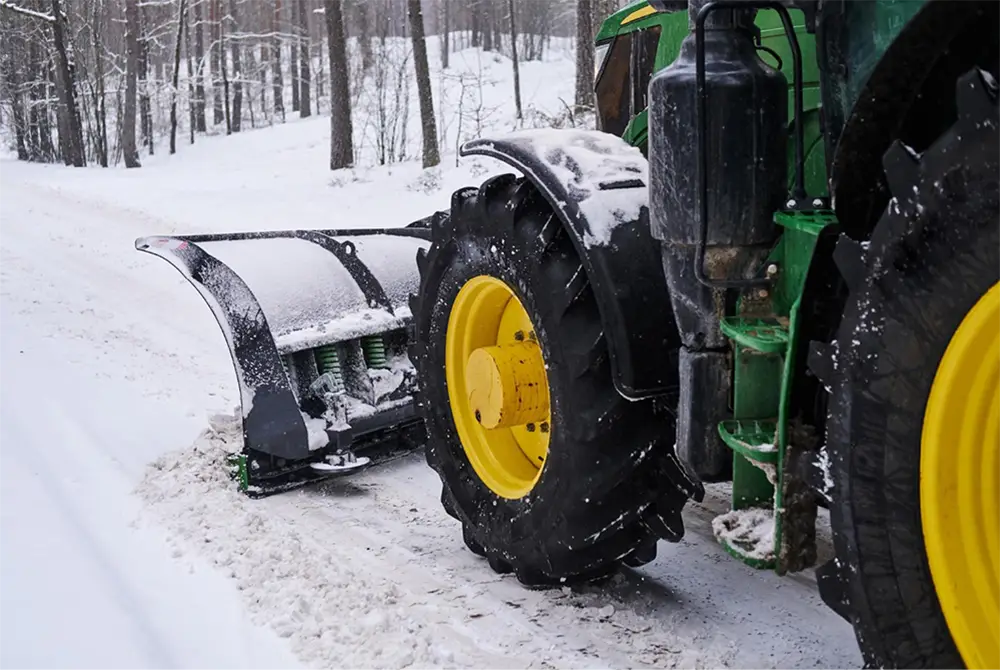
Heat treatment plow edges: what the treatment has to achieve
Heat treatment sets the hardness the edge actually delivers.
Hardening and tempering decide how hard the steel becomes and how much toughness it keeps, and the depth of that hardness decides how much of the edge can be worn before the softer core is reached.
Those three variables are set together, and a specification that names only one of them leaves the others to the supplier. A hardness value with no depth and no tempering condition describes a surface reading rather than a wear part, and it is the most common gap in a steel edge specification.
The second purpose of the treatment is to keep the part usable. A hardened edge that has distorted beyond its flatness allowance will not seat on the moldboard, and a section that has hardened throughout will crack rather than deform when it meets an obstacle. Both are consequences of the treatment rather than of the grade.
Hardening and tempering basics
Hardening raises the hardness; tempering trades some of it back for toughness, and the pair is what makes the material usable.
Hardening consists of heating the steel to a temperature at which its structure changes, then cooling it quickly enough to lock in a hard structure. That structure is hard and brittle, which is why it is never the final condition. Tempering reheats the part to a lower temperature and holds it, allowing the structure to relax to a controlled combination of hardness and toughness.
The tempering temperature is therefore a design decision rather than a finishing step. A low tempering temperature keeps more hardness and less toughness; a higher one does the reverse. Two parts from the same steel and the same hardening cycle can be delivered with different properties depending on what tempering condition they were given.
Depth of hardness
Depth is the variable that decides how long the edge stays hard as it wears, and it is the one most often left unstated.
A hardened layer has to be deep enough that the working surface stays hard through the wear the edge will see. Where the layer is shallow, the edge behaves as specified until the layer is consumed and then behaves like untreated steel, which on a wearing edge can happen within a season. Where it is deep, the edge keeps its hardness for longer, and a section that is hard all the way through loses the toughness that protects it from impact.
The practical specification therefore states a hardness range and a depth, and it accepts that the two interact: a deeper layer at the same surface hardness usually means a different steel or a different treatment route, not simply more of the same.
Distortion control
Distortion is the treatment defect that reaches the customer, because it shows up as a part that will not seat rather than as a soft edge.
Heating and quenching move a part, and the movement depends on the section, the restraint and the cooling rate. Four points cover the practical controls.
- A flatness or straightness allowance stated on the drawing, so that distortion has a limit rather than an opinion.
- A quenching method suited to the section, since uneven cooling moves a part as well as hardening it.
- Support and restraint during the cycle, so the part is not free to move while it is hot and soft.
- A dimensional check after treatment rather than only before it.
The fourth item is the one that catches the problem before delivery. A part measured before treatment and packed after it can leave the plant flat in the records and bowed in the crate.
Testing to verify treatment
Verification has to show both the hardness and the depth, and it has to be taken at a stated position on the part.
A hardness reading is affected by where it is taken and how the surface was prepared, so the record should state the position and the method. Where depth is specified, a surface reading alone cannot confirm it, and the verification has to be a section measurement on a sample or a documented process record that demonstrates the depth was achieved on the lot.
- Take the reading on the working face at a stated distance from the edge.
- Record the value and the method, including the scale and the preparation.
- For a depth requirement, verify on a section taken from a production part.
- Record the result against the batch reference rather than only on the packing list.
- Retain the record for the service life of the part plus its warranty.
The third item is what separates a depth specification from a depth claim. A section shows where the hardness stops; a surface reading cannot, whatever equipment is used to take it.
Certificate contents
A heat treatment certificate is useful when it states the process and the result, and it is decorative when it states only the result.
The useful document names the steel heat or batch, the treatment route, the tempering condition, the hardness values with their positions, the depth where specified, the standard the treatment was performed to, and the batch reference of the finished parts.
- The steel heat number, linking the treatment to the material.
- The treatment route and tempering condition, not only the final hardness.
- Hardness values with the position and method of measurement.
- The depth result, where a depth requirement is specified.
- The batch reference of the parts the certificate applies to.
The second item is the one that makes the certificate revisitable. If an edge behaves differently from the previous lot, the tempering condition is the first thing to compare, because it is the parameter that most easily changes without altering the surface hardness.
Repair welding after treatment
Repair welding is normal practice on steel edges, and it changes the material locally in ways that matter to the wear pattern.
The heat from welding softens the zone beside the weld and can leave it hard and brittle as it cools, depending on the steel and the cooling rate. The repaired area therefore wears differently from the surrounding edge, and on a hardened part the difference can be large enough to change where the part fails next.
- Confirm the steel’s condition and the procedure the supplier recommends for repair.
- Preheat the surrounding area to the temperature the procedure specifies.
- Use a filler matched to the base material, and control the heat input.
- Cool under cover rather than in a draught, to avoid a brittle zone.
- Record the repair against the machine, so the next wear pattern can be interpreted.
The fifth item is worth more than it looks. A repaired edge that fails beside the weld is a different problem from one that wears evenly, and without the record the pattern cannot be read. Standards that define these procedures are published by bodies such as ASTM International and the American Society of Mechanical Engineers.
Questions for suppliers
Six questions settle whether a supplier treats the edge or merely sells it in a treated condition.
Each one asks for a document or a parameter rather than an assurance, which is what makes the answers comparable between two suppliers.
- What is the hardness range, the method, and the position where the reading is taken?
- Is a depth of hardness specified, and how is it verified?
- What tempering condition is used, and how is it recorded?
- What flatness allowance is held after treatment, and how is it checked?
- What certificate travels with the parts, and does it carry the batch reference?
- What repair procedure is recommended after the edge is in service?
The second question is the one that separates a specification from a description. A supplier who can answer it has a depth requirement and a way of proving it; one who cannot has a surface reading and a process that might produce anything underneath.
What treatment cannot fix
Three problems are often attributed to heat treatment and are not caused by it.
A grade that is unsuitable for the application will still be unsuitable after treatment, because treatment changes hardness and toughness within the range the chemistry allows rather than changing the material. A design that concentrates load at an edge will still concentrate it. And an edge that is being asked to run at a speed or a down pressure outside its design will still be outside it.
The practical boundary is that treatment raises the performance of a suitable material in a suitable design. It does not rescue either of them, and a buyer who is seeing failures that look like material problems should confirm the design and the operating conditions before specifying a different treatment.
Specifying treatment on a drawing
A complete treatment specification fits in six lines, and it removes the ambiguity that produces most disputes about hardness.
Stating the requirement on the drawing rather than in a purchase order note also means it survives a change of buyer, which is the situation in which treatment requirements are most often quietly dropped.
- The steel grade and the standard it is defined by.
- The hardness range, the scale and the position of the reading.
- The depth of hardness, where the wear depth justifies it.
- The flatness or straightness allowance after treatment.
- The certificate required, and the batch reference it must carry.
- The repair procedure permitted after the part enters service.
Measurement practice behind the values in a certificate is published by the National Institute of Standards and Technology, and the fitment conventions that the treated part still has to meet come from the American Association of State Highway and Transportation Officials and SAE International. Fleet practice around edge specifications is documented by the Snow and Ice Management Association, and the treatment and inspection routine SENTHAI applies to a lot is described on the quality control page.
FAQ
What does heat treatment do to a plow edge?
It raises the hardness of the steel so that the edge resists abrasion, and it tempers the result so that the material keeps enough toughness to survive an impact. The combination, not the hardness alone, is what the buyer is specifying.
Why does the depth of hardness matter?
Because an edge wears through its hardened layer as it works. A shallow layer is gone partway through the season and the remaining material behaves like untreated steel, while a deeper one keeps the edge hard for longer without making the whole section brittle.
How is the treatment verified?
By a hardness reading on the delivered part, taken at a stated position and with a stated method, recorded against the lot. Where depth matters, the record has to show it, because a surface reading alone cannot distinguish a shallow layer from a deep one.
Can a treated edge be welded?
It can, with a procedure that accounts for the steel’s condition. The welded area loses its hardness locally and can harden brittly as it cools, so a repair usually needs preheat, a matched filler and controlled cooling, and the repaired zone will wear differently from the rest of the edge.
If a treated edge has worn through its hardness early, send the certificate and the batch reference. SENTHAI will check the hardness, the tempering condition and the depth against what the drawing specifies.