Two arenas running the same resurfacer model and the same stud count finished a season in different states. One set came off with rounded tips and sound holes; the other came off with tips still sharp and a tire that had begun to release studs.
The difference between those two outcomes is not the stud material. It is the geometry and the retention, and both of those are specified before the set is built. This is how material, geometry and retention interact, and how to read a stud failure back to the decision that caused it.
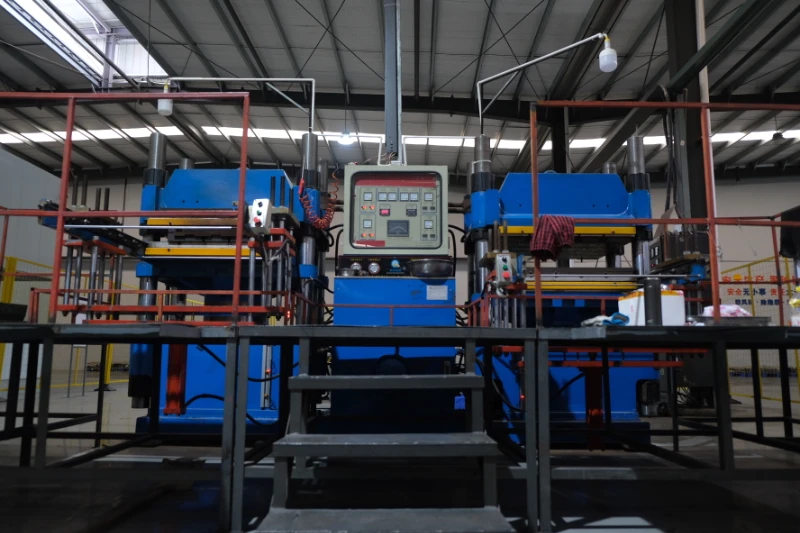
Carbide versus steel grip materials
The material comparison is narrower than it looks, because both options grip ice and they differ mainly in how long the grip lasts and how the tip fails.
A tungsten carbide tip holds a sharp edge far longer against ice, which is why it is the usual choice for a machine that runs many hours on a clean surface. Its weakness is toughness: carbide resists abrasion and is less tolerant of impact, so a tip that meets a concrete threshold or a metal track at speed can chip rather than deform. Hardened steel does the opposite, deforming instead of fracturing, and losing its point quickly on abrasive ice.
For an engineer, the decision is a question about the operating profile rather than about material quality. Hours on ice per shift, the number of hard-surface crossings per shift, and whether the machine is turned under load all point to one end of the range or the other. Where a machine does both, the answer is usually a carbide tip with a geometry that protects the point, not a compromise material.
Tip geometry and the grip mechanism
Geometry determines how the stud generates grip, and the mechanism is pressure rather than friction.
A stud holds because the load on it is concentrated into a small area, which raises the local pressure enough for the tip to penetrate the ice surface. A sharper point concentrates the same load into a smaller area and engages at a lower load per stud, which is why a machine with fewer studs can still steer if the points are sharp. A blunter tip needs more load to reach the same penetration, and it distributes wear over a wider area once it does engage.
Two secondary effects matter in service. The first is that the tip rounds as it wears, so the pressure needed to engage rises through the season and grip falls even though the stud is still present. The second is that the shoulder of the tip, where it meets the ice at an angle, carries a bending load when the machine turns, and that load is transmitted straight into the rubber at the hole. Geometry therefore affects retention as well as grip.
Wear life by arena usage
Wear life is set by how the arena uses the machine, and the operating profile is a better predictor than any general figure.
Three variables dominate. Hours on ice per shift sets the sliding distance the tips see. The number of hard-surface crossings per shift sets the number of impact events at the door and on the apron. Turns under load set the lateral forces that work a stud in its hole. An arena that resurfaces frequently for short sessions puts more hours on the tips; an arena with a long machine route and several door crossings puts more impact on them.
The practical consequence is that a replacement interval from a neighbouring venue is a weak input. The interval has to come from the arena’s own record, taken against the same variables, which is the reason an inspection log is worth keeping even where it starts as a simple tally.
Embedding and vulcanisation
Embedding is the process that decides whether a stud is held by the rubber or merely sits in it.
Where a set is produced as a complete wheel, the studs are placed in the mould and the rubber is vulcanised around them. During cure the rubber flows into the retention features on the shank and the bond forms across the full embedded length, which gives the stud good resistance to being pulled straight out. The variables that matter in that process are the placement accuracy of each stud, the cure profile, and the cleanliness of the stud surface where the rubber has to bond.
Where studs are fitted into an existing tire after manufacture, the mechanism changes. Retention then depends on interference between the shank and the hole, on the retention feature, and on the elasticity of the rubber that remains around the hole. A tire that has already run a season has less of that elasticity available, which is why replacement studs hold less well in an aged body.
Pull-out resistance and how to test it
Pull-out resistance is measurable, and a measured value is what turns retention from an opinion into a specification item.
The test is straightforward in principle: apply an axial load to a stud and record the force at which it moves or releases, on a sample taken from the production lot. What makes the result meaningful is the record that accompanies it, because the figure depends on the rubber, the hole preparation, the embedded depth and the insertion method. Without those recorded, a pull-out figure cannot be compared with anything.
For a buyer, the practical requirement is a documented check on a sample per lot, with the method and the rubber condition stated. Test methods for hardmetals and for mechanical properties are published by ASTM International, dimensional verification practice comes from the National Institute of Standards and Technology, and the material supply side of the carbide industry is represented by the International Tungsten Industry Association.
Failure patterns in service
Studs fail in a small number of recognisable patterns, and each one points at a different decision.
A rounded tip with the stud still firmly seated is normal wear, and it means the set reached the end of its useful grip. A chipped or fractured tip points at impact, which is a grade or geometry question. A missing stud with the tip intact points at retention, which is a hole, shank or rubber question. A set that wears unevenly across the tread points at the stud pattern or at the way the machine is turned. And a tire that shows cracks around several holes has usually been overloaded at those points, either by too few studs for the load or by a pattern that concentrates grip.
Recording which pattern appeared is more useful than recording that the set wore out, because the pattern is what selects the change to make.
Reading a failure back to its cause
Working from the pattern to the cause takes a fixed order, and the order matters because the causes overlap.
Follow the sequence below on each set that comes off a machine.
- Record tip condition across the tread, noting whether wear is even or concentrated.
- Count the missing studs and note their positions, since a cluster suggests a loading problem and a scatter suggests a retention problem.
- Measure a sample of holes against the drawing to establish whether the hole has enlarged.
- Check the stud shanks that came out for deformation, which separates a pull-out from a fracture.
- Compare the result with the operating record for the period, including door crossings and any change in machine or route.
A set that fails this check is still information. The five records together usually identify one decision to change, and the next set tests whether the change was right.
Ice resurfacer tire studs: the retention specification
Retention is decided by the hole, the shank and the rubber.
All three have to be specified for the load the machine applies, because a stud that grips well will still be released if the rubber around its shank cannot hold it. In most pull-out reports the tip is intact, which is what identifies retention rather than tip wear as the problem.
The specification items that follow are short. The hole diameter and depth with a tolerance. The shank diameter and the retention feature. The embedded depth and the rubber hardness at the interface. The insertion or cure method. And the pull-out check that will be performed on a sample, with the acceptance figure stated.
Where the set is bought as a complete wheel, most of these sit with the manufacturer, and the buyer’s job is to require the documentation rather than to specify the dimensions. Where studs are fitted locally, all of them sit with the buyer, and the hole condition becomes the dominant variable. Both cases benefit from the same discipline: write down what was supplied, so that the next set can be compared with it.
Specifying a set: what to write down
The specification for a studded set fits on one page, and the order of the items reflects how the decisions depend on each other.
- Machine class, wheel position and axle load, since the load per stud follows from these.
- Tire size and body specification, including rubber hardness where it is known.
- Stud count and pattern, stated with the stud diameter rather than on its own.
- Tip geometry and carbide grade, chosen against the operating profile.
- Retention method and the pull-out requirement on a sample.
- Lot identification and the documentation that travels with the delivery.
Written in that order, each item is constraint-driven rather than preference-driven, and a supplier can quote against it without a clarification round. Equipment-level conventions for the machines involved are published by the Association of Equipment Manufacturers, and interface standards for mounted equipment by SAE International.
Common misconceptions about studs
Four beliefs about studded sets are widely held and each one leads to a specification that underperforms.
- That more studs always means more grip, when past a point the extra points share a load that is already sufficient.
- That a harder tip is always better, when impact rather than abrasion decides a large part of the wear.
- That a lost stud is a wear item, when an intact tip on a released stud indicates a retention problem.
- That one set specification suits every arena, when hours on ice and door crossings differ enough to change the answer.
Inspection interval for a working arena
An inspection schedule that produces records, rather than reassurance, is worth more than a frequent glance.
- Tip condition across the tread, recorded against operating hours since the last check.
- Missing stud count and positions, which distinguishes a loading problem from a retention one.
- Hole condition on a sample, measured against the drawing rather than judged by eye.
- Any change in the machine, the route or the ice preparation that would explain a shift in wear.
Reference measurement practice for the dimensional side of these checks is published by the National Institute of Standards and Technology, and test methods for hardmetals by ASTM International.
Specification guidance across the material families
Across the three material options, the choice follows the operating profile rather than the purchase price.
A carbide tip in a hard grade suits high hours on clean ice with few hard-surface crossings. A carbide tip in a tougher grade suits a machine that crosses concrete or matting regularly, and it trades wear interval for resistance to chipping. A hardened steel tip suits a low-hour machine where the set is replaced often and impact is the dominant risk. In each case the retention specification stays the same, because pull-out is a function of the hole, the shank and the rubber rather than of the tip material.
FAQ
What are ice resurfacer studs made of?
The tips are normally tungsten carbide, set into a steel or carbide body and anchored in the tire rubber. Hardened steel tips are also used where the machine sees more impact than abrasion, and they wear faster on ice.
Does a higher stud count always mean better grip?
Only up to the point where the load per stud stops being enough to bite. Past that, extra studs spread the same weight over more points without adding engagement, and they increase the number of holes in the tire that can loosen.
Why do studs pull out while the tips are still sharp?
That combination points at retention rather than wear. The hole has enlarged, the rubber has lost its hold on the shank, or the stud has been loaded sideways in a turn hard enough to open the hole further.
Is vulcanisation or mechanical fixing better for stud retention?
Vulcanisation bonds the rubber around the stud during cure, which suits a set produced as a wheel and gives good resistance to axial pull-out. Mechanical retention suits replacement studs fitted into an existing tire, and it depends much more on the condition of the hole.
How often should a studded set be inspected?
Often enough to see the trend rather than the failure. Recording tip condition, stud retention and hole condition at a set interval through the season shows which of the three is limiting the set, which is the information needed to change the specification.
If a studded set is being specified for a specific machine and arena, send the operating profile and the wheel details and SENTHAI will set out the grade, geometry and retention that suit it.