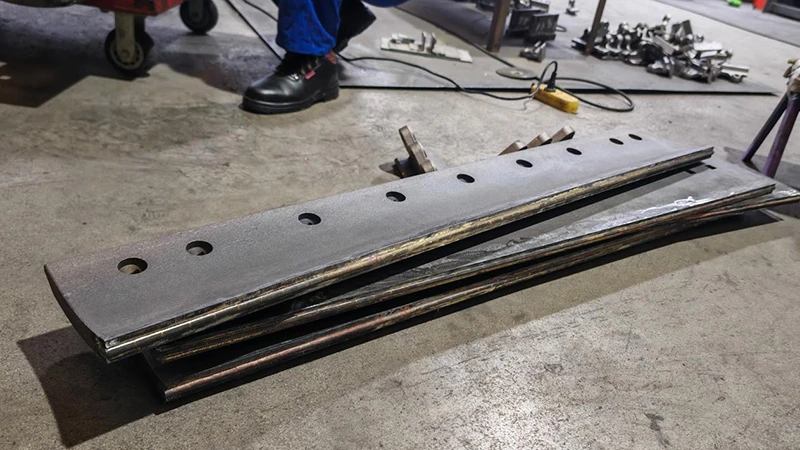
Loader cutting edges are the replaceable wear surfaces on a loader bucket that take abrasion and impact while the base edge protects the bucket structure. Choosing abrasion-resistant edges—steel, overlay, or carbide-assisted—starts with the material you dig, how you load, and whether you can rotate or segment the edge before the base is damaged.
(Last modified date: November 12, 2026)
This guide answers what loader cutting edges are, how cutting edges for loader buckets differ from a one-piece “forever” lip, and when carbide wear parts earn their place versus hardened steel. For RFQ structure and dual-source checks that apply across carbide wear parts, use the sourcing carbide wear parts guide. Related winter and edge hardware lives under snow plow wear parts and carbide inserts.
What are loader cutting edges?
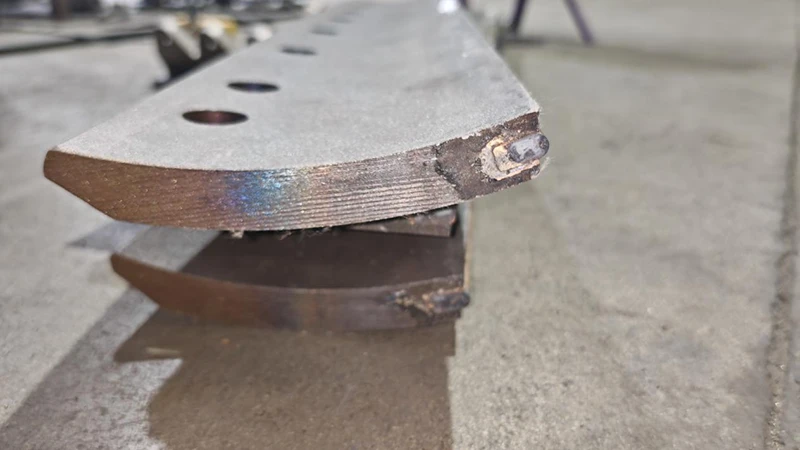
Loader cutting edges are the working lips bolted or welded at the front of the bucket. In most abrasive fleets they are treated as wear parts: the cutting edge and segments take the scrape, while a thicker base edge or adapter system protects the bucket shell. “Cutting edges for loader buckets” in search language usually means these replaceable lips, plus corners and heel protection that fail early in rock or recycled aggregate.
Selection turns on duty, not on catalogue thickness alone. Fine abrasive sand, shot rock, demolition debris, and sticky clay punish edges differently. A fleet that keeps replacing the whole lip when only the corners are gone is usually missing segmentation or corner shrouds—not “stronger steel” as a slogan.
Loader bucket cutting edge parts: what each one does
| Part | Where it sits | What it protects |
|---|---|---|
| Base edge | Welded front lip of the bucket | The bucket structure; it should not be the wearing part |
| Bolt-on cutting edge | Bolted to the base edge, one-piece or segments | The base edge, in abrasive loading and grading |
| Teeth and adapters | On the base edge instead of, or with, an edge | Penetration into hard or rocky material |
| Side cutting edges | Along the bucket side plates | Side plates when cutting into a pile or trench wall |
| End bits / corner guards | At each end of the cutting edge | The corners, which wear fastest |
| Wear plates and heel shrouds | Bucket floor and heel | The floor when the bucket is dragged or back-dragged |
Rubber cutting edges for loader buckets: when they fit
Rubber or polyurethane edges suit snow and finished surfaces such as pavers, decorative concrete and parking decks, where a steel edge would scratch. They are not an abrasion solution for digging. For snow work on sensitive surfaces with longer wear life, a rubber-flex edge with carbide segments, such as the JOMA style blade, is one option; for abrasive pavement, a carbide snow plow blade.
Abrasion-resistant choices: carbide versus steel
Hardened and alloy steels remain the default for many loader cutting edges because they tolerate impact, are widely available, and can be cut, drilled, or welded in the field within normal shop practice. Abrasion-resistant plate and overlay edges extend life where sliding wear dominates and impact is moderate.
Carbide enters as inserts, tiles, or carbide-faced sections where abrasive sliding wear outruns what steel can economically provide—think repeated passes in highly abrasive fines. Carbide is not a universal upgrade: it is less forgiving of heavy impact, poor support geometry, or loose fasteners. This article does not invent hardness numbers; compare candidates on your own wear hours, failure mode (lip thinning versus corner breakout versus insert loss), and cost per hour on the same machine.
| Factor | Hardened / AR steel edge | Carbide-assisted edge |
|---|---|---|
| Primary strength | Impact tolerance and field repairability | Resistance to sliding abrasion on supported faces |
| Watch-outs | Faster lip loss in high abrasion | Chipping if impact or support is wrong |
| Maintenance style | Rotate, rebuild, or replace segments | Inspect fasteners/braze; replace inserts or faced sections |
| Best evidence | Hours to condemning thickness on your material | Hours plus insert retention on the same route |
Bucket duty and where edges fail early
Corner and heel wear often outrun the center lip. If operators dig with a corner or back-drag aggressively, a straight one-piece edge will look “worn out” while most of the steel is still usable. Segmented cutting edges and dedicated corner protection let you replace only the failed zone. Bolt-on systems favor planned change-outs; weld-on systems favor permanent duty where bolt access is poor—but they raise the skill bar for replacement.
Match the edge system to the machine class and the bucket that is actually fitted. Hole patterns, thickness, and bevel must match the base edge. Ordering “a loader edge” without the bucket serial, base-edge part number, or a measured pattern is how fleets receive parts that almost fit.
Bolt-on versus weld-on, base edge versus segments
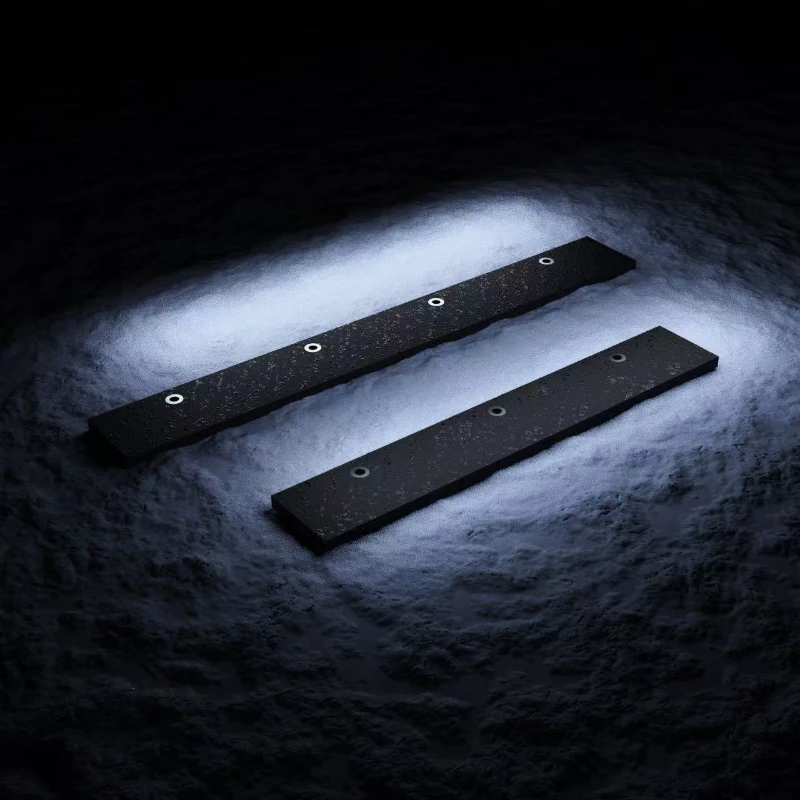
Bolt-on loader cutting edges support rotation and fast swap when downtime windows are short. Weld-on edges suit applications where bolts shear or where the lip is integral. Keep the base edge in condemning limits; replacing only the cutting edge while the base is hooked or thin transfers wear into the bucket floor and side walls.
Segment kits shine when abrasion is uneven. They also make abrasion-resistant upgrades easier to trial: carbide or overlay can be tested on high-wear segments before a full-lip commitment. Document hours, material, and operator notes so the trial is comparable.
Ordering information buyers should prepare
- Machine make/model and bucket identification
- Base-edge part number or a verified hole pattern and thickness
- Material handled and whether impact or abrasion dominates
- Preferred system: one-piece, segmented, corner/heel protection
- Whether carbide inserts or faced sections are in scope
- Inspection photos of the condemned edge and base
Send that pack when you request options. Lead time and price belong on the quotation for the exact edge system—lead time is confirmed with the quotation. For cross-category carbide sourcing discipline, follow the sourcing carbide wear parts guide rather than inventing a loader-only product page that does not exist on this site.
FAQ
What are loader cutting edges?
Loader cutting edges are the replaceable lips on a loader bucket that take digging abrasion and impact. They usually work with a base edge that protects the bucket structure, and may include segments, corners, and heel protection.
What are cutting edges for loader buckets made of?
Most cutting edges for loader buckets use hardened or abrasion-resistant steels; high-abrasion duties may add overlay or carbide inserts on supported faces. Choose from your wear mode and hours, not from a single hardness claim.
When should abrasion-resistant carbide be considered on a loader edge?
Consider carbide-assisted sections when sliding abrasion consumes steel edges too quickly and the geometry can support inserts without heavy unsupported impact. Trial on high-wear segments before converting a full lip.
Is a bolt-on loader cutting edge better than weld-on?
Bolt-on edges favor planned rotation and faster change-outs. Weld-on edges suit permanent duty or poor bolt access. Neither replaces a sound base edge or correct hole pattern.
What is a bucket side cutting edge?
A replaceable wear strip bolted or welded along the bucket side plate so the side plate is not worn away when the bucket cuts into a pile or trench wall.
Are rubber cutting edges good for loader buckets?
For snow and finished surfaces, yes, because they do not scratch. For digging or abrasive loading, no; use steel or carbide-faced edges.
Planning abrasion-resistant loader cutting edges or carbide-assisted segments? Email machine, bucket, and wear photos to [email protected]. SENTHAI will respond with options and lead time confirmed with the quotation.