OEM is not the expensive model and private label is not the cheap one. The three arrangements differ on a single question, and the cost difference follows from the answer rather than from the label.
That question is who owns the design the blade is built from. Buyers usually arrive at it after a season of selling a rebranded stock edge and finding that the range, the packaging and the story do not hold together.
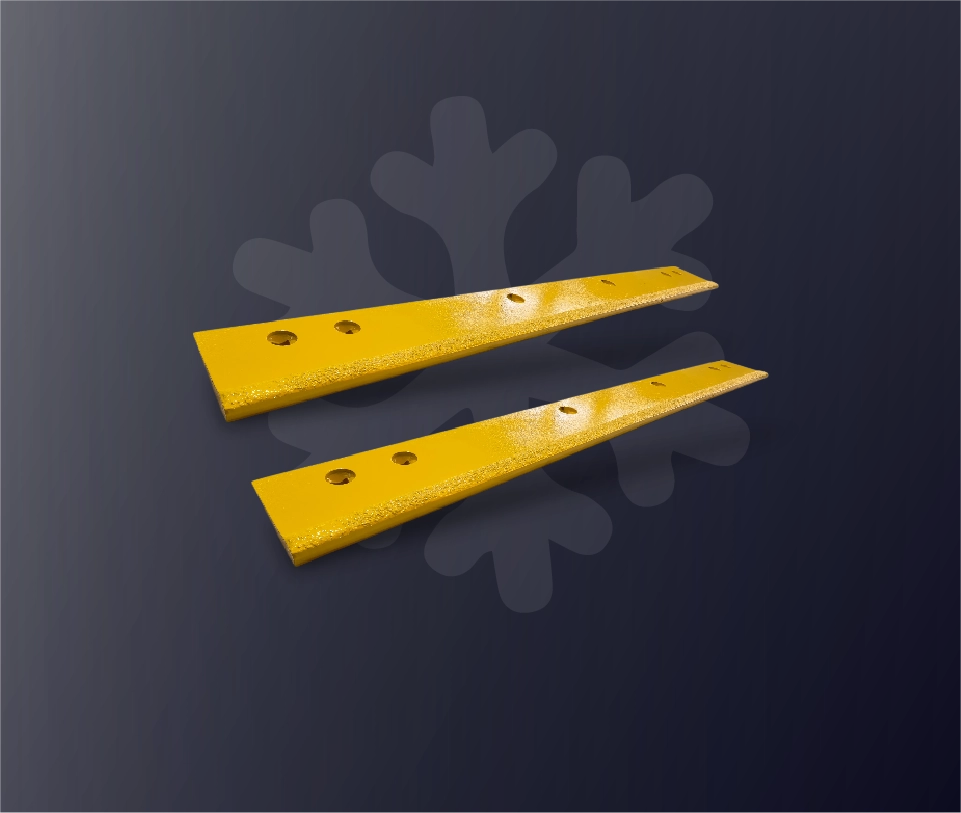
What OEM snow plow blades, ODM and private label actually mean
The three models differ in who owns the design.
In OEM the buyer’s drawing governs; in ODM the manufacturer’s existing design is rebranded; in private label a catalogue item carries the buyer’s name. Which model a buyer enters decides tooling ownership, minimum order, certification duties and time to market.
The three positions are not degrees of the same thing. OEM puts the specification, and the liability for it, under the buyer’s control: the drawing, the tolerance callouts and the revision history are the buyer’s documents. ODM leaves the design with the manufacturer, who licenses the right to sell it under another name. Private label changes nothing about the product at all, because the buyer contributes a brand, a catalogue entry and a demand forecast.
That is why the conversation about OEM snow plow blades goes wrong so often. A buyer asking three suppliers for OEM prices is asking for a quotation against a drawing that does not exist, and the three answers measure three interpretations rather than three prices.
Where the design sits decides everything else
Four commercial terms follow directly from the design question, and they are rarely negotiable on their own.
The first is who carries revision control: a buyer-owned drawing has a revision number and a change process, while a manufacturer-owned design has whatever the supplier decides to build this season. The second is who can be asked to change something, because only the design owner can alter a profile, a bolt layout or a carbide grade.
The third is what happens when the relationship ends, since a buyer who owns the tooling and the drawing can move the product to another plant while a buyer who licensed a design usually cannot. The fourth is who answers for a field failure: where the buyer supplied the specification the diagnosis starts there, and where the manufacturer supplied the design it starts there instead.
Tooling and intellectual property questions to settle first
Tooling and IP are where the models differ most sharply, and where the questions are cheapest to answer before an order rather than after one.
In OEM, tooling is often buyer-funded, and that funding buys an asset which has to be named in the contract: who holds title to the die, the fixture or the extrusion tool, where it is kept, whether the buyer may inspect it, and what happens to it if the relationship ends. An ownership clause with no access clause is difficult to enforce.
In ODM the manufacturer owns the design and the tooling behind it, so what the buyer needs instead is clarity on the licence: territory, channel, duration, and whether the design may be sold in the same market under another brand. Exclusivity is bought rather than assumed, and it usually carries a volume condition.
Private label carries no tooling question but does carry a trademark question, because the brand is the only asset the buyer contributes. Registration in the markets where the line will be sold, and a check that the name is not already in use in the category, are worth completing before the first carton is printed; the examination basics are published by the United States Patent and Trademark Office.
What each model does to the minimum order
Minimum order quantities look like a supplier policy, but in the three models they are driven by three different costs, and the resulting numbers behave differently as volume grows.
| Model | What drives the MOQ | Behaviour as volume grows |
|---|---|---|
| Private label | Print run for packaging and labels, plus a production lot size | Falls quickly to a stock quantity; packaging is the last constraint to disappear |
| ODM | Existing production lot size; the design is already tooled | Scales with the supplier’s batch size and rarely falls below it |
| OEM | Tooling amortisation spread across the order, plus set-up time | Falls steeply at first, then flattens once the tooling is paid off |
The shape of the curve matters more than the first number. A private label MOQ that looks high is usually a packaging decision the buyer can influence by choosing a plain carton and a printed label. An OEM MOQ is a tooling decision, and it moves only if the tool is shared across more sizes, the first delivery is accepted later, or the tooling is paid for separately so the first order is priced as production.
Branding and packaging options compared
Branding is where private label and ODM buyers have the most choice and OEM buyers the least, because the product itself was specified by someone else.
Four levels are in common use and can be mixed within one range: a plain product with a buyer-applied label; a printed sleeve or band carrying the brand and the part number; a printed carton with the buyer’s own numbering and barcode; and a full set that adds buyer-specific documents inside the box. The first two are usually available on any model, while the last two normally need a volume commitment because they consume tooling or print set-up.
Edge marking deserves its own decision. A stamped or laser-applied brand lasts as long as the blade, which is an asset on a municipal yard and a liability if the buyer later changes supplier. Where the long-term brand is not settled, keep the marking on the packaging and leave the product plain.
Certification and documentation duties across the three models
Certificates belong to the manufacturer’s plant rather than to the model, but the name printed on the document changes with the arrangement, and that is what buyers forget.
A quality management certificate is issued to the site that holds it, so an OEM customer cannot present the supplier’s certificate as its own. What the OEM buyer can require is documentation with the lot: a dimensional record against the agreed drawing revision, a material declaration with the standards the values were measured to, such as those published by ASTM International, and a batch reference tying the lot to its production record.
Where a market requires a declaration of conformity issued in the seller’s name, the issuer must be the party responsible for the design. For OEM products that is normally the buyer, because the buyer supplied the specification; for ODM and private label products it is normally the manufacturer. Import requirements are set by the destination authority, such as US Customs and Border Protection, working from the origin conventions published by the World Customs Organization.
Cost and time to market comparison
The cost difference between the models is a difference in when money is spent, and the time-to-market gap follows the same pattern.
| Cost or timing item | Private label | ODM | OEM |
|---|---|---|---|
| Set-up cost before production | Artwork and label printing | Artwork plus any licence or exclusivity fee | Tooling, drawings, and first-article approval |
| First-order size | Packaging run and a production lot | Supplier’s existing lot size | Tooling amortisation quantity |
| Time to first shipment | Shortest; packaging is the only queue | Short to moderate; design already exists | Longest; tooling and approval sit before production |
| Unit cost at scale | Catalogue price less volume tier | Between the other two, depending on licence terms | Lowest where the design removes cost from the product |
| What the buyer owns at the end | A brand and a customer list | A licence, and a customer list | A design, tooling and revision history |
Read the last row as the real output of the decision. Private label builds demand, ODM builds a range and a market position, and OEM builds a product the buyer controls. Where goods cross a border, the delivery term decides who carries freight, duty and risk, under the definitions published by the International Chamber of Commerce.
Choosing the model by business stage
The right model is decided by what the buyer already has, and most successful brand lines move through two of the three.
A distributor with no drawings and no brand of its own should start with private label: the product exists, the investment is in packaging and stock, and the first season produces the sales data everything else depends on. A distributor that has found a fitment gap, a size its competitors do not carry, or a wear problem the catalogue product does not solve is a candidate for OEM on that one item while the rest of the range stays private label.
ODM sits between the two and suits a brand that wants a range broader than one factory’s catalogue without funding tooling on every size. The pattern that works most often is a mixed range: private label on the commodity sizes, ODM where the brand needs a point of difference, and OEM on the two or three items that carry the name. A manufacturer running the full process chain in house can support all three from one plant, which matters because mixed ranges otherwise mean mixed suppliers and mixed documentation. The production scope behind each model is set out on the factory page and the custom blade programme page, and the trade practice behind these ranges is documented by the Snow and Ice Management Association.
The objection that decides most sourcing debates
Two objections come up in almost every OEM versus ODM discussion, and both are worth answering because they change the decision.
The first is that the three models are simply price tiers of the same product. That holds only while the product is unchanged: once the buyer needs a different bolt layout, a heavier section or another insert grade, the private label route cannot deliver it at any price.
The second is that OEM guarantees a better product. It guarantees a product built to the buyer’s specification, which is a different claim, and a weak specification produces a weak blade with the buyer’s name on the drawing. The protection is a first-article inspection and a documented approval step, not the model itself.
What to write into the agreement
Whichever model is chosen, six items should be settled in writing before the first order, because all six are difficult to renegotiate once tooling exists and cartons are printed.
- The design owner, named explicitly, with the drawing revision that production is measured against.
- Tooling: who pays, who holds title, where it is kept, and what happens on termination.
- The licence terms for an ODM product: territory, channel, duration and any exclusivity condition.
- The document set that travels with each lot, and the name that appears on each document.
- Branding scope: what is printed on the product, the packaging and the enclosed documents.
- The change process: how a specification is revised, who approves it, and how it is communicated.
The sixth item is the one most often left out, and it decides what happens in year three. A supplier who improves a product without telling the buyer has changed the OEM specification or the ODM design, and in both cases the buyer has lost control of the thing the agreement was written to define.
FAQ
Is private label just OEM with a different sticker?
No, and the difference is legal rather than cosmetic. In private label the manufacturer’s existing design is unchanged and the buyer contributes branding only, so the buyer owns artwork and nothing else. OEM transfers a design to the buyer’s drawing, which is why tooling, approval documents and revision control come with it.
Can an ODM blade be sold exclusively under my brand?
Only if the agreement says so. The manufacturer owns an ODM design and can license it to several buyers, which is normal in this category. Exclusivity has to be bought as a territory, a volume band or a time window, and it should name the channel as well as the country.
Is OEM only worth considering at container volumes?
Not necessarily. The binding constraint is the tooling and set-up cost spread across the order, not the container itself. A narrow OEM range that reuses existing tooling can start at a fraction of the volume that a new extruded profile or a new die requires.
Can a private label line be upgraded to OEM later?
Yes, and it is the usual route. Sales data from the private label line shows which sizes move, and that evidence is what justifies paying for tooling on the sizes worth differentiating. What carries over is the customer base and the catalogue; what does not is the design, which starts from the new drawing.
If you are deciding between the three models, send the sizes and the application rather than a finished specification. SENTHAI will say which model suits each part of the range and what documentation can travel with a first order.
This article is one step in the Sourcing Carbide Wear Parts Guide, which covers the technical pack, supplier selection, landed cost and supply risk.