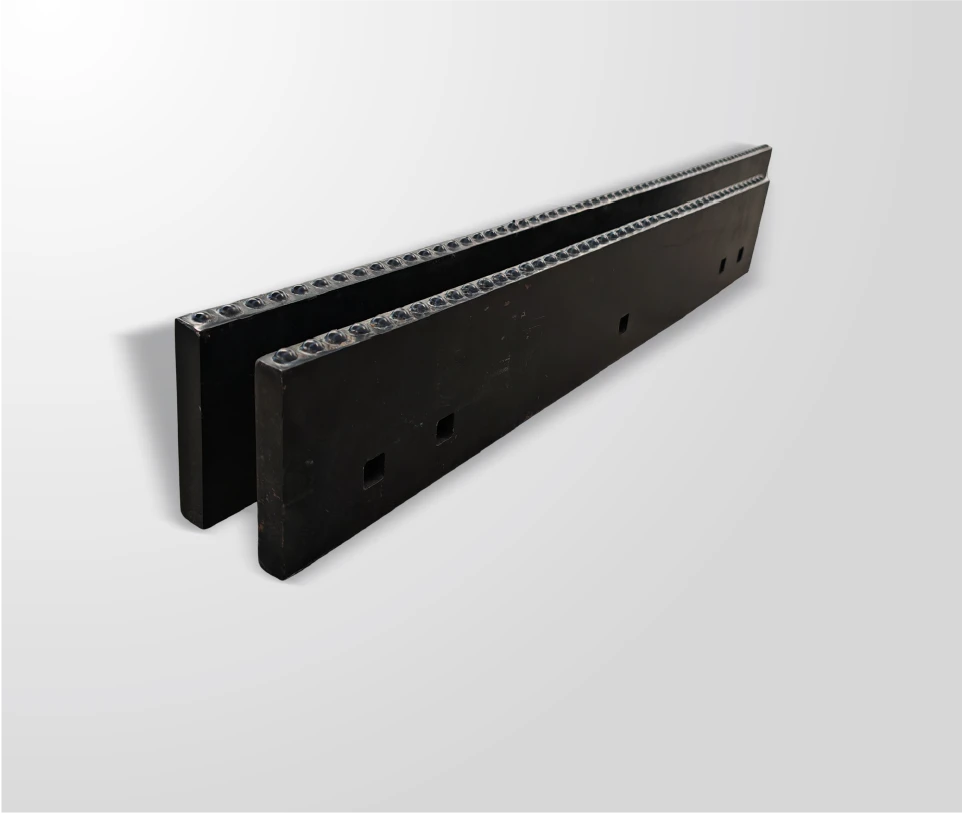
Freeze-thaw cycles are the number that decides this case. A route that goes through 40 of them in a season gives a cutting edge far more to work with than one that sees 10, and the difference between those two routes matters more to the payback than any difference between two pieces of equipment.
A packed ice kit does not save money on the edge itself; it saves the work that was being done because the edge could not cut. This is a cost anatomy of that trade: what the kit replaces, how to build the case from a route’s own numbers, and how to pilot it before a fleet-wide decision.
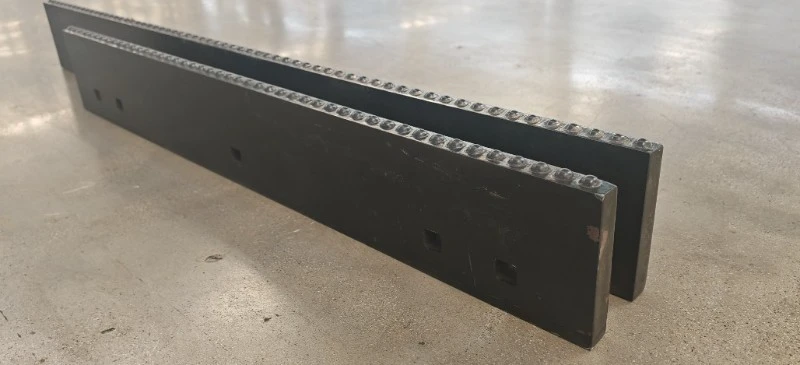
Packed ice kit cost: what the kit replaces
A packed ice kit pays back through the work it removes.
What the kit replaces is not another edge; it is a set of recurring activities that exist because a standard edge rides polished hardpack instead of cutting it. Those activities are measurable, and they are what the payback case is built from rather than a comparison of part prices.
The table below lists what usually appears on the replaced side of the calculation, along with the record a fleet needs to put a number against each one.
| Item replaced | What it is | Record needed |
|---|---|---|
| Repeated passes | Extra passes on the same route to work a polished layer | Passes per storm from the route log |
| Chemical applications | Treatments applied to soften or prevent hardpack | Application count and quantity per storm |
| Abrasive spreading | Grit applied where the surface stays bonded | Spreading events and material used |
| Call-outs | Additional mobilisations after a refreeze | Out-of-hours call-out records |
| Labour hours | The operator and equipment time attached to all of the above | Hours by activity, at the fleet’s own rates |
The fourth row is the one fleets most often leave out and the one budget holders notice, because a call-out carries overtime and mobilisation rather than only hours.
Route freeze-thaw profile
The number of freeze-thaw cycles a route goes through is the single largest driver of the payback, and it can be counted from the fleet’s own weather and dispatch records rather than estimated. A cycle is a period in which the surface melts or softens and then refreezes, which is the condition that builds a polished layer.
The profile varies more within a network than between fleets. Routes at higher elevation, routes with long shaded sections, routes that cross bridges, and routes with heavy stop-start traffic at junctions all produce more bonded hardpack than an open arterial that drains and dries. That is why the case is built per route, and why a fleet-wide average is usually the wrong number to use.
Two characteristics are worth recording per route alongside the cycle count: how quickly the surface refreezes after treatment, and whether the hardpack persists through the day or clears with traffic. A route where the layer survives the afternoon is a stronger candidate than one where it breaks up on its own by mid-morning.
Labour hours saved per event
Labour is charged per event rather than per metre, which is what makes it decisive. The hours that matter are the difference between what a route costs to bring to a given condition today and what it would cost if the surface broke up on the first pass.
Building that number means separating the activity rather than the shift. A pass over a route costs the operator time plus the operating cost of the carrier; an application of chemical or abrasive adds the material and its handling; a call-out adds mobilisation and premium hours. Those three lines are what change when the edge starts cutting, and totalling them per event gives a figure that can be multiplied by the number of events the route no longer needs.
Chemical and abrasives savings
The material side of the case is smaller than the labour side but easier to evidence, because quantities are already recorded for purchasing. Two effects usually appear: fewer applications, because the surface is broken up mechanically rather than chemically, and smaller quantities per event where applications continue.
There is a second-order effect worth noting rather than counting as a saving. Grit and abrasives applied to a hardpack surface can be spread off the route or buried in the layer, and the volume that stays in contact with the cutting edge adds to its wear. A route that needs less grit is also a route where the edge meets a somewhat less abrasive surface, which shows up in the wear record rather than in the materials budget.
Worked example for one route
The example below keeps the arithmetic visible and substitutes the route’s own figures at the end. Symbols are used deliberately: the structure of the calculation is what transfers between routes, and a fleet’s own numbers are the only ones that make it meaningful.
Take one route with a recorded cycle count per season, a recorded number of ice-control events, and a recorded pass count per event. The replaced side of the case is the events the kit removes, multiplied by the cost of one event, where the cost of an event is the pass cost plus any application and any call-out premium. The added side is the kit cost divided by the seasons it serves, plus the additional shift time caused by working bonded sections more slowly.
Reading the two sides as rates rather than totals is what makes the figure comparable between routes of different lengths. A route with a high cycle count and a low event cost may still be a better candidate than a long route with a low cycle count, and the calculation shows that in one line rather than in an argument.
Sensitivity to winter severity
The result moves with the winter, and knowing which way is more useful than a single figure. The table below shows how the case responds as conditions change.
| Condition | Effect on the case | Why |
|---|---|---|
| Severe winter, many cycles | Strongest position | More events that a cutting edge can remove |
| Mild winter, few cycles | Payback stretches over more seasons | Fewer events replaced, same kit cost |
| Long route with high event cost | Strengthens even at moderate cycle counts | Each removed event is worth more |
| Route that clears on its own by mid-morning | Weakens | The hardpack does not persist long enough to create repeated events |
| Carrier that cannot hold down pressure | Fails regardless of severity | The cutting condition never develops, so nothing is removed |
The last row is worth checking before the calculation is attempted at all. Where the carrier cannot develop the contact the system needs, the route will produce neither the saving nor the cutting action, and the payback case is being built on an assumption the equipment does not support. Whether the carrier can deliver it is described on the packed ice kit page.
How to pilot before fleet-wide purchase
A pilot is worth running because the inputs are route-specific and because it produces the baseline a later comparison needs.
- Choose the route with the highest recorded cycle count and the most persistent hardpack.
- Record the current baseline for a full season: passes, applications, call-outs and labour hours per storm.
- Fit the kit to that route only, and keep the operating records in the same format.
- Record the slower effective speed on bonded sections as a cost rather than treating it as free.
- Compare the two seasons on the recorded activities, not on the impression the operators formed.
The second step is the one that cannot be skipped or reconstructed later. A fleet that fits the kit and then tries to establish a baseline from memory has no comparison, and the result of the pilot becomes an opinion with a purchase order attached.
What the payback case does not include
Three costs are usually left out of these calculations, and all three are real. The first is the additional shift time caused by working bonded sections at the lower speed the cutting action requires. The second is the training time needed for operators to run the edge differently, which is not large but is not zero.
The third is the inspection load. An insert array has to be measured each season rather than judged by eye, and that is workshop time the fleet did not previously spend. Including all three makes the case smaller and more durable, and a case that survives a budget review is worth more than one that wins an argument and then fails to repeat. The wider framework these figures sit inside is set out on the total cost of ownership page.
Reading the result when the winter is mild
A mild winter produces a result that looks like a failure and usually is not. Fewer cycles mean fewer replaced events, so the first season may not return the kit cost even when the mechanism is working exactly as intended.
The useful response is to check whether the mechanism worked and the season was short, rather than assuming the equipment underperformed. That means looking at the wear pattern and the surface condition records rather than the financial total: a route whose hardpack broke up on the first pass in the few cycles it saw has demonstrated the mechanism, and the case then needs more seasons rather than different equipment.
SENTHAI manufactures packed ice carbide kits and inserts in Rayong, Thailand, with the insert arrangement and grade matched to the surface a route produces. Guidance on how winter conditions affect a network is published by the Federal Highway Administration, research on winter maintenance performance by the Transportation Research Board, budgeting practice for public fleets by the National Association of Counties, and winter operations practice by the American Association of State Highway and Transportation Officials and the Snow and Ice Management Association. Route-level figures that need to be turned into a specification can be discussed through the contact page.
FAQ
How is the payback of a packed ice kit calculated?
Add up the work the kit removes: passes over the route, chemical and abrasive applications, call-outs and the labour hours attached to each, plus the wear parts that were being replaced. Then compare that total against the kit cost and the slower effective speed on bonded sections.
What is the single biggest input?
Usually the number of ice-control events the route no longer needs. One removed pass per storm across a season is worth more than every other input combined, which is why the freeze-thaw profile of the route is the first thing to measure.
Does a mild winter break the case?
It delays rather than breaks it. A mild winter reduces the number of freeze-thaw cycles and therefore the work the kit removes, so the payback stretches over more than one season. That is a reason to pilot first, not a reason to abandon the calculation.
Should the kit be assessed on one route or the fleet?
One route first. The payback depends on how much bonded hardpack a route produces, and that varies more between routes than between machines. A single route piloted through a full season gives a defensible number and identifies which other routes have the same profile.
What costs does the case usually leave out?
The slower effective speed on bonded sections, the training time to run the edge properly, and the inspection hours the insert array needs each season. All three are real, and leaving them out is what makes a payback case look better than it survives contact with.
Send the route length, the freeze-thaw cycle count, the ice-control events per storm and the carrier. The SENTHAI engineering desk will confirm the insert arrangement so the trial is run against a specification rather than an assumption.
This article is one step in the Packed Ice Edge Guide, which explains why a standard edge skates across hardpack and how to set one up so it bites.