On a first order, the deposit percentage is the single term that decides who is financing the transaction. Everything else in the negotiation is secondary to that number, and it is also the term suppliers are least willing to move without a delivery history.
The other terms matter too, but they matter in a specific way: each one allocates a risk to one party or the other. Reading them that way is what turns a list of percentage splits into a decision.
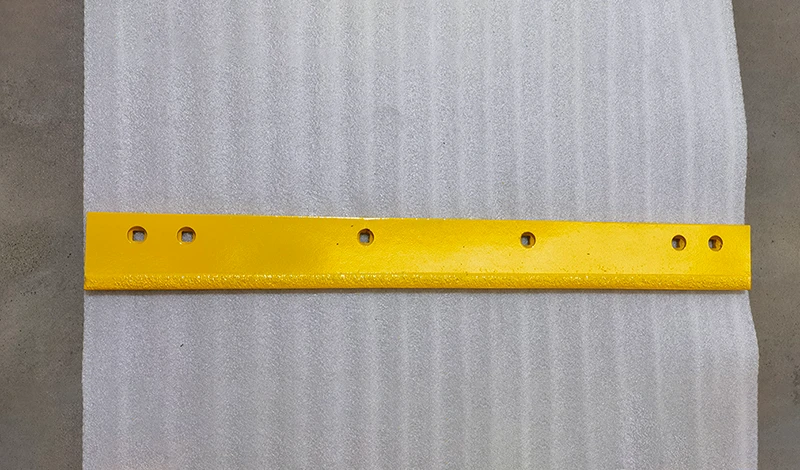
Payment terms blade supply: what the structure allocates
Payment terms decide who finances the order.
A deposit shifts working capital to the buyer, an open account shifts it to the supplier, and a letter of credit moves it to a bank for a fee; the right structure is the one the transaction’s risk can support.
Three risks are being allocated at once. Production risk: whether the goods will be made as specified. Transit risk: whether they will arrive in a usable condition. And payment risk: whether the money will arrive after the goods have been committed. Each of the common structures moves those risks in a different direction, which is why two offers with the same price and different terms are not comparable.
The practical consequence is that terms are negotiated at the point where both parties can still change them, which is before the order rather than after the first shipment.
Typical terms by order size
Suppliers price the financing, so the structure offered usually reflects the size of the order and the length of the relationship rather than the buyer’s preference.
A small trial order is normally paid in full before production, because the administrative cost of splitting the payment exceeds the financing benefit. A first container order typically moves to a deposit with the order and the balance against shipping documents. Once there is a delivery history, the structure extends: a lower deposit, a balance after arrival, and eventually open account terms for part of the value.
| Structure | Who finances the order | Where it normally appears |
|---|---|---|
| Full payment in advance | Buyer, for the whole production cycle | Trial orders and first-time buyers with no history |
| Deposit plus balance on documents | Buyer for part, supplier for the balance until shipment | First container orders and repeat orders early in a relationship |
| Deposit plus balance on arrival | Buyer to the deposit, supplier through transit | Established relationships with good delivery records |
| Letter of credit at sight | Bank, pending documents that meet the credit terms | Larger first shipments where neither side wants open exposure |
| Open account, 30 to 60 days | Supplier for the full cycle plus the credit period | Programme buying after a season or more of deliveries |
The last row is the goal and it should be earned rather than demanded. A buyer asking for open account terms on a first order is asking the supplier to fund the working capital of a customer it has never shipped to, which is why the request is usually refused or priced.
Deposits, balance and inspection release
The deposit percentage and the release point are the two variables that matter in an otherwise standard term.
A deposit covers material, and material is the cost the supplier commits first. A deposit that covers the material value is therefore the natural floor in the negotiation, and a supplier asking for more is financing its own production cycle with the buyer’s money. The release point matters for the same reason in reverse: releasing the balance on shipping documents is standard, releasing it on arrival is better for the buyer and costs the supplier a cash cycle.
Where the item is custom, an inspection release is worth adding: part of the balance becomes payable on a documented first article or a goods-in check rather than on the shipment date. That single change gives the buyer a lever if the goods arrive wrong, and it gives the supplier a reason to have the lot documents complete before dispatch.
Letters of credit and their cost
A letter of credit replaces commercial trust with documents, and its cost is the bank’s charge for standing between the two parties.
The structure is straightforward: the buyer’s bank commits to pay against a defined document set, and the supplier is paid when that set is presented and found compliant. The cost has three parts: an issuance fee, a negotiation or presentation fee, and the cash margin the buyer’s bank may require to hold the facility.
Whether it is worth using turns on the order value. On a container of blades the fees are immaterial against the value, and the instrument removes the risk of paying for goods that were never shipped. On a trial order the fees can exceed the total value, which is why small first orders are usually paid directly rather than through a credit. The document conventions behind the instrument are maintained by the International Chamber of Commerce, and the delivery terms that sit alongside it are defined by the Incoterms rules.
Escrow and title questions
Escrow and title are often treated as the same question, and separating them is what prevents a dispute.
Escrow concerns the money: a third party holds the funds until an agreed event. Title concerns the goods: who owns them at a given moment, which becomes urgent if either party fails. A delivery term does not settle title; it settles who carries the risk of loss. Title is set by the contract of sale and, in some markets, by local law.
Where escrow is used, three details need to be agreed. What event releases the funds, who decides whether it has occurred, and what happens if the decision is disputed. The second is the one that fails in practice, because an escrow arrangement that names no decision-maker simply relocates the argument.
Currency and exchange risk
Currency risk appears as a change in the landed cost that has nothing to do with the supplier, the product or the freight.
Two approaches work. Quoting in the supplier’s cost currency keeps the price aligned with the supplier’s own costs, so a re-pricing conversation is about inputs rather than about exchange rates, and the buyer carries the movement. Quoting in the buyer’s currency puts the risk on the supplier, which is reflected in the price. The second is not automatically worse: the supplier may hedge at a better rate than the buyer can, and the cost of that cover is then visible in the offer rather than appearing later as a revision.
What should be avoided is a third arrangement in which the currency is left open. An invoice that names no currency, or a price validity that does not state whether it survives an exchange movement, is the version that produces the unexpected increase. Guidance on cross-border payment practice is published by the US Commercial Service, and the trade framework that governs the movement of goods and payments between markets is documented by the World Trade Organization.
Terms to avoid as a first-time buyer
Some structures are a warning rather than an offer, and they are recognisable before anything is signed.
- Full payment in advance on a first order from a supplier that has not shipped to the market before.
- A deposit paid to a personal account rather than to the company named on the invoice.
- Payment released against a document set that is not defined before the order.
- A price validity period too short to cover the production lead time the supplier has quoted.
- Any term that requires payment before an inspection the buyer has been told it may not perform.
The fourth item is subtle and common: a quotation valid for fourteen days against a ten-week lead time means the price can be revised while the order is being made. Matching the validity period to the lead time is a reasonable request, and a supplier that refuses it is telling the buyer something about how the order will be managed.
Negotiating a fair structure
A structure both parties can live with usually separates the material from the balance rather than splitting the total evenly.
The reasoning is straightforward. The supplier’s first real commitment is the material, so a deposit that covers it protects the supplier. The buyer’s risk concentrates at the point of dispatch, where the goods exist but are not yet verified, so a balance released against a documented lot gives the buyer a check without taking anything from the supplier.
| Term | Buyer’s position | Reason the supplier can accept it |
|---|---|---|
| Deposit | Covers the material value, not the whole order | Matches the supplier’s first committed cost |
| Balance release | Against a documented lot, not against the invoice date | Only asks for the documents the lot should have anyway |
| Price validity | Equal to the quoted production lead time | Removes a revision the supplier would rather not manage |
| Currency | Supplier’s cost currency, with the cover priced | Keeps pricing aligned with the supplier’s own costs |
Presented that way, each request has a reason the supplier can act on rather than a preference to argue against. That is the difference between a term that is granted and a term that is traded away for something else.
What to do when the first order goes wrong
The payment structure is also what determines the buyer’s leverage if the first shipment fails, so it is worth checking before choosing it.
Where payment is complete before dispatch, the only remedy is a claim after arrival. Where a balance is released against documents, the buyer can hold the balance until the claim is resolved. Where the transaction is under a letter of credit, the document set itself is the control, because the bank pays against compliant documents rather than against the goods. For import-side requirements that could hold a shipment, the rules of the destination authority, such as US Customs and Border Protection, decide what may be released and when.
- Hold the unreleased balance until the claim is answered or the replacement is shipped.
- Check whether the document set was compliant before the bank releases anything.
- Keep the remedy decision separate from the commercial relationship, and record it either way.
None of these make a first order risk-free. They set the point at which a problem becomes a financial loss, which is what the payment structure is for. Programme buying practice in the sector, including how distributors typically fund a season, is documented by the Snow and Ice Management Association.

FAQ
What payment terms should a first order expect?
A deposit with the order and the balance against shipping documents or on arrival is the most common structure for a first order from a new buyer. Open account terms normally follow a delivery history rather than a negotiation, because they transfer the financing cost to the supplier.
Is a letter of credit worth its cost?
It depends on the size of the order and the trust in the counterparty. The bank charges are a fixed percentage of the value plus a negotiation fee, which is negligible on a container and material on a small trial order, so the tool suits larger first shipments.
Who owns the goods while they are in transit?
Title is a matter for the contract rather than for the delivery term, which is why the two are often confused. The delivery term decides who carries the risk of loss; the contract decides when title passes, and a clause that states it removes the argument.
How should currency risk be handled?
Quote in the currency the supplier costs are incurred in, then decide who carries the movement. A buyer with a currency account can take the risk and often benefits; a buyer without one is usually better off with a fixed price in its own currency and the cost of that cover visible in the offer.
If you are structuring a first order, send the quantity and the delivery point. SENTHAI will quote the deposit, the release point and the document set that triggers it, in the currency the price is built from.