Most parts rooms order curb guards and cutting edges from separate mental folders, then wonder why carbide life collapses on urban nights while the guard still looks fine. Guards and edges share wear; buying them as strangers creates false confidence.
A snow plow curb guard is not a cutting edge: it shares curb and manhole abuse so the carbide face can stay on the pavement longer, but only if both parts are inspected together.
Plow guards and curb runners take side and height impacts so the cutting edge can scrape; they do not make edge inspection optional. Spec guards in the same RFQ when urban curb hits dominate, inspect edges even when guards look intact, and keep spare kits for city trucks. Pair carbide or JOMA-style edges with guard strategy deliberately, see carbide snow plow blade and JOMA-style blade.
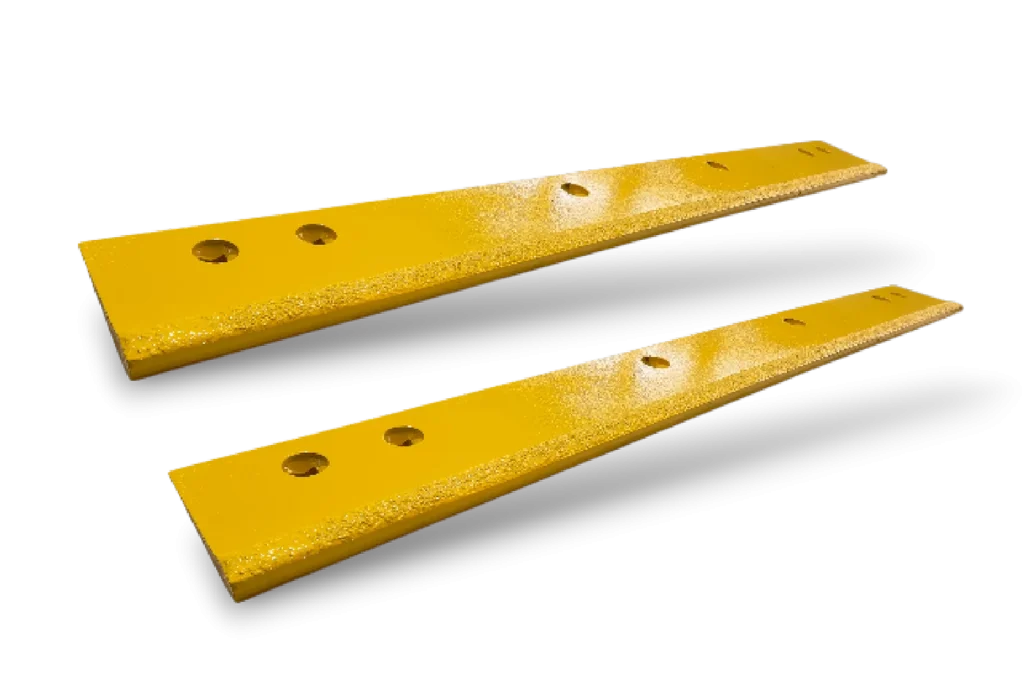
Guards vs cutting edges roles
Cutting edges scrape the road surface. Guards and curb runners manage curb, manhole, and lateral strikes. Confusing the two leads to over-trusting a shiny guard while the edge is gone to bolts. Decision path: assign each truck a surface class, then choose edge material and guard package together.
Curb-guard content should state how guards share wear with carbide edges, when they hide edge wear, and what belongs on the same RFQ—SERPs often sell guards alone.
| Component | Primary job | Failure signal |
|---|---|---|
| Cutting edge | Scrape snow/ice / abrasion | Height loss, rounding, insert chips |
| Curb guard / runner | Absorb curb/side hits | Mushrooming, missing chunks, bent brackets |
| Wear plate stack | Protect moldboard / set height | Elongated holes, uneven stack |
When guards hide edge wear
A intact guard can visually “frame” an edge that is already thin in the centre. Always measure edge height at left/centre/right stations, do not eyeball from the curb side only. Night leads should carry a wear card, not only a flashlight glance.
Carbide edge life with aggressive curb hits
Carbide resists abrasion; repeated curb impacts still chip inserts. Urban trucks with aggressive curb contact may need tougher grades, sectional outer thirds, or more frequent guard refresh, not harder carbide alone. Ops pressure framing: FHWA Road Weather Management.
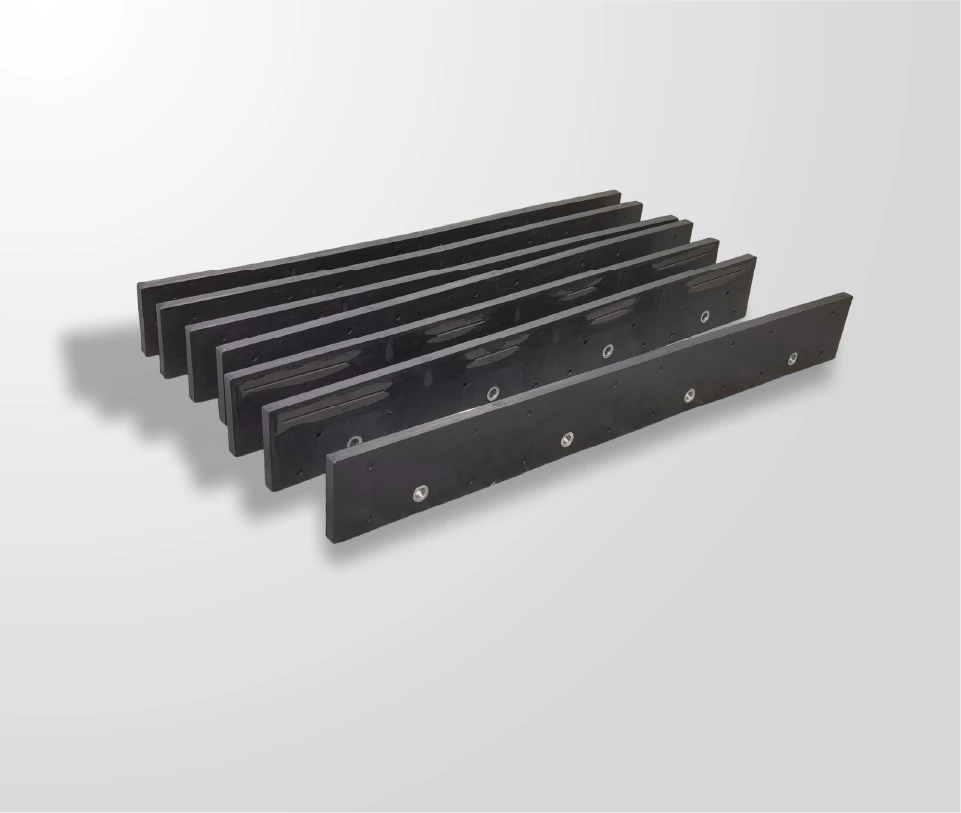
Rubber-flex segment protection
JOMA-style and rubber-flex systems share wear differently and can be kinder on sensitive surfaces, but curb hits still damage modules. Spec segment spares for city routes. Guide: JOMA flex blade guide.
Specifying guards in the same RFQ
Put guard model/drawing, edge drawing, and stack height in one RFQ package so bolt lengths and clearances match. Separate purchases create mismatched stacks.
Inspection sequence after urban routes
- Photograph guards and edges together
- Measure edge height at three stations
- Check brackets and fasteners
- Tag trucks that kissed curbs heavily for early re-inspection
Spare kits for city trucks
Kit guards, fasteners, and edges by drawing revision. City trucks deserve higher spare depth than rural polish routes. Season timing: NWS. Canadian urban fleets: Transport Canada. Material footnote: USGS. Evaluation culture: ND DOT.
Related links
Urban route briefing for guards and edges together
City night briefs should mention both guard condition and edge height targets. Crews that only glance at curb runners miss centre thinning. Add a three-station measurement habit to the same checklist that already captures fuel and plow lights. The extra minute costs less than a mid-storm bolt-kiss failure.
When curb hits cluster on the same corners every storm, fix the route technique and guard package before ordering harder carbide. Harder inserts without impact control simply create sharper fragments. Pair tougher grades with refreshed guards and slower approaches to known lids.
Procurement should receive one photo pack per incident truck: guards, edges, brackets, and fastener condition. That pack informs whether the next RFQ needs sectional outers, different guard geometry, or only hardware discipline. Separate purchases of guards and edges without stack-height notes remain a top cause of clearance mistakes.
For mixed fleets that also run JOMA-style modules on noise-sensitive blocks, keep rubber-flex segment spares on those trucks and carbide-plus-guard kits on abrasive arterials. One universal “city edge” SKU is how surface complaint emails and chipping claims arrive in the same week.
How plow guards and curb runners share wear with carbide
Guards and curb runners exist to take the hits carbide inserts should not. If runners are missing or worn flat, outer inserts chip and the complaint looks like “soft carbide.” Inspect runners on the same schedule as the cutting edge and replace them before the edge reaches scrap height.
Shared-wear checklist: runner height vs edge height, fastener torque after the first storm, and whether the attack angle dumps load onto the outer inserts. Photograph both ends after chip-seal weeks, that is when aggregate plus curb geometry accelerates corner loss.
Spec language: list guard / runner part intent beside the edge drawing. Aftermarket edges still need compatible hardware; do not assume OEM runners transfer without measurement.
FAQ
Do curb guards replace cutting edge inspections?
No. Guards manage side and curb impacts; edges still abrade and must be measured at multiple stations even when guards look intact.
Why do carbide edges chip on city routes?
Abrasion resistance does not equal impact immunity. Repeated curb and lid strikes chip inserts; improve guards, technique, grade toughness, or sectional outers as needed.
Should guards and edges be on the same RFQ?
Yes when stack height and bolt length must match. Buying them separately is a common source of clearance and fastener mistakes.
What belongs in a city-truck spare kit?
Guards, matched fasteners, and edges (or sections) labeled by drawing revision, plus a wear card for night measurement.
Are rubber-flex systems immune to curb damage?
No. They can be gentler on pavement but modules and hardware still take curb energy and need spares.
Request Specs or a Quote
Contact [email protected] with photos of the worn edge or the plow make/model, and add length, thickness, bolt pattern and a short note on the surfaces along your routes. Our replies, in English or Chinese, typically go out within one working day. Lead time and MOQ are quoted per product family; this page does not commit to a blanket number of production weeks.