The counter-intuitive part of plowing an unsealed road is that the surface is the asset being protected, not the obstacle being cleared. An edge set to follow the road, which is exactly right on pavement, rakes the wearing course off a gravel road and throws it into the ditch. The snow goes, the road goes with it, and the potholes that appear in spring were created in January.
This is a setup sequence for that surface. It covers why a rigid edge damages an unsealed road, how shoe height and float are set, what a flexible edge changes, where material is lost and how to stop it, and the spring maintenance that follows a winter of working gravel.
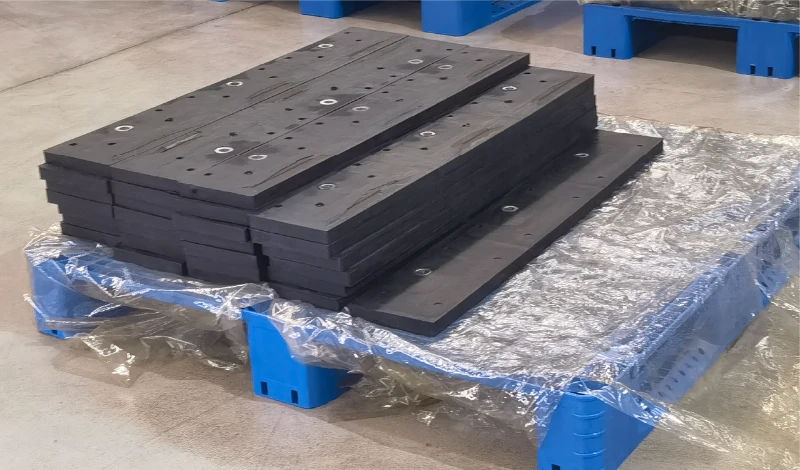
Why gravel surfaces punish rigid edges
A rigid edge with weight behind it has nowhere to go on a loose surface. On pavement the material being cleared is on top of a hard plane, so the edge follows the plane and the load is spread. On gravel there is no hard plane at the working depth: the edge sinks until it finds resistance, and what it finds is the compacted wearing course, which is the part of the road that carries traffic.
The consequences appear in three places. The edge wears fast, because it is being driven through abrasive material for the whole width of the blade rather than sliding over it. The road loses its surface, first in a band along the plow line and then more widely as traffic works the loosened material. And the material that was the road ends up in the ditch or on the shoulder, which is a cost that appears in the spring maintenance budget rather than in the winter one.
What the blade is doing on an unsealed road
On this surface the blade is not only clearing snow; it is interacting with the road itself. The working depth is a matter of millimetres, and the difference between clearing and cutting is set by the blade’s attitude, its height and the speed it is worked at.
Two properties of gravel make that harder to control than it sounds. The surface is not uniform, because traffic compacts some sections and leaves others loose, so a setting that floats over one part of the route digs into the next. And the material changes with temperature: frozen gravel is closer to pavement in behaviour, while gravel that has thawed at the surface is loose and moves easily.
The practical conclusion is that the setup has to be adjustable in service rather than fixed at the workshop. A fleet that sets the blade before the season and leaves it is working blind on the sections where the surface changes within a single route.
Plow shoes for gravel: shoe height and float settings
Float the blade; do not cut the surface.
Shoe height and float are the two settings that make that possible. The shoe carries part of the blade’s weight on a runner so the edge rides above the surface rather than being pressed into it.
Float allows the blade to follow changes in the surface height without transferring them into the edge as load. Working together they keep the contact light and variable, which is what a loose surface needs. The relationship between shoe height and edge protection is general to all surfaces and is set out on the plow shoe selection page.
Two details matter on gravel specifically. The shoe has to be wide enough not to sink into a soft surface, since a narrow runner loaded heavily behaves like an edge. And the height has to be set with the machine on the road it will work, because a workshop floor gives a reading the road will not reproduce.
Rubber-flex edges on gravel
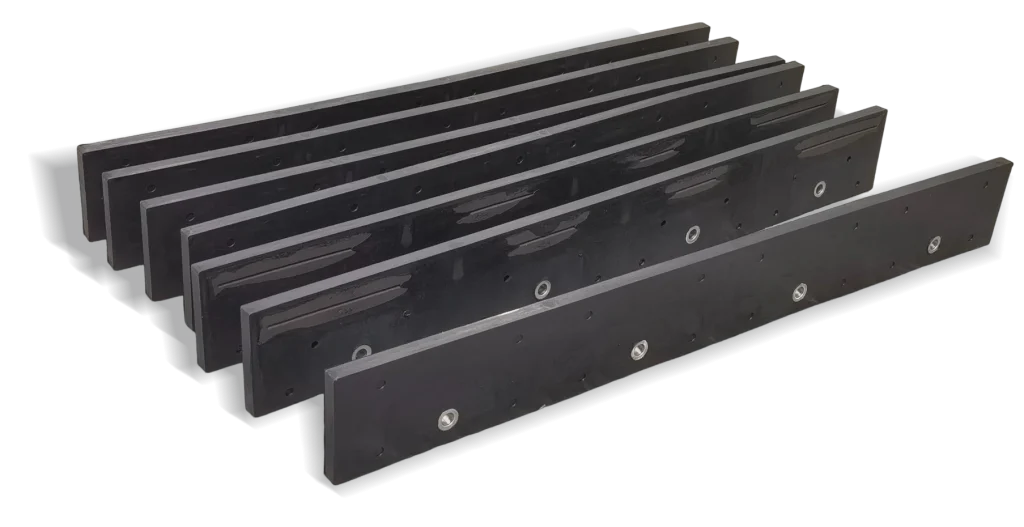
A flexible edge changes the interaction rather than only softening it. The segments deflect when they meet resistance, so a high spot in the road surface pushes the edge aside instead of being cut off, and the load at any moment is spread across a section rather than concentrated at a point.
Two practical consequences follow. The edge survives contact with material that would damage a rigid edge, which is why flexible blades are common on unsealed networks. And the surface is protected at the moment it would otherwise be raked, which reduces the amount of material displaced into the shoulder over a season. The way a segmented flexible edge handles rough surfaces is described on the JOMA style blade page.
Losing material to the shoulder
Material on the shoulder is a reliable indicator of how the blade is set up, and it is visible from the cab without any measurement. Where gravel is being thrown clear of the edge, the blade is pushing rather than casting and the speed or the angle is wrong. Where material is being drawn up and over the blade, the angle is set to lift the surface rather than clear it.
The correction is usually a combination rather than a single change: reduce speed first, then adjust the angle so material is rolled aside, and re-check the shoe height. Doing those in the reverse order tends to over-correct the height, which leaves snow behind and sends the operator back to the settings that were causing the loss.
Speed and angle adjustments
Speed and angle behave differently on gravel from the way they behave on pavement, and the sequence below reflects that.
- Reduce speed to the point where material rolls off the blade instead of being thrown.
- Adjust the blade angle so that material is cast to one side rather than lifted or pushed.
- Check the windrow pattern: a steady roll shows the setup is casting, a scattering shows it is throwing.
- Re-check the shoe height last, since speed and angle changes both alter how much load reaches the edge.
The fourth step is the one that is usually done first and should be done last. Adjusting height before speed and angle have been set produces a figure that no longer matches the way the machine is being worked.
Setting up a gravel route: the sequence
The sequence below is the one to run when a machine is assigned to an unsealed route, and it takes less time than a single pass over the route.
- Fit the shoe assembly if the route requires it, or confirm the flexible edge is in good condition if it does not.
- Set the blade to contact the surface on the road itself, then raise it by the intended float.
- Run a short section at working speed and check the windrow rather than the surface behind the blade.
- Adjust speed and angle until material rolls, then confirm the shoe height still leaves the edge clear.
- Record the settings, the surface and the date, so a reassignment starts from a known position.
The third step is deliberate: judging the result from the windrow is faster and more reliable than judging it from the road behind the machine, because the surface can look cleared while the wearing course has been moved into the ditch.
Spring maintenance of gravel roads
A winter of plowing shows up on a gravel road in specific places, and the inspection after the thaw is what limits the damage.
- Material accumulated on the shoulder, which is the wearing course that has to be brought back before it is lost.
- Loss of crown where the blade has worked the centre of the road down.
- Soft spots along the plow line, where the surface was disturbed and then saturated.
- Edge drop-off at the shoulder, which becomes a hazard once the surface dries.
The first and second entries are related, and both are recovered by reworking the surface rather than by replacing material. Left alone, they become the potholes that appear the following winter in the same places.
Equipment combinations that work
Three combinations are in common use on unsealed networks, and they differ in how much adjustment they require through the season. A rigid edge with shoes is the cheapest setup and the most dependent on the operator adjusting the blade as the surface changes. A flexible edge without shoes suits routes where the surface is uniform enough that deflection handles the variation.
The combination that gives the most control is a flexible edge with shoes, since the deflection handles the high spots and the shoe sets the working height. It costs more and it is the one that most often ends up on routes where the surface varies within a single pass, which is where the simpler setups produce the most material loss.
What to record per route
Records for an unsealed route are worth keeping against the route rather than the machine, because the surface is what the settings are matched to.
- The shoe height and blade angle in use, and the surface condition they were set for.
- Where material was being lost, and what was changed to stop it.
- The edge or shoe wear measurement at the end of the season.
- The condition of the surface after the thaw, against the previous year.
The fourth item closes the loop. A route where the surface is holding up better than in the previous season is evidence that the setup worked, and a route where potholes are appearing in the same places is evidence that something in the combination still needs to change. Unsealed road maintenance practice is published by the Transportation Research Board and the Federal Highway Administration, county-level practice by the National Association of Counties, and winter operations practice by the Snow and Ice Management Association.
SENTHAI manufactures carbide and rubber-flex plow edges, shoes and inserts in Rayong, Thailand, with the edge specification confirmed against the surface a route presents. Test methods for the materials involved are published by ASTM International, the assemblies these parts fit are covered by standards from SAE International, and routes that need an edge and a setting matched together can be discussed through the contact page. The difference between a shoe and a foot, which matters when ordering replacements, is clarified on the plow feet and skid shoes page.
FAQ
Can you plow a gravel road with a snow plow?
Yes, provided the blade floats rather than cuts. On an unsealed surface the material underneath is the road, so an edge working at pavement settings takes the wearing course off with the snow. Shoes or a flexible edge, plus a lower speed, are what make the same machine suitable.
How high should shoes be set for gravel?
High enough that the edge rides over the surface rather than raking it, and no higher. The setting is found by working up from contact until the blade stops pulling material, then stopping. A setting taken from another route or another machine is a starting point at best.
Do rubber-flex edges work on gravel?
They suit it well, because a flexible edge deflects over the surface instead of digging into it. The blade still carries the load, but the contact releases over high spots rather than cutting them off, which is what protects both the edge and the road surface.
How do you stop losing gravel to the shoulder?
By cutting the speed and adjusting the blade angle so material is cast rather than pushed. Gravel thrown onto the shoulder is material the road has lost, and it is the first sign that the setup is moving more of the surface than it needs to.
Send the route surfaces, the edge currently fitted and the shoe height in use. The SENTHAI engineering desk will confirm the edge specification and the settings that suit an unsealed surface.