A five-truck depot once scrapped an entire one-piece carbide bar because one outer third took a curb beating, while the centre third still had life. Sectional systems exist to stop that kind of scrap story, not to complicate the parts room for sport.
Sectional carbide snow plow blades let fleets replace worn or damaged segments instead of scrapping a full bar, improving spares logistics when segment lengths and SKUs are controlled. Compare bolted carbide sections with JOMA-style flex segments carefully; they are not interchangeable systems. Model cost against one-piece bars using scrap rates and bay time, and confirm fitment per moldboard. See carbide snow plow blade and JOMA-style blade.
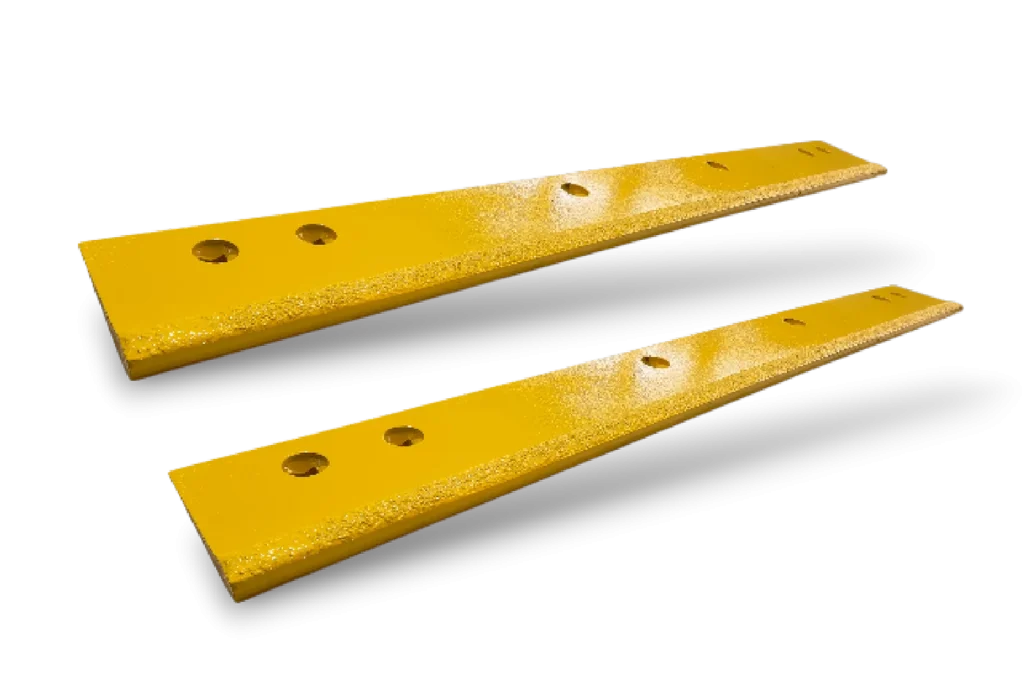
Why sectional systems reduce scrap
Sectional carbide is modular wear segments.
Sectional carbide blades use individual steel segments with carbide inserts so crews replace worn sections instead of whole bars.
That modular idea cuts scrap when wear is uneven across the mouldboard. Segment length, spare SKUs, and fitment caveats decide whether the system saves money. JOMA-style rubber-flex sections are a different family from bolted carbide sections—do not mix vocabularies on the PO. Model thermal and impact behaviour before stocking every length.
Depot playbooks for first-season sectional adoption—label racks and changeout times—are usually absent from overview text.
Wear and impact are rarely uniform. Sections isolate damage. The tradeoff is more SKUs and more joints to inspect. Fleets with high curb exposure and long bars usually gain; tiny fleets with one moldboard drawing may not.
Segment length tradeoffs
Shorter segments increase flexibility of inventory and raise joint count. Longer segments behave closer to one-piece bars. Pick lengths that match how your routes actually wear, outer thirds versus centre, after one season of tagged photos.
| Topic | Sectional carbide | JOMA-style segments |
|---|---|---|
| Primary benefit | Replace damaged carbide sections | Flex and pavement-friendlier scrape |
| Inventory | Section SKUs by length | Segment/module SKUs |
| Best duty cue | Abrasive routes with uneven impact | Noise/pavement-sensitive routes |
| Fit caution | Joint hardware and hole alignment | Different system, do not mix casually |
JOMA-style vs bolted carbide sections
JOMA-style rubber-flex systems and bolted carbide sectional bars solve different problems. Do not order “sectional” without naming the system. Custom flex work: custom JOMA-style and JOMA-style replacement blades.
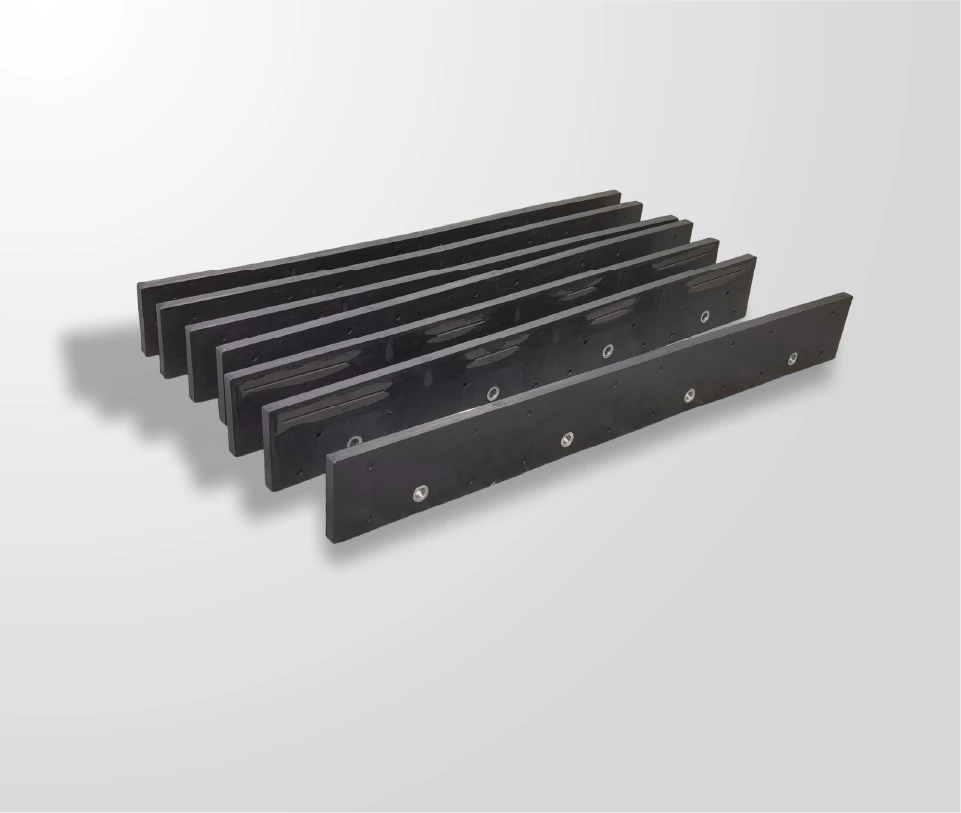
Inventory SKUs for sections
Label SKUs by drawing revision and segment position (left/centre/right if asymmetric). Keep fasteners kitted per joint design. Mixed unlabeled sections create midnight bay archaeology.
Thermal and impact behaviour
Joints and section gaps change how impact loads travel. Brief operators that sectional does not mean “ignore angle.” Inspect joints after heavy curb nights.
Field change without full blade drop
Some systems allow section swaps with the bar still on the plow; others need a drop. Document the actual procedure for your hardware so night estimates are honest.
Cost modelling vs one-piece
Compare not only bar price but scrap rate, bay hours, and freight for emergency full-bar replacements. Ops downtime context: FHWA. Season timing: NWS. Canadian fleets: Transport Canada. Material footnote: USGS. Evaluation culture: ND DOT.
Fitment caveats
Sectional aftermarket bars still need hole-chart confirmation. No brand-style label replaces measurement. Process quality narrative per company website belongs in the vendor file via QC, not as a fit guarantee.
Depot playbook for first-season sectional adoption
Introduce sectional carbide on one moldboard family first. Train the night lead on joint inspection and fastener kits before expanding to the whole yard. Photograph section positions after the first heavy curb week so you learn whether outer thirds truly take the punishment you assumed when you chose segment lengths.
Inventory software should treat section SKUs as first-class items with min/max levels. A sectional program that still thinks in “one bar per truck” will stock out of the only segment that actually wears. Keep a small buffer of joint hardware; missing bolts turn a five-minute section swap into a bay hunt.
When comparing JOMA-style flex modules to bolted carbide sections, write two separate business cases. Pavement-sensitive routes and abrasive highway connectors rarely share the same winner. Mixing language on a single PO is how receiving hangs the wrong system and blames “sectional” as a category.
Cost reviews after the first season should count scrapped one-piece bars avoided, not only segment unit price. If scrap avoidance is small and SKU chaos is large, reconsider one-piece bars for that drawing. If outer-third failures were frequent, sectional likely paid for the extra labels.
Sectional spares logistics and wear-evenness checks
Sectional carbide edges help when full-length bars exceed container, aisle, or handling limits. The trade-off is inventory: each section needs a labelled spare and a fastener kit, or crews will bolt mismatched lengths during storms.
Wear-evenness discipline: measure remaining height at centre and both ends after a set lane-kilometre window. If one outer section dies early from curb contact, adjust guards or rotation policy before blaming the grade. Log which truck and route consumed which section revision.
For distributors, sectional layouts also simplify private-label packing marks and mixed-surface kits. Keep drawings revision-locked; do not mix revisions in one shipment without a written change note.
Sectional edges only save logistics if the spare map matches the plow. Paint or stamp section positions (L / C / R or numbered) on both the bar and the rack slot. When a centre section is swapped alone, log the remaining height of the neighbours so the next full refresh is planned from data, not from the loudest complaint in the yard.
FAQ
Do sectional carbide blades always cost less over a season?
Not always. They pay when uneven wear or impact would otherwise scrap long one-piece bars. Fleets with uniform wear and few SKUs may prefer one-piece simplicity.
Are JOMA-style segments the same as bolted carbide sections?
No. JOMA-style systems emphasize flex modules; bolted carbide sections emphasize abrasive carbide segments. Specify the system explicitly.
How should section SKUs be labeled?
By drawing revision and position when segments differ. Kit fasteners with each joint design and ban unlabeled mixed bins.
Can we change one section in the field at night?
Sometimes, depending on hardware. Document your actual procedure; do not assume every sectional system allows on-plow swaps.
Request Specs or a Quote
For a quotation on this edge type, email [email protected] with plow make/model, length, thickness, bolt pattern and the surfaces your route covers; worn-edge photos help where specs are unclear. We normally reply within one working day, in English or Chinese. Lead time and MOQ are confirmed with the quote by product family, so this page does not state a general production week count.