A fleet qualifies a new supplier on a competitive sample, places a season’s order, and finds that the delivered lots differ from the sample in ways nobody checked. The parts are similar enough to be accepted at goods-in and different enough to wear differently, and the fleet discovers the variation in February.
This is an implementation path for qualifying a supplier in a way that predicts delivery rather than only capability: the capability questions, the process and quality evidence to request, the sample order that actually tests repetition, and the requalification trigger that keeps the assessment current.
Capability questions that matter
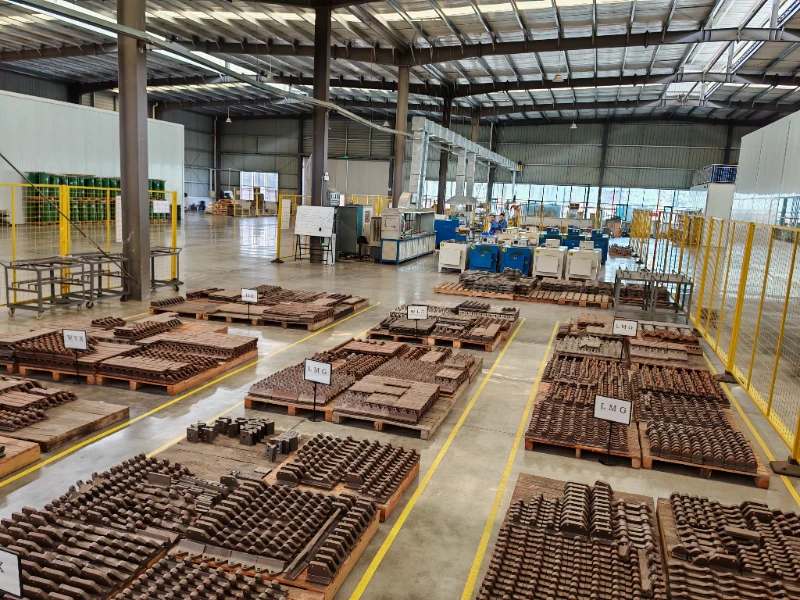
Capability questions should be about the processes the part actually requires, not about the size of the company. Four cover most of the ground: which processes are performed in-house and which are subcontracted; what the dimensional tolerances and measurement methods are for the critical dimensions; how the joining process is controlled where the product is bonded; and what the production capacity is relative to the quantity being ordered.
The fourth question is the one that predicts late delivery. A supplier operating near capacity during the season delivers late, however good the product is, and the answer often comes as a statement about normal capacity rather than about the peak.
Process documentation to request
Process documentation is what distinguishes a supplier who controls production from one who inspects it afterwards. The items worth requesting are the process route for the product, the parameters that are recorded for the critical steps, and the inspection points built into the route rather than bolted on at the end.
For a bonded product, the joining parameters are the most useful single document, because the joint is where most field failures originate. For a ground or machined part, the dimensional control plan serves the same purpose.
Quality system evidence
Certification is evidence of a system and not of a product, which is why it should be read as one input rather than as a pass mark. What it establishes is that documented processes and corrective action exist. What it does not establish is that this part is produced within the tolerances the fleet needs.
The useful combination is a certificate plus records from actual lots: a batch reference that traces to a production record, dimensional results against a stated drawing revision, and the joint inspection result where the product is bonded. A supplier that can produce those for previous work can produce them for the fleet’s order, and a supplier that cannot will not be able to do so after the award either. Documentation practice of this kind is described on the quality control page.
Sample and trial order approach
A sample order is the only way to test repetition before an award, and it works only if it is specified. Two practices make it informative. Order the sample against the same specification and drawing the production quantities will use, so the comparison is like for like. And inspect the sample using the same receiving routine the fleet applies to production lots, so that the result predicts what will happen at goods-in rather than in a laboratory.
A second useful test follows the first. Run the sample on a route for a season and compare the wear against the fleet’s existing edge. That converts the question from whether the supplier can make the part to whether the product performs on this network, which is the question that matters and the one no document answers.
Financial and delivery stability
Stability is assessed from records rather than from accounts. Late deliveries in the previous season, partial shipments, substitute material offered without notice, and communication during a problem are the four signals worth asking about, and they are usually obtainable from other customers rather than from the supplier’s finance function.
Where the supplier’s capacity is close to the order size, the fleet is also exposed to the supplier’s other customers. A question about what happens when a larger customer orders at the same time is a legitimate part of qualification and is usually answered honestly.
Reference checks with other fleets
Two or three reference conversations, held with customers who have taken delivery rather than with contacts the supplier chooses for their enthusiasm, produce most of the remaining information. Four questions are enough: did the lots match the specification on arrival, how was the wear rate against the previous product, how did the supplier respond to a problem, and what would they change about the arrangement.
The fourth question produces the most useful answer. A reference who describes a specific friction and how it was resolved gives a better picture than one who describes the product as satisfactory.
Reference and record questions
Ask for the records, not for assurances.
The table below sets out what to request, what each item establishes, and where it comes from in the supplier’s own documentation or in its customers’ experience.
| Item | What it establishes | Where it comes from |
|---|---|---|
| Process route and control plan | Whether production is controlled rather than inspected | The supplier’s own documentation |
| Batch and dimensional records | Whether past lots can be traced and checked | Samples from previous deliveries |
| Joint inspection results | Whether the bonded interface is verified | Production records for bonded products |
| Capacity relative to the order | Whether the quantity can be delivered in the window | A direct question about the peak |
| Reference conversations | How the supplier behaves when something goes wrong | Existing customers |
The second row is the one that can be checked directly, and it should be. Asking for a dimensional record from a previous lot and comparing it against the drawing revision it names takes minutes and separates a supplier who measures from one who inspects.
A qualification sequence that produces a decision
The assessment is easiest to run as a sequence, with each step able to end it.
- Screen the capability questions, especially capacity against the order window.
- Request the process and quality records and check them against the specification.
- Order a specified sample and inspect it on the receiving routine.
- Run the sample on a route for a season where the fleet intends to award.
- Take references, and decide with the sample result and the reference in hand.
The fourth step is the one that takes time and the one that carries the most information, which is why qualification is best started a season ahead of the award it is intended to inform.
Requalification cadence
Requalification has an interval and a trigger, and the trigger is the more useful of the two. The interval keeps the file current; the trigger catches the events that actually change capability: a change of plant, of key process or of material source, a change of ownership, or a run of non-conformances that the supplier cannot explain.
Recording the trigger events in the supplier’s file is what makes them detectable. A fleet that only requalifies on a calendar will not notice the plant change that altered the process, and will discover it through the parts instead.
What supply capability problems look like from the fleet side
The fleet experiences a supplier’s capability problems in three ways, and each has an earlier warning at the qualification stage. Late deliveries follow from capacity near the limit, which the capacity question surfaces. Inconsistent lots follow from inspection-based rather than process-based production, which the control plan surfaces. And unexplained field failures follow from an uncontrolled joining process, which the joint inspection records surface.
Looking for those three warnings during qualification is what makes the process worth running. Equipment and component standards are maintained by SAE International and the Association of Equipment Manufacturers, material test methods by ASTM International and ISO, and corrosion control by NACE International.
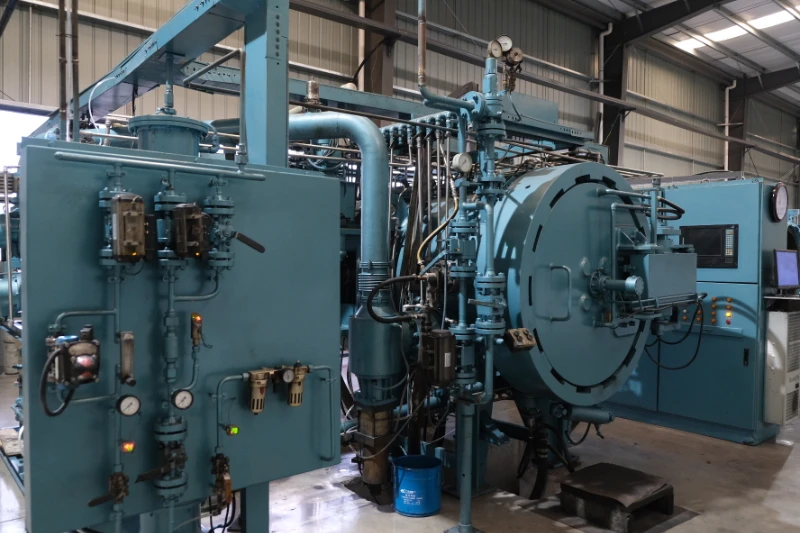
SENTHAI manufactures carbide and rubber-flex plow edges, wear plates and inserts in Rayong, Thailand, with in-house process control from powder metallurgy through brazing and inspection, and supplies sample orders against a specified drawing so a fleet can assess repetition before it awards. Qualification requests can be raised through the contact page, and the production and inspection stages are described on the factory page.
FAQ
What should a supplier qualification cover?
Capability to make the part, process control, quality evidence, and stability to deliver on schedule. Those four separate a supplier that can produce a sample from one that can repeat it across a season and a quantity.
Is a sample order a fair test of a supplier?
It is the fairest test available before an award, provided the sample is ordered against a specification rather than a description and is inspected on the same basis the production lots will be. A sample that is not specified tests the supplier’s assumptions as much as its capability.
What evidence shows a supplier can repeat quality?
Records from previous lots: a batch reference that traces to a production record, dimensional results against a stated drawing revision, and inspection results for the joint where the product is bonded. A supplier who can produce those for past work can produce them for the fleet’s order.
How often should a supplier be requalified?
At a stated interval and on a stated trigger. The interval keeps the file current; the trigger — a change of ownership, plant, process or key material, or a run of non-conformances — is the one that matters, because those are the events that actually change a supplier’s capability.
Does a certification replace a site visit?
It covers part of the question. A certification says a system is in place; a visit or a sample order says whether the system is producing the parts the fleet needs. The two answer different questions, and for a wear part the production evidence is the one that predicts delivery.
Send the specification and the quantity you intend to award. The SENTHAI engineering desk will supply the process and quality records a qualification file needs, and arrange a specified sample for assessment.