A blade order that goes wrong is usually underspecified rather than mispriced. These are the fields we ask for before quoting, and the same list makes a sound foundation for a tender or framework agreement.
Geometry
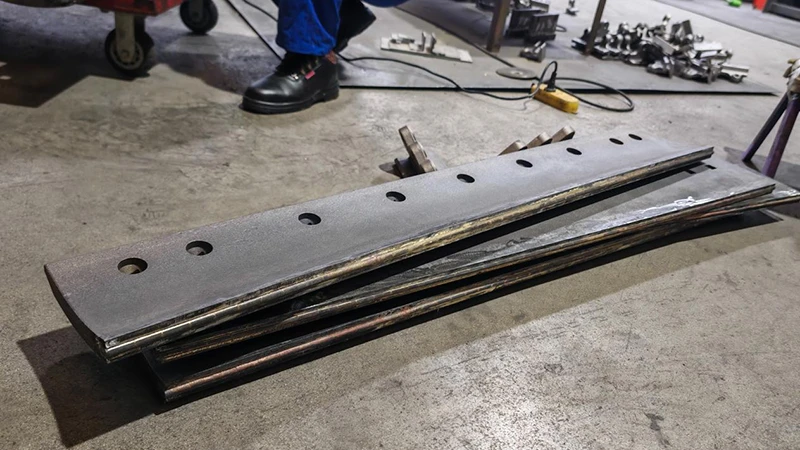
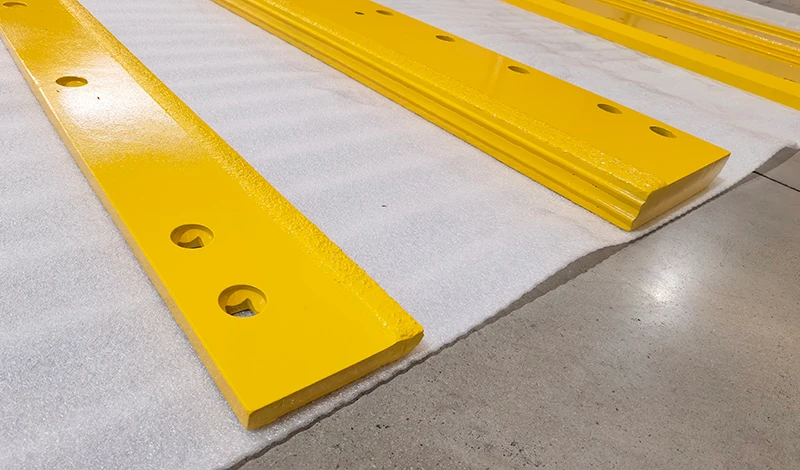
- Overall length and thickness, with the tolerance you expect rather than ‘as standard’.
- Edge angle and the direction of the cutting face.
- Bolt pattern: hole diameter, countersink depth and centres measured both across and along the blade.
- Reversible or single-sided, since a reversible blade needs symmetric fixings and layout.
Material and grade
- Blade family: rigid steel-backed carbide, rubber-flex, insert-based or plain steel.
- Carbide grade intent — abrasion-led or impact-led — rather than a supplier-specific grade name.
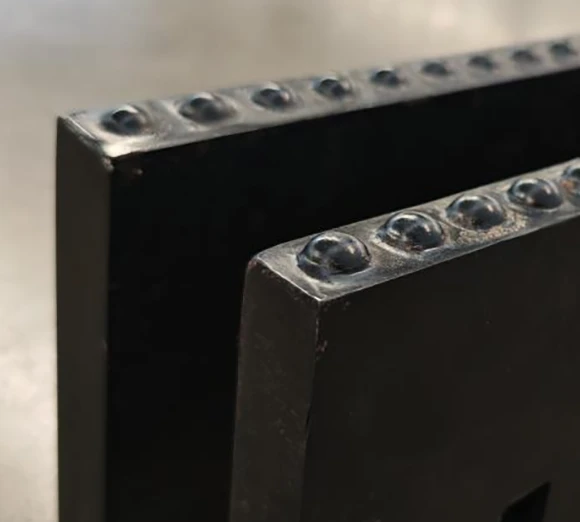
- Insert geometry and spacing where the edge is insert-based.
- Hardware specification if bolts are supplied with the blade.
Performance and acceptance
- Acceptance criteria agreed on the drawing, so both sides inspect against the same document.
- Inspection rights: whether third-party inspection is required and at which production stage.
- Documentation: material certificates, dimensional reports or a certificate of conformity.
- Trial provisions where a new profile or grade is being adopted.
Commercial and logistics
- Quantity and delivery window, expressed against your season rather than a calendar date alone.
- Packing requirements: pallet footprint, carton counts, label content and private-label rules.
- Incoterm and the destination port or facility.
- Warranty terms and the claim process you expect to follow.
Specification freeze. State that the approved drawing is archived and that repeat orders are manufactured to it. Without that line, a repeat order can legally arrive as a near-match rather than an exact one.
Writing it so suppliers can respond
Describe the intent alongside the numbers. A supplier who understands that the priority is surface protection will propose a different edge from one who is told only to supply a 12 ft blade at a given price. The more the requirement explains itself, the more useful the responses will be.
Should a tender specify a carbide grade by name?
Better to specify the performance intent and the acceptance test. Naming a grade locks you to one supplier’s nomenclature and makes comparison between tenders difficult.
How important is the packing clause?
It is one of the most common causes of friction after delivery. Pallet footprint, carton count and label content are cheap to specify and expensive to correct.