For blade hardware: bolt torque and wear plates, the best result comes from matching the component, material, and setup to a documented operating condition, then validating fit, wear, safety, and cost in a controlled trial. This updated guide uses current search evidence and official-source checks to turn the topic into a repeatable selection process.
Updated: October 19, 2026
Hardware is the least glamorous part of winter maintenance and the cause of a surprising share of damage. A bolt that is slightly loose lets the blade move, and movement abrades the moldboard behind it until the mounting holes themselves are worn oval.
Why edge hardware comes loose
- Vibration from the road surface, which is constant and worst on chip seal and gravel.
- Reusing worn fasteners, particularly nyloc nuts and spring washers that have already been cycled.
- Torquing onto a painted or contaminated surface, where the coating compresses after the fact and the preload disappears.
- Recessed hardware packed with debris, which stops the bolt seating properly.
Setting torque properly
- Clean the mounting faces and the bolt holes; a wire brush is usually enough.
- Fit new fasteners where the specification calls for them rather than reusing cycled hardware.
- Tighten in a sequence from the centre outwards so the blade beds down evenly instead of bowing.
- Re-check torque after the first few hours of service, then again at the intervals your maintenance schedule sets.
A blade torqued correctly in the workshop and never re-checked will usually be loose within a week of abrasive work. The re-check takes minutes and prevents the expensive failure.
Wear plates and moldboard protection
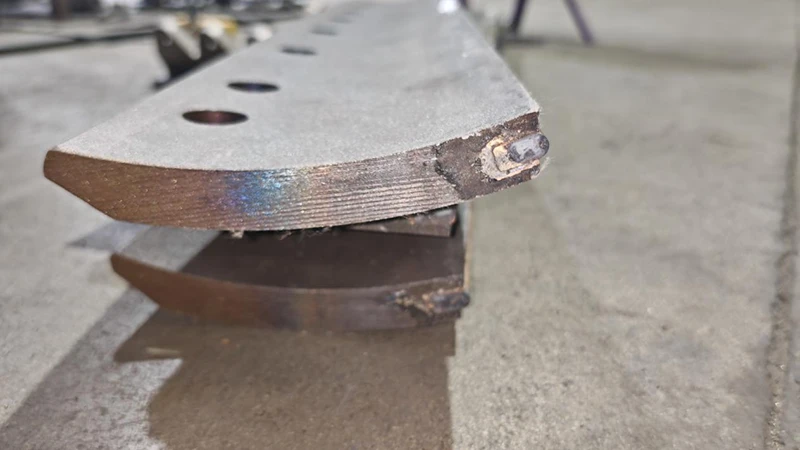
Behind a carbide edge, the moldboard takes the abrasion that the edge has already deflected. On high-mileage routes that shows up as a worn lip and elongated bolt holes, which eventually prevents a new edge from seating properly at all.
Wear plates are cheap insurance. They are fitted behind or beneath the cutting edge, take the abrasion that would otherwise reach the moldboard, and are replaced without touching the structure of the plow.
| What you see | What it means | Action |
|---|---|---|
| Shiny wear ring around a bolt head | The bolt has been moving | Re-torque or replace the fastener |
| Elongated bolt holes in the moldboard | Long-term movement and abrasion | Wear plates and, where needed, hole repair |
| Blade mounted with a visible gap | Uneven seating after tightening | Loosen, clean, and re-tighten from the centre outwards |
| Frequent loss of the same bolt | Thread or hole damage at that position | Inspect the hole and use a repair insert if required |
How often should edge hardware be checked?
After the first few hours of service and then at the intervals in your maintenance schedule. On abrasive routes, more often than feels necessary.
Can I reuse bolts when changing an edge?
Only if they are undamaged and the specification allows it. Locking fasteners that have already been cycled lose holding force and should be replaced.
Do wear plates affect blade performance?
They protect the moldboard without changing how the cutting edge meets the surface, provided they are fitted to the correct thickness for the mounting.
This article is one step in the Snow Plow Blade Selection Guide, which works the whole decision in order — surface, position, size, geometry and material — through to the written specification.
Match the Edge or Attachment to the Actual Operating Condition
This research-backed framework closes a recurring gap in pages ranking for snow plow bolts: readers need a decision method, not a list of unsupported superlatives. Apply the same evidence fields to every option before choosing blade hardware: bolt torque and wear plates.
| Decision gate | Evidence to collect | Release rule |
|---|---|---|
| Surface | Asphalt, concrete, gravel, pavers, bridge deck, or sensitive finish | Choose material and setup that protect the surface while meeting removal goals |
| Snow and ice | Loose snow, wet snow, compacted snow, bonded ice, or mixed conditions | Separate plowing, scraping, and deicing functions |
| Machine setup | Carrier weight, attack angle, down pressure, shoes, trip system, and speed | Verify the complete system rather than judging the edge alone |
| Validation | Short route trial, photographs, wear readings, fuel or time, and operator notes | Expand only after the trial meets a written acceptance rule |
The most useful choice is the one that meets the route objective without shifting damage or downtime elsewhere in the system. Record setup and operating conditions so the result can be repeated.
Run a Controlled Trial Before Full-Fleet Adoption
-
Freeze the baseline: record the current component, carrier settings, route, weather, operator, hours, and reason for removal.
-
Approve fit first: compare the supplier drawing with the machine and attachment. Do not drill, grind, weld, or substitute fasteners without an approved procedure.
-
Change one major variable: keep route and operating method as consistent as practical so the result can be attributed to the component rather than a different setup.
-
Inspect at planned intervals: photograph the same locations, measure wear, check fastener torque and retention, and log impacts or abnormal vibration.
-
Release against written criteria: decide in advance what wear, removal quality, downtime, and cost per operating hour would justify expansion.
Official-Source and SERP Verification
The technical boundary was checked against Federal Highway Administration snow and ice guidance. That source is used for the operating or safety context; model-specific dimensions, settings, and limits must still come from the approved manual for the exact machine and component. The following leading pages were reviewed for search intent and missing decision details:
Frequently Asked Questions
What should be verified before selecting blade hardware: bolt torque and wear plates?
Confirm the exact application, dimensions, carrier limits, operating surface, expected impacts, supplier drawing, and acceptance evidence. A product name or grade label alone is not enough.
How should blade hardware: bolt torque and wear plates be compared on cost?
Compare landed and installed cost, service hours, maintenance labor, downtime, collateral wear, and replacement reason. Use cost per operating hour for comparable routes rather than purchase price alone.
When is a trial required?
Use a controlled trial whenever fit, material, setup, route conditions, or supplier process changes. Define the baseline and pass criteria before the trial starts.
Which document controls installation and operating limits?
The current manual, approved drawing, and written instructions for the exact carrier and component control. General articles and cross-reference tables are screening tools, not installation authority.
Request an Application Review
Send SENTHAI the carrier or machine model, drawing or dimensions, operating surface, route condition, current failure mode, expected quantity, and target service interval. The engineering team can then review a suitable product path without changing the evidence requirements described above.