Two county routes, same truck class, same operator. One surface is chip seal over old asphalt, the other is planed concrete. The blade that finishes the season on the concrete route is still serviceable; the one on the chip seal is through. Nothing changed between the machines except the aggregate the surface sheds, and that is the variable the whole material comparison turns on.
This comparison puts five edge materials against one abrasion profile at a time, so each section advances the same argument rather than restating what a material is. The output is a selection matrix by surface and speed, which is what a specification can actually quote.
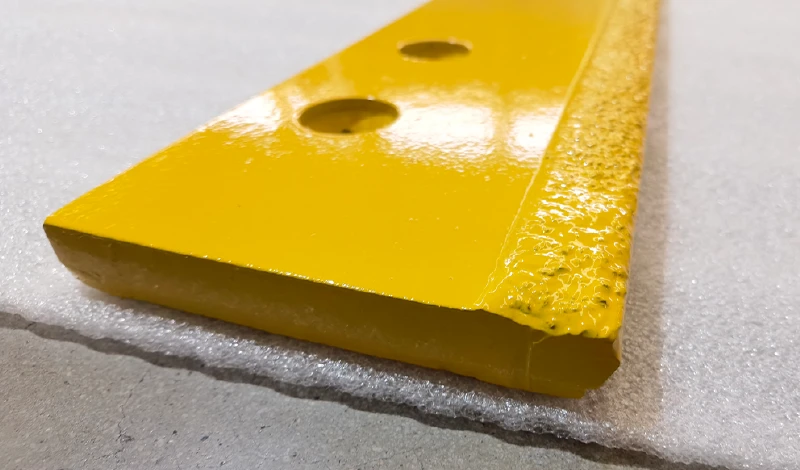
How surface abrasion differs by route type
Abrasion is set by what the surface sheds, and the four route types shed very different things:
- Chip seal releases aggregate that behaves like a grinding medium against the edge.
- Concrete loses fines and polishes rather than cutting.
- Asphalt in good condition is comparatively kind until it starts to ravel.
- Unsealed surfaces do not abrade the edge so much as present stones that damage it.
Set against those four, the same edge material produces four different service lives. That is why the useful question is not which material lasts longest but which material is limiting on this specific surface: on chip seal the limiter is wear, on a route with raised ironwork it is impact, and on gravel it is surface protection rather than the edge’s own survival. Getting the limiter wrong is how fleets buy an abrasion-resistant edge for a route that is destroying edges by impact.
The measurement that settles it is the failure pattern rather than the consumption rate, because the pattern names the mechanism. A blade worn evenly along its length is abrasion-limited; one with inserts missing at positions that align with joints and frames is impact-limited; one whose edge survives while the surface behind it is being removed is a surface-protection problem.
Carbon steel edge behaviour
Plain steel is the reference the others are judged against.
Carbon steel wears evenly along the cutting line at a rate set by the aggregate, tolerates impact without chipping because it is relatively ductile, and can be replaced at a cost that makes frequent changes affordable.
Compared with every other material below, its weakness is the same as its strength: because it is soft enough to survive impact, it wears fastest against abrasion, so on a high-aggregate surface it becomes the limiting item in the fleet’s changeout schedule rather than the edge’s own cost. The comparison point to hold onto is that steel does not fail suddenly; it consumes, and consumption is predictable enough to plan against. That predictability is worth real money on routes where a mid-storm change is expensive, and it is the reason steel snowplough blades remain the correct answer on surfaces that are not abrasive.
Heat-treated and through-hardened edges
Hardened steel is the first entry that changes the comparison rather than the price. It resists the same aggregate for longer by raising surface hardness, which extends the interval between changeouts on abrasive routes without changing the geometry of the edge.
The trade appears at the other end of the duty. Hardening reduces the material’s capacity to absorb impact, so an edge that wins on chip seal can lose on a route with expansion joints, raised manhole covers or frozen berms, where the failure arrives as a chip or a crack rather than as wear. Measured against plain steel, hardened steel buys abrasion life with impact tolerance, and the exchange rate depends on how much of each the route presents. Where a fleet operates a mix, the useful approach is to put hardened edges on the abrasive routes and leave the softer material on the routes where impacts dominate.
Carbide-edged blades in abrasion
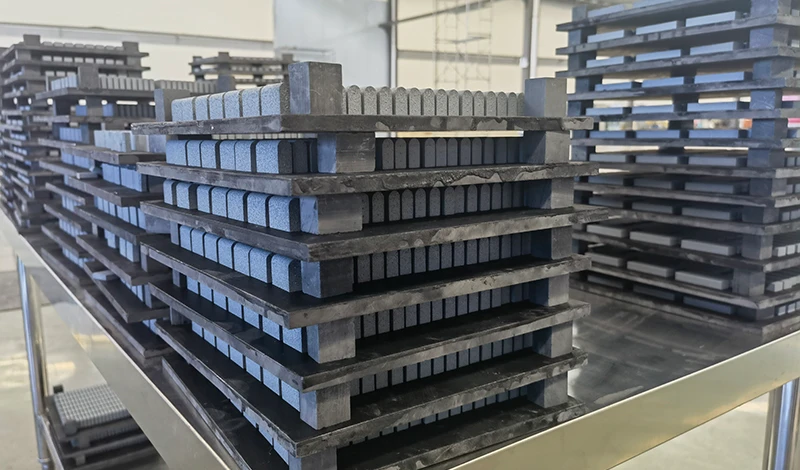
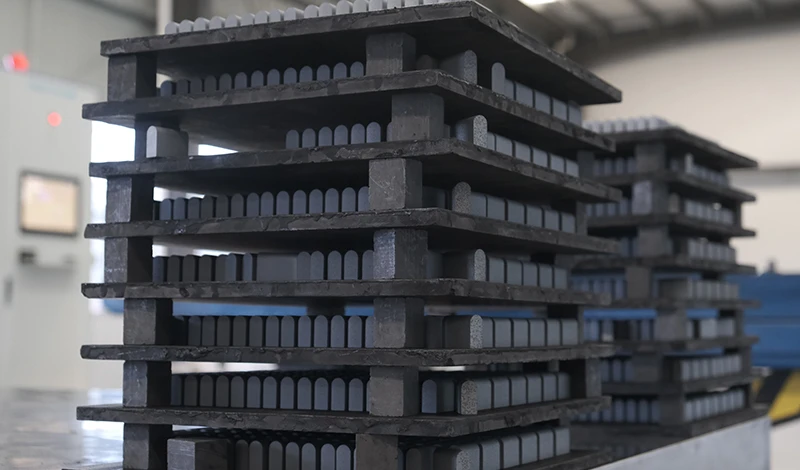
Carbide changes the mechanism rather than the rate. Instead of the whole edge wearing down, the tungsten inserts resist abrasion at the contact points while the steel carrier behind them carries the load, so the cutting geometry stays close to its designed shape for far longer than a steel edge can hold it.
Set against hardened steel, the difference is one of degree and of failure mode. Carbide extends the interval further, which matters most where changeouts are expensive, and it introduces a new failure possibility: because it is harder and less tolerant, the inserts can chip or debond where the route presents impacts. The insert layout is also part of the comparison, since closer spacing puts more carbide per metre against the aggregate at a higher cost per edge. That relationship is described on the carbide snow plow blade page, and the economics of trading edge price against interval are worked through in carbide vs steel cost per lane kilometre.
Clad and overlay alternatives
Cladding sits between the previous two entries and is often misread as a cheaper version of carbide. An overlay puts a wear-resistant layer on the surface of a steel edge, so the contact face behaves differently from the body beneath it.
Measured against hardened steel on abrasion, the gain comes from the overlay alone and is limited by how much of the surface it covers and how well it is bonded. Measured against carbide, it gives up durability at the contact point but keeps more of the carrier’s toughness, which makes it a reasonable entry where a route mixes abrasion with occasional impacts. The comparison trap here is thickness: an overlay does not thicken the section, so it does not change the impact behaviour of the edge, and a fleet that buys it expecting both abrasion and impact improvement has bought one of the two. Bond quality is the variable that decides whether the layer survives, and the inspection methods that support a requirement for it are published by ASTM International.
Rubber-flex edges in the same comparison
The rubber-flex entry does not compete on wear life, and treating it as though it does makes the comparison meaningless. A flexible edge follows the surface, deforms over obstacles instead of levering them out, and protects both the pavement and the stones on an unsealed road.
Against the steel entries above, its advantage appears where the surface, not the edge, is what the fleet is trying to protect, and its disadvantage appears where cutting capability is needed: a flexible edge does not concentrate enough pressure to break a bonded layer or cut hardpack. Compared with carbide on the same route, it will outlast it on gravel by preserving the surface and fail to do the job at all on bonded ice. Position in the range is described on the snow plow blade hub.
Using the fleet’s own abrasion record to choose
Every fleet already holds the data needed for this comparison; the work is in reading it rather than in collecting it. Consumption records show how many edges each machine used; the workshop record shows why they came off; and the route list says what surface each machine works. Joined together, those three answer the question the material comparison is really asking.
The reading that matters is the reason for replacement rather than the number. A machine that consumed three edges in a season because all three wore out is abrasion-limited and is a candidate for a harder material. A machine that consumed the same three because two were damaged on the same ironwork is impact-limited, and a harder edge will not help. Splitting the consumption by reason is what stops a fleet buying abrasion resistance for a damage problem, which is the most common and most expensive mistake in this comparison.
The second reading is the spread between machines on the same route class. A wide spread points at the machines or their settings; a narrow one points at the surface and is a genuine case for changing the material across that class.
Where two materials are used on the same machine
Mixing materials on one machine is legitimate and sometimes the correct answer, provided the position and the duty are matched. A front blade and an underbody blade on the same truck work different jobs: the front blade meets the loose layer and the impacts first, while the underbody blade works what has already been pressed down and needs cutting geometry more than impact tolerance.
Two practical cautions belong with that approach. The first is that rotation becomes harder to manage, because an edge specified for one position may be moved to the other and meet conditions it was not chosen for. The second is spares: two materials on one machine means two edge part numbers and two sets of hardware, which is a real cost against the saving the mix was meant to produce.
The approach pays where the positions differ enough that a single compromise material is doing one job badly. It does not pay where the difference is marginal, because the stock and rotation complications consume the benefit.
Selection matrix by surface and speed
The matrix consolidates the five entries against the variables that separated them: what the surface sheds, how much impact the route presents, and what the fleet is trying to protect. It is written as decision logic rather than as measured results, because abrasion rates and changeout intervals are fleet-specific and a figure borrowed from another operation would mislead.
| Surface profile | Entry that usually wins | Why | What is given up |
|---|---|---|---|
| Chip seal or surface dressing | Hardened or carbide | Aggregate abrasion is the limiter | Some impact tolerance |
| Planned or well-finished concrete | Plain or hardened steel | Wear is slow and predictable | Long changeout intervals |
| Asphalt with raised ironwork | Impact-tolerant steel | Impacts, not abrasion, end the edge | Abrasion resistance |
| Mixed paved and unsealed | Clad or rubber-flex | Compromise on both mechanisms | Cutting capability |
| Bonded ice and hardpack | Insert edge with cutting geometry | Fracture, not wear, is the objective | Surface tolerance |
The fourth column is the one a procurement discussion usually omits. Every entry in the table buys its advantage by giving something up, and the specification is complete only when that trade is written down.
Material and test standards that support these requirements are published by ISO and ASTM International, winter maintenance research by the Transportation Research Board, road maintenance guidance by the Federal Highway Administration, and equipment guidance by the Association of Equipment Manufacturers.
SENTHAI manufactures carbide, hardened, clad and rubber-flex blades in Rayong, Thailand, and confirms the mounting pattern and edge geometry against the customer’s measurements before production.
FAQ
Isn’t carbide always the better edge if the budget allows?
Only where abrasion is the limiting factor. On surfaces where the edge dies from impact or from surface protection requirements, the extra tungsten is bought and never used, and a tougher or softer edge outlives it.
Do hardened steel edges really last longer than plain steel?
Longer against wear, shorter against shock. Hardening raises abrasion resistance and reduces the material’s ability to absorb impact, so the same edge can win on one route and lose on another.
Are clad or overlay edges a middle option between steel and carbide?
In cost, yes, and in behaviour they sit closer to hardened steel. An overlay resists abrasion at the surface it covers, while the body behind it behaves as the steel it is.
Where does a rubber-flex edge fit in this comparison?
It is not competing on wear life at all. It competes on surface protection and on following an uneven surface, which is why it wins on unsealed roads and loses where a bonded layer has to be cut.
Send the surfaces your fleet works and the failure pattern from last season. The SENTHAI engineering desk will match the material to each abrasion profile and quote it against the measured mounting pattern.