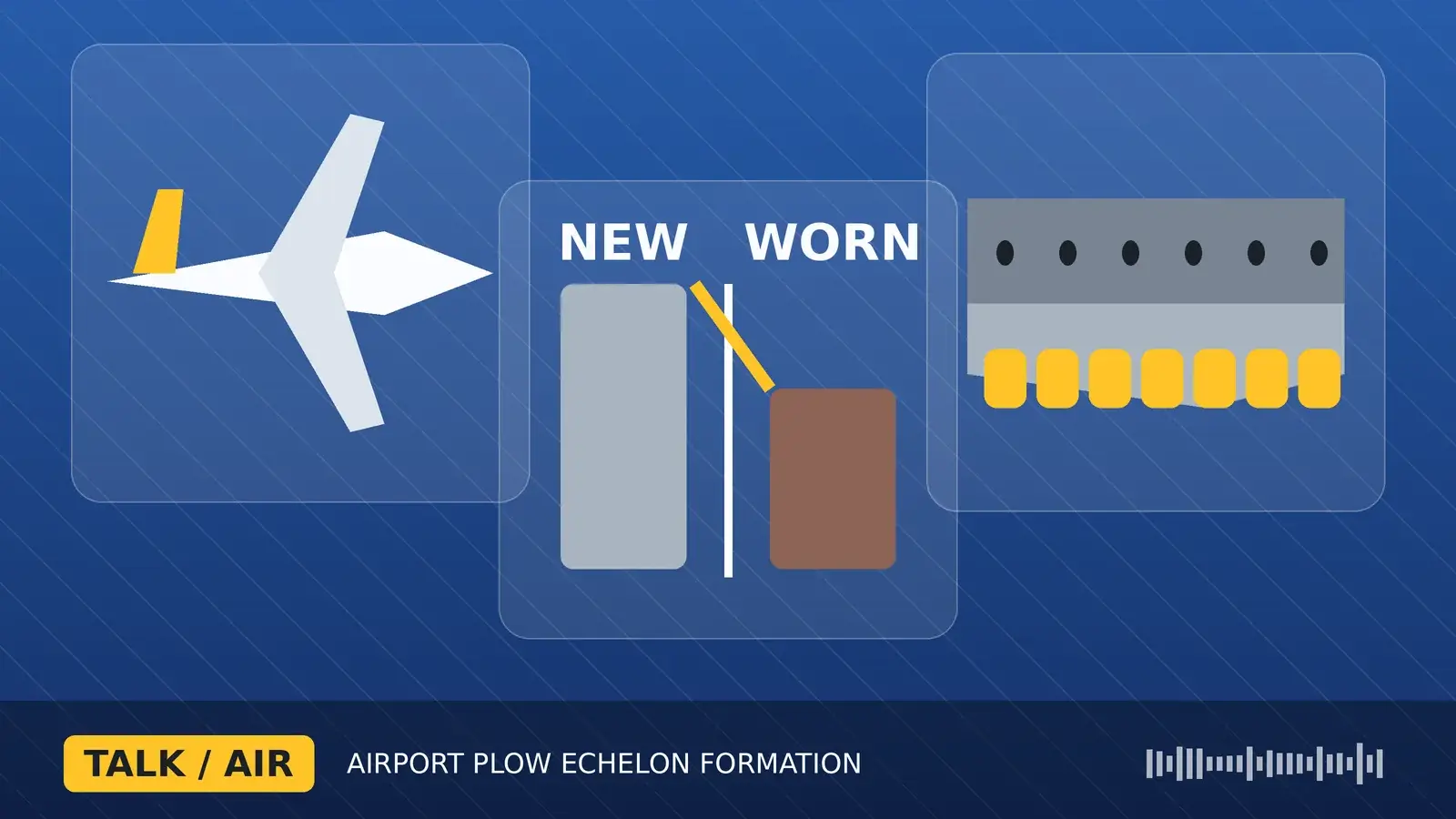
Why it might differ
The mechanisms are simple, and they explain why the lead position can wear differently without any product difference.
- The lead plow meets the snow first and may carry more load.
- Followers clear the windrow thrown by the plow ahead and may carry less load or different loads.
- The lead driver finds hidden hazards first.
- Followers may run closer to the pavement edge or lights, with their own risks.
These are reasons it might differ, not evidence that it does.
How to test it
An echelon test only answers the question if the positions are controlled. Run it as an experiment, not as another season.
- Fix the formation and note the order of trucks on each run. A formation that changes every storm cannot be compared.
- Rotate positions on a schedule, so no truck always leads. Without rotation, you are measuring trucks as well as positions.
- Log per edge: hours, position, wear reading and date. The position is the variable; everything else is noise.
- Use the same gauge and the same photo method for every edge. A different gauge is a different measurement.
- Compare wear per hour by position, not per calendar day. Storm lengths differ, and calendar time hides that.
- Look for damage differences as well as wear. Chips and strikes by position tell a different story from slow wear.
Template: formation log
| Date | Truck | Position (lead, second, third) | Hours | Wear reading | Damage notes |
|---|---|---|---|---|---|
If the lead plow wears faster
If the lead position shows more wear, decide what you will do about it before the next rotation, not after the next failure.
- Rotate the lead role to even out wear. Rotation does not reduce total wear, but it spreads the cost across the fleet instead of concentrating it on one truck.
- Plan more edge changes for the lead truck, or put the freshest edge there. The lead truck sets the pace for the formation, so it is the worst place to run a worn edge.
- Check whether the cause is load or hazards, because the fix differs. Steady wear points to load; chips and strikes point to what the lead truck meets first.
If there is no difference
Then you have saved the cost of a special plan. Note it and move on.
Limits
No study is cited. Airport formations are set by the airport’s snow plan, so any change must fit it.
Keeping the test fair
Position is only one thing that changes between runs. Weather, snow type, route and driver also change, so one storm proves little. Compare wear per hour across many runs, and keep a note on anything unusual such as a strike. Share the result with the crews, because their field sense about which position is hardest is worth recording alongside the numbers. If the airport’s snow plan fixes the order of vehicles, rotate only within what the plan allows.
Boundary: No study or result is cited; any effect of formation position on edge wear is a hypothesis, and airport formations must follow the airport’s snow plan.
Further reading on this site.
Our new blades seem to wear faster after a route change. What should we compare first? ↗Sourcing Ice Resurfacer Tires and Studs: Lead Times and Documentation ↗Carbide snow plow blades ↗One Plow, One Broom: Spare-Edge Strategy for a Small General-Aviation Airport ↗Carbide Fragments on Movement Areas: FOD Inspection After an Edge Failure ↗Edges and In-Pavement Lights: Height Settings and Strike Checks ↗


