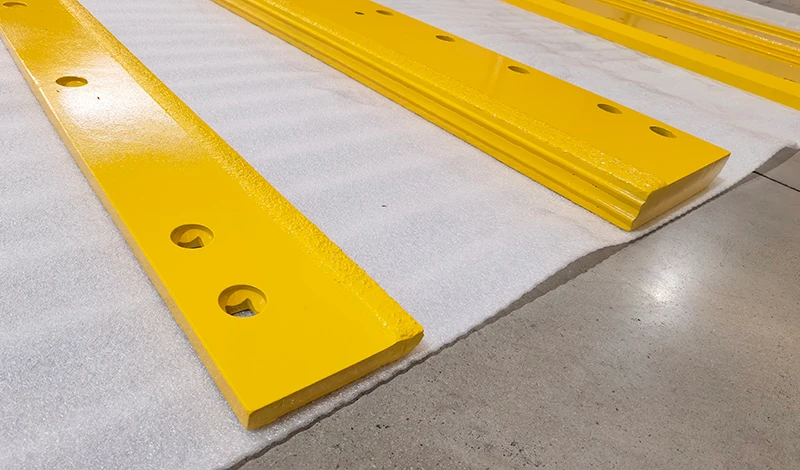
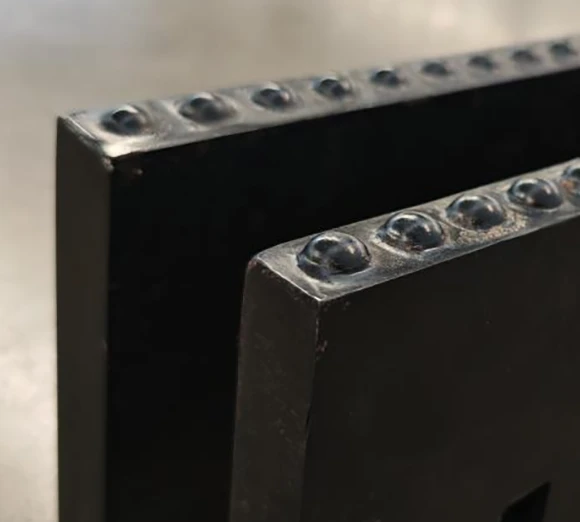
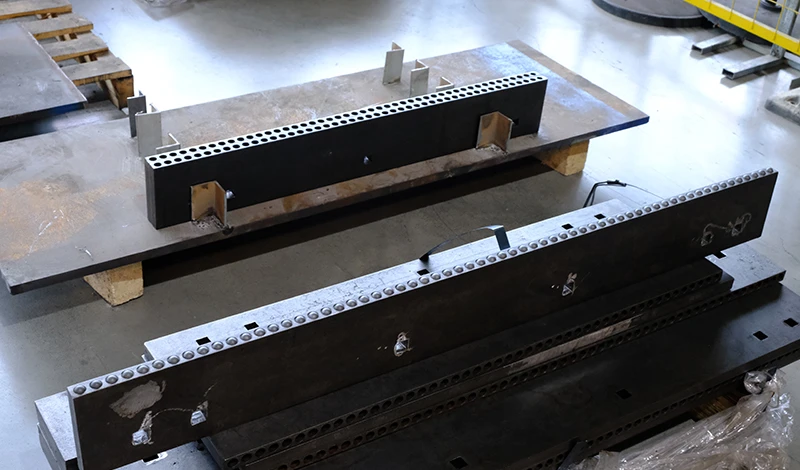
A clamp-on blade is often described as the budget option for organisations that cannot justify a plow truck. In practice it is frequently the correct specification rather than a compromise: the machine has another job for nine months of the year, and the blade has to arrive, work and come off again without changing the machine it mounts to.
That reframes the buying questions. Attachment integrity, weight, width and edge choice matter more than the blade’s finish, and the seasonal cost of ownership is dominated by things that never appear on the attachment invoice.
When a clamp-on blade makes sense
Clamp-on blades suit machines with another job all year.
A clamp on snow blade is the right answer when the machine is shared, the clearing work is seasonal and the site does not justify a dedicated plow unit, provided the attachment is matched to the bucket or frame it clamps to.
The conditions that favour it are specific. The machine is used for something else through the rest of the year, so a permanently mounted plow would be idle capital. The routes are short or contained: yards, campuses, car parks, industrial sites and private lanes. The operator is the same person who uses the machine for its other work, so fitting and removal can follow a documented routine rather than a workshop job.
The conditions that argue against it are equally specific. Continuous highway or arterial work needs a dedicated plow with proper mounting and hydraulic control. Sites with heavy, wet snow and long pushes need a machine with the traction and mass to move it. And any operation where the attachment must be fitted and removed by different people every shift needs a mounting system simple enough to be done correctly under time pressure. Procedure and training are what make a seasonal attachment work.
Attachment without frame damage
Attachment design decides whether a seasonal blade is a tool or a slow source of structural damage. Clamps, bolts and quick-attach plates all concentrate load somewhere, and the question is whether that load lands on a part of the machine designed to take it.
Three practices keep the interface sound. First, spread the clamp load with a pad or a plate sized to the surface it bears on, rather than letting a single screw press directly onto a bucket edge. Second, respect the fastener specification: the grade, the tightening sequence and the torque value, rechecked after the first working shift. Third, inspect the mounting area at the start and end of each season for distortion, cracking and wear at the weld toes, because early detection is what prevents a small distortion becoming a repair.
Where the machine uses a quick-attach system, verify compatibility before ordering. Equipment manufacturers publish mounting and compatibility information for their machines, and the Association of Equipment Manufacturers is a reasonable entry point to the machine-level constraints that decide what a loader or a three-point hitch can safely carry.
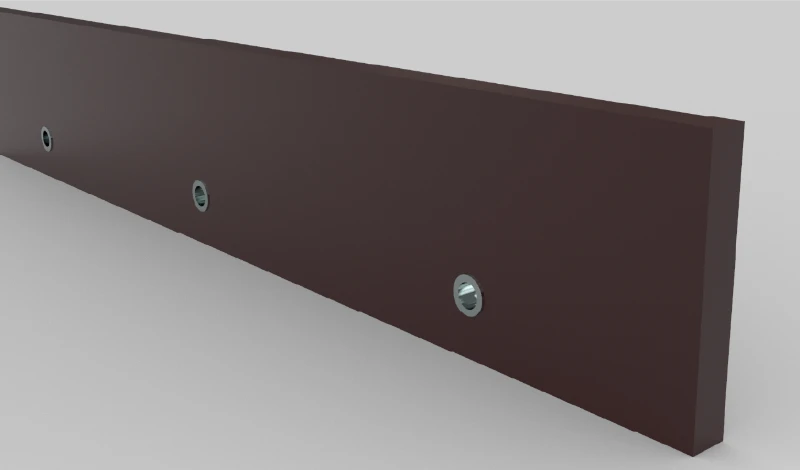
Weight and balance on light trucks
Weight is the constraint that surprises seasonal buyers most, because an attachment that fits does not automatically suit the machine. A blade and its mounting hardware sit ahead of the front axle on a truck or at the end of a loader arm on a tractor, and both positions change how the machine steers, brakes and rides.
On light trucks the answer is usually ballast in the bed, plus tyres set for the load, plus a realistic view of how much snow the machine can push before traction is lost. On tractors and loaders the answer is the same in principle: the loaded attachment must leave the operator in control. A machine that cannot steer confidently with the blade fitted is not a machine that should be clearing the site.
Two checks belong in the seasonal routine. Check the machine’s rated capacity for front-mounted equipment before ordering, and check the actual behaviour with the blade fitted and loaded, on the surface it will work, rather than in a yard on dry ground.
Blade width limits for seasonal use
Width limits for seasonal attachments are tighter than the machine’s dimensions suggest, because the blade is controlled by a machine that was designed for a different job.
The practical ceiling is reached when the operator has to slow down to keep the machine straight, or when the blade starts to steer the machine in heavy snow. That point arrives sooner on a seasonal attachment than on a dedicated plow, because the mounting is usually less rigid and the machine has less mass. Buying narrower than the maximum is often the decision that makes the season work.
Site geometry sets a second limit. Gates, kerbs, parked vehicles and building corners all punish an oversized blade, and the time lost to manoeuvring is usually greater than the time saved by clearing a wider strip. For campus and car park work, the more useful measure is how many passes a route needs, not how wide a single pass can be.
Cutting edge options for occasional duty
Occasional duty changes the edge economics. A seasonal machine works far fewer hours than a municipal plow, so the abrasion that justifies carbide on a highway route is rarely the deciding factor; surface protection, impact tolerance and storage life matter more.
Three options cover most seasonal work. A rubber-flex edge protects paving and handles the mixed surfaces of a campus or yard. Steel is the pragmatic choice for unpaved ground and heavy impact, because it can be straightened and reused. An impact-led carbide edge suits sites where hardpack forms and the edge has to bite, such as an industrial yard that ices over every season.
The specification question to ask is where the machine works at its worst rather than where it works most often: one slip on a decorative surface or one season of chipped inserts costs more than the difference between the edge options. The published blade range splits along exactly these lines, with a flexible edge for surfaces that damage easily and carbide edges for routes that generate abrasion.
Storage and off-season handling
Storage is where seasonal attachments quietly lose value. A blade that spends the summer on damp ground, with fasteners left under load and an edge still carrying road salt, will not be in the same condition when it is needed again.
The routine is short and worth writing into the season close-out: clean the blade and the mounting hardware, dry it, treat the bare steel and the fasteners, store it off the ground and with the edge protected, and record the condition of the clamping hardware so the same parts are replaced rather than reused indefinitely. Pair that with a check of the machine interface at the same time, while the attachment is still on the machine.
Keep the batch labels and the attachment paperwork with the blade. Where a warranty question arises, the documented scope and the claim steps are what make the difference between a repair and an argument; SENTHAI publishes its scope, claim process and packing standards on the warranty and shipping page.
Total cost of a seasonal attachment
The cost of a seasonal attachment is assessed across the season rather than at the invoice. Purchase price is one line; fitting and removal time, edge consumption, storage condition and the risk of surface damage are the others.
Build the comparison per season: the attachment cost amortised over its expected life, the labour to fit and remove it each year, the edges it consumes, and the value of the machine hours it frees elsewhere. Where the same tractor also mows, lifts and moves material, those freed hours are the real return, and they are invisible in a price comparison between two attachments.
Fitting time is the line most often underestimated. A system that takes one person twenty minutes to fit is worth more across a season than one that takes two people an hour, particularly when the first snow arrives outside working hours. Where a fleet runs several machines, distributor programmes make it possible to buy blade sets, edges and hardware against one drawing pack so the seasonal kits stay interchangeable (wholesale snow plow blades for distributors).
Independent guidance on seasonal contracting and surface protection is published by the Snow & Ice Management Association, and route classification practice from agencies such as Colorado DOT is a useful model for deciding which parts of a site justify a dedicated unit rather than a shared machine. The wider context of how weather affects the road network is documented by the Federal Highway Administration, and research on equipment and method selection is collected by the Transportation Research Board.
FAQ
Is a snow pusher worth it compared with a clamp-on blade?
They answer different jobs. A pusher carries snow in a box and is efficient for stacking and clearing large open areas in one direction, but it needs room to push and it does not angle to cast snow off a lane. A clamp-on blade angles, casts snow to the side and follows a route, which suits lanes, yards with obstacles and sites where the snow has to be thrown clear rather than gathered.
Do clamp-on blades damage the bucket or frame?
They can, and the risk is in the clamping detail rather than the blade. A clamp that concentrates load on a small area, or that is tightened beyond the bucket’s design, can distort a bucket edge or crack a weld over a season. Spread the load with a properly sized clamp and pad, follow the manufacturer’s torque guidance, and inspect the bucket edge and welds at the start and end of each season.
How much does a seasonal snow blade attachment cost?
The cost is driven by the machine interface, the blade width, the edge material and how the blade is controlled, so it cannot be quoted without those inputs. A clamp-on blade for a compact machine and a frame-mounted blade with hydraulic angle on a utility tractor sit at different points, and the edge specification adds to either. Price the attachment and the first spare edge together, because that pair is what a season actually consumes.
Can a clamp-on blade be used on a paved driveway?
It can, with the right edge and a light setting. The clamp-on arrangement itself does not damage paving; the risk comes from a rigid steel edge scraping a sealed or decorative surface and from the operator pressing the blade down to clear hardpack. Pair the attachment with a rubber-flex or impact-tolerant edge, keep the working height controlled, and take the bulk of the snow in the first pass rather than scrubbing the surface.
Tell the SENTHAI engineering desk which machine the blade shares, how it attaches and which surfaces it clears. You will get a blade width, edge material and mounting recommendation for the whole seasonal kit.