Carbide cutting edges fail in two different ways, and only one of them is the material’s fault. An edge that wears evenly for a season is doing its job. An edge that loses inserts in the first storm is usually a grade, braze or fitment problem — and that is what should be diagnosed before the next order, not the purchase price.
The arithmetic that decides whether carbide pays is not the invoice. It is stops per season times the cost of a stop. On a chip-seal corridor with 400 hours a season, a steel edge that comes off in February costs more than the carbide edge that did not.
What “carbide cutting edge” means in the trade
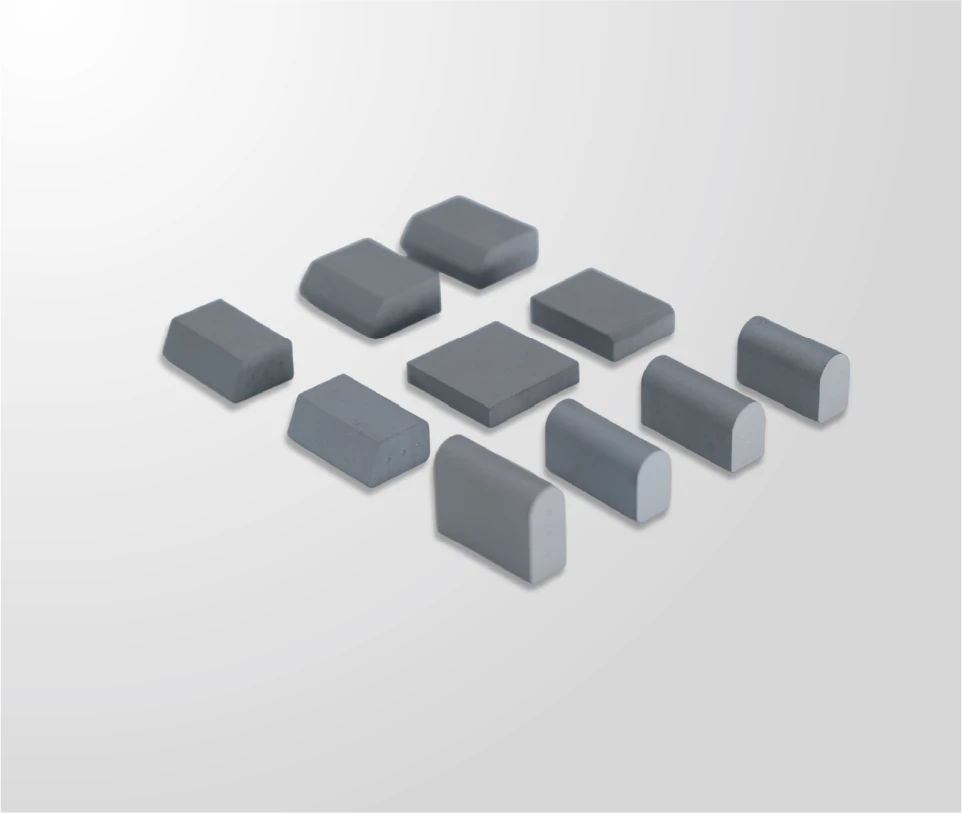
Three different products get sold under the same two words, and they behave differently enough that comparing prices between them is meaningless.
The first is a full carbide edge: a steel carrier with sintered tungsten carbide working sections brazed or welded along the scraping face. The second is a set of replaceable inserts that are fitted into a carrier you already own, so the carrier stays and only the wear material is consumed. The third is carbide-tipped or carbide-hardfaced steel, where a comparatively thin carbide layer sits on a steel body.
All three are legitimate. They fail differently, they are replaced differently, and they suit different maintenance models. A depot that services edges in place wants inserts. A fleet that swaps whole edges at the rack wants the full edge.
What you are buying per inch of working edge
Comparing a carbide edge to a steel edge by unit price is the wrong comparison, because the two do not deliver the same number of scraping hours.
What matters is cost per hour of working edge, and that includes the labour and downtime of every change. The table below is the framework we use in quotations; fill it with your own numbers rather than ours.
| Line | Steel edge | Carbide edge | What to use |
|---|---|---|---|
| Purchase price per edge | Lower | Higher | Your quotation, landed |
| Edges per season | Several | Usually one | Your maintenance log |
| Hours per changeout | Same both ways | Same both ways | Two-person crew, timed |
| Downtime cost per stop | Paid several times | Paid once | Route hours lost × truck cost |
| Cost per scraping hour | (price × changes + labour) ÷ hours | (price + labour) ÷ hours | The only number that compares |
Where carbide wins, and where it does not
Carbide wins on abrasion: chip seal, aged asphalt, packed ice, and any surface that grinds a steel edge down a millimetre at a time. It also holds an edge at temperatures where steel softens, which matters on long routes where the edge runs hot.
It loses on impact. Gravel shoulders, frozen ruts, raised castings, manhole rims and debris all deliver point loads that a hard, brittle material cannot absorb the way steel can. This is not a manufacturing defect; it is the trade you accepted when you chose hardness.
The practical consequence: carbide is usually right for the lane, and wrong for the shoulder. Fleets that run both should not standardise on one material for the whole machine.
Failure modes and what each one tells you
Read the failed edge before you replace it. The pattern names the cause, and the cause tells you whether to change the grade, the fitment, or the operator briefing.
| What you see | Most likely cause | What to change |
|---|---|---|
| Even wear across the whole face | Normal abrasion | Nothing — the edge did its job |
| Isolated chipped inserts | Impact at joints or debris | Tougher grade, or higher shoe setting |
| Inserts missing with clean pockets | Braze or weld failure | Supplier process — ask for batch records |
| Cracks running from the bolt holes | Carrier fatigue, over-torque, oversized holes | Carrier design and torque spec |
| Wear concentrated at one end | Plow angle, or crown following | Operating practice, not material |
Grade and binder: the questions worth asking
Two suppliers can quote “carbide” and deliver very different material. The differences live in grain size, cobalt content and how the part is joined to the carrier.
Coarser grain and higher binder content give toughness at the cost of wear resistance; finer grain and lower binder give hardness and abrasion life but chip more readily. Neither is better in the abstract. Ask which grade is proposed for your surface, and ask for the batch record that shows it was actually used.
On the join: brazed inserts and welded inserts behave differently under impact. A clean pocket where an insert used to be is a joining failure, and it is a supplier conversation rather than an operator one.
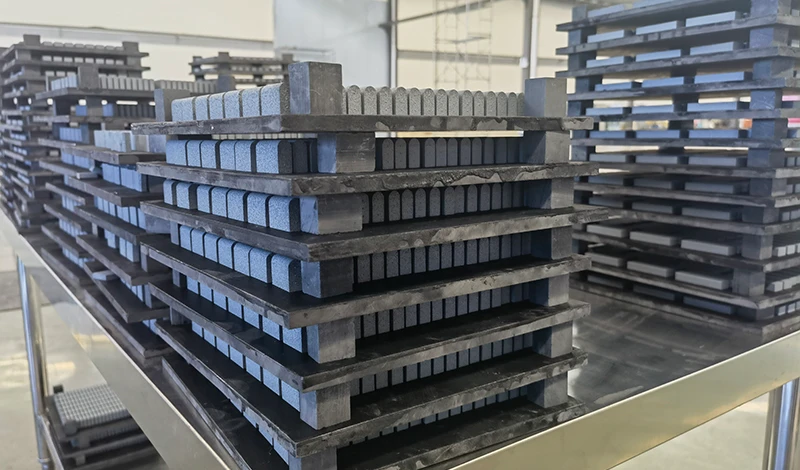
Retrofit, or replace the whole edge?
If the existing carrier is sound — no cracks from the bolt holes, no dishing, holes still round — fitting replaceable inserts is usually the cheaper route into carbide. It also lets a depot top up worn sections without scrapping a carrier that has years left in it.
If the carrier is tired, replacing the whole edge is cleaner. Welding new inserts onto a fatigued carrier moves the failure from the insert to the plate, and the plate fails without warning.
What it does to changeout labour and downtime
The labour saving is the part fleets underestimate. One planned change instead of four removes three call-outs, three truck-hours and three rounds of manual handling on a heavy component.
It also changes the failure mode of the schedule: a single planned swap can be slotted into a maintenance window, while four unplanned swaps happen during storms, at night, with a crew that has somewhere else to be.
Trial one route before committing a fleet
Put carbide on one route with a known abrasion profile, keep steel on a comparable route, and log both the same way for a season: hours, stops, reason for pull, photographs at each change.
The comparison you want is cost per scraping hour, not wear depth in a photograph. If the carbide route did not reduce stops, the problem is fitment or route selection, and buying more carbide will not fix it. If you want to talk through a trial, the carbide insert selection guide covers grade and spacing, and the cost per lane-kilometre worksheet gives you the fields to log.
FAQ
Is a carbide edge worth the price on a municipal truck?
On abrasive corridors with high season hours, usually yes, because the saving is stops rather than material. On short routes with mixed surfaces, run a single-route trial first.
Will carbide chip if we hit a manhole?
It can. Carbide is hard and therefore brittle; a point load at a raised casting can chip an insert. Shoes, plow angle and operator briefing reduce the frequency but do not eliminate it.
Can we replace individual inserts instead of the whole edge?
Yes, where the carrier uses replaceable inserts and the pockets are undamaged. A clean pocket with a missing insert is a joining failure and should be raised with the supplier before more inserts are fitted.
How do we compare two quotations properly?
Convert both to cost per scraping hour: price, number of changes per season, labour hours per change and downtime cost. The quotation with the higher unit price often wins once stops are counted.
If you are weighing carbide against steel on a specific route, send the surface, the season hours and the current edge. We will quote the grade and the packing, or tell you that steel is the better answer.