The Federal Highway Administration’s 2024 road-length table counts 1,207,692 miles of unpaved public road out of 4,010,626—roughly 30 percent of the network, and almost all of it rural (FHWA Highway Statistics, Table HM-12). A lot of those miles see a plow every winter, and the carbide on those plows is often chosen from a data sheet written with clean asphalt in mind.
That mismatch costs money. A grade that wears well on a sanded highway can chip within a few storms once the edge keeps meeting frozen-in cobbles, washboard and loose stone. This checklist is for fleet engineers and county buyers choosing between a tougher and a harder grade before a tender, with trial evidence behind the choice.
Carbide grade for a gravel plow: tougher first, harder second
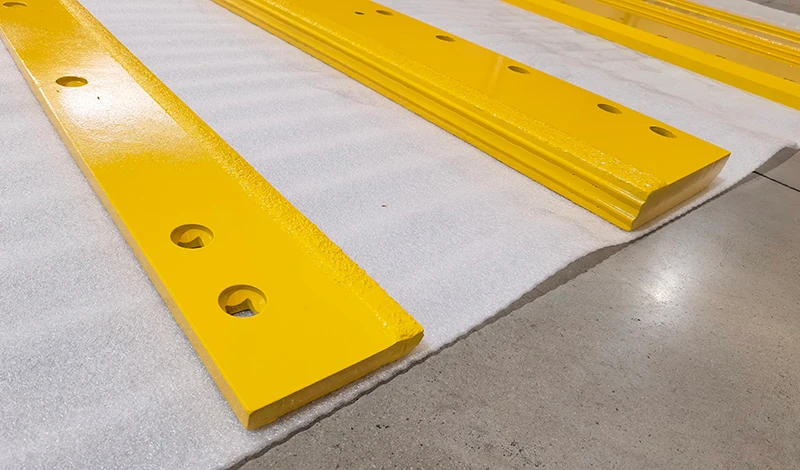
For a gravel or other unpaved plow route, start with a tougher carbide grade—typically more binder, coarser grain and somewhat lower hardness—because loose and frozen stones load each insert in impact. A chipped insert stops wearing evenly. Move toward a harder, more abrasion-resistant grade only after trial edges show smooth wear with no chipping.
Search summaries often repeat that carbide edges can last 10 to 20 times longer than steel. Clear Roads cites the same range in its standard specification project for carbide-insert plow blades. On gravel, that multiple depends on whether the grade survives impact long enough to wear at all, so treat it as conditional on surface, down-pressure and operator.
The rest of this page is a buyer’s checklist for making that carbide grade gravel plow decision with evidence: describe the surface, read the failure mode, ask for the right grade data, run a fair trial and write it into the RFQ.
Checklist item 1: describe the gravel, not just “unpaved”
“Gravel road” covers very different duty. Before comparing grades, write down which of these your routes actually contain, and roughly what share of plowed kilometres each represents:
- Maintained crushed-aggregate surface with a crown and loose surface gravel—mostly abrasion, with intermittent stone strikes.
- Washboard or rutted sections—repeated low-amplitude impact and chatter that fatigues insert edges.
- Frozen-in cobbles or exposed base rock—high-energy point impact, the classic cause of chipped or missing inserts.
- Mixed routes that switch between chip seal, asphalt and gravel on the same pass.
The FHWA Gravel Roads Construction and Maintenance Guide is a useful reference for the road side of this: crown shape, surface gravel and how loose material behaves. The point for a buyer is simple. A route that is mostly maintained aggregate wants a different balance from one where the plow regularly finds rock.
Checklist item 2: separate impact damage from abrasion on the old edges
Sort the last set of worn edges before anyone talks about grades. Two patterns tell different stories:
- Abrasion-led wear: inserts worn down evenly with the steel carrier, polished faces, rounded leading corners, no missing pieces. A harder grade may extend life here.
- Impact-led damage: chipped corners, cracked or missing inserts, steel scalloped out between inserts where a tip broke away. A harder grade usually makes this worse.
Photograph each edge square-on and from the end, note which truck and route it came from, and count chipped or missing inserts per metre. That count becomes one of the two numbers you will use to judge a trial.
Toughness vs hardness: what the grade data should show
ASTM’s test method for hardness testing of cemented carbides (B294) notes that within a compositional group, lower-hardness grades usually mean less wear resistance but greater toughness. That trade-off is the whole decision on gravel. Ask the supplier to place the proposed grade on it explicitly.
| Grade property | Tougher-leaning grade | Harder-leaning grade | What to request on the quote |
|---|---|---|---|
| Binder (usually cobalt) content | Higher | Lower | Nominal binder range for the named grade |
| Carbide grain size | Coarser | Finer | Grain size class, not just “micro-grain” or “premium” |
| Hardness | Somewhat lower | Higher | Value with the test method stated (for example HRA per B294) |
| Typical failure on gravel | Wears and rounds, fewer chips | Chipping, cracked or lost inserts under strikes | Supplier’s view of the grade for impact duty, in writing |
| Typical result on clean asphalt | Faster wear than a hard grade | Longer abrasion life | Which of your routes the grade is proposed for |
A data sheet that only shows hardness is not enough to judge gravel suitability. If you need a refresher on insert geometry and replacement before comparing offers, the carbide insert selection and replacement guide covers the basics.
Checklist item 3: decide whether cold changes the answer
Deep cold matters on gravel because the base freezes and stones lock in place. The edge then meets them as rigid obstacles rather than material it can push aside. That raises impact energy without changing anything you would see on a spec sheet. The mechanism, and how binder content interacts with low temperature, is covered in our separate article on carbide grade selection for cold and abrasive conditions. For this checklist, record one thing: whether most of your gravel plowing happens on frozen or unfrozen ground. A route plowed mostly before the base freezes sees more loose-stone abrasion; a route plowed in mid-winter sees more locked-stone impact.
Parameter check: turning trial data into a grade decision
Judging a trial only by remaining edge height hides the failure mode on gravel. Track two figures per edge:
- Wear rate (W) = height lost at the insert line ÷ kilometres plowed.
- Chip rate (C) = chipped or missing inserts per metre of edge ÷ kilometres plowed.
An edge comes off either when height reaches the minimum the carrier can tolerate, or earlier, when enough inserts are lost that the steel behind them starts to wear through. So service kilometres are roughly the smaller of two limits: allowed height loss ÷ W, and allowed insert loss ÷ C.
Compare two grades on one route. The harder grade may show a lower W, but if its C is high, the insert-loss limit arrives first and the edge comes off early anyway. The tougher grade wears faster yet rarely loses inserts, so it runs to the height limit. The grade with more kilometres before its first limit wins. Divide edge cost plus changeout labour and downtime by those kilometres for cost per kilometre, using your own prices and rates.
Checklist item 4: run a split-edge trial that a reviewer will accept
Clear Roads’ high-performance blade evaluation produced a field-test protocol for comparing blade types. A small fleet can borrow its logic without its budget:
- Pick one gravel-heavy route and, if possible, one truck that always runs it.
- Fit the candidate grades on the same truck (left and right sections) or on two trucks sharing the route with the same operator rotation.
- Measure insert-line height at marked points before the first storm.
- Log kilometres plowed, surface condition (frozen or unfrozen base) and down-pressure or float setting per shift.
- Photograph and count chips at fixed intervals, not only at the end.
- Stop the comparison when either edge reaches a removal limit and calculate W, C and cost per kilometre for both.
One season on one route is limited evidence, but it beats a brochure hardness number and gives the next tender a defensible basis.
Checklist item 5: grade is only one part of the insert
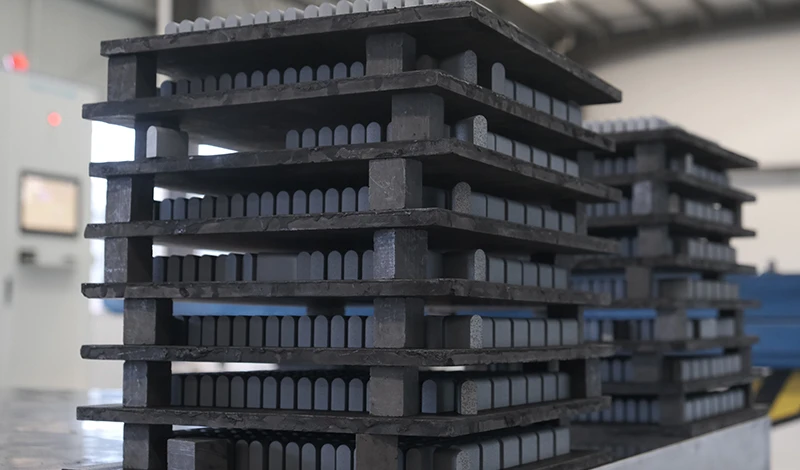
A tougher grade will not rescue an insert that is badly seated. On gravel, check insert protrusion beyond the carrier, the quality of the braze line, the carrier steel and the spacing between inserts. Gaps that are too wide let stones lever against individual tips. The insert options on our carbide inserts page show the shapes and spacing choices involved. When you compare offers, make sure two suppliers are proposing the same insert geometry before you compare their grades.
Checklist item 6: RFQ fields for a gravel-route grade
Put the evidence into the request so every bidder answers the same question:
- Route surface mix by share of plowed kilometres (paved, maintained aggregate, washboard, exposed rock).
- Frozen vs unfrozen base during most plowing.
- Failure mode of the current edges, with photos and chips per metre.
- Trial results (W, C and kilometres to first limit) if you have them.
- Edge length, thickness, bolt pattern and carrier drawing; insert dimensions and spacing.
- Requested grade data: grade name, binder range, grain class, hardness with test method.
- Whether you want one grade fleet-wide or separate grades for gravel and paved trucks.
Once that sheet is filled in, it doubles as our brief. Attach it with a few photos of a worn edge and email [email protected]. We will reply with the grade we would put on your gravel trucks, the reasoning behind it, and a quotation. Order quantities and production timing are worked out on that quotation for each product family, not set by a standard number on this page. Edge formats are on the carbide snow plow blade page if you are specifying complete edges rather than inserts.
Where gravel-route grade choices usually go wrong
- Buying the hardest grade on offer because the paved-highway trucks like it, then losing inserts on the first rocky route.
- Judging the trial on height alone, ignoring chip counts that would have predicted early removal.
- Changing grade and insert geometry at the same time, so nobody knows which change helped.
- Running one grade across mixed fleets when the gravel trucks and highway trucks clearly fail differently. For a broader route-to-edge framework, see the snow plow blade selection guide.
- Accepting “tough grade” as a description without a named grade and data behind it.
FAQ
Is a harder carbide grade always better for gravel roads?
No. Harder grades resist abrasion but usually give up toughness, and gravel routes load inserts in impact from loose and frozen stones. If worn edges show chipped or missing inserts, a tougher grade with more binder normally lasts longer on that route even though it wears faster.
How can I tell whether inserts failed from impact or from wear?
Wear leaves inserts worn level with the carrier, with polished faces and rounded corners. Impact leaves chipped corners, cracks, missing inserts and steel scalloped out where a tip broke away. Photograph edges square-on and from the end, and count damaged inserts per metre.
Should gravel and paved routes share one carbide grade?
Only if trial data shows one grade performs acceptably on both. Many fleets run a tougher grade on gravel-heavy trucks and a harder grade on paved routes. Compare kilometres to first removal and cost per kilometre for each route before standardising.
What grade information should a supplier include with a quote?
Ask for the named grade, nominal binder range, grain size class and hardness with the test method stated, plus the supplier’s written view of the grade for impact duty and which of your routes it is proposed for. A hardness figure on its own is not enough.
These are buyer questions; no People Also Ask results were captured for this keyword in our search research.
Related reading
- Carbide grade selection for cold and abrasive conditions
- Carbide insert selection and replacement guide
- Snow plow blade selection guide
- More on blade selection and specification
Sources
- FHWA Highway Statistics 2024, Table HM-12: public road length by surface type
- FHWA Gravel Roads Construction and Maintenance Guide
- Clear Roads 17-02: Standard Specifications for Plow Blades with Carbide Inserts
- Clear Roads 18-02: High Performance Blade Evaluation
- ASTM B294: Hardness Testing of Cemented Carbides
- FHWA Road Weather Management: Snow and Ice