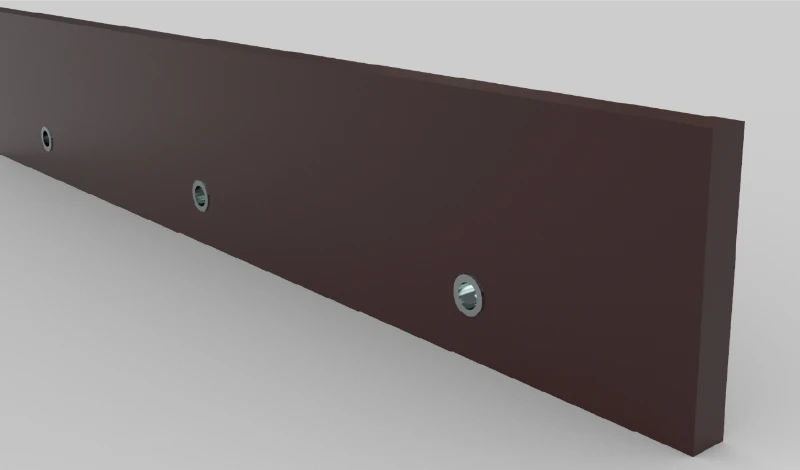
For clamp-on and bolt-on snow blades for seasonal fleets, the best result comes from matching the component, material, and setup to a documented operating condition, then validating fit, wear, safety, and cost in a controlled trial. This updated guide uses current search evidence and official-source checks to turn the topic into a repeatable selection process.
Updated: October 19, 2026
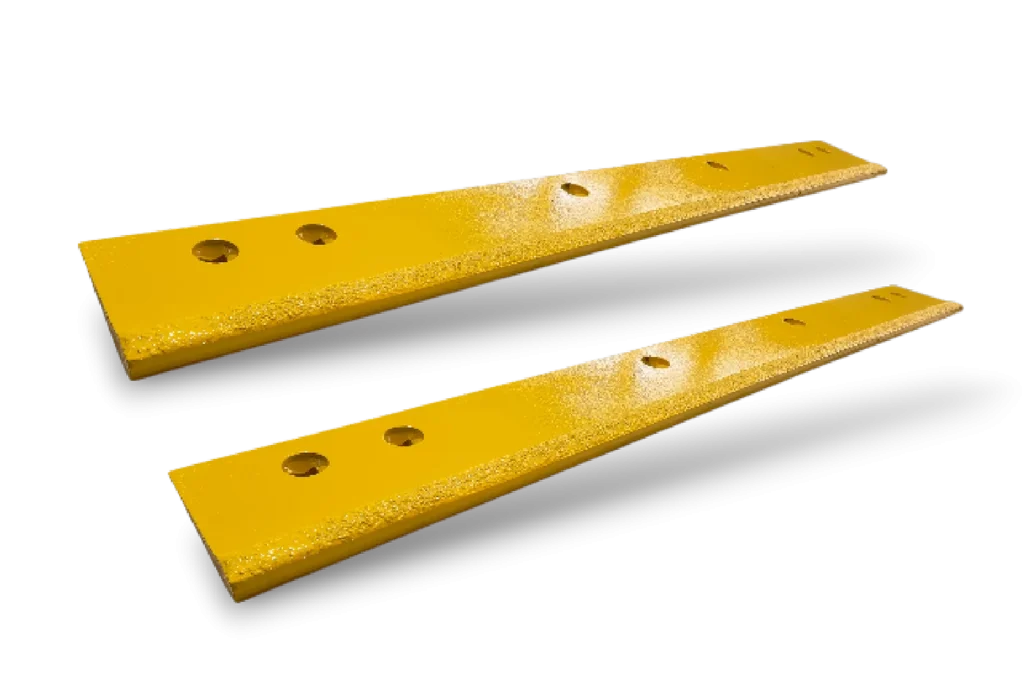
A clamp-on blade is often described as the budget option for organisations that cannot justify a plow truck. In practice it is frequently the correct specification rather than a compromise: the machine has another job for nine months of the year, and the blade has to arrive, work and come off again without changing the machine it mounts to.
That reframes the buying questions. Attachment integrity, weight, width and edge choice matter more than the blade’s finish, and the seasonal cost of ownership is dominated by things that never appear on the attachment invoice.
When a clamp-on blade makes sense
Clamp-on blades suit machines with another job all year.
A clamp on snow blade is the right answer when the machine is shared, the clearing work is seasonal and the site does not justify a dedicated plow unit, provided the attachment is matched to the bucket or frame it clamps to.
The conditions that favour it are specific. The machine is used for something else through the rest of the year, so a permanently mounted plow would be idle capital. The routes are short or contained: yards, campuses, car parks, industrial sites and private lanes. The operator is the same person who uses the machine for its other work, so fitting and removal can follow a documented routine rather than a workshop job.
The conditions that argue against it are equally specific. Continuous highway or arterial work needs a dedicated plow with proper mounting and hydraulic control. Sites with heavy, wet snow and long pushes need a machine with the traction and mass to move it. And any operation where the attachment must be fitted and removed by different people every shift needs a mounting system simple enough to be done correctly under time pressure. Procedure and training are what make a seasonal attachment work.
Myth: a bolt-on attachment is always the stronger choice
The claim is true about the joint and misleading about the outcome. A bolted plate concentrates its load at the mounting holes; a clamp spreads the same load across a longer section of the frame. Which one is safer depends on what the frame was built to accept, not on which fixing looks more permanent.
Read as an argument rather than a specification, the two designs answer different questions. Bolt-on answers “how do I transfer the most load into the frame at one point”. Clamp-on answers “how do I transfer a moderate load without drilling the frame”. A light utility truck with a thin frame section often favours the second answer even though the first sounds stronger, because the failure mode of a concentrated load on a thin section is distortion rather than a loose fixing.
What settles it in practice is the vehicle: the frame section, the accessory mounting points the manufacturer provides, and whether drilling is permitted at all under the fleet’s own policy. That is a measurement and a permission question, not a brand preference.
Attachment without frame damage
Attachment design decides whether a seasonal blade is a tool or a slow source of structural damage. Clamps, bolts and quick-attach plates all concentrate load somewhere, and the question is whether that load lands on a part of the machine designed to take it.
Three practices keep the interface sound. First, spread the clamp load with a pad or a plate sized to the surface it bears on, rather than letting a single screw press directly onto a bucket edge. Second, respect the fastener specification: the grade, the tightening sequence and the torque value, rechecked after the first working shift. Third, inspect the mounting area at the start and end of each season for distortion, cracking and wear at the weld toes, because early detection is what prevents a small distortion becoming a repair.
Where the machine uses a quick-attach system, verify compatibility before ordering. Equipment manufacturers publish mounting and compatibility information for their machines, and the Association of Equipment Manufacturers is a reasonable entry point to the machine-level constraints that decide what a loader or a three-point hitch can safely carry.
Weight and balance on light trucks
Weight is the constraint that surprises seasonal buyers most, because an attachment that fits does not automatically suit the machine. A blade and its mounting hardware sit ahead of the front axle on a truck or at the end of a loader arm on a tractor, and both positions change how the machine steers, brakes and rides.
On light trucks the answer is usually ballast in the bed, plus tyres set for the load, plus a realistic view of how much snow the machine can push before traction is lost. On tractors and loaders the answer is the same in principle: the loaded attachment must leave the operator in control. A machine that cannot steer confidently with the blade fitted is not a machine that should be clearing the site.
Two checks belong in the seasonal routine. Check the machine’s rated capacity for front-mounted equipment before ordering, and check the actual behaviour with the blade fitted and loaded, on the surface it will work, rather than in a yard on dry ground.
Quick-attach and receiver systems in the same comparison
A receiver or quick-attach system is a third family, and it changes the comparison by moving the permanent hardware from the blade to the vehicle. The vehicle keeps a receiver whether or not the blade is fitted; the blade arrives and leaves in minutes.
Compared with a clamp-on, the trade is three-way. Fitting time is shortest, because alignment is built into the receiver rather than achieved by the operator. Vehicle modification is greatest, because the receiver stays on the machine. And the machine’s residual use changes: a truck with a receiver in the front bumper or chassis is a truck with a receiver, which matters for resale and for any fleet that shares vehicles between duties.
For a seasonal contractor running one or two vehicles across several sites, the fitting time usually decides it. For a fleet that also uses the same trucks for other work through the year, the permanent hardware is the objection to weigh against the time saved.
Blade width limits for seasonal use
Width limits for seasonal attachments are tighter than the machine’s dimensions suggest, because the blade is controlled by a machine that was designed for a different job.
The practical ceiling is reached when the operator has to slow down to keep the machine straight, or when the blade starts to steer the machine in heavy snow. That point arrives sooner on a seasonal attachment than on a dedicated plow, because the mounting is usually less rigid and the machine has less mass. Buying narrower than the maximum is often the decision that makes the season work.
Site geometry sets a second limit. Gates, kerbs, parked vehicles and building corners all punish an oversized blade, and the time lost to manoeuvring is usually greater than the time saved by clearing a wider strip. For campus and car park work, the more useful measure is how many passes a route needs, not how wide a single pass can be.
Cutting edge options for occasional duty
Occasional duty changes the edge economics. A seasonal machine works far fewer hours than a municipal plow, so the abrasion that justifies carbide on a highway route is rarely the deciding factor; surface protection, impact tolerance and storage life matter more.
Three options cover most seasonal work. A rubber-flex edge protects paving and handles the mixed surfaces of a campus or yard. Steel is the pragmatic choice for unpaved ground and heavy impact, because it can be straightened and reused. An impact-led carbide edge suits sites where hardpack forms and the edge has to bite, such as an industrial yard that ices over every season.
The specification question to ask is where the machine works at its worst rather than where it works most often: one slip on a decorative surface or one season of chipped inserts costs more than the difference between the edge options. The published blade range splits along exactly these lines, with a flexible edge for surfaces that damage easily and carbide edges for routes that generate abrasion.
Storage and off-season handling
Storage is where seasonal attachments quietly lose value. A blade that spends the summer on damp ground, with fasteners left under load and an edge still carrying road salt, will not be in the same condition when it is needed again.
The routine is short and worth writing into the season close-out: clean the blade and the mounting hardware, dry it, treat the bare steel and the fasteners, store it off the ground and with the edge protected, and record the condition of the clamping hardware so the same parts are replaced rather than reused indefinitely. Pair that with a check of the machine interface at the same time, while the attachment is still on the machine.
Keep the batch labels and the attachment paperwork with the blade. Where a warranty question arises, the documented scope and the claim steps are what make the difference between a repair and an argument; SENTHAI publishes its scope, claim process and packing standards on the warranty and shipping page.
Fitting a seasonal blade without a second pair of hands
The attachment method decides whether one person can fit the blade, and that is a practical constraint rather than a convenience. A blade that needs two people to align will not be fitted by one on a cold morning, however good the hardware is.
- Position the vehicle on level ground and take the weight on the lift before aligning anything.
- Bring the mounting faces together loosely, then confirm the blade sits square to the vehicle rather than to the ground.
- Tighten the fixings from the centre outward so the clamp seats evenly instead of pulling one end down first.
- Check the blade angle and shoe height after the first pass, when the joint has settled.
The step that decides whether the fit is repeatable is the second one. A blade aligned to the ground rather than to the vehicle will sit differently every time it is fitted, which is the usual reason a seasonal attachment appears to need constant adjustment.
Total cost of a seasonal attachment
The cost of a seasonal attachment is assessed across the season rather than at the invoice. Purchase price is one line; fitting and removal time, edge consumption, storage condition and the risk of surface damage are the others.
Build the comparison per season: the attachment cost amortised over its expected life, the labour to fit and remove it each year, the edges it consumes, and the value of the machine hours it frees elsewhere. Where the same tractor also mows, lifts and moves material, those freed hours are the real return, and they are invisible in a price comparison between two attachments.
Fitting time is the line most often underestimated. A system that takes one person twenty minutes to fit is worth more across a season than one that takes two people an hour, particularly when the first snow arrives outside working hours. Where a fleet runs several machines, distributor programmes make it possible to buy blade sets, edges and hardware against one drawing pack so the seasonal kits stay interchangeable (wholesale snow plow blades for distributors).
Independent guidance on seasonal contracting and surface protection is published by the Snow & Ice Management Association, and route classification practice from agencies such as Colorado DOT is a useful model for deciding which parts of a site justify a dedicated unit rather than a shared machine. The wider context of how weather affects the road network is documented by the Federal Highway Administration, and research on equipment and method selection is collected by the Transportation Research Board.
Renting, borrowing or buying for a short season
For a season measured in days rather than months, ownership is not automatically the cheaper option, and the comparison has four lines: the purchase price, the storage and off-season handling, the depreciation while the blade sits unused, and the fitting and removal time each time it is used.
Renting removes the last three lines and adds a daily rate, so the decision turns on how many days the blade is genuinely needed. A contractor who needs a blade for a handful of events per season often finds renting cheaper once storage and handling are counted; one who needs it available throughout the winter is buying availability as much as hardware, and that is what the purchase price pays for.
Match the Edge or Attachment to the Actual Operating Condition
This research-backed framework closes a recurring gap in pages ranking for Clamp-On and Bolt-On Snow Blades for Seasonal Fleets: readers need a decision method, not a list of unsupported superlatives. Apply the same evidence fields to every option before choosing clamp-on and bolt-on snow blades for seasonal fleets.
| Decision gate | Evidence to collect | Release rule |
|---|---|---|
| Surface | Asphalt, concrete, gravel, pavers, bridge deck, or sensitive finish | Choose material and setup that protect the surface while meeting removal goals |
| Snow and ice | Loose snow, wet snow, compacted snow, bonded ice, or mixed conditions | Separate plowing, scraping, and deicing functions |
| Machine setup | Carrier weight, attack angle, down pressure, shoes, trip system, and speed | Verify the complete system rather than judging the edge alone |
| Validation | Short route trial, photographs, wear readings, fuel or time, and operator notes | Expand only after the trial meets a written acceptance rule |
The most useful choice is the one that meets the route objective without shifting damage or downtime elsewhere in the system. Record setup and operating conditions so the result can be repeated.
Run a Controlled Trial Before Full-Fleet Adoption
-
Freeze the baseline: record the current component, carrier settings, route, weather, operator, hours, and reason for removal.
-
Approve fit first: compare the supplier drawing with the machine and attachment. Do not drill, grind, weld, or substitute fasteners without an approved procedure.
-
Change one major variable: keep route and operating method as consistent as practical so the result can be attributed to the component rather than a different setup.
-
Inspect at planned intervals: photograph the same locations, measure wear, check fastener torque and retention, and log impacts or abnormal vibration.
-
Release against written criteria: decide in advance what wear, removal quality, downtime, and cost per operating hour would justify expansion.
Official-Source and SERP Verification
The technical boundary was checked against Federal Highway Administration snow and ice guidance. That source is used for the operating or safety context; model-specific dimensions, settings, and limits must still come from the approved manual for the exact machine and component. The following leading pages were reviewed for search intent and missing decision details:
Frequently Asked Questions
What should be verified before selecting clamp-on and bolt-on snow blades for seasonal fleets?
Confirm the exact application, dimensions, carrier limits, operating surface, expected impacts, supplier drawing, and acceptance evidence. A product name or grade label alone is not enough.
How should clamp-on and bolt-on snow blades for seasonal fleets be compared on cost?
Compare landed and installed cost, service hours, maintenance labor, downtime, collateral wear, and replacement reason. Use cost per operating hour for comparable routes rather than purchase price alone.
When is a trial required?
Use a controlled trial whenever fit, material, setup, route conditions, or supplier process changes. Define the baseline and pass criteria before the trial starts.
Which document controls installation and operating limits?
The current manual, approved drawing, and written instructions for the exact carrier and component control. General articles and cross-reference tables are screening tools, not installation authority.
Request an Application Review
Send SENTHAI the carrier or machine model, drawing or dimensions, operating surface, route condition, current failure mode, expected quantity, and target service interval. The engineering team can then review a suitable product path without changing the evidence requirements described above.